Top 10 PVC Valves and Fittings Suppliers for Buyers?
FLUID HANDLING EXPERTS

Blog, all our news

Top 10 PVC Valves and Fittings Suppliers for Buyers?

Choosing a supplier for pvc valves and fittings involves more than comparing catalog prices. Buyers need components that match the fluid, operating pressure, temperature, and connection type in their system. A mismatch can mean leaks, delays, or costly rework. Small details matter. This guide introduces ten suppliers for buyers to evaluate, not as a universal ranking or endorsement, but as a starting point for practical research.

When comparing options, check product specifications, available sizes, pressure ratings, material details, and technical documentation. Ask whether the supplier can provide clear installation guidance and responsive support when a fitting or valve does not match the drawing. Lead times and stock availability also deserve attention; a suitable product is less useful if it cannot arrive when needed. Where relevant, confirm that stated standards fit your project requirements rather than relying on a product label alone.

Supplier quality can vary by product line and location. A company with a broad catalog may not offer the same service for every item, and published information may not answer every technical question. That is worth remembering. Use the profiles below to narrow your shortlist, then verify specifications directly with each supplier before ordering. A careful comparison may take longer, but it can help buyers make a more informed choice for their particular application.
Top 10 PVC Valves and Fittings Suppliers for Buyers?

PVC Valves and Fittings: Types, Materials, and Applications

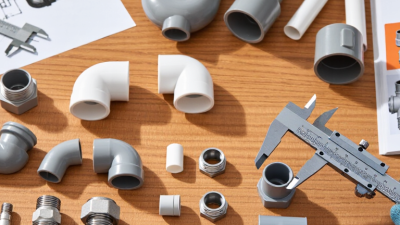
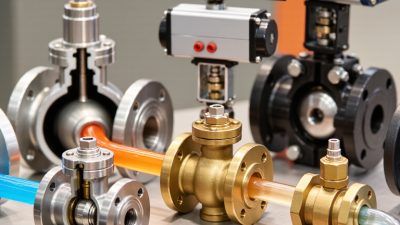
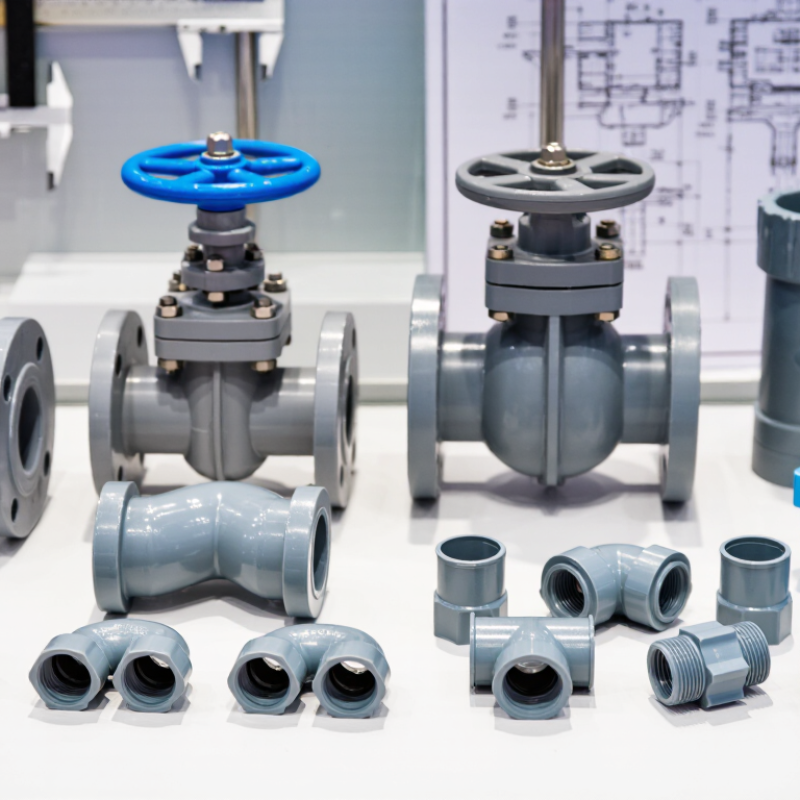
PVC systems use several valve types, each controlling flow differently. Ball valves open with a quarter-turn handle and suit quick shutoff. Check valves help prevent backflow in pump lines. Butterfly valves can control larger pipe runs, while diaphragm valves are useful where flow adjustment matters. Small details matter. Fittings include elbows, tees, reducers, unions, and flanges. Each changes direction, joins branches, or makes maintenance easier.

Material choice depends on temperature, pressure, and the fluid being carried. PVC-U is common in cool-water, irrigation, and pool systems; it also tolerates many chemicals, but compatibility must be checked for each fluid. CPVC handles warmer service than standard PVC, though its pressure rating still changes with temperature. PVC valves and fittings are not interchangeable with every plastic system. A clean-looking chart can hide a temperature derating, so confirm operating conditions.

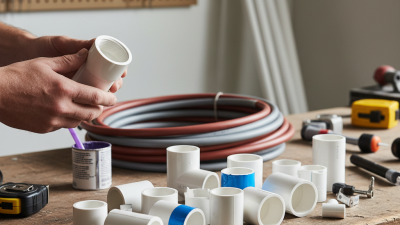
These components appear in water treatment, aquaculture, agricultural irrigation, and low-temperature process lines. In a pump room, a union near a valve can make replacement less awkward. For procurement, compare pressure ratings, connection style, dimensions, and seal materials—not just nominal pipe size. Solvent-cement joints need clean, properly prepared surfaces. It is easy to focus on the valve and overlook installation space. Check the actual layout before ordering.

How to Evaluate Suppliers for Quality, Compliance, and Service

A top-ten supplier list is only a starting point. Buyers should check whether each PVC valve’s pressure rating, temperature range, and material match the actual service. Ask for current test records, dimensional drawings, and traceability linking shipped parts to production batches. For potable-water use, verify that the exact product and intended application are covered by relevant approvals, such as NSF/ANSI/CAN 61. A certificate for a different product is not enough.

The U.S. EPA’s 2023 Drinking Water Infrastructure Needs Survey and Assessment estimates $625 billion in drinking-water infrastructure needs over 20 years. That scale makes dependable supply and documented quality important, not just unit price. Review the supplier’s quality procedures, nonconformance records, and inspection methods. Confirm applicable standards against the project specification and destination market. Paperwork can look neat. It may still leave gaps.

Service matters when a project changes or a shipment is delayed. Ask for written lead times, stocking details, technical response targets, and a clear process for handling defects. Test how quickly the supplier answers a practical question about jointing, installation, or pressure limits. Keep a scorecard, but treat it as a guide, not proof. I would also check references from comparable projects; one missed detail can outweigh a polished presentation.

Top 10 PVC Valves and Fittings Suppliers for Buyers? – How to Evaluate Suppliers for Quality, Compliance, and Service

This is a buyer’s comparison framework, not a ranking of named companies. Supplier profiles describe common areas of specialization; verify each supplier’s current product documentation, certifications, and project-specific suitability before purchase. Standards and approvals apply only to products within their stated scope.

No. Supplier Profile Typical Product Scope Quality Evidence to Request Relevant Standards or Compliance Checks Service Questions Best Fit for Buyers
1 Pressure-Pipe and Fittings Specialist PVC pressure pipe, sockets, adapters, and compatible fittings for water distribution or industrial systems. Product datasheets, dimensions, material designation, pressure-rating tables, and lot traceability. Check whether the pipe and fittings meet the applicable specification, such as ASTM D1785 for PVC pipe and ASTM D2466 or ASTM D2467 for Schedule 40 or Schedule 80 PVC fittings. Can the supplier confirm compatibility across pipe, fittings, and joining materials? Are current technical documents available for every item? Buyers assembling matched pressure-piping systems.
2 PVC Valve Specialist Ball, butterfly, check, diaphragm, and other PVC valves, depending on the supplier’s range. Valve pressure-temperature limits, material and seal details, operating instructions, and applicable test documentation. Confirm that ratings and materials suit the fluid, temperature, pressure, and installation conditions. Request the exact product approvals required for the application. Are replacement seals and parts available? What are the warranty terms and the recommended maintenance procedure? Projects where valve selection, serviceability, or spare parts are important.
3 Molded-Fittings Specialist Elbows, tees, couplings, reducers, and other molded PVC fittings. Dimensional data, material specifications, inspection records, and product identification or lot codes. For applicable products, check ASTM D2466 for Schedule 40 PVC fittings or ASTM D2467 for Schedule 80 PVC fittings; confirm the listed size and pressure class. Can the supplier provide consistent dimensions and documented availability across the required fitting sizes? Buyers needing a broad, repeatable range of standard fittings.
4 Industrial-Piping Supplier PVC valves and fittings selected for process lines, utilities, or corrosive-service applications. Chemical-compatibility guidance, pressure-temperature charts, material details, and installation limitations. Verify chemical compatibility for the actual concentration and temperature. Do not rely on a general “chemical resistant” claim alone. Will the supplier review the service conditions and identify any product limitations in writing? Facilities with non-potable process fluids or demanding operating conditions.
5 Drinking-Water System Supplier PVC components intended for potable-water systems, where the product and local rules permit their use. Current certification records that identify the exact product, size range, and intended use. Check whether the specific product is certified to NSF/ANSI/CAN 61 for health effects and whether other local requirements apply. Certification of one product does not cover an entire product range automatically. Can the supplier provide a current certificate or verifiable listing for the exact product being quoted? Potable-water projects requiring documented health-effects compliance.
6 Code- and Certification-Focused Supplier PVC piping components sold with third-party certifications or listings for defined applications. Certificate number, issuing organization, scope, validity, and product identification matching the quotation. Where applicable, review NSF/ANSI 14 listings for plastics piping system components and related materials; confirm the listing covers the intended product and use. Can the supplier show how certificates are kept current and notify buyers of changes to product status? Procurement teams that need auditable compliance records.
7 PVC-U Water-System Supplier Unplasticized PVC pipe-system components for water supply or other specified pressure applications. System specifications, dimensional series, pressure class, and installation instructions. For projects using international specifications, check whether the relevant products conform to the applicable parts of ISO 1452 for PVC-U piping systems for water supply and related pressure applications. Can the supplier confirm dimensional compatibility with the project’s specified standard and joining system? Projects designed around ISO-based PVC-U specifications.
8 Municipal Waterworks Supplier PVC pressure-pipe system products for municipal waterworks, including associated fittings where offered. Project submittals, product markings, pressure-class documentation, and installation guidance. For applicable PVC water pipe, check the project specification and relevant AWWA requirements, including AWWA C900 where specified. Confirm the standard’s scope matches the product ordered. Can the supplier support submittals, delivery scheduling, and documentation required for public projects? Utilities and contractors buying to municipal project specifications.
9 Solvent-Cement Joining Supplier PVC solvent cement and related joining products, sometimes supplied alongside fittings and pipe. Product labels, technical data sheets, shelf-life information, and storage and application instructions. Check applicable specifications such as ASTM D2564 for solvent cements for PVC piping systems, and follow the joining procedure applicable to the system and jurisdiction. Are product age, storage conditions, and required application instructions documented for each shipment? Buyers seeking a compatible and documented joining-material supply.
10 Project-Stocking Distributor Mixed PVC valves, fittings, and accessories sourced from one or more manufacturers. Manufacturer identification, traceable product documentation, inventory records, and clear substitution controls. Verify the compliance documents for the actual manufacturer and product supplied; a distributor’s general statement is not a substitute for product-specific evidence. What are the confirmed lead times, stock levels, back-order process, and rules for approving substitutions? Buyers prioritizing consolidated purchasing, availability, and delivery coordination.

Top 10 PVC Valves and Fittings Suppliers for Buyers

Choosing among the top 10 PVC valves and fittings suppliers starts with the application, not the catalog. Write down the fluid, operating pressure, temperature, pipe size, and connection type. Details matter. A valve listed as PVC may still be unsuitable for a particular chemical or operating condition. Check the supplier’s technical data and request written confirmation when compatibility is unclear. Compare pressure ratings at the intended temperature, dimensional drawings, and available socket, threaded, or flanged ends. A neat product photo proves very little.

For each supplier, ask for current product specifications, material information, and batch identification that can be traced through an order. Review sample parts for clean molding, even socket depth, and undamaged threads; small defects can complicate installation. Also compare lead times, minimum order quantities, packaging, and how the supplier handles incorrect or damaged goods. Requesting a sample can slow purchasing. It may still reveal fit problems before a larger shipment arrives. Keep the comparison practical: record each supplier’s answers in the same checklist, and note anything left unverified. One overlooked detail can outweigh a low unit price.

Comparing Supplier Capabilities, Product Ranges, and Markets

Choosing among ten PVC valve and fitting suppliers is less about catalog size than project fit. A municipal irrigation buyer may need pressure-rated ball valves, unions, and clear dimensional data. A greenhouse installer may value compact fittings, fast availability, and smaller order quantities. Compare pressure limits, temperature ranges, connection styles, and material specifications before discussing price. Details matter.

Supplier capabilities vary. Some maintain broad inventories for plumbing, water treatment, and industrial fluid handling; others focus on one market and offer deeper technical support. Ask whether stock information is current, replacement parts are available, and nonstandard sizes can be sourced. A polished catalog is useful, but it does not prove reliable delivery. Request current datasheets and confirm that ratings apply to the exact valve size and operating conditions.

The product range should cover the installation: valves, elbows, tees, adapters, unions, and compatible seals. Verify solvent-weld and threaded options, since mixing connection systems can cause rework. Compare lead times, minimum orders, export packaging, and technical response quality alongside unit cost. Small trial orders can reveal packing or documentation gaps. No comparison is perfect; published information may not reflect current stock. Clarify freight costs and testing records in writing, and record exceptions rather than assuming every PVC product performs alike.

Key Purchasing Factors: Pricing, Availability, and After-Sales Support

For buyers comparing PVC valve and fitting suppliers, the lowest quote is not always the lowest-cost choice. Check whether pricing includes compatible seals, handles, packaging, and delivery. Ask for a written quote by size, pressure rating, connection type, and quantity. A small unit-price gap can grow quickly when freight or minimum-order fees appear. Request samples for critical applications, and compare dimensions against your drawings. Details matter.

Availability deserves equal attention. Confirm stock by item, not just by product family, and ask whether stated lead times include inspection and dispatch. For a project with several pipe sizes, one missing reducer can delay installation. Suppliers should explain how they handle substitutions and backorders before an order is placed. After-sales support is practical, too: clarify response times, replacement procedures, and what documentation accompanies a defect claim. Keep the answers in writing. It sounds cautious, perhaps overly so, but memories of phone calls are unreliable. A capable supplier will provide clear product data, realistic delivery updates, and help identify the cause of a leak without making unsupported promises. Compare these service details alongside price; a slightly higher quote may be worthwhile when deadlines are tight.

Copyright 2025 Fluidra S.A. | Created by BCM Marketing Agencia Privacy Policy Legal note | Cookie policy |

Technical cookies are strictly necessary for our website to work and you can navigate through it. These types of cookies are those that, for example, allow us to identify you, give you access to certain restricted parts of the page if necessary, or remember different options or services already selected by you, such as your privacy preferences. Therefore, they are activated by default, your authorization not being necessary in this regard. Through the configuration of your browser, you can block or alert the presence of this type of cookies, although such blocking will affect the proper functioning of the different functionalities of our website.


The analysis cookies allow us to study the navigation of the users of our website in general (for example, which sections of the page are the most visited, which services are used most and if they work correctly, etc.). From the statistical information on navigation on our website, we can improve both the operation of the page itself and the different services it offers. Therefore, these cookies do not have an advertising purpose, but only serve to make our website work better, adapting to our users in general. By activating them you will contribute to this continuous improvement. You can enable or disable these cookies by checking the corresponding box, being disabled by default.


Functionality cookies allow us to remember your preferences, to personalize certain characteristics and general options of our website, every time you access it (for example, the language in which the information is presented to you, the sections marked as favorites, your browser type, etc.) Therefore, this type of cookies does not have an advertising purpose, but by activating them you will improve the functionality of the website (for example, adapting to your type of browser) and the customization of it based on your preferences (for example, by presenting the information in the language that you have chosen in previous occasions), which will contribute to the ease, usability and comfort of our page during your navigation. You can enable or disable these cookies by checking the corresponding box, being disabled by default.


Advertising cookies allow us to manage the advertising spaces included in our website based on criteria such as the content shown or the frequency in which the ads are displayed. For example, if you have been shown the same ad several times on our website, and you have not shown a personal interest by clicking on it, it will not appear again. In summary, by activating this type of cookies, the advertising shown on our website will be more useful and diverse, and less repetitive. You can enable or disable these cookies by checking the corresponding box, being disabled by default.


Behavioral advertising cookies allow us to obtain information based on the observation of your browsing habits and behaviors on the web, in order to show you advertising content that best suits your personal tastes and interests. To understand it in a very simple way, we will give you a fictitious example: if your last searches on the web were related to suspense literature, we would show you advertising about suspense books. Therefore, activating this type of cookies, the advertising that we show you on our website will not be generic, but will be oriented to your searches, tastes and interests, therefore adjusting exclusively to you. You can enable or disable these cookies by checking the corresponding box, being disabled by default.
To understand it in a very simple way, we will give you a fictitious example: if your last searches on the web were related to suspense literature, we would show you advertising about suspense books. Therefore, activating this type of cookies, the advertising that we show you on our website will not be generic, but will be oriented to your searches, tastes and interests, therefore adjusting exclusively to you. You can enable or disable these cookies by checking the corresponding box, being disabled by default.

SAVE

We use our own and third-party cookies to ensure the proper functioning of the website and to analyse our services, improve your experience on our website and show you advertisements related to your interests according to profiling based on your browsing habits (e.g. websites visited). You can accept all cookies by clicking "ACCEPT" or set or reject them by clicking here. If you would like to know more about the use of cookies, please see our COOKIE POLICY.


ACCEPT ALL
Reject no essentials