How to Choose the Right PVC Fittings for Your Project?
FLUID HANDLING EXPERTS

Blog, all our news

How to Choose the Right PVC Fittings for Your Project?

Choosing the right pvc fittings can determine whether a piping system lasts for decades or develops leaks within months. The decision involves more than matching diameter and color. Pressure rating, temperature, fluid chemistry, installation method, and local conditions all matter. A fitting beside a boiler faces different demands than one beneath a garden sink.

Lars-Eric Janson, a respected plastics-pipe researcher and author, offers a useful principle: “Choose the fitting for the system, not the shelf.” That advice remains practical. A solvent-weld fitting may suit a permanent water line, while a threaded connection may support easier maintenance. However, the wrong sealant, poor alignment, or insufficient curing time can weaken even a certified product.

Look closely at manufacturer data. Check pressure and temperature limits. Confirm chemical compatibility. Review the relevant standards and certification marks. Reliable suppliers should provide traceable specifications, installation instructions, and clear warranty terms. Experienced installers also inspect pipe ends, remove burrs, and test joints before covering them.

Small details matter.

There is no perfect checklist. Site conditions can change, and product labels may not explain every limitation. That is why careful selection should combine technical documents with professional judgment. A cheaper fitting may reduce the initial budget, yet increase labor and repair costs later. This guide will examine the practical questions behind each choice, helping you compare pvc fittings with greater confidence and fewer costly assumptions.
How to Choose the Right PVC Fittings for Your Project?

Identify PVC Fitting Types Under ASTM D2466 and ASTM D2467

How to Choose the Right PVC Fittings for Your Project?

Identify PVC Fitting Types Under ASTM D2466 and ASTM D2467

Choosing a PVC fitting starts with its standard, pressure class, and connection style. ASTM D2466 covers Schedule 40 PVC socket fittings. ASTM D2467 covers Schedule 80 PVC fittings, including socket-type and threaded designs. These standards help define dimensions, materials, and performance requirements.

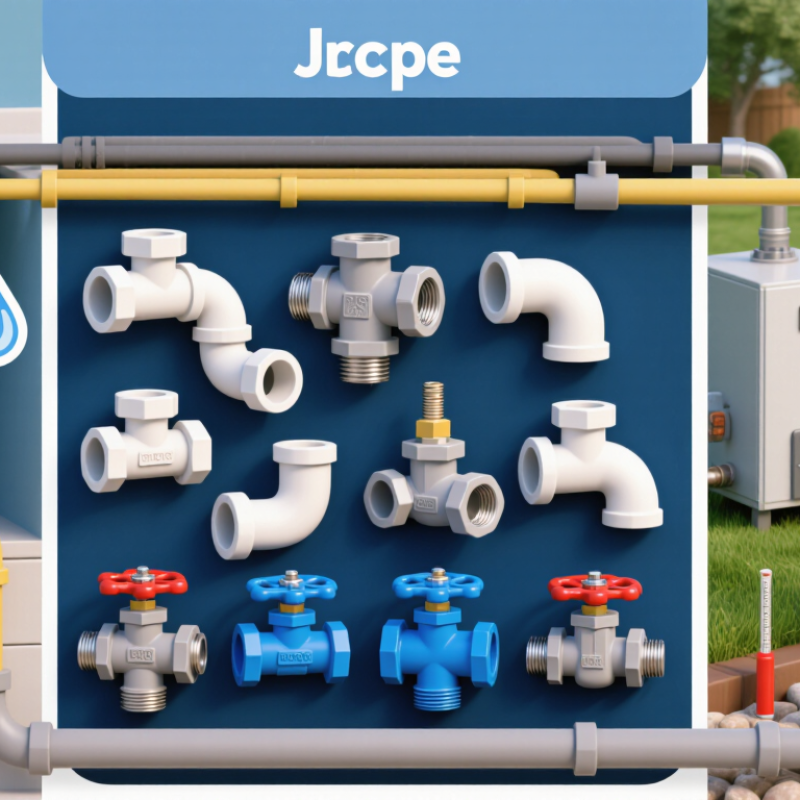
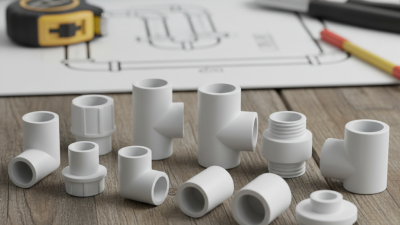
Common shapes include elbows, tees, couplings, reducers, adapters, caps, and bushings. A 90-degree elbow changes flow direction, while a tee creates a branch connection. Couplings join two pipes. Reducers connect different pipe sizes. Schedule 80 fittings usually have thicker walls than Schedule 40 fittings. They may suit higher-pressure service, but the pipe system must match.

Check the fitting body for size, schedule, material, and applicable standard markings. Confirm the pressure rating at the actual operating temperature. Heat can reduce PVC pressure capacity. Chemical exposure can also affect service life. A fitting that looks correct may still be unsuitable.

I have seen projects fail because installers matched diameter but ignored thread type. Dry-fit each connection before solvent cementing. Make sure the pipe seats fully and remains aligned. Use only compatible joining materials and follow the cement manufacturer’s instructions. One detail is easy to miss.

ASTM compliance does not guarantee suitability for every application. Review the current standard, project specifications, and local requirements. When uncertain, ask a qualified piping professional to verify the complete assembly, not just one fitting.
Match Fitting Size to Schedule 40 and Schedule 80 Pipe Dimensions

How to Choose the Right PVC Fittings for Your Project?

Choosing PVC fittings starts with the pipe’s nominal size and schedule. Schedule 40 and Schedule 80 pipes share the same outside diameter, but their wall thicknesses differ. This changes the inside diameter and flow area. For example, 1-inch pipe has an outside diameter of about 1.315 inches. Schedule 40 has a larger inside diameter than Schedule 80. Small detail. It matters.

Match the fitting’s nominal size to the pipe size, then confirm its schedule compatibility. A fitting labeled 1 inch should fit the pipe’s measured outside diameter. Do not judge size by the socket opening alone. For pressure systems, Schedule 80 fittings are often selected with Schedule 80 pipe because they offer suitable pressure performance. Schedule 40 fittings may fit physically, yet their rating could be unsuitable. Check the published dimensions and pressure tables.

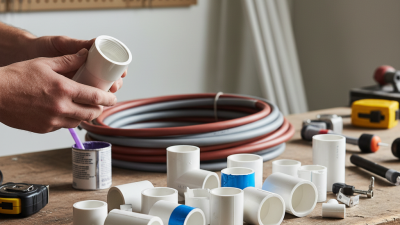
On site, I measure the pipe with calipers when markings are faded or unclear. I also verify temperature, pressure, chemical compatibility, and connection method. Dry-fit every joint before applying solvent cement. That habit catches surprises. A reducer can correct a planned size transition, but it should not conceal a measurement error. I have trusted old labels too quickly before. A second measurement is cheaper than replacing a buried connection.

Compare Pressure Ratings at the 73°F Industry Reference Temperature

How to Choose the Right PVC Fittings for Your Project?

At 73°F, or 23°C, PVC pressure ratings provide a common industry comparison point. They are not a guarantee for every installation.

ASTM D2466 covers pressure-rated PVC fittings, while ASTM D1785 covers rigid PVC pipe. Their test methods help engineers compare fittings under controlled conditions. A fitting rated at 150 psi at 73°F may appear suitable for a 120 psi system. That leaves limited room for surge, temperature changes, and installation errors. Real installations are messier.

The Plastics Pipe Institute’s PPI TR-4 lists hydrostatic design-basis values for PVC compounds at reference temperatures. Those values support engineering calculations, but they do not replace the fitting manufacturer’s certified rating. Compare pressure ratings by size, schedule, connection type, and service fluid. Threaded fittings often require extra caution because threads reduce wall thickness. Solvent-cemented joints also need proper surface preparation, curing time, and alignment.

Temperature matters quickly. Above 73°F, allowable pressure generally decreases, so a summer rooftop line may need a larger safety margin. Check surge pressure too. A pump shutdown can create a brief spike beyond normal operating pressure. I have seen otherwise acceptable selections fail because only the steady gauge reading was considered. That oversight is easy to repeat. Use the lowest rated component in the assembly, then verify the applicable ASTM requirements, PPI data, and project code.

Check Chemical Compatibility with ASTM D1784 PVC Compound Standards

How to Choose the Right PVC Fittings for Your Project?

Check Chemical Compatibility with ASTM D1784 PVC Compound Standards

ASTM D1784 classifies rigid PVC and CPVC compounds by physical performance, including strength, impact resistance, and heat behavior. That distinction matters. The standard supports material evaluation, but it is not a universal chemical-compatibility approval. A fitting may meet an ASTM D1784 cell classification while remaining unsuitable for a specific solvent, acid, or process fluid. Chemical concentration, operating temperature, pressure, and exposure time can change the result. Small details matter.

Match the fitting compound to the actual service conditions. Record the fluid name, concentration, temperature range, pressure, and cleaning chemicals before choosing a size or connection method. Then review chemical-resistance data for the exact compound and fitting design. Pay attention to threaded connections, because stress and tightening force can increase cracking risk. Check whether repeated thermal cycling could weaken the assembly. Do not rely on appearance alone.

A practical review should include the pipe, fitting, gasket, sealant, and joint adhesive. One compatible component cannot make the entire system safe. ASTM D1784 information is useful evidence, but it should be combined with laboratory data, technical documentation, and qualified engineering judgment. I would avoid treating a cell classification as a final answer. That assumption feels convenient, yet it can hide real service risks. When conditions are unusual, test a representative assembly before installation. Testing takes time. Replacing failed fittings takes longer.

How to Choose the Right PVC Fittings for Your Project?

Chemical compatibility screening for unplasticized PVC (PVC-U) fittings, considered alongside ASTM D1784 compound requirements.

The scores are a practical screening scale from 1 (poor compatibility) to 5 (excellent compatibility) for common PVC-U service environments at moderate temperatures. ASTM D1784 classifies PVC compounds by physical-property requirements; it does not provide a universal chemical-resistance rating. Always verify concentration, temperature, exposure time, pressure, and the fitting manufacturer’s technical data before selection.

Select Joining Methods and Test Performance Under ASTM D2855 and D1599

Choosing PVC fittings starts with the joining method, not the fitting shape. For solvent-cemented systems, ASTM D2855 recommends square cuts, clean surfaces, proper dry fitting, and controlled cement application. The socket should provide firm interference, without forcing the pipe deeply. Poor alignment can create a hidden stress point.

ASTM D1599 measures short-time hydraulic pressure failure. The test pressure rises until the specimen fails, typically within 60–70 seconds. This timing is a measured requirement, not a service-pressure rating. A fitting that survives the test may still fail under heat, vibration, or repeated pressure changes. Select fittings using pressure class, temperature limits, fluid compatibility, and dimensional standards. Do not treat one laboratory result as the whole design.

Tips: Mark insertion depth. Rotate slightly during assembly. Keep the joint still during curing. Record batch numbers and test pressure.

One field lesson is uncomfortable: a neat joint can still be weak. I have seen installation teams focus on appearance while ignoring curing conditions. ASTM D2855 does not replace the cement manufacturer’s cure guidance. Temperature, humidity, pipe size, and interference fit all matter. After curing, use a controlled pressure test based on the project specification. Check for pressure loss, visible movement, and leakage. ASTM D1599 data can support material comparison, but it cannot predict every site condition. Small details decide performance.

How to Choose the Right PVC Fittings for Your Project? - Select Joining Methods and Test Performance Under ASTM D2855 and D1599

Selection guidance is based on commonly used PVC pressure and drainage applications. Final dimensions, pressure ratings, chemical resistance, and testing requirements shall be confirmed against the applicable product and project standards.
Project Condition Suitable PVC Fitting Configuration Preferred Joining Method Important Selection Dimensions ASTM D2855 Process Controls ASTM D1599 Performance Record
Pressurized cold-water service
Typical building, irrigation, and process-water systems
Socket-end coupling, elbow, tee, reducer, or threaded transition fitting made for the selected PVC pressure-pipe system Solvent-cemented socket joint; use a threaded transition only where disconnection or equipment connection is required Match nominal pipe size, outside diameter, pressure class or schedule, and fitting socket dimensions. Do not combine incompatible dimensional systems. Use clean, dry, properly fitted components; apply suitable primer and solvent cement when required; assemble with a full insertion and correct alignment; observe the cement manufacturer’s cure conditions. Record test temperature, specimen dimensions, conditioning time, internal pressure, time to failure, failure location, and failure mode. ASTM D1599 provides a short-time hydraulic pressure failure test method rather than one universal acceptance pressure.
Higher-pressure or mechanically demanding service
Systems requiring increased wall thickness or reduced deformation
Schedule 80 or another specified heavy-wall PVC pressure fitting, subject to the system design pressure and temperature derating requirements Solvent-cemented socket joint using components designed for the same dimensional standard and service rating Verify outside diameter, minimum wall thickness, socket depth, pressure rating, operating temperature, and hydraulic compatibility with the pipe. Confirm that the interference fit is suitable; cut square, remove burrs, dry-fit, mark insertion depth, apply cement uniformly, and prevent movement during initial set. Use D1599 to compare short-time burst or failure performance of representative joined assemblies. Results should be compared with the project specification and the applicable fitting or pipe product standard.
Non-pressure drainage, waste, and vent service
Gravity-flow systems
Drainage-pattern sanitary tee, wye, long-radius bend, cleanout adapter, or trap fitting designed for gravity drainage Solvent-cemented socket joint or another method specifically permitted by the applicable drainage standard Select drainage-pattern geometry, nominal size, slope requirements, cleanout access, and compatibility with the drainage pipe wall and outside diameter. Keep joint surfaces free of dirt and moisture; ensure complete insertion and alignment; allow adequate curing before leak testing or service. ASTM D1599 is generally not the primary acceptance test for a gravity drainage installation. Use the applicable drainage-system leak or hydrostatic test requirement; D1599 may be used for material or assembly development when specified.
Connection to metal valves, pumps, or instruments
Transition between PVC and metallic equipment
Socket-to-FIPT or socket-to-MIPT adapter, flanged adapter, union, or dielectric transition selected for the equipment connection Solvent cement on the PVC socket side; compatible threaded sealant or gasketed bolted connection on the equipment side Match thread type and size, flange drilling pattern, gasket material, pressure rating, installation torque, and allowable bending load. Avoid over-tightening plastic threads. Prepare and cure the PVC socket joint according to ASTM D2855 practice; support valves and equipment independently so that external loads are not transferred to the fitting. Test the complete representative assembly when the transition is part of the pressure boundary. Document leakage, pressure, time, and any thread, flange, or socket failure.
Frequent maintenance or equipment removal
Sections requiring periodic dismantling
Union, true-union valve connection, or flanged fitting with an appropriate gasket Solvent-cemented permanent joints combined with a union or flange for the removable section Check face-to-face length, gasket dimensions, bolt pattern, pressure rating, alignment tolerance, and access for tightening or removal. Apply ASTM D2855 controls to the permanent socket joints; keep cement away from sealing faces, threads, and union mating surfaces. If short-time pressure failure testing is required, test the full joint configuration, including the union or flange, because the weakest component may not be the solvent-cemented socket.
Chemically exposed service
Water treatment, laboratory, or process-fluid systems
Fitting selected from a PVC material with documented resistance to the actual fluid, concentration, temperature, and exposure time Solvent-cemented socket joint only when the cement and PVC material are compatible with the chemical environment; otherwise use the specified alternative system Verify chemical compatibility, temperature derating, pressure rating, pipe dimensions, fitting wall thickness, and potential permeation or environmental stress effects. Use clean, compatible primer and cement; control surface preparation, insertion, cure time, ventilation, and exposure before commissioning. Condition specimens in the relevant environment when required by the test plan. Report the fluid, concentration, temperature, conditioning period, pressure, failure time, and failure mode; do not treat an unconditioned D1599 result as chemical-resistance proof.
Test interpretation: ASTM D2855 describes a practice for making solvent-cemented joints with PVC pipe and fittings. ASTM D1599 determines short-time hydraulic pressure failure performance. Neither standard alone establishes the complete design pressure, long-term service life, or universal pass/fail value for every PVC fitting system.
Copyright 2025 Fluidra S.A. | Created by BCM Marketing Agencia Privacy Policy Legal note | Cookie policy |

Technical cookies are strictly necessary for our website to work and you can navigate through it. These types of cookies are those that, for example, allow us to identify you, give you access to certain restricted parts of the page if necessary, or remember different options or services already selected by you, such as your privacy preferences. Therefore, they are activated by default, your authorization not being necessary in this regard. Through the configuration of your browser, you can block or alert the presence of this type of cookies, although such blocking will affect the proper functioning of the different functionalities of our website.


The analysis cookies allow us to study the navigation of the users of our website in general (for example, which sections of the page are the most visited, which services are used most and if they work correctly, etc.). From the statistical information on navigation on our website, we can improve both the operation of the page itself and the different services it offers. Therefore, these cookies do not have an advertising purpose, but only serve to make our website work better, adapting to our users in general. By activating them you will contribute to this continuous improvement. You can enable or disable these cookies by checking the corresponding box, being disabled by default.


Functionality cookies allow us to remember your preferences, to personalize certain characteristics and general options of our website, every time you access it (for example, the language in which the information is presented to you, the sections marked as favorites, your browser type, etc.) Therefore, this type of cookies does not have an advertising purpose, but by activating them you will improve the functionality of the website (for example, adapting to your type of browser) and the customization of it based on your preferences (for example, by presenting the information in the language that you have chosen in previous occasions), which will contribute to the ease, usability and comfort of our page during your navigation. You can enable or disable these cookies by checking the corresponding box, being disabled by default.


Advertising cookies allow us to manage the advertising spaces included in our website based on criteria such as the content shown or the frequency in which the ads are displayed. For example, if you have been shown the same ad several times on our website, and you have not shown a personal interest by clicking on it, it will not appear again. In summary, by activating this type of cookies, the advertising shown on our website will be more useful and diverse, and less repetitive. You can enable or disable these cookies by checking the corresponding box, being disabled by default.


Behavioral advertising cookies allow us to obtain information based on the observation of your browsing habits and behaviors on the web, in order to show you advertising content that best suits your personal tastes and interests. To understand it in a very simple way, we will give you a fictitious example: if your last searches on the web were related to suspense literature, we would show you advertising about suspense books. Therefore, activating this type of cookies, the advertising that we show you on our website will not be generic, but will be oriented to your searches, tastes and interests, therefore adjusting exclusively to you. You can enable or disable these cookies by checking the corresponding box, being disabled by default.
To understand it in a very simple way, we will give you a fictitious example: if your last searches on the web were related to suspense literature, we would show you advertising about suspense books. Therefore, activating this type of cookies, the advertising that we show you on our website will not be generic, but will be oriented to your searches, tastes and interests, therefore adjusting exclusively to you. You can enable or disable these cookies by checking the corresponding box, being disabled by default.

SAVE

We use our own and third-party cookies to ensure the proper functioning of the website and to analyse our services, improve your experience on our website and show you advertisements related to your interests according to profiling based on your browsing habits (e.g. websites visited). You can accept all cookies by clicking "ACCEPT" or set or reject them by clicking here. If you would like to know more about the use of cookies, please see our COOKIE POLICY.


ACCEPT ALL
Reject no essentials