How to Choose the Right Ball Valves for Your Project?
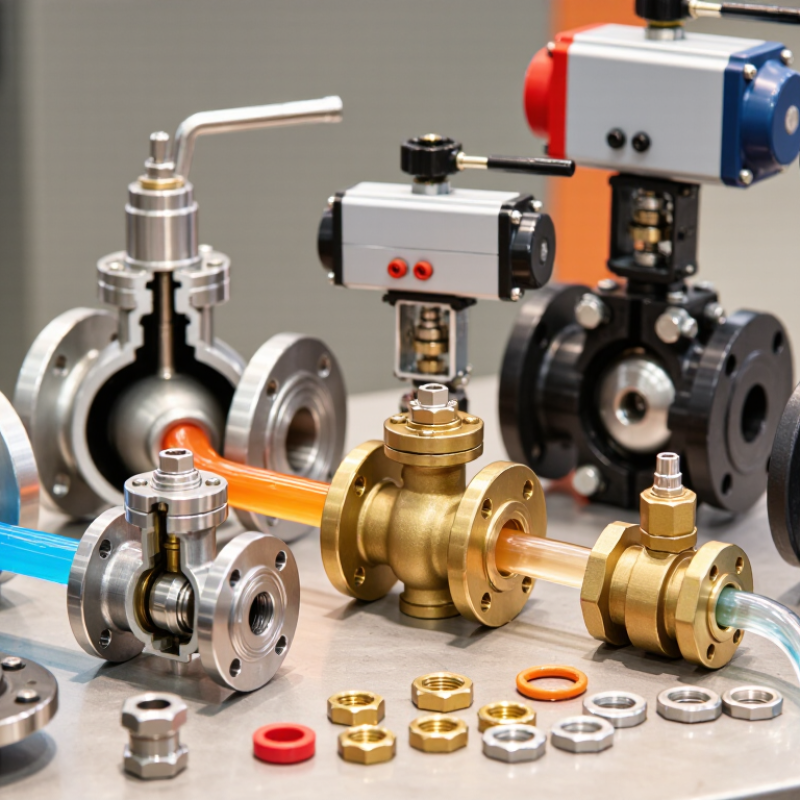
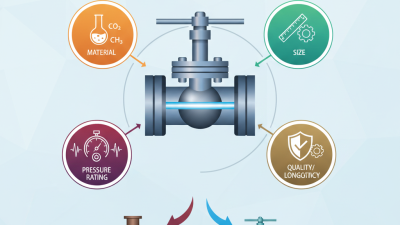
Choosing the right ball valves begins with understanding the real demands of the project, not simply selecting the largest available model. The valve must suit the fluid, operating pressure, temperature range, flow rate, and pipe connection. Water service may tolerate different materials than corrosive chemicals, compressed air, or food-processing fluids. A stainless-steel body, reinforced seat, or fire-safe design may be necessary in demanding environments. Small details matter.
A practical selection process also considers actuation, maintenance access, installation space, and expected operating frequency. Manual handles can work well for occasional isolation, while pneumatic or electric actuators may support frequent, remote, or automated control. Full-port ball valves generally reduce pressure loss, but reduced-port designs can lower cost and conserve space. That trade-off deserves careful review. A checklist alone is not enough.
Reliable decisions should be supported by verified datasheets, pressure-temperature ratings, material certificates, and relevant test records. Supplier experience matters, especially when the valve will operate in a harsh or safety-sensitive system. Check thread types, flange standards, seal compatibility, and replacement-part availability before approval. Field conditions often reveal assumptions that drawings miss. This is where experience helps, although even experienced teams can overlook changing temperatures or unexpected contaminants. Reviewing those risks openly improves confidence and reduces costly rework. The following guide explains how to compare ball valves with practical criteria, helping engineers, contractors, and buyers choose equipment that performs consistently throughout its service life.
Define the Valve’s Role, Media, Pressure, and Temperature Requirements
Choosing a ball valve starts with its role, not its size. Is it isolating equipment, controlling flow, or protecting a pressure boundary? A standard full-port valve suits frequent isolation with low pressure loss. A control application may require a different design, because throttling can cause erosion, noise, and unstable flow. The wrong role creates expensive surprises.
Identify the media in detail. Water, steam, oxygen, hydrocarbons, and abrasive slurry demand different materials and sealing arrangements. FAO AQUASTAT data shows agriculture uses roughly 70% of global freshwater withdrawals, making reliable irrigation isolation especially important. For gas service, fugitive emissions deserve attention. The International Energy Agency’s Global Methane Tracker 2024 estimates that about 75% of fossil-fuel methane emissions could be avoided with existing measures. Stem sealing and shutoff performance are not minor details.
Record maximum and minimum pressure, temperature, cycling frequency, and pressure spikes. Use ASME B16.34 pressure-temperature ratings, then verify shutoff testing against ISO 5208 requirements. Do not size from normal operating pressure alone. A pump start can create a short, damaging surge. Cold temperatures can also change elastomer behavior. A clean specification can still mislead. Solids, poor alignment, and repeated cycling often defeat a valve that looked correct on paper. Field conditions deserve one more review.
Choose the Right Ball Valve Design for Flow Control and Isolation
Choosing the right ball valve design starts with its duty: flow control, isolation, or both. A standard full-port ball valve minimizes pressure loss during open service. It is often the practical choice for pipelines carrying water, gas, or clean process fluids. Reduced-port designs lower cost, but they create higher velocity and pressure loss. Check the required flow coefficient, pressure class, temperature range, and media compatibility before selecting the body material.
Isolation needs a different mindset from throttling. A conventional ball valve works best fully open or fully closed. Frequent throttling can damage seats, increase turbulence, and create unstable flow. For regular control, consider a characterized or V-port design with a suitable actuator. API 6D, ISO 5211, and ISO 15848 provide useful guidance for pipeline construction, actuation, and emissions performance. World Bank water assessments report that non-revenue water can reach 30–50% in some systems. Poor isolation and leakage are not minor details.
Field reviews often reveal oversized valves installed “for safety.” That choice can reduce control accuracy and raise purchase costs. Select the smallest suitable bore without restricting required capacity. For abrasive slurry, inspect seat materials carefully. For high-temperature or hazardous service, verify fire-safe and fugitive-emission requirements. One uncomfortable truth remains: a valve can meet the datasheet and still fail operationally. Maintenance access, cycling frequency, actuator torque, and emergency positioning deserve equal attention. Test the complete assembly, not just the valve body.
Match Valve Materials to Fluid Compatibility and Operating Conditions
How to Choose the Right Ball Valves for Your Project?
Match Valve Materials to Fluid Compatibility and Operating Conditions
Choosing the right ball valve starts with the fluid, not the pipe size. Record the fluid’s chemistry, concentration, temperature, pressure, and possible solids before comparing materials. A valve handling clean water may fail quickly with solvents, acids, or chlorinated cleaning solutions. That failure can appear as swelling, brittleness, leakage, or a seized stem. Small details matter.
For general water and compressed air, brass or stainless steel bodies often provide practical durability. Stainless steel is useful where corrosion resistance and frequent washing matter, but grade selection still requires care. Carbon steel suits many industrial services, yet it needs protection in wet or corrosive environments. Plastic bodies can perform well with compatible chemicals and moderate temperatures. Do not treat “chemical resistant” as universal. Check compatibility data at the actual concentration and temperature.
The seat and seal materials deserve equal attention. PTFE handles many corrosive fluids, while elastomers may react differently to oils, fuels, or solvents. Higher temperatures can soften seals, reduce pressure ratings, and accelerate wear. At low temperatures, some plastics become less forgiving during impact or rapid cycling.
Field reviews often show teams choosing a strong body while overlooking the seal. That is an expensive mistake.
Question catalog ratings when fluid temperature changes sharply during operation. Confirm pressure-temperature charts, cycling frequency, pipe stress, and maintenance access before approval. A small test with the real fluid can reveal assumptions that a table misses.
Verify Size, Connection Type, Actuation, and Performance Ratings
How to Choose the Right Ball Valves for Your Project?
Selecting a ball valve starts with accurate sizing, not guesswork. Check the pipe’s nominal diameter, wall thickness, flow rate, and pressure drop. An oversized valve may reduce control accuracy and increase cost. An undersized valve can restrict flow and create damaging turbulence. Measure twice. Site conditions often differ from drawings.
Connection type must match the piping system and maintenance plan. Threaded ends suit smaller lines and simpler service work. Flanged ends support larger systems, frequent inspection, and higher mechanical loads. Welded connections provide a compact, permanent joint, but installation requires qualified procedures. Confirm the valve materials against the fluid, temperature, and corrosion risk. A stainless body is not automatically suitable for every chemical.
Actuation also affects reliability and operating speed. Manual handles work well for accessible, low-cycle lines. Pneumatic or electric actuators may be better for remote, frequent, or emergency operation. Check available air pressure, power supply, fail position, and torque requirements. Do not rely only on nominal pressure ratings. Review the full performance data, including temperature limits, shutoff class, cycle life, and leakage criteria. Testing under real operating conditions is valuable. A valve that performs well in clean water may behave differently with abrasive solids or viscous fluids. That assumption fails. Record the selection basis, inspection results, and any uncertainty before approval.
Compare Maintenance Needs, Safety Features, Cost, and Service Life
Choosing a ball valve starts with the service, not the purchase price. Check pressure, temperature, fluid chemistry, cycling frequency, and required tightness. In real plant maintenance, a valve that operates smoothly during commissioning may fail early when solids enter the seat area. For pneumatic systems, U.S. Department of Energy guidance reports that leaks can waste 20–30% of compressor output. Poor isolation can therefore increase both maintenance work and energy costs.
Safety features deserve close attention. For flammable service, review fire-tested designs under API 607 or API 6FA. For toxic or volatile fluids, ISO 15848-1 fugitive-emission testing provides a stronger comparison than general marketing claims. Anti-static devices, blowout-proof stems, cavity-pressure relief, and a fail-safe actuator can reduce operational risk. Double block and bleed may improve isolation, but it also adds purchase cost and more inspection points. More protection is not automatically better. The process hazard decides.
Tips: Build a lifecycle-cost sheet. Include installation, actuator energy, inspection hours, spare seats, downtime, and disposal. Ask for test certificates and cycle-test evidence. Compare the same pressure class and materials. A low-cost valve can be reasonable for clean, infrequent service. It may be a poor choice for abrasive slurry or daily cycling. I would also question optimistic service-life promises; actual life depends heavily on contamination, torque, and operator practice. Review the first six months of field data before standardizing one design.
How to Choose the Right Ball Valves for Your Project?
Comparison of floating soft-seated, trunnion-mounted soft-seated, and metal-seated trunnion ball valves across maintenance, safety suitability, cost efficiency, and service life.
The chart uses a comparative engineering index from 0 to 100, where a higher score is better. The index reflects typical industry characteristics: floating valves generally offer lower purchase cost, trunnion-mounted valves provide lower operating torque and stronger isolation options, and metal-seated trunnion valves are better suited to high-temperature, abrasive, or severe-service applications. Actual maintenance intervals and service life depend on pressure, temperature, media, cycling frequency, materials, installation, and maintenance practices.
Cepex is the brand for the fluid handling market belonging to the Fluidra group. One of the leading european manufacturer of valves and fittings in thermoplastic materials.
Dedicated to the swimming pool, irrigation and industrial markets, we distribute our products worldwide with the Fluidra commercial network and presence in 46 countries with 136 sales branches.
Your data will be processed by CEPEX S.A., with address at C. Lluís Companys, 51-53, 08400, Granollers (Barcelona), and C.I.F. nº A-08928707, to send you communications about our products based on your interests. You can consult more information about the processing of your data and how to exercise your rights as described in the Privacy Policy.
Technical cookies are strictly necessary for our website to work and you can navigate through it. These types of cookies are those that, for example, allow us to identify you, give you access to certain restricted parts of the page if necessary, or remember different options or services already selected by you, such as your privacy preferences. Therefore, they are activated by default, your authorization not being necessary in this regard. Through the configuration of your browser, you can block or alert the presence of this type of cookies, although such blocking will affect the proper functioning of the different functionalities of our website.
The analysis cookies allow us to study the navigation of the users of our website in general (for example, which sections of the page are the most visited, which services are used most and if they work correctly, etc.). From the statistical information on navigation on our website, we can improve both the operation of the page itself and the different services it offers. Therefore, these cookies do not have an advertising purpose, but only serve to make our website work better, adapting to our users in general. By activating them you will contribute to this continuous improvement. You can enable or disable these cookies by checking the corresponding box, being disabled by default.
Functionality cookies allow us to remember your preferences, to personalize certain characteristics and general options of our website, every time you access it (for example, the language in which the information is presented to you, the sections marked as favorites, your browser type, etc.) Therefore, this type of cookies does not have an advertising purpose, but by activating them you will improve the functionality of the website (for example, adapting to your type of browser) and the customization of it based on your preferences (for example, by presenting the information in the language that you have chosen in previous occasions), which will contribute to the ease, usability and comfort of our page during your navigation. You can enable or disable these cookies by checking the corresponding box, being disabled by default.
Advertising cookies allow us to manage the advertising spaces included in our website based on criteria such as the content shown or the frequency in which the ads are displayed. For example, if you have been shown the same ad several times on our website, and you have not shown a personal interest by clicking on it, it will not appear again. In summary, by activating this type of cookies, the advertising shown on our website will be more useful and diverse, and less repetitive. You can enable or disable these cookies by checking the corresponding box, being disabled by default.
Behavioral advertising cookies allow us to obtain information based on the observation of your browsing habits and behaviors on the web, in order to show you advertising content that best suits your personal tastes and interests. To understand it in a very simple way, we will give you a fictitious example: if your last searches on the web were related to suspense literature, we would show you advertising about suspense books. Therefore, activating this type of cookies, the advertising that we show you on our website will not be generic, but will be oriented to your searches, tastes and interests, therefore adjusting exclusively to you. You can enable or disable these cookies by checking the corresponding box, being disabled by default. To understand it in a very simple way, we will give you a fictitious example: if your last searches on the web were related to suspense literature, we would show you advertising about suspense books. Therefore, activating this type of cookies, the advertising that we show you on our website will not be generic, but will be oriented to your searches, tastes and interests, therefore adjusting exclusively to you. You can enable or disable these cookies by checking the corresponding box, being disabled by default.
We use our own and third-party cookies to ensure the proper functioning of the website and to analyse our services, improve your experience on our website and show you advertisements related to your interests according to profiling based on your browsing habits (e.g. websites visited). You can accept all cookies by clicking "ACCEPT" or set or reject them by clicking here. If you would like to know more about the use of cookies, please see our COOKIE POLICY.