
Choosing the right plastic valves for global sourcing requires more than comparing unit prices. Buyers must match valve material, pressure rating, temperature range, and chemical resistance with the actual service conditions. A valve that performs well in clean water may fail quickly with acids, solvents, abrasive slurries, or repeated thermal cycling. The details matter.
Dr. Michael J. Ellison, a polymer-fluid-systems engineer, states, “A plastic valve is only reliable when its material, design, and installation environment agree.” This principle deserves attention during supplier evaluation. Check whether the body uses PVC, CPVC, PP, PVDF, or another engineered polymer. Review seals, connection standards, operating torque, test records, and replacement availability. Ask for production samples, not only polished catalogs. Look closely at threads and molded surfaces. Small flaws can become expensive leaks.
Global sourcing adds further uncertainty. Suppliers may use different pressure definitions, testing methods, or dimensional tolerances. Confirm standards before approving a purchase order. Request traceability documents, inspection reports, and clear warranty terms. A low-cost quotation can hide inconsistent batches or difficult after-sales support. That mistake is common.
Still, no checklist removes every risk. Field conditions change, and forecasts are often optimistic. A sensible sourcing plan includes pilot orders, third-party inspection, and documented acceptance criteria. It also considers shipping damage, local inventory, and technical communication. The best plastic valves are not simply the cheapest products. They are dependable components supported by verified data, responsive suppliers, and realistic engineering judgment.
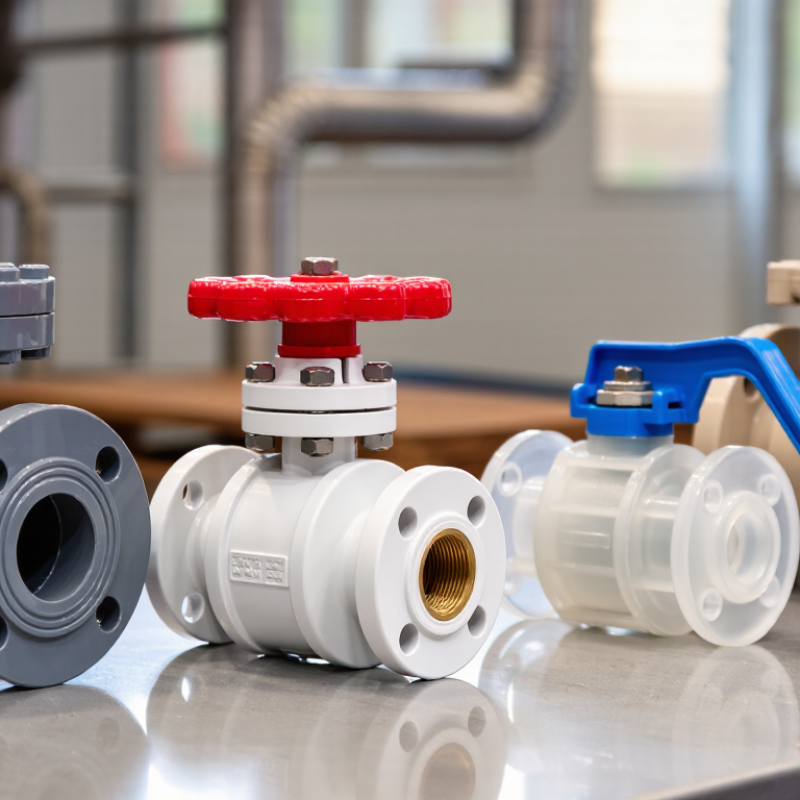
How to Choose the Right Plastic Valves for Global Sourcing?
Temperature changes everything. PVC valves suit many water and chemical services from 0°C to 60°C. They are practical for moderate environments, but freezing conditions still require careful review. CPVC extends the range to 93°C, making it more suitable for warmer process lines. PVDF can handle temperatures up to 140°C when the application and pressure conditions support it.
Do not guess. Measure the process.
Check the normal temperature, peak temperature, pressure, and cycling frequency. A valve exposed to repeated heating and cooling may fail sooner than a steady-temperature application. Chemical compatibility also matters. The same fluid can behave differently at high temperatures. I have seen sourcing teams select a material from a temperature chart alone, then discover that pressure ratings changed at operating heat. That shortcut is risky.
For global sourcing, request temperature-pressure curves, material certificates, dimensional drawings, and documented test results. Confirm whether ratings apply to the complete valve, not only the plastic body. Ask suppliers how they control batches and identify production lots. A small safety margin is sensible, though it should not replace engineering review. Country-specific standards, installation practices, and transport conditions may also affect selection. A valve that looks correct on paper can still disappoint after long shipping, storage, or thermal cycling. Recheck the assumptions before approving the purchase.
| Valve Material | Typical Continuous Service Temperature | Primary Strengths | Common Chemical Compatibility | Typical Applications | Key Limitations | Global Sourcing Verification Points |
|---|---|---|---|---|---|---|
| PVC | Approximately 0–60°C | Cost-effective, lightweight, corrosion-resistant, easy to install, and widely available in industrial and building-service valve designs. | Generally suitable for many dilute acids, alkalis, salts, and water-based fluids. Compatibility depends on concentration, temperature, and exposure time. | Cold-water systems, irrigation, water treatment, chemical drainage, aquaculture, and low-temperature process lines. | Not suitable for high-temperature service, many aromatic solvents, chlorinated solvents, and some hydrocarbons. Mechanical strength and pressure capability decrease as temperature increases. | Confirm the exact temperature range, pressure rating at operating temperature, connection standard, seal material, and dimensional compliance before ordering. |
| CPVC | Approximately 0–93°C | Higher temperature capability than PVC, good corrosion resistance, low thermal conductivity, and suitability for hot-water applications. | Generally compatible with many acids, alkalis, salts, and aqueous chemicals. Compatibility should be checked for concentrated chemicals and organic solvents. | Hot-water distribution, industrial water treatment, chemical processing, fire-protection piping, and moderately heated process fluids. | Pressure ratings are temperature-dependent. Certain solvents, hydrocarbons, and highly concentrated chemicals may cause swelling, softening, or stress cracking. | Verify the maximum continuous temperature, pressure derating curve, joining method, certification requirements, gasket compound, and local pipe or flange standards. |
| PVDF | Approximately −20–140°C, depending on design | Excellent chemical resistance, high purity, strong UV resistance, good abrasion resistance, and reliable performance across a broad temperature range. | Often selected for aggressive acids, halogens, oxidizing chemicals, ultrapure water, and many solvents. Final compatibility must be confirmed against the specific chemical and concentration. | Semiconductor processing, pharmaceutical systems, high-purity water, chemical manufacturing, laboratory piping, and corrosive-fluid handling. | Higher material and component cost than PVC or CPVC. Mechanical pressure capacity may be lower at elevated temperatures, and some high-temperature or strongly alkaline conditions require specific compatibility review. | Request chemical-compatibility data, temperature-pressure curves, extractables or purity documentation where applicable, weld or connection requirements, and traceability records. |
| PP | Typically up to approximately 80–100°C | Good resistance to many acids, alkalis, and salts; low density; and good performance in many industrial chemical environments. | Commonly used with aqueous acids, alkalis, salts, and selected organic chemicals. Strong oxidizers and some solvents require additional evaluation. | Chemical drainage, wastewater treatment, plating systems, laboratory services, and industrial process piping. | Lower resistance to UV exposure than some fluoropolymers unless stabilized or protected. Performance can be affected by oxidizing chemicals and low-temperature impact conditions. | Check UV stabilization, operating temperature, pressure derating, welding or socket-fusion requirements, and the applicable connection dimensions. |
| Valve Seal Material | Must match the complete service range | Seals determine leakage resistance, chemical compatibility, cycling life, and the practical service limit of the valve assembly. | Common options include EPDM, FKM, PTFE, and other application-specific elastomers or thermoplastics. No single seal material is universally compatible. | Water, chemicals, gases, high-purity fluids, and temperature-sensitive process services. | A chemically compatible body material can still fail if the seal swells, hardens, cracks, or loses elasticity in the operating fluid. | Specify the fluid, concentration, temperature, pressure, cycling frequency, and cleanliness requirement. Obtain a written seal compatibility confirmation for critical services. |
| Pressure and Temperature Rating | Always evaluated together | Provides the actual safe operating envelope for the selected valve, rather than relying on material temperature alone. | Chemical exposure can reduce mechanical strength and may require a more conservative operating limit. | All pressurized liquid or gas systems, including global replacement and maintenance projects. | A valve rated at a stated pressure at room temperature may have a significantly lower allowable pressure at elevated temperature. | Request pressure-temperature curves, hydrostatic or functional test records, end-connection ratings, design standard, and safety factor. Do not use material temperature limits as the valve pressure rating. |
| Global Compliance and Documentation | Project- and market-dependent | Reduces installation risk, customs delays, replacement difficulties, and uncertainty during quality inspection. | Documentation should identify wetted materials and any restrictions relevant to the intended fluid. | Export projects, multi-country installations, OEM replacement, industrial plants, and regulated facilities. | Equivalent nominal sizes may use different outside diameters, pressure classes, flange dimensions, or thread forms in different markets. | Confirm drawings, dimensional tolerances, material certificates, batch traceability, inspection plans, packaging, marking, spare-part availability, and the required regional or industry standards. |
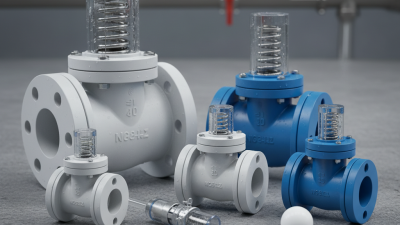
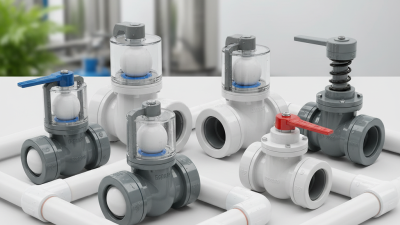

Cepex is the brand for the fluid handling market belonging to the Fluidra group. One of the leading european manufacturer of valves and fittings in thermoplastic materials.
Dedicated to the swimming pool, irrigation and industrial markets, we distribute our products worldwide with the Fluidra commercial network and presence in 46 countries with 136 sales branches.


