How to Choose the Right Butterfly Valves?
FLUID HANDLING EXPERTS

Blog, all our news

How to Choose the Right Butterfly Valves?

Choosing the right butterfly valves is not simply a matter of matching pipe size. The valve must suit the medium, pressure, temperature, flow pattern, and operating frequency. Water, steam, chemicals, and abrasive slurries can demand completely different materials and sealing designs. A valve that performs well in a cooling-water line may fail quickly in a corrosive process.

Small details matter. Consider the body material, disc construction, seat compound, shaft design, and connection type. Wafer, lug, and flanged configurations each fit different installation conditions. Manual handles work for occasional adjustment, while pneumatic or electric actuators support frequent and automated operation. Space around the pipeline also matters, especially when maintenance teams need to remove the valve without disturbing nearby equipment.

Reliable selection combines field experience with verified technical data. Review pressure-temperature ratings, leakage requirements, compatible media, and applicable industry standards before purchasing. Ask manufacturers for test records, product drawings, and service recommendations. Do not rely on price alone. A cheaper valve may create higher costs through leakage, downtime, or premature replacement.

Even experienced teams get this wrong. I have seen specifications focus heavily on diameter while overlooking the seat material or actuator torque. That assumption fails. Actual operating conditions should guide the decision, not a familiar product name. The best butterfly valves provide dependable isolation or control while remaining practical to install, inspect, and replace. This guide explains the main selection factors, common mistakes, and questions buyers should ask before approving a valve for service.
How to Choose the Right Butterfly Valves?

What Is a Butterfly Valve and How Does It Work?

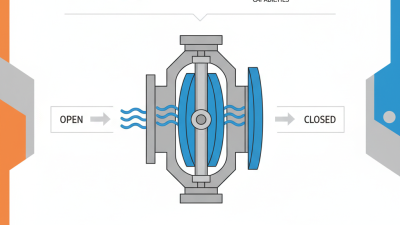
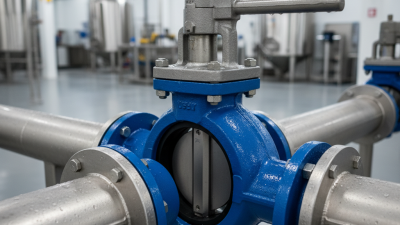
A butterfly valve controls fluid flow with a rotating disc inside a pipe. The disc connects to a stem, which turns through roughly 90 degrees. When the disc faces the flow, the passage remains open. When it turns across the pipe, flow is restricted or stopped.

It is simple. Yet, its behavior depends on installation details. Compared with a gate valve, a butterfly valve is lighter and requires less space. In practical inspections, I check whether the disc can rotate freely without touching the pipe wall. Misalignment can damage the seat and create leakage. The valve may also cause pressure loss when partly open.

Choosing the right butterfly valve requires more than matching the pipe diameter. The disc and body materials must suit the fluid, temperature, and pressure. Clean water may allow resilient seating materials, while abrasive or corrosive media demand more careful selection. Do not guess. Review verified pressure ratings and material compatibility data.

The sealing method also affects performance. A resilient seat usually provides reliable shutoff for common services. Metal-seated designs can tolerate harsher conditions but may require tighter installation control. Manual handles suit smaller lines, while pneumatic or electric actuators support frequent operation. I once saw a correctly sized valve leak because the flange faces were uneven. That mistake showed me that sizing alone cannot guarantee dependable service.
Which Butterfly Valve Design Best Fits Your Application?

Choosing the right butterfly valve design begins with the application, not the pipe size. The right design must match the medium, pressure, temperature, flow pattern, and operating frequency. A concentric butterfly valve works well in water, air, and other moderate-service systems. Its simple structure keeps costs and maintenance manageable. Keep it simple when conditions allow. However, abrasive particles, high temperatures, or frequent cycling can quickly expose its limits.

For demanding service, a double-offset valve reduces disc contact with the seat during opening. This lowers friction and can extend service life. A triple-offset design uses a cam-like sealing action and often suits high-temperature, high-pressure applications. Metal seats may handle heat better than elastomers, but they require careful installation and accurate alignment. Resilient seats usually provide tighter shutoff at lower cost. The trade-off is temperature and chemical compatibility.

Connection style also affects the choice. Wafer valves fit between flanges and save space, while lug-style bodies support more independent installation work. Check the required shutoff rating and applicable standards, such as API 609 or EN 593. Confirm the actuator torque under real operating conditions, not only catalog values. Field experience shows that undersized actuators and poorly supported piping cause avoidable failures. A clean selection chart can still mislead. Review start-up conditions, solids content, emergency operation, and access for maintenance. One detail is often missed: a valve that works perfectly in steady flow may perform poorly during rapid cycling.

How to Select the Right Valve Size and Pressure Rating?

How to Choose the Right Butterfly Valves?

How to Select the Right Valve Size and Pressure Rating?

Selecting a butterfly valve starts with the actual pipeline, not the old purchase record. Measure the line. Do not guess. Check the pipe’s internal diameter, flow rate, fluid temperature, and required velocity. A valve matching the pipe size may still create excessive pressure loss. For control service, review the valve’s operating range and avoid running it nearly closed for long periods. That condition can increase turbulence, vibration, and seat wear.

Pressure rating requires more than comparing one pressure number. Confirm the maximum working pressure at the highest operating temperature. Review the body, disc, shaft, seat, and flange ratings together. The weakest component controls the safe limit. Consider pressure surges during pump starting, rapid closure, or an unexpected line blockage. Vacuum conditions also matter, especially when draining or cooling a pipeline. A valve rated for positive pressure may need separate vacuum verification.

In field inspections, incorrect flange alignment often causes more trouble than incorrect valve sizing. Leave enough space for the disc to rotate without striking nearby equipment. Check whether the valve must provide bubble-tight shutoff or only regulate flow. I have seen specifications omit this detail. That omission can change the seat material and pressure class. Verify calculations against current standards, supplier test data, and the real operating cycle. Then question the selection once more. Specs can be incomplete.

Which Materials Suit Your Fluid, Temperature, and Environment?

How to Choose the Right Butterfly Valves?

Material selection should begin with the fluid, not the valve price. For clean water, ductile iron bodies with EPDM liners often provide practical corrosion resistance. Stainless steel suits saltwater, chemicals, and humid installations better. However, “stainless” is not automatically safe. Chlorides can still trigger pitting, especially near welds and stagnant areas. The NACE MR0175/ISO 15156 standard requires careful material controls for sour environments containing hydrogen sulfide. Follow it when gas service becomes hazardous.

Temperature changes the decision quickly. EPDM commonly supports hot water, while PTFE handles stronger chemicals and wider temperature ranges. Buna-N may suit oils, but it can swell in certain solvents. Check the manufacturer’s pressure-temperature chart at the actual operating temperature. The U.S. Department of Energy reports that pumping systems may consume 25–50% of industrial electricity. A poorly selected liner can increase friction, leakage, and maintenance energy. Small losses accumulate.

Tips: Write down fluid concentration, temperature, pressure, solids, and cycling frequency. Then compare the body, disc, stem, and seat separately. Do not judge compatibility from the body material alone. In my experience, field conditions often differ from design sheets. A valve exposed to sunlight, salt spray, or abrasive particles may fail earlier than laboratory data suggests. Test a sample when the fluid is unusual, and review ISO 5208 leakage requirements before approval. There is no universal best material. Some choices remain uncertain until real operating data appears.

How to Choose the Right Butterfly Valves?

Typical continuous temperature ranges for common butterfly valve seat and sealing materials. Actual limits depend on compound formulation, pressure, valve design, and chemical concentration.

Selection guidance

  • EPDM: Suitable for water, hot water, steam in suitable designs, and many dilute chemicals; avoid petroleum-based oils.
  • NBR: Commonly selected for mineral oils, fuels, and hydraulic fluids; temperature and ozone resistance are more limited than FKM.
  • FKM: Performs well with many oils, fuels, and elevated-temperature applications; verify compatibility with hot water, steam, and strong chemicals.
  • PTFE: Offers broad chemical resistance and a wide temperature range, but cold-flow and pressure limitations must be checked.
  • Metal-seated designs: May handle higher temperatures and abrasive service, but the alloy, leakage class, and corrosion environment are critical.

Temperature values are indicative engineering ranges in °C, not guaranteed valve ratings. Always confirm the manufacturer’s pressure-temperature rating and chemical compatibility data.

How to Compare Actuation, Standards, Maintenance, and Cost?

Choosing the right butterfly valve requires more than matching pipe size. Actuation, standards, maintenance, and cost must work together. Manual handles suit small lines with occasional operation. Gear operators provide better control on larger valves. Pneumatic actuators respond quickly, while electric actuators offer precise positioning. Confirm the available power, control signal, fail-safe needs, and operating frequency before selecting an actuator.

Standards protect reliability, but certificates alone do not guarantee performance. Check pressure ratings, temperature limits, material compatibility, and testing requirements. The valve body, disc, seat, and shaft should match the fluid and pipeline environment. A valve for clean water may fail early in abrasive service. Maintenance access matters too. Leave space around the actuator and inspect seals, bolts, and alignment during scheduled shutdowns. In practice, poor alignment causes more trouble than many buyers expect.

Tips

Compare total ownership cost, not only the purchase price. Include actuators, wiring, installation, spare seals, inspection time, and energy use. Ask for test records and clear maintenance instructions. I have seen inexpensive valves create costly delays because replacement parts were unavailable. That lesson is easy to overlook. Select standard components where possible, but do not force a standard choice into an unusual service. When uncertain, document the assumptions and request a qualified engineer’s review. Safety should remain measurable, not assumed.

How to Choose the Right Butterfly Valves? — How to Compare Actuation, Standards, Maintenance, and Cost?

A practical comparison of common butterfly-valve actuation options for water, HVAC, utility, and general industrial service.

Comparison Dimension Manual Lever or Handwheel Pneumatic Actuator Electric Actuator Hydraulic Actuator
Typical Applications Small- to medium-size isolation valves in water, HVAC, irrigation, and utility piping. Frequent cycling, process automation, hygienic service, and installations where compressed air is already available. Remote isolation, modulating control, water treatment, HVAC, and locations without a compressed-air system. Large or high-torque valves, emergency shutdown systems, and applications requiring high force in compact equipment.
Operating Principle Valve shaft is turned directly by a lever or through a manual gearbox. Compressed air moves a piston or diaphragm to rotate the valve shaft. An electric motor and gearbox rotate the valve shaft; limit switches or position sensors provide feedback. Pressurized hydraulic fluid drives a cylinder or rotary actuator to operate the valve.
Control Capability Manual open/close positioning; limited repeatability for throttling. Suitable for on/off control and modulating control when fitted with a positioner. Suitable for on/off control and accurate modulating control with a compatible control signal. Suitable for on/off, modulating, and high-force control applications.
Typical Operating Speed Usually seconds to minutes, depending on valve size and operator effort. Fast; commonly about 0.5–10 seconds for a 90-degree stroke, depending on air volume and accessories. Moderate; commonly about 10–120 seconds for a 90-degree stroke, depending on torque and gearing. Fast to moderate; commonly about 1–20 seconds, depending on hydraulic flow and system design.
Fail-Safe Options None unless a separate mechanical or counterweight system is provided. Spring-return actuators can provide fail-open or fail-closed action when air or power is lost. Usually stays in its last position unless equipped with a battery, spring-return unit, or emergency power system. Can provide fail-open or fail-closed action using accumulators, springs, or dedicated hydraulic control circuits.
Energy Requirement No external energy for normal operation. Requires a compressor, air treatment, tubing, and control valves; compressed-air leakage can increase energy use. Requires electrical power and suitable wiring; energy is generally used only during movement or position correction. Requires a hydraulic power unit, fluid reservoir, piping, filtration, and pressure control equipment.
Installation Complexity ★☆☆☆☆ ★★★☆☆ ★★★☆☆ ★★★★★
Maintenance Requirements Inspect the stem, gearbox, fasteners, and valve operation; lubrication may be required for gearboxes. Check air quality, filter-regulator-lubricator equipment, tubing, solenoid valves, seals, and air leaks. Inspect electrical connections, limit switches, torque settings, enclosure seals, and gear lubrication. Check fluid cleanliness, pressure, hoses, fittings, filters, cylinders, seals, and potential leakage.
Maintenance Frequency Usually low; inspection is commonly aligned with scheduled plant maintenance. Usually moderate to high in continuous-cycle service because seals and air components are wear items. Usually moderate; electrical and mechanical inspection is required, especially in outdoor or corrosive environments. Usually high because hydraulic-fluid condition, filtration, leakage, and accumulator safety require regular attention.
Indicative Initial Cost Lowest: typically the reference cost for the same valve size and material. Medium to high: actuator, solenoid valve, air preparation, tubing, and compressor capacity may be required. Medium to high: actuator, controls, cabling, feedback devices, and possible emergency power equipment may be required. Highest: actuator, hydraulic power unit, control valves, piping, filtration, and safety equipment add cost.
Relative Lifecycle Cost Low where operation is infrequent and local access is acceptable. Low to medium where compressed air already exists; higher where a new air system is needed. Medium; often attractive where electrical infrastructure and remote control are already available. High unless high torque, compact force, or emergency performance justifies the additional system cost.
Environmental Considerations Generally simple and low-emission during operation; operator access may be required. Potential noise from exhaust air and energy losses from leaks; suitable silencers can reduce noise. Requires appropriate enclosure and electrical classification for moisture, dust, or hazardous areas. Hydraulic-fluid leakage can create environmental and housekeeping risks; fluid selection is important.
Recommended Valve Type Wafer or lug butterfly valves with a lever or gearbox for isolation service. Wafer, lug, or double-flanged butterfly valves with compatible pneumatic mounting and torque capacity. Wafer, lug, or double-flanged valves with electric actuator sizing based on breakaway, running, and seating torque. Heavy-duty double-flanged or high-performance butterfly valves where high shaft torque is required.
Key Selection Check Confirm operator torque, access space, valve size, operating frequency, and required locking arrangement. Confirm available air pressure, air volume, fail position, cycle time, valve torque, and control accessories. Confirm voltage, duty cycle, environmental protection, control signal, emergency operation, and actuator torque. Confirm hydraulic pressure, available flow, fluid compatibility, fail-safe requirement, and system redundancy.
Relevant Standards to Review Valve design and testing commonly reference API 609, EN 593, ISO 10631, ISO 5208, and MSS SP-67, depending on service and project requirements. Face-to-face dimensions may reference ISO 5752 or EN 558. Flange compatibility may reference ASME B16.5, ASME B16.47, EN 1092-1, or another specified flange standard. Actuator-to-valve mounting commonly uses ISO 5211. Electrical enclosures may require an appropriate IEC 60529 IP rating, while hazardous-area installations require the applicable local classification and certification.
Best Overall Choice When The valve is operated occasionally, local access is available, and low acquisition cost is the priority. Fast cycling, fail-safe action, and existing compressed-air infrastructure are important. Remote control, accurate positioning, and readily available electrical power are important. Very high torque, rapid emergency operation, or specialized shutdown performance is required.
Note: Cost, speed, torque, service life, and maintenance intervals are indicative engineering comparisons rather than guaranteed values. Final selection should be based on valve size, pressure class, temperature, fluid compatibility, shutoff requirements, cycle frequency, environmental conditions, and the applicable project standards.
Copyright 2025 Fluidra S.A. | Created by BCM Marketing Agencia Privacy Policy Legal note | Cookie policy |

Technical cookies are strictly necessary for our website to work and you can navigate through it. These types of cookies are those that, for example, allow us to identify you, give you access to certain restricted parts of the page if necessary, or remember different options or services already selected by you, such as your privacy preferences. Therefore, they are activated by default, your authorization not being necessary in this regard. Through the configuration of your browser, you can block or alert the presence of this type of cookies, although such blocking will affect the proper functioning of the different functionalities of our website.


The analysis cookies allow us to study the navigation of the users of our website in general (for example, which sections of the page are the most visited, which services are used most and if they work correctly, etc.). From the statistical information on navigation on our website, we can improve both the operation of the page itself and the different services it offers. Therefore, these cookies do not have an advertising purpose, but only serve to make our website work better, adapting to our users in general. By activating them you will contribute to this continuous improvement. You can enable or disable these cookies by checking the corresponding box, being disabled by default.


Functionality cookies allow us to remember your preferences, to personalize certain characteristics and general options of our website, every time you access it (for example, the language in which the information is presented to you, the sections marked as favorites, your browser type, etc.) Therefore, this type of cookies does not have an advertising purpose, but by activating them you will improve the functionality of the website (for example, adapting to your type of browser) and the customization of it based on your preferences (for example, by presenting the information in the language that you have chosen in previous occasions), which will contribute to the ease, usability and comfort of our page during your navigation. You can enable or disable these cookies by checking the corresponding box, being disabled by default.


Advertising cookies allow us to manage the advertising spaces included in our website based on criteria such as the content shown or the frequency in which the ads are displayed. For example, if you have been shown the same ad several times on our website, and you have not shown a personal interest by clicking on it, it will not appear again. In summary, by activating this type of cookies, the advertising shown on our website will be more useful and diverse, and less repetitive. You can enable or disable these cookies by checking the corresponding box, being disabled by default.


Behavioral advertising cookies allow us to obtain information based on the observation of your browsing habits and behaviors on the web, in order to show you advertising content that best suits your personal tastes and interests. To understand it in a very simple way, we will give you a fictitious example: if your last searches on the web were related to suspense literature, we would show you advertising about suspense books. Therefore, activating this type of cookies, the advertising that we show you on our website will not be generic, but will be oriented to your searches, tastes and interests, therefore adjusting exclusively to you. You can enable or disable these cookies by checking the corresponding box, being disabled by default.
To understand it in a very simple way, we will give you a fictitious example: if your last searches on the web were related to suspense literature, we would show you advertising about suspense books. Therefore, activating this type of cookies, the advertising that we show you on our website will not be generic, but will be oriented to your searches, tastes and interests, therefore adjusting exclusively to you. You can enable or disable these cookies by checking the corresponding box, being disabled by default.

SAVE

We use our own and third-party cookies to ensure the proper functioning of the website and to analyse our services, improve your experience on our website and show you advertisements related to your interests according to profiling based on your browsing habits (e.g. websites visited). You can accept all cookies by clicking "ACCEPT" or set or reject them by clicking here. If you would like to know more about the use of cookies, please see our COOKIE POLICY.


ACCEPT ALL
Reject no essentials