What Are the Different Types of Valves?
FLUID HANDLING EXPERTS

Blog, all our news

What Are the Different Types of Valves?

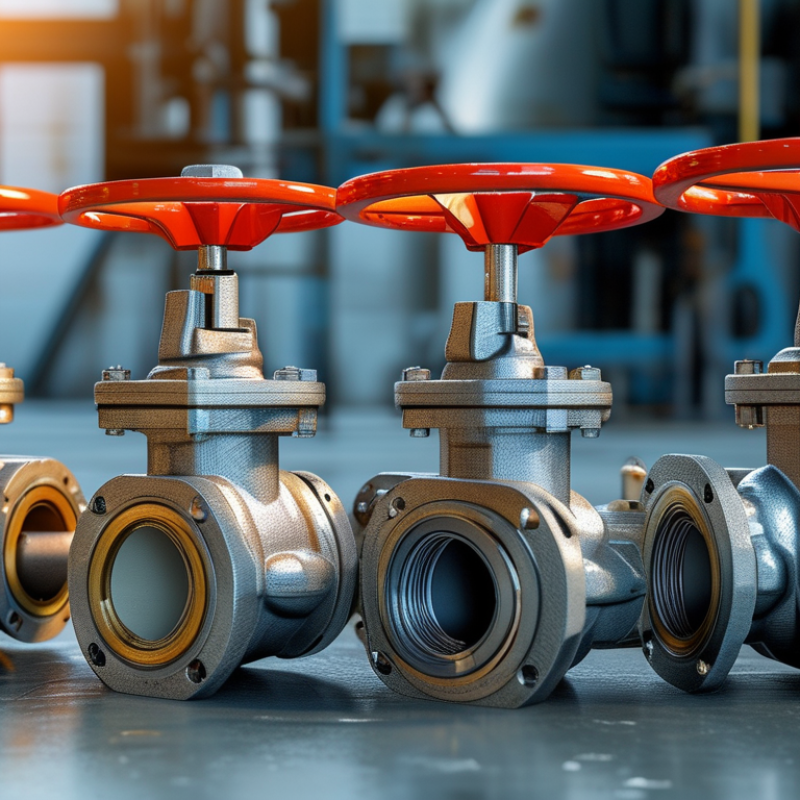
Valves rarely attract attention until a process stops, leaks, or becomes unsafe. Yet these components regulate pressure, isolate equipment, control flow, and protect entire systems. The different types of valves include gate, globe, ball, butterfly, check, diaphragm, control, and pressure-relief designs. Each type creates a different balance between shutoff strength, flow control, maintenance effort, and operating speed.

The market reflects their industrial importance. Grand View Research reported that the global industrial valves market was valued at approximately USD 78.2 billion in 2023. Its report also projects continued growth through 2030, supported by water infrastructure, energy projects, chemical processing, and manufacturing. Fortune Business Insights estimated the market at USD 77.64 billion in 2023 and forecast substantial expansion by 2032. The estimates differ slightly. That difference matters. Market forecasts are useful indicators, not exact field measurements.

Engineering standards provide a stronger practical reference. ASME B16.34 addresses valve pressure-temperature ratings, materials, and testing requirements. API 600 covers steel gate valves, while API 6D applies to pipeline and piping valves. These standards help engineers compare designs beyond appearance or purchase price. A stainless-steel ball valve may isolate a line quickly, while a globe valve can provide more precise throttling. A butterfly valve may save space in a large water line. A check valve can prevent reverse flow without an operator.

Small details can decide performance. Seat materials, actuator selection, corrosion resistance, and pressure class all deserve attention. No single valve suits every service. That is the part many simplified guides miss. The following overview examines how each valve works, where it performs best, and where its limitations become visible.
What Are the Different Types of Valves?

Valve Basics and Their Role in Fluid Control

What Are the Different Types of Valves?

Valves are the working gates in a fluid system. They start, stop, direct, or reduce the movement of liquids and gases. This control protects equipment, manages pressure, and supports safer operation. In real systems, valve selection depends on fluid type, temperature, pressure, and flow speed. Small errors can create noise, leakage, or costly downtime. Not every valve suits every line.

Gate valves provide a clear, straight path and work well for full isolation. Ball valves open quickly with a quarter turn. Globe valves offer more precise flow adjustment, though they may create greater resistance. Check valves prevent reverse flow without constant manual control. Butterfly valves are lightweight and practical for larger pipes. Needle valves support fine adjustments in smaller lines.

A tidy diagram can hide a difficult reality: fluids rarely behave perfectly. Sediment, vibration, and sudden pressure changes can alter performance.

Tips: Confirm the normal and maximum pressure before installation. Check whether the valve materials match the fluid. Install flow-direction arrows correctly. Test the valve slowly and watch for unusual sound or movement. Keep inspection records, even when everything appears normal. Field checks often reveal problems that drawings miss. A qualified technician should verify critical systems. Valve basics look simple, but reliable fluid control requires careful judgment.
Main Valve Types and How They Operate

What Are the Different Types of Valves?

Main Valve Types and How They Operate

Valves control, isolate, or redirect fluid inside pipelines. Their design affects pressure loss, maintenance, safety, and service life.

A gate valve lifts a flat disc away from the flow path. It works well for full open or full closed service, but it is unsuitable for frequent throttling. A globe valve uses a movable plug and seat. This arrangement provides accurate flow regulation, although it creates higher pressure loss.

Ball valves rotate a bored sphere through 90 degrees. They open quickly and seal tightly. Butterfly valves turn a disc around a central shaft. They are lighter and often fit large, low-pressure lines.

Check valves operate automatically. Flow pressure opens the disc, while reverse flow closes it. Simple in appearance.

Control valves respond to a signal from an actuator or process controller. They adjust continuously, not merely open or shut. In practical commissioning, engineers check cavitation, flashing, vibration, and actuator response. A valve that looks correctly sized may still perform poorly. That is the uncomfortable part.

The International Energy Agency reported that industry used about 37% of global final energy in 2022. Efficient flow control therefore matters beyond maintenance budgets. The U.S. Department of Energy also identifies process efficiency as a major industrial decarbonization pathway. Standards such as ISO 5208 and ASME B16.34 support pressure, leakage, and testing decisions. Yet standards cannot replace site-specific judgment. Temperature, fluid chemistry, cycling frequency, and failure consequences must guide the final selection.

Valve Categories by Design and Construction

What Are the Different Types of Valves?

Valve Categories by Design and Construction

Valve design determines how fluid moves, stops, and responds to pressure. Gate valves use a sliding wedge for nearly unrestricted flow. They suit isolation duties, but frequent throttling can damage the sealing surfaces. Globe valves guide flow through a shaped passage. Their construction supports accurate regulation, although pressure loss is higher. The choice matters.

Rotary valves include ball and butterfly designs. A ball valve uses a drilled sphere that turns inside the body, creating fast, tight shutoff. A butterfly valve rotates a disc around a central shaft. It is lighter and more compact, especially in larger pipelines. Check valves work differently. They open automatically in one direction and close when flow reverses. Swing, lift, and wafer constructions each react differently to changing flow conditions.

Diaphragm valves separate the operating mechanism from the fluid with a flexible membrane. This design helps control corrosive, contaminated, or sensitive media. Body construction may use metal, engineered polymers, or lined surfaces, depending on temperature and chemical exposure. During field inspections, engineers often examine stem alignment, seat wear, gasket compression, and corrosion around bolts. Small defects can become serious leaks. It can fail.

No valve is universally best. A technically suitable design may still perform poorly when installed backward, oversized, or operated beyond its pressure rating. Reviewing flow direction, temperature, cycling frequency, maintenance access, and failure consequences creates a more dependable selection. Some recommendations remain uncertain until real operating data is available.

Choosing the Right Valve for Different Applications

Choosing the right valve starts with the fluid, not the valve name. Ball valves suit quick isolation in clean water and gas lines. Butterfly valves save space in large, low-pressure pipelines. Globe valves provide accurate throttling, but their curved flow path creates higher pressure loss. Check valves prevent reverse flow, while gate valves work best when fully open or closed.

Application details matter. For corrosive chemicals, confirm body and seal compatibility using concentration, temperature, and exposure time. For steam, review pressure, temperature, and cycling frequency. The International Energy Agency reports that industry uses about 37% of global final energy, so unnecessary pressure loss deserves serious attention. In water systems, a World Bank report estimated that roughly 35% of supplied water is lost in developing regions. Reliable isolation and pressure control can therefore protect both energy and water.

Tips: Match the valve’s pressure class to the real operating range. Leave room for startup surges. Specify fail-open or fail-closed action for actuated valves. Ask for tested leakage rates, not vague “high performance” claims. A checklist helps, but it is not enough. Installation direction, poor alignment, and neglected maintenance can defeat a correct selection. I would also challenge oversized valves; they often operate near the seat, causing unstable control and premature wear. Review the actual flow range before approving the final size.

Valve Materials, Actuators, and Performance Factors

What Are the Different Types of Valves?

Valve materials, actuators, and performance factors determine whether a valve works reliably in service. Ball valves provide quick, tight shutoff, while gate valves suit fully open or closed pipelines. Globe valves offer better throttling control, although they create greater pressure loss. Butterfly valves are compact and practical for large pipes.

Material selection must match the fluid and operating environment. Stainless steel resists corrosion in many wet systems. Carbon steel handles demanding pressure but may require protective treatment. Brass suits moderate temperatures and clean water applications. Engineered plastics can reduce weight and chemical attack, but heat limits matter. A valve body is only one concern. Seats, seals, stems, and internal coatings may fail earlier.

Actuators convert control signals into movement. Manual handles remain simple and useful for infrequent operation. Pneumatic actuators respond quickly and work well in hazardous areas with suitable safeguards. Electric actuators support precise positioning and remote monitoring. Hydraulic systems deliver high force, but they need careful leak control. Performance depends on pressure rating, flow coefficient, leakage class, cycle speed, and cavitation resistance. I have seen a correctly sized valve perform poorly because the actuator lacked enough torque. A neat calculation can still miss site conditions. Engineers should review test records, installation orientation, maintenance access, and actual process data before approval. Small details matter.

What Are the Different Types of Valves?

Valve selection depends on valve design, body material, actuator type, pressure, temperature, corrosion resistance, and required flow-control performance.

The chart shows approximate upper continuous-service temperatures for commonly used valve body and lining materials. Carbon steel and stainless steel are often selected for higher-temperature service, while ductile iron, bronze, and PTFE-lined designs are commonly used where corrosion resistance, cost, or chemical compatibility is more important. Actual limits depend on pressure, fluid, design standard, wall thickness, seals, and manufacturer specifications.

Copyright 2025 Fluidra S.A. | Created by BCM Marketing Agencia Privacy Policy Legal note | Cookie policy |

Technical cookies are strictly necessary for our website to work and you can navigate through it. These types of cookies are those that, for example, allow us to identify you, give you access to certain restricted parts of the page if necessary, or remember different options or services already selected by you, such as your privacy preferences. Therefore, they are activated by default, your authorization not being necessary in this regard. Through the configuration of your browser, you can block or alert the presence of this type of cookies, although such blocking will affect the proper functioning of the different functionalities of our website.


The analysis cookies allow us to study the navigation of the users of our website in general (for example, which sections of the page are the most visited, which services are used most and if they work correctly, etc.). From the statistical information on navigation on our website, we can improve both the operation of the page itself and the different services it offers. Therefore, these cookies do not have an advertising purpose, but only serve to make our website work better, adapting to our users in general. By activating them you will contribute to this continuous improvement. You can enable or disable these cookies by checking the corresponding box, being disabled by default.


Functionality cookies allow us to remember your preferences, to personalize certain characteristics and general options of our website, every time you access it (for example, the language in which the information is presented to you, the sections marked as favorites, your browser type, etc.) Therefore, this type of cookies does not have an advertising purpose, but by activating them you will improve the functionality of the website (for example, adapting to your type of browser) and the customization of it based on your preferences (for example, by presenting the information in the language that you have chosen in previous occasions), which will contribute to the ease, usability and comfort of our page during your navigation. You can enable or disable these cookies by checking the corresponding box, being disabled by default.


Advertising cookies allow us to manage the advertising spaces included in our website based on criteria such as the content shown or the frequency in which the ads are displayed. For example, if you have been shown the same ad several times on our website, and you have not shown a personal interest by clicking on it, it will not appear again. In summary, by activating this type of cookies, the advertising shown on our website will be more useful and diverse, and less repetitive. You can enable or disable these cookies by checking the corresponding box, being disabled by default.


Behavioral advertising cookies allow us to obtain information based on the observation of your browsing habits and behaviors on the web, in order to show you advertising content that best suits your personal tastes and interests. To understand it in a very simple way, we will give you a fictitious example: if your last searches on the web were related to suspense literature, we would show you advertising about suspense books. Therefore, activating this type of cookies, the advertising that we show you on our website will not be generic, but will be oriented to your searches, tastes and interests, therefore adjusting exclusively to you. You can enable or disable these cookies by checking the corresponding box, being disabled by default.
To understand it in a very simple way, we will give you a fictitious example: if your last searches on the web were related to suspense literature, we would show you advertising about suspense books. Therefore, activating this type of cookies, the advertising that we show you on our website will not be generic, but will be oriented to your searches, tastes and interests, therefore adjusting exclusively to you. You can enable or disable these cookies by checking the corresponding box, being disabled by default.

SAVE

We use our own and third-party cookies to ensure the proper functioning of the website and to analyse our services, improve your experience on our website and show you advertisements related to your interests according to profiling based on your browsing habits (e.g. websites visited). You can accept all cookies by clicking "ACCEPT" or set or reject them by clicking here. If you would like to know more about the use of cookies, please see our COOKIE POLICY.


ACCEPT ALL
Reject no essentials