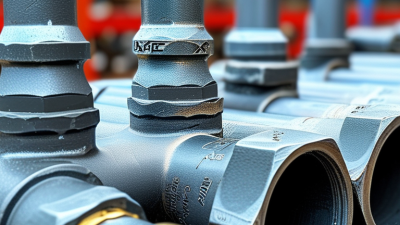
How to Choose the Right Cepex PVC Fittings?
FLUID HANDLING EXPERTS

Blog, all our news

How to Choose the Right Cepex PVC Fittings?

Choosing the right cepex pvc fittings starts with the system, not the shelf. Pressure rating, fluid temperature, pipe diameter, and connection type must all match. A fitting that looks correct can still create a weak point if its rating falls below the pump’s operating pressure. Check the product datasheet, including any temperature-related limits, before choosing a model.

Industry data shows why material selection deserves care. PlasticsEurope’s Plastics—The Fast Facts 2023 reports global plastics production of 400.3 million tonnes in 2022. That figure covers many applications, not PVC fittings alone, but it highlights the scale of plastics in modern infrastructure. For practical selection criteria, consult the manufacturer’s technical documentation and applicable pipe-system standards. A catalogue photo is not enough.

Cepex publishes technical information for its PVC-U valves and fittings, including dimensions and pressure specifications. Use those details to check compatibility with the pipe, seal, and operating conditions. Tony Radoszewski, a recognized plastics-pipe industry leader and former president of the Plastics Pipe Institute, has emphasized the importance of choosing pipe systems according to their intended service. The same principle applies to fittings. Match the specification to the real installation—not an assumption. One detail is easy to miss: pressure ratings can change with temperature. Always verify the exact product data. I cannot verify a direct quotation from Radoszewski on Cepex fittings, so this introduction does not present one as his words.
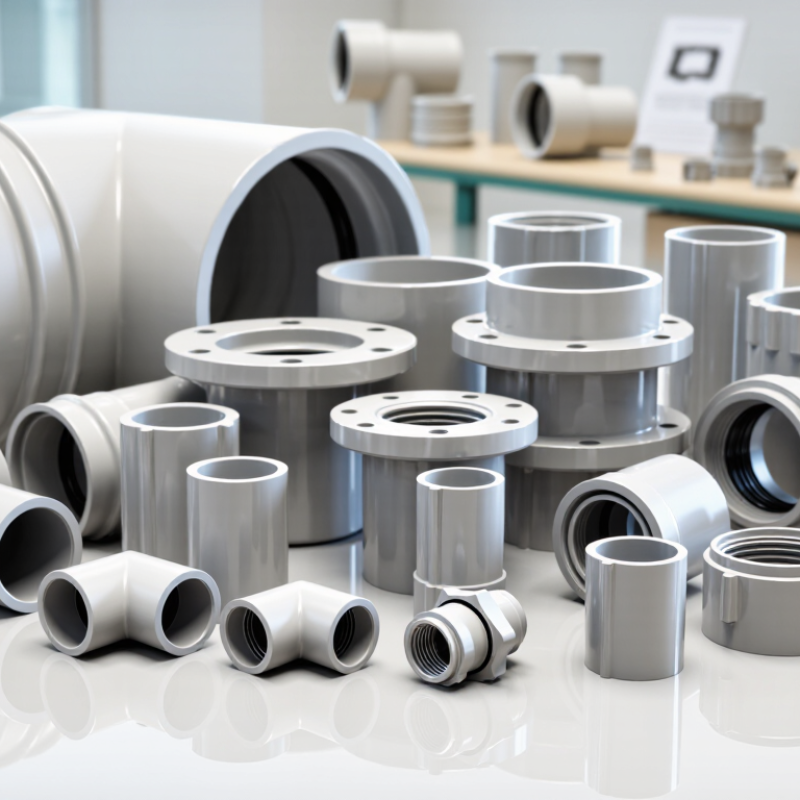
How to Choose the Right Cepex PVC Fittings?

Identify the System’s Fluid, Pressure, and Operating Conditions

Before selecting a PVC fitting, identify the fluid and every additive it carries. Water, mild acids, and cleaning solutions can affect materials differently. Check a chemical-compatibility chart at the actual concentration and temperature, not just the fluid name. Note whether the line carries grit or cycles between liquids; small details matter. A tiny leak can become a costly maintenance problem.

Then define normal and peak pressure, operating temperature, and pressure surges during pump starts or valve closures. The PVC Pipe Association’s Handbook of PVC Pipe Design and Construction uses 73°F (23°C) as a reference temperature and explains that allowable pressure decreases as temperature rises. That reference is not a safe operating limit for every installation. Compare the fitting’s pressure rating with the system’s conditions, including temperature-related derating and transient loads. Leave room for uncertainty. I would recheck the assumptions.

Record the fluid, concentration, temperature range, and pressure range before comparing fitting specifications. Confirm connection type and dimensions against the pipe, and inspect installation guidance for support and assembly requirements. If operating conditions vary, assess the worst credible combination, not the daily average. Real systems are rarely perfect. A forgotten startup surge can matter more than a neat pressure reading taken at rest.

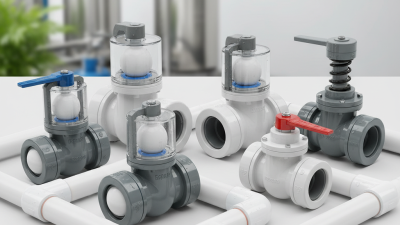
Compare Cepex PVC Fitting Types and Their Applications

Choosing PVC fittings starts with the pipe route, required flow, and operating conditions—not appearance. A socket coupling joins two pipe ends in a straight run, making it useful for extensions and repairs. An elbow changes direction; a 45-degree bend can create a gentler route than a tight 90-degree turn. Tees divide flow into branches, but extra junctions can increase resistance.

Reducers connect pipes of different diameters, often where a line feeds smaller tubing or equipment. Threaded adapters link PVC pipe to compatible threaded components, while unions allow a section to be disconnected for service. Useful distinction. A solvent-weld joint is permanent, so check alignment and dry-fit parts before applying cement.

Match each fitting to pipe size, pressure rating, temperature, and fluid compatibility. Irrigation lines may need frequent branches, while equipment connections benefit from unions that simplify replacement. On paper, a compact layout can look efficient; crowded joints may make later maintenance awkward. Check the manufacturer’s specifications, and leave enough room to reach valves and connections. A small clearance can save real trouble.

Match Fitting Size, Connection Style, and Pipe Standards

How to Choose the Right Cepex PVC Fittings?
Match Fitting Size, Connection Style, and Pipe Standards

A fitting can look right and still leak. Match its nominal size to the pipe, then confirm the actual outside diameter and pressure schedule. PVC dimensions depend on the applicable pipe standard; ASTM D1785 covers Schedule 40 and 80 pipe, while ASTM D2466 covers Schedule 40 socket fittings. Check both markings before ordering. A half-inch label alone is not enough.

Choose the connection for the job: solvent-weld sockets suit permanent joints, while threaded fittings allow removable connections when correctly sealed. Unions help where a pump or filter may need servicing. The PVC Pipe Association’s Handbook of PVC Pipe reports a thermal expansion rate near 3 × 10⁻⁵ inches per inch per °F. A 10-foot run exposed to a 40°F temperature change may shift about 0.14 inches. Leave room for movement. I still double-check mixed-standard systems; that detail is easy to miss. Dry-fit parts before applying cement, and verify that the fitting’s pressure rating meets the system’s operating conditions.

Check Chemical Compatibility, Temperature, and Pressure Ratings

A PVC fitting can look suitable and still fail if the fluid attacks its material. Check a compatibility chart for the exact chemical, concentration, and operating conditions. Diluted acids, cleaning solutions, and process fluids may behave differently as temperatures or concentrations change. When the fluid is a blend, verify every component rather than relying on its main ingredient. There is no universal safe answer.

Temperature affects both chemical resistance and pressure capacity. Read the fitting’s technical data for its rated temperature range, then check whether the allowable working pressure drops as heat rises. A rating printed for room temperature may not apply beside a warm pump or sunlit pipe run. Small details matter. If the service temperature varies, use the highest expected temperature, not the daily average.

Pressure checks should include normal operating pressure and brief surges during pump starts or valve closures. Compare these values with the fitting rating at the actual temperature, and consider the whole assembly: pipe, valves, joints, and fittings. The weakest part sets the practical limit. I would not choose by nominal size or a familiar-looking label alone; those clues leave too much unsaid. If the fluid data or pressure conditions are uncertain, ask the supplier for written confirmation before installation. A cautious check now is easier than tracing a leak later.

Select the Fittings and Verify Installation Requirements

Choosing a PVC fitting starts with the pipe, not the shelf. Match its nominal size and schedule, then check that the fitting’s pressure rating suits the system. The weakest component sets the practical limit. Small details matter. A reducing fitting may solve a layout problem, but it can also affect flow. Check the system design before changing pipe diameter.

Installation requirements deserve equal attention. Confirm that the pipe and fitting materials are compatible with the specified solvent cement or joining method. Read the product instructions for surface preparation, application, and cure time. Temperature and humidity can change how quickly a joint sets. Don’t assume a joint is ready because its surface feels dry. That shortcut can be costly.

Before assembly, dry-fit parts to check alignment and clearance. Mark insertion depth where useful, and avoid forcing a connection into position. Strain on a joint may cause trouble later. After the required cure period, test the system at the pressure and duration specified for the application. Inspect each connection for moisture or movement. I still double-check the rating and cure time, even on familiar jobs; memory is not a reliable installation guide. Follow applicable project requirements when they are stricter.

Copyright 2025 Fluidra S.A. | Created by BCM Marketing Agencia Privacy Policy Legal note | Cookie policy |

Technical cookies are strictly necessary for our website to work and you can navigate through it. These types of cookies are those that, for example, allow us to identify you, give you access to certain restricted parts of the page if necessary, or remember different options or services already selected by you, such as your privacy preferences. Therefore, they are activated by default, your authorization not being necessary in this regard. Through the configuration of your browser, you can block or alert the presence of this type of cookies, although such blocking will affect the proper functioning of the different functionalities of our website.


The analysis cookies allow us to study the navigation of the users of our website in general (for example, which sections of the page are the most visited, which services are used most and if they work correctly, etc.). From the statistical information on navigation on our website, we can improve both the operation of the page itself and the different services it offers. Therefore, these cookies do not have an advertising purpose, but only serve to make our website work better, adapting to our users in general. By activating them you will contribute to this continuous improvement. You can enable or disable these cookies by checking the corresponding box, being disabled by default.


Functionality cookies allow us to remember your preferences, to personalize certain characteristics and general options of our website, every time you access it (for example, the language in which the information is presented to you, the sections marked as favorites, your browser type, etc.) Therefore, this type of cookies does not have an advertising purpose, but by activating them you will improve the functionality of the website (for example, adapting to your type of browser) and the customization of it based on your preferences (for example, by presenting the information in the language that you have chosen in previous occasions), which will contribute to the ease, usability and comfort of our page during your navigation. You can enable or disable these cookies by checking the corresponding box, being disabled by default.


Advertising cookies allow us to manage the advertising spaces included in our website based on criteria such as the content shown or the frequency in which the ads are displayed. For example, if you have been shown the same ad several times on our website, and you have not shown a personal interest by clicking on it, it will not appear again. In summary, by activating this type of cookies, the advertising shown on our website will be more useful and diverse, and less repetitive. You can enable or disable these cookies by checking the corresponding box, being disabled by default.


Behavioral advertising cookies allow us to obtain information based on the observation of your browsing habits and behaviors on the web, in order to show you advertising content that best suits your personal tastes and interests. To understand it in a very simple way, we will give you a fictitious example: if your last searches on the web were related to suspense literature, we would show you advertising about suspense books. Therefore, activating this type of cookies, the advertising that we show you on our website will not be generic, but will be oriented to your searches, tastes and interests, therefore adjusting exclusively to you. You can enable or disable these cookies by checking the corresponding box, being disabled by default.
To understand it in a very simple way, we will give you a fictitious example: if your last searches on the web were related to suspense literature, we would show you advertising about suspense books. Therefore, activating this type of cookies, the advertising that we show you on our website will not be generic, but will be oriented to your searches, tastes and interests, therefore adjusting exclusively to you. You can enable or disable these cookies by checking the corresponding box, being disabled by default.

SAVE

We use our own and third-party cookies to ensure the proper functioning of the website and to analyse our services, improve your experience on our website and show you advertisements related to your interests according to profiling based on your browsing habits (e.g. websites visited). You can accept all cookies by clicking "ACCEPT" or set or reject them by clicking here. If you would like to know more about the use of cookies, please see our COOKIE POLICY.


ACCEPT ALL
Reject no essentials