What Are the Best Types of Butterfly Valves in 2026?
FLUID HANDLING EXPERTS

Blog, all our news

What Are the Best Types of Butterfly Valves in 2026?

Choosing among the best types of butterfly valves in 2026 starts with the job, not the catalog. A valve controlling cooling water in a treatment plant faces different demands from one handling abrasive slurry or hot process fluids. Pressure, temperature, flow control, media compatibility, and maintenance access all shape the choice. Small details matter.

Market growth adds context, but it does not identify a universal winner. Grand View Research’s Industrial Valves Market Size, Share & Trends Analysis Report estimated the global industrial valves market at USD 78.4 billion in 2023 and projected continued growth through 2030. That figure covers industrial valves broadly, not butterfly valves alone. It signals sustained investment in flow-control equipment, while leaving each buyer to verify the requirements of a specific system.

This guide compares resilient-seated, high-performance, and triple-offset butterfly valves, including their practical strengths and trade-offs. Resilient-seated designs often suit lower-pressure water service; high-performance options can handle more demanding conditions. Triple-offset models are typically considered where tight shutoff and higher temperatures matter. These are starting points, not guarantees. A seat material that performs well in clean water may deteriorate quickly in a chemical line. And specifications can look reassuring on paper. Real operating conditions still decide. Review manufacturer pressure-temperature charts, applicable test documentation, and maintenance needs before specifying a valve. The best choice is the one that matches the process, not the one with the longest feature list.
What Are the Best Types of Butterfly Valves in 2026?

How Butterfly Valves Work and Which Features Define Their Performance

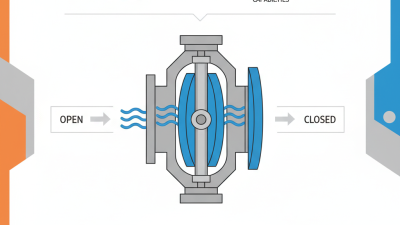
A butterfly valve controls flow with a disc mounted across the pipe. A quarter-turn rotates the disc from open to closed. When open, the disc remains in the flow path, so it can create more resistance than a full-bore ball valve. That matters. For basic isolation in water lines, a resilient-seated wafer or lug valve may be practical and compact. Lug designs can allow one side of a line to be removed, but only when the installation and valve rating support that arrangement.

The best design depends on the fluid, temperature, pressure, and operating frequency. Resilient seats seal well in many general services, while offset designs can reduce seat wear in demanding cycles. Triple-offset metal-seated valves are often considered for higher temperatures, but they need suitable materials and careful installation. Small details count. Check the pressure-temperature rating, disc and seat compatibility, face-to-face dimensions, and actuator torque—not just the nominal pipe size. A valve that fits the pipe may still be a poor match for abrasive slurry or frequent throttling. Flow control also deserves attention: a partly open disc can cause turbulence and uneven wear. In practice, confirming service conditions with a qualified valve specialist is more reliable than choosing by type alone. Even then, operating data can be incomplete, so allow room to revisit the selection.
Major Butterfly Valve Types and Their Design Differences

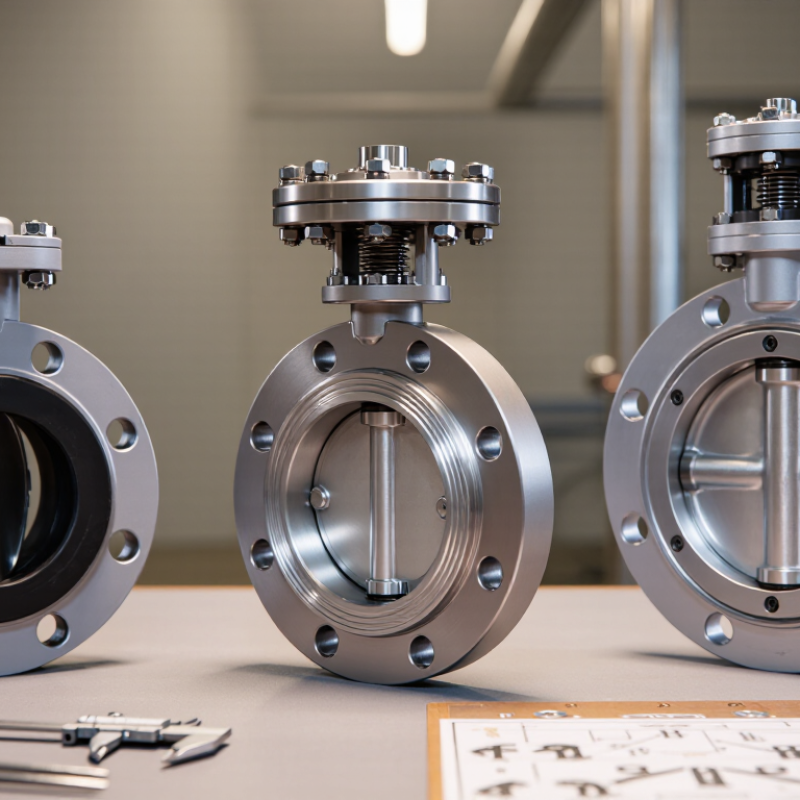
Butterfly valves are classified by both disc-and-seat geometry and body connection. These details affect sealing, torque, pressure range, and maintenance.

A concentric valve places its stem through the disc center, with the disc closing against a resilient seat. Its compact body and straightforward operation suit many water and general-service lines. The seat can provide a tight shutoff, but heat, chemicals, or abrasive flow may shorten its service life. Simple, but not universal.

A double-offset design shifts the stem behind the disc and away from its centerline. This reduces seat contact during rotation, helping limit wear in higher-pressure service. Triple-offset valves add a third angle, creating a cam-like closing action; metal sealing surfaces can handle demanding temperatures, though installation and machining tolerances matter.

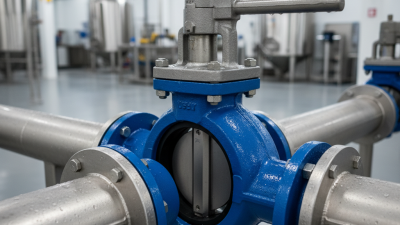
Wafer, lug, and flanged designs describe how the valve attaches to piping, not how it seals. A wafer body fits between pipe flanges; lug bodies allow bolting on each side, while flanged bodies connect directly to matching flanges.

In practice, the right choice depends on the fluid, operating temperature, shutoff needs, and available space. A valve that looks suitable on a drawing may still be awkward to maintain once installed.

How Materials, Seats, and Actuators Affect Valve Selection

What Are the Best Types of Butterfly Valves in 2026?
How Materials, Seats, and Actuators Affect Valve Selection

There is no single best butterfly valve for every 2026 application. A resilient-seated valve often suits water service, while a double-offset design handles more demanding pressure and temperature conditions. Triple-offset valves, typically using metal seats, may fit high-temperature or low-leakage duties. Match body and disc materials to the fluid: stainless steel can resist many corrosive media, but compatibility depends on concentration and temperature. Small details matter. Check the full operating range, not just the normal process temperature.

Tips: Confirm seat compatibility with the actual fluid and cleaning chemicals. Compare actuator torque requirements with the valve’s pressure differential. Leave a margin; a tight calculation can cause trouble.

Seat and actuator choices shape reliability as much as valve type. Elastomer seats can provide tight shutoff, but heat, abrasion, or chemical exposure may shorten service life. PTFE seats offer broader chemical resistance, though pressure and temperature limits still apply. Manual handles are simple for occasional operation. Pneumatic actuators suit frequent cycling and may support fail-safe action; electric units can offer precise positioning where compressed air is unavailable. Ask whether the valve must close during a power or air failure. A selection can look right on paper and still disappoint if the seat wears quickly or the actuator is undersized. Verify conditions with the supplier’s technical data, and review the choice when process details are uncertain.

Best Butterfly Valve Types for Common Industrial Applications

For water treatment, HVAC, and general utility lines, concentric resilient-seated butterfly valves are often a practical fit. Their compact bodies and quarter-turn operation suit frequent isolation where pressure and temperature remain moderate. The U.S. EPA’s 2023 Drinking Water Infrastructure Needs Survey estimates $625 billion in drinking-water infrastructure needs over 20 years. This is not a valve-market forecast, but it points to substantial system renewal work where dependable isolation matters.

For higher pressure, temperature, or more demanding process duty, double-offset valves can reduce seat friction during operation. Triple-offset, metal-seated designs are worth considering for hot service and repeated cycling, though they may cost more and need careful installation. For corrosive fluids, lined valves may help, but lining compatibility must be checked against the actual fluid and temperature. A catalog rating can mislead. Verify operating conditions, not just nominal pipe size.

Tips: Confirm the medium, pressure, temperature, and required shutoff level before choosing. Check the seat and disc materials against the fluid. Details matter. A valve that works well in clean water may perform poorly with abrasive solids or frequent cycling.

What Are the Best Types of Butterfly Valves in 2026?

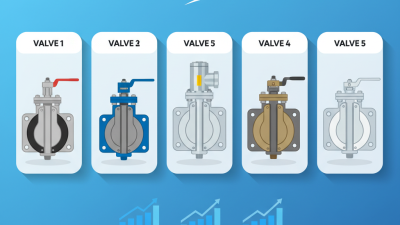
A comparison of common butterfly valve designs by their number of disc-and-seat offset axes.

How to read this chart: The offset counts describe valve geometry, not a performance score. Concentric resilient-seated valves are commonly used for water and HVAC service; double-offset valves are common in general industrial process service; and triple-offset metal-seated valves are often selected for high-temperature, higher-pressure, or tight-shutoff duties. Actual suitability depends on materials, pressure, temperature, and the process fluid.

How to Compare Butterfly Valves for Specific Operating Conditions

What Are the Best Types of Butterfly Valves in 2026?
How to Compare Butterfly Valves for Specific Operating Conditions

The best butterfly valve depends on the process, not the year. Start with the operating pressure, temperature, flow rate, and fluid. A water line at moderate pressure may suit a resilient-seated valve. For hotter service or more demanding shutoff, compare high-performance designs with offset discs. Metal-seated triple-offset valves can handle some severe-duty applications, but they may be unnecessary for ordinary water service. Check the manufacturer’s pressure and temperature limits against actual operating conditions, including occasional peaks.

Valve style matters, too. Wafer bodies fit between flanges and save space; lug bodies can support some end-of-line arrangements, subject to the valve design and piping requirements. For throttling, confirm the valve’s control range and expected pressure drop. A valve that is too large may operate mostly closed, making control less stable. Seat and disc materials should match the fluid’s chemistry and cleanliness. Small debris can wear a soft seat sooner than expected. I would verify compatibility rather than assume a familiar material will work.

Tips: Compare certified performance data, not just nominal size. Ask about cycle life, leakage class, and maintenance access. Leave room for uncertainty: real process conditions can differ from the design case.

What Are the Best Types of Butterfly Valves in 2026? — How to Compare Butterfly Valves for Specific Operating Conditions

Valve Type Best-Fit Operating Conditions Typical Seat and Temperature Considerations Pressure and Shutoff Considerations Key Advantages Main Limitations and Checks
Concentric resilient-seated Water distribution, HVAC, irrigation, and general-purpose, clean or mildly dirty services. Elastomer seats are common. EPDM is often selected for water and many dilute aqueous services; NBR is commonly considered for oils and fuels. Allowable temperature depends on the exact compound and design. Commonly available for lower-to-moderate pressure duties, including many PN 10/16 and Class 150 applications. Soft seats can provide tight shutoff when properly selected and installed. Compact, lightweight, economical, and suitable for frequent on/off operation. Confirm chemical compatibility, seat temperature limits, pressure rating, vacuum suitability, and whether the specified leakage class is achievable.
Double-offset high-performance Process, utility, and industrial services needing tighter shutoff or higher pressure capability than a basic concentric design. Often uses PTFE-based or other engineered soft seats; metal-seat versions are also available. Temperature limits depend on seat, seals, and construction. Designs are commonly offered for Class 150 and Class 300 duties, but ratings vary by size and design. Offset geometry reduces seat rubbing and operating torque. Good balance of shutoff performance, durability, and control capability for many demanding services. Verify bidirectional shutoff, allowable differential pressure, actuator torque, seat material, and the manufacturer’s pressure-temperature rating.
Triple-offset metal-seated High-temperature, high-pressure, thermal-cycle, or fire-safe process duties where a soft seat may not be suitable. Metal-to-metal sealing avoids reliance on an elastomer or polymer seat. Maximum temperature depends strongly on disc, seat, body, and sealing materials. Available in a broad range of pressure classes; the exact rating and leakage performance are design-specific. Intended shutoff performance should be confirmed against the applicable specification. Suitable for demanding temperature cycles and can offer low-friction, non-rubbing seating when correctly designed. Usually higher initial cost. Check leakage requirement, thermal expansion effects, corrosion resistance, seat materials, and actuator sizing.
Fluoropolymer-lined Corrosive chemical services where a compatible lining can isolate the process fluid from the body and disc. PTFE or PFA linings are used in selected chemical duties. Temperature limits are specific to the lining, pressure, vacuum conditions, and valve construction. Typically selected within the pressure and temperature envelope stated for the complete lined valve. Lining and body design can limit vacuum service and allowable pressure. Can provide broad chemical resistance for compatible fluids and help protect wetted components. Check compatibility against a chemical-resistance guide, permeation, abrasion, vacuum rating, temperature cycling, and lining integrity.
Slurry-duty resilient-seated Water containing suspended solids, wastewater, and selected abrasive or fibrous services when the valve is specifically designed for them. Typically uses a resilient liner or seat; compound selection must match the fluid, solids, and temperature. Pressure capability depends on the design and size. Shutoff may be affected by trapped solids, seat wear, and the way the valve is installed. Can handle solids better than many general-purpose designs when clearances and seat geometry are intended for slurry service. Assess particle size, concentration, abrasiveness, settling, flushing needs, seat wear, and whether the valve is suitable for throttling.

Selection note: These are general comparison guidelines, not universal ratings. Actual pressure, temperature, leakage, and chemical-compatibility limits vary by size, materials, design, and applicable standards. Confirm the valve’s certified pressure-temperature data and operating requirements before specification. Wafer and lug describe body connection styles, not separate sealing or offset types.

Copyright 2025 Fluidra S.A. | Created by BCM Marketing Agencia Privacy Policy Legal note | Cookie policy |

Technical cookies are strictly necessary for our website to work and you can navigate through it. These types of cookies are those that, for example, allow us to identify you, give you access to certain restricted parts of the page if necessary, or remember different options or services already selected by you, such as your privacy preferences. Therefore, they are activated by default, your authorization not being necessary in this regard. Through the configuration of your browser, you can block or alert the presence of this type of cookies, although such blocking will affect the proper functioning of the different functionalities of our website.


The analysis cookies allow us to study the navigation of the users of our website in general (for example, which sections of the page are the most visited, which services are used most and if they work correctly, etc.). From the statistical information on navigation on our website, we can improve both the operation of the page itself and the different services it offers. Therefore, these cookies do not have an advertising purpose, but only serve to make our website work better, adapting to our users in general. By activating them you will contribute to this continuous improvement. You can enable or disable these cookies by checking the corresponding box, being disabled by default.


Functionality cookies allow us to remember your preferences, to personalize certain characteristics and general options of our website, every time you access it (for example, the language in which the information is presented to you, the sections marked as favorites, your browser type, etc.) Therefore, this type of cookies does not have an advertising purpose, but by activating them you will improve the functionality of the website (for example, adapting to your type of browser) and the customization of it based on your preferences (for example, by presenting the information in the language that you have chosen in previous occasions), which will contribute to the ease, usability and comfort of our page during your navigation. You can enable or disable these cookies by checking the corresponding box, being disabled by default.


Advertising cookies allow us to manage the advertising spaces included in our website based on criteria such as the content shown or the frequency in which the ads are displayed. For example, if you have been shown the same ad several times on our website, and you have not shown a personal interest by clicking on it, it will not appear again. In summary, by activating this type of cookies, the advertising shown on our website will be more useful and diverse, and less repetitive. You can enable or disable these cookies by checking the corresponding box, being disabled by default.


Behavioral advertising cookies allow us to obtain information based on the observation of your browsing habits and behaviors on the web, in order to show you advertising content that best suits your personal tastes and interests. To understand it in a very simple way, we will give you a fictitious example: if your last searches on the web were related to suspense literature, we would show you advertising about suspense books. Therefore, activating this type of cookies, the advertising that we show you on our website will not be generic, but will be oriented to your searches, tastes and interests, therefore adjusting exclusively to you. You can enable or disable these cookies by checking the corresponding box, being disabled by default.
To understand it in a very simple way, we will give you a fictitious example: if your last searches on the web were related to suspense literature, we would show you advertising about suspense books. Therefore, activating this type of cookies, the advertising that we show you on our website will not be generic, but will be oriented to your searches, tastes and interests, therefore adjusting exclusively to you. You can enable or disable these cookies by checking the corresponding box, being disabled by default.

SAVE

We use our own and third-party cookies to ensure the proper functioning of the website and to analyse our services, improve your experience on our website and show you advertisements related to your interests according to profiling based on your browsing habits (e.g. websites visited). You can accept all cookies by clicking "ACCEPT" or set or reject them by clicking here. If you would like to know more about the use of cookies, please see our COOKIE POLICY.


ACCEPT ALL
Reject no essentials