
What Is a Zeolite Rotor and How Does It Work?
FLUID HANDLING EXPERTS

Blog, all our news

What Is a Zeolite Rotor and How Does It Work?

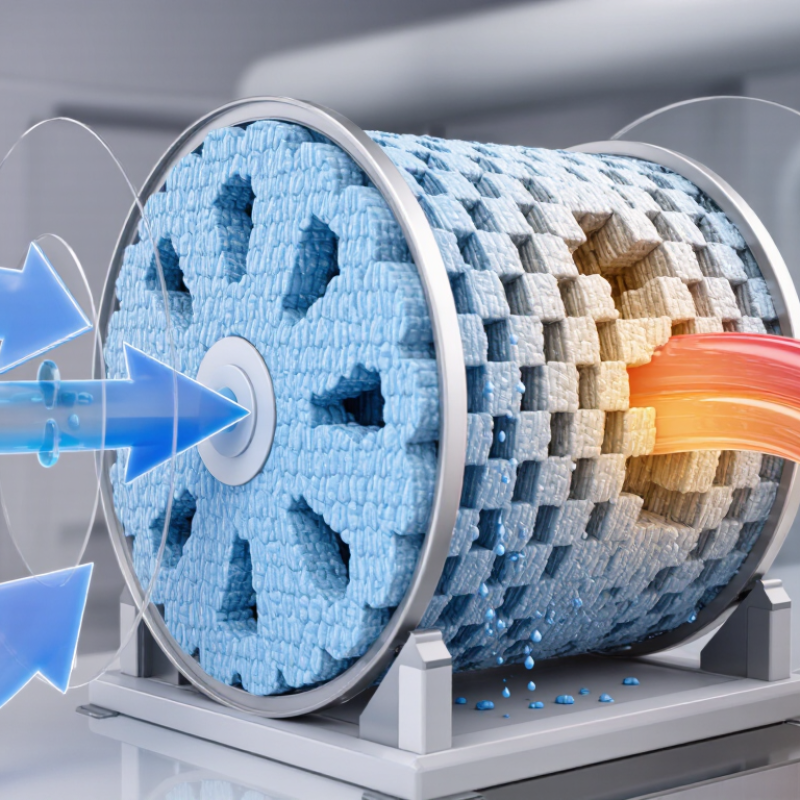
A Zeolite Rotor is a rotating adsorption system designed to remove moisture and selected volatile organic compounds from industrial air. Its honeycomb wheel contains thousands of tiny channels coated with zeolite, a porous mineral with a strong affinity for water molecules. As process air passes through the rotating wheel, the zeolite captures moisture. A separate heated airstream then releases that moisture and regenerates the adsorption surface.

Dr. Donald W. Breck, a leading zeolite researcher, wrote, “Zeolites are crystalline, hydrated aluminosilicates of alkali and alkaline-earth cations.” This definition explains the rotor’s foundation: a stable crystal structure with microscopic pores. These pores act like molecular filters. They attract certain molecules while allowing others to pass. The result can be a continuous drying process with consistent outlet air conditions. Small details matter. Wheel speed, regeneration temperature, airflow balance, and seal quality all influence performance.

The technology is efficient, but it is not magic. Dust, oil, high humidity, and unsuitable solvents can reduce adsorption capacity or damage components. A poorly selected rotor may consume unnecessary energy. That risk deserves attention. Engineers should review inlet concentration, temperature, pressure, required dew point, and maintenance conditions before specifying equipment. Field experience also shows that real installations rarely match laboratory assumptions perfectly. A reliable evaluation combines manufacturer data, measured operating conditions, and periodic performance checks. This article explains how a Zeolite Rotor works, where it performs best, and which practical limitations deserve careful consideration.
What Is a Zeolite Rotor and How Does It Work?

What Is a Zeolite Rotor?

A zeolite rotor is a rotating air-treatment device filled with honeycomb-shaped zeolite material. Zeolite is a porous crystalline mineral, usually made from aluminosilicate compounds. Its microscopic pores attract and hold certain molecules from polluted air. Volatile organic compounds, or VOCs, are common targets. The rotor does not destroy these pollutants. It captures them first. That distinction matters.

The wheel turns slowly through several air zones. Process air passes through the adsorption section, where zeolite retains the VOC molecules. The loaded section then moves into a smaller regeneration zone. Heated air releases the trapped compounds into a concentrated exhaust stream. This concentrated stream can then receive further treatment, depending on the facility and pollutant type. The cleaned zeolite returns to the process-air section and repeats the cycle.

A practical inspection should check airflow, temperature, rotation speed, and pressure drop. These details reveal whether the rotor is working evenly. Dust can block pores and raise resistance. Excess moisture can compete with target molecules and reduce adsorption performance. During commissioning, engineers should compare inlet and outlet concentrations under real operating conditions. Laboratory data helps, but it cannot represent every factory environment. The simple picture is useful, yet incomplete. Measurement still matters.

How Zeolite Rotors Capture Moisture and Pollutants

A zeolite rotor is a rotating honeycomb coated with porous mineral adsorbents. Its tiny pores attract water molecules and many volatile organic compounds (VOCs). Process air passes through the rotor, while moisture and pollutants cling to its surfaces. The cleaned air then returns to the workspace. A separate hot-air stream slowly regenerates the wheel. It releases the captured load into a smaller exhaust stream.

The cycle is continuous. No filters are replaced every few hours. ASHRAE Handbook—HVAC Systems and Equipment describes desiccant wheels that can produce very low dew points when airflow and regeneration heat are properly controlled. For VOC service, the U.S. EPA Air Pollution Control Cost Manual reports typical removal efficiencies near 90–95% for well-designed rotary concentration systems. That figure needs caution. It depends on inlet concentration, humidity, rotor speed, leakage, and maintenance.

Humidity can compete with VOC adsorption. A wet rotor may lose capacity for certain pollutants. Field commissioning often finds imperfect seals or uneven airflow, not dramatic chemistry failures. Small gaps matter. Operators should track dew point, pressure drop, outlet VOC levels, and regeneration temperature. Excessive heat can waste energy and damage sensitive compounds. Insufficient heat leaves pollutants trapped inside the rotor. The system works best when the pollutant profile is known, airflow remains stable, and sensors are calibrated against laboratory methods. Performance data should be checked over seasons, not judged from one clean test day.

The Main Components of a Zeolite Rotor System

What Is a Zeolite Rotor and How Does It Work?

A zeolite rotor system is built around a slowly rotating wheel filled with honeycomb zeolite media. The media adsorbs selected volatile organic compounds from process air. A sealed housing divides the wheel into treatment and regeneration zones. The drive motor turns the rotor at a controlled speed. Seals around the rim limit unwanted air leakage. This simple arrangement hides a demanding balance between airflow, temperature, pressure, and rotor speed. Small changes can affect removal performance.

During operation, contaminated air enters the treatment section and passes through narrow channels. Zeolite surfaces hold targeted molecules while cleaner air exits the system. A smaller, heated regeneration stream moves through another section. Heat releases the captured compounds, creating a concentrated exhaust stream for suitable downstream treatment. Sensors typically monitor temperature, pressure drop, airflow, and motor operation. Controls adjust these conditions, although poor calibration can create false confidence. The rotor is not self-correcting.

Tips: Inspect seals, bearings, and media regularly. Watch for rising pressure drop or uneven temperature readings. Dust can block narrow channels and reduce contact efficiency. Keep airflow stable during testing. A clean-looking rotor may still perform poorly. Maintenance records should include operating temperatures, leakage observations, and sensor checks. In practice, small seal gaps are easy to overlook, yet they can weaken the entire system.

How the Adsorption and Regeneration Cycles Work

A zeolite rotor is a rotating honeycomb wheel designed to capture selected pollutants from air. Its porous structure provides a large contact area. As process air passes through the rotor, zeolite surfaces attract volatile organic compounds and water molecules. This step is called adsorption. The treated air then exits with a lower pollutant concentration.

The wheel turns slowly through separate process and regeneration zones. A typical rotor completes one rotation over several minutes. In the regeneration zone, heated air moves across the loaded material. Heat weakens the attraction between the zeolite and captured molecules. The pollutants then leave the pores and form a smaller, more concentrated exhaust stream. Some systems use a purge section to improve removal. It consumes additional energy, though.

After regeneration, the rotor returns to the adsorption zone and repeats the cycle. Performance depends on temperature, humidity, airflow, and sealing quality. High humidity can occupy adsorption sites and reduce capacity for other compounds. Poor seals may let untreated air bypass the wheel. The cycle is not perfectly clean. Residual loading can remain inside the zeolite, especially during rapid changes in concentration. Operators should check outlet readings, pressure drop, and regeneration temperature regularly. That check is essential. A practical design must balance removal efficiency against heat use, maintenance demands, and changing air conditions.

Common Applications and Benefits of Zeolite Rotors

What Is a Zeolite Rotor and How Does It Work?

A zeolite rotor is a honeycomb wheel coated with porous mineral material. Its tiny pores adsorb volatile organic compounds from moving exhaust air. As the wheel turns, it passes through separate process, regeneration, and cooling zones. Heated regeneration air removes the captured pollutants in a smaller, concentrated airflow. That stream can then receive thermal or catalytic treatment.

Common Applications and Benefits of Zeolite Rotors

Zeolite rotors are often used in coating, printing, chemical, and electronics manufacturing facilities. They help control solvent vapors from ovens, drying lines, and storage areas. Because the rotor concentrates pollutants, a smaller treatment system may handle the final exhaust. This can reduce equipment size, operating airflow, and heat demand.

The system also supports steady operation when exhaust volumes change. Properly selected zeolite materials can tolerate many industrial conditions. However, humidity can compete for adsorption space and reduce performance. Dust, oil mist, and sticky compounds may also block the rotor surface. Not a universal filter.

In practical inspections, engineers should check inlet temperature, solvent type, moisture, pressure drop, and regeneration airflow. Monitoring these details helps identify capacity loss before emissions increase. A common design mistake is focusing only on removal efficiency. Maintenance access matters too. Seals, bearings, filters, and temperature controls require regular attention. Results depend on airflow balance and pollutant chemistry, not the rotor alone.

What Is a Zeolite Rotor and How Does It Work?

A zeolite rotor continuously adsorbs VOCs from process air, rotates into a heated desorption zone, and releases a concentrated VOC stream for treatment or recovery. The chart shows representative VOC removal-efficiency ranges commonly targeted in industrial applications.

Values are representative engineering ranges rather than company or brand specifications. Actual performance depends on VOC type, humidity, inlet concentration, rotor design, airflow, and operating temperature.

Copyright 2025 Fluidra S.A. | Created by BCM Marketing Agencia Privacy Policy Legal note | Cookie policy |

Technical cookies are strictly necessary for our website to work and you can navigate through it. These types of cookies are those that, for example, allow us to identify you, give you access to certain restricted parts of the page if necessary, or remember different options or services already selected by you, such as your privacy preferences. Therefore, they are activated by default, your authorization not being necessary in this regard. Through the configuration of your browser, you can block or alert the presence of this type of cookies, although such blocking will affect the proper functioning of the different functionalities of our website.


The analysis cookies allow us to study the navigation of the users of our website in general (for example, which sections of the page are the most visited, which services are used most and if they work correctly, etc.). From the statistical information on navigation on our website, we can improve both the operation of the page itself and the different services it offers. Therefore, these cookies do not have an advertising purpose, but only serve to make our website work better, adapting to our users in general. By activating them you will contribute to this continuous improvement. You can enable or disable these cookies by checking the corresponding box, being disabled by default.


Functionality cookies allow us to remember your preferences, to personalize certain characteristics and general options of our website, every time you access it (for example, the language in which the information is presented to you, the sections marked as favorites, your browser type, etc.) Therefore, this type of cookies does not have an advertising purpose, but by activating them you will improve the functionality of the website (for example, adapting to your type of browser) and the customization of it based on your preferences (for example, by presenting the information in the language that you have chosen in previous occasions), which will contribute to the ease, usability and comfort of our page during your navigation. You can enable or disable these cookies by checking the corresponding box, being disabled by default.


Advertising cookies allow us to manage the advertising spaces included in our website based on criteria such as the content shown or the frequency in which the ads are displayed. For example, if you have been shown the same ad several times on our website, and you have not shown a personal interest by clicking on it, it will not appear again. In summary, by activating this type of cookies, the advertising shown on our website will be more useful and diverse, and less repetitive. You can enable or disable these cookies by checking the corresponding box, being disabled by default.


Behavioral advertising cookies allow us to obtain information based on the observation of your browsing habits and behaviors on the web, in order to show you advertising content that best suits your personal tastes and interests. To understand it in a very simple way, we will give you a fictitious example: if your last searches on the web were related to suspense literature, we would show you advertising about suspense books. Therefore, activating this type of cookies, the advertising that we show you on our website will not be generic, but will be oriented to your searches, tastes and interests, therefore adjusting exclusively to you. You can enable or disable these cookies by checking the corresponding box, being disabled by default.
To understand it in a very simple way, we will give you a fictitious example: if your last searches on the web were related to suspense literature, we would show you advertising about suspense books. Therefore, activating this type of cookies, the advertising that we show you on our website will not be generic, but will be oriented to your searches, tastes and interests, therefore adjusting exclusively to you. You can enable or disable these cookies by checking the corresponding box, being disabled by default.

SAVE

We use our own and third-party cookies to ensure the proper functioning of the website and to analyse our services, improve your experience on our website and show you advertisements related to your interests according to profiling based on your browsing habits (e.g. websites visited). You can accept all cookies by clicking "ACCEPT" or set or reject them by clicking here. If you would like to know more about the use of cookies, please see our COOKIE POLICY.


ACCEPT ALL
Reject no essentials


