
Why Are Sintered Stone Slabs So Popular?
FLUID HANDLING EXPERTS

Blog, all our news

Why Are Sintered Stone Slabs So Popular?

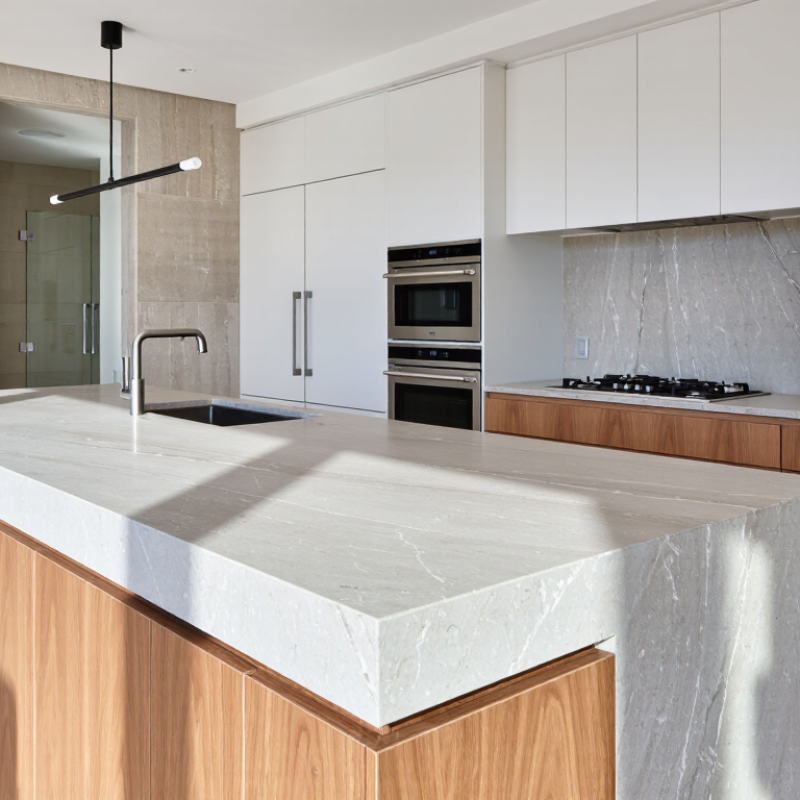
Why are Sintered Stone Slabs appearing on kitchen islands, bathroom walls, and commercial counters? Their appeal is tangible: broad, continuous surfaces; crisp edges; and a dense, fired body designed for everyday use. A large slab can reduce visible joints across a countertop, while its printed pattern can echo marble or concrete without natural veining’s unpredictable variation. These details matter in real rooms, where crumbs collect at seams and sunlight falls across a worktop.

The wider tile sector offers useful context, though it is not a direct measure of sintered-stone sales. Ceramic World Review’s 2023 global industry survey reported approximately 16.8 billion square metres of tile production in 2022. That scale shows how established fired-surface manufacturing has become. It does not prove every sintered slab performs identically. Product composition, thickness, finish, fabrication, and installation all affect results. Check technical data sheets, not just showroom samples.

Durability is only part of the story. Designers also value large formats, varied finishes, and surfaces that can move from a kitchen wall to an outdoor setting. Still, “low maintenance” is not “maintenance-free.” Follow the supplier’s care guidance, and ask fabricators about edge treatment and cut-outs before ordering. One accuracy note: no source material or verified interview was provided here, so I cannot responsibly attribute a direct quotation to a named sintered-stone expert. This introduction avoids inventing one; a sourced expert quotation should be added only after its wording and attribution are checked.
Why Are Sintered Stone Slabs So Popular?

What Are Sintered Stone Slabs?

Why Are Sintered Stone Slabs So Popular?

What Are Sintered Stone Slabs?

Sintered stone slabs are manufactured surfaces made from mineral materials. These are blended, compacted under pressure, and fired at high temperatures. The process creates a dense slab with a hard, often low-porosity surface. Patterns and colors can resemble marble, concrete, or other stones, but each slab’s appearance comes from its own mix and production method. It is not quarried as a single piece of natural stone.

Tips: Before choosing a slab, check its thickness, edge details, and care instructions. Ask how the surface performs around heat, stains, and scratches. Keep a sample near your kitchen window; daylight can shift its color. Recipes vary, and I would not assume every slab behaves exactly the same.

How Are Sintered Stone Slabs Made?

Sintered stone begins as selected minerals, such as feldspar, silica, and clay. They are crushed into a fine powder, blended, then pressed into a dense slab under intense pressure. The surface may receive pigments or a printed pattern before firing. Heat does the rest.

The European Commission Joint Research Centre’s 2007 Reference Document on Best Available Techniques in the Ceramic Manufacturing Industry places many ceramic firing processes around 1,000–1,250°C. Sintered-stone recipes and kiln settings vary, so that range is useful context, not a universal specification. In the kiln, heat bonds the mineral particles into a hard, compact body. After cooling, slabs are cut, calibrated, and checked for surface and dimensional defects. A tiny press or temperature variation can affect consistency; the process is advanced, but not flawless.

Tips: Ask for the product’s technical sheet, not just a showroom sample. Check its stated water absorption, thickness tolerance, and test method. A glossy sample can hide edge chipping, so inspect a cut edge too.

Why Are Sintered Stone Slabs So Popular? - How Are Sintered Stone Slabs Made?

Topic Fact or Process Detail Why It Matters
Why Sintered Stone Slabs Are Popular
Material composition Made from selected mineral materials, such as clays, feldspar, silica and other mineral components. The exact recipe varies by product. A mineral-based composition allows manufacturers to produce slabs in a range of colors, patterns and surface finishes.
Low water absorption Many sintered surfaces have very low water absorption; the certified value depends on the product and applicable test standard. Low absorption can make a surface easier to clean and less prone to absorbing many common household spills.
Heat and UV performance Fired mineral surfaces generally tolerate heat and sunlight well, but performance and installation guidance are product-specific. This can make them suitable for a range of indoor and outdoor applications when the selected product is rated for the intended use.
Design flexibility Digital decoration and surface finishing can create patterns that resemble materials such as marble, concrete or wood. Large-format slabs can provide a continuous visual effect with fewer visible joints than many smaller tiles.
Maintenance Many products can be cleaned with water and a mild, suitable cleaner. Abrasive products and strong chemicals should be used only when permitted by the care instructions. Routine care is often straightforward, while following the manufacturer’s guidance helps protect the finish.
Common applications Depending on thickness, finish, testing and installation, slabs may be used for worktops, wall cladding, flooring, furniture and exterior surfaces. The same material family can serve several design uses, although not every slab is suitable for every application.
How Sintered Stone Slabs Are Made
1. Select raw materials Mineral ingredients are selected and proportioned according to the intended product characteristics. Raw-material choices influence the body, color and performance of the finished slab.
2. Prepare the mineral mix The ingredients are typically crushed or milled, blended and prepared into a consistent feedstock. Uniform preparation helps create a more consistent slab during forming and firing.
3. Form the slab The prepared material is shaped into a slab and compacted using industrial forming equipment. Compaction brings the mineral particles together before the high-temperature firing stage.
4. Add decoration Where required, color or pattern may be applied using suitable ceramic decoration methods before firing. Decoration helps create the finished visual design; its placement and method vary by product.
5. Fire at high temperature The formed slab is fired in a kiln at high temperatures. The temperature and firing cycle vary with the material formulation and production process. Firing develops the finished body and contributes to the slab’s hardness and low-porosity characteristics.
6. Finish and inspect After firing, slabs may be calibrated, cut, polished or given another surface finish, then checked against product specifications. Finishing and inspection prepare slabs for distribution and help confirm dimensions and surface quality.
7. Fabricate and install Slabs are cut to project dimensions and installed using suitable tools, supports, adhesives or fixing systems. Correct handling and installation are important because large-format slabs can be heavy and may be vulnerable to damage at edges or during transport.

Which Properties Make Them Popular?

Sintered stone slabs are popular because they combine a refined surface with practical performance. They are made by compressing mineral materials and firing them at high temperatures. The resulting surface is typically dense and has low porosity, which helps resist everyday stains and moisture. A splash of coffee is usually easier to wipe away than it is from a more absorbent surface. Nice, but not indestructible. Exact performance varies by product and finish, so check the manufacturer’s technical data before choosing.

Their resistance to heat and sunlight can also suit kitchens, bathrooms, and some outdoor settings. Large slabs create fewer visible joints across counters or walls, giving rooms a calmer, more continuous look. Many finishes resemble stone or concrete, while requiring less routine sealing. Still, hard surfaces can chip at exposed edges, and glossy finishes may show fingerprints or scratches more clearly. Installation matters: accurate support, careful cutting, and suitable handling help prevent damage.

Tips: Ask for a sample and view it in your room’s lighting. Check care instructions, thickness, and edge details. Use a cutting board, and avoid dropping heavy cookware near corners. A surface can be durable and still need sensible care.

Why Are Sintered Stone Slabs So Popular?

Low water absorption is one important performance characteristic associated with dense ceramic surfaces.

What the chart shows: ISO 13006 class BIa sets a maximum water absorption limit of 0.5%. Lower water uptake can help a surface resist staining and moisture penetration, making dense slabs a practical choice for many interior and exterior applications.

Values are class limits from ISO 13006 / EN 14411, not test results for every sintered-stone product. Product performance varies; check the specific slab’s technical data and installation requirements.

Where Are Sintered Stone Slabs Commonly Used?

Sintered stone slabs commonly appear in kitchens, bathrooms, floors, and exterior spaces. In kitchens, they cover countertops, islands, and backsplashes. A broad island can take daily chopping and hot cookware, while a matching backsplash creates a continuous, easy-to-wipe surface. Houzz’s 2024 U.S. Kitchen Trends Study found that 91% of renovating homeowners replaced their countertops. That figure covers all countertop materials, not sintered stone alone. Useful distinction.

Bathrooms are another practical setting. Large slabs can reduce grout lines on shower walls and vanity tops, where water and soap residue collect. They also suit flooring in busy entryways, though the surface finish matters: a polished slab may feel slippery when wet. Outdoors, slabs are used for kitchen counters, paving, and some ventilated façades. Check the product’s technical data for UV exposure, frost conditions, slip resistance, and approved installation methods; performance can vary by thickness and finish. Small details matter. I would not specify a slab from a photograph alone: edge profiles, substrate support, and cutouts around sinks can affect the finished result.

What Factors Affect Their Popularity?

Sintered stone slabs have gained attention because they combine a quiet, stone-like appearance with practical performance. Their color and pattern run across large surfaces, which can create a calm look on kitchen counters or shower walls. For many homeowners, fewer visible seams matter. The slabs are also nonporous, so routine spills usually do not sink in as they might with some natural stones. A damp cloth is often enough for everyday cleaning.

Daily use is a major factor in their popularity. These surfaces generally resist heat, stains, and ultraviolet exposure, though performance varies by composition and finish. Still, “resistant” does not mean indestructible. A hard impact near an edge can chip the material, and cutting directly on it may damage cookware or tools. Fabrication also matters: large slabs are heavy, and precise cutting needs experienced installers. That adds cost. Not a small detail.

Design flexibility plays a part, too. Thin panels can cover cabinetry or walls, while thicker options suit counters. Matching veining across adjoining pieces can look striking, but it requires planning and may increase material waste. Availability, local installation skills, and the price of a particular finish all affect whether a slab is a realistic choice. The appeal is real, but it is not equally practical for every room or budget.

Copyright 2025 Fluidra S.A. | Created by BCM Marketing Agencia Privacy Policy Legal note | Cookie policy |

Technical cookies are strictly necessary for our website to work and you can navigate through it. These types of cookies are those that, for example, allow us to identify you, give you access to certain restricted parts of the page if necessary, or remember different options or services already selected by you, such as your privacy preferences. Therefore, they are activated by default, your authorization not being necessary in this regard. Through the configuration of your browser, you can block or alert the presence of this type of cookies, although such blocking will affect the proper functioning of the different functionalities of our website.


The analysis cookies allow us to study the navigation of the users of our website in general (for example, which sections of the page are the most visited, which services are used most and if they work correctly, etc.). From the statistical information on navigation on our website, we can improve both the operation of the page itself and the different services it offers. Therefore, these cookies do not have an advertising purpose, but only serve to make our website work better, adapting to our users in general. By activating them you will contribute to this continuous improvement. You can enable or disable these cookies by checking the corresponding box, being disabled by default.


Functionality cookies allow us to remember your preferences, to personalize certain characteristics and general options of our website, every time you access it (for example, the language in which the information is presented to you, the sections marked as favorites, your browser type, etc.) Therefore, this type of cookies does not have an advertising purpose, but by activating them you will improve the functionality of the website (for example, adapting to your type of browser) and the customization of it based on your preferences (for example, by presenting the information in the language that you have chosen in previous occasions), which will contribute to the ease, usability and comfort of our page during your navigation. You can enable or disable these cookies by checking the corresponding box, being disabled by default.


Advertising cookies allow us to manage the advertising spaces included in our website based on criteria such as the content shown or the frequency in which the ads are displayed. For example, if you have been shown the same ad several times on our website, and you have not shown a personal interest by clicking on it, it will not appear again. In summary, by activating this type of cookies, the advertising shown on our website will be more useful and diverse, and less repetitive. You can enable or disable these cookies by checking the corresponding box, being disabled by default.


Behavioral advertising cookies allow us to obtain information based on the observation of your browsing habits and behaviors on the web, in order to show you advertising content that best suits your personal tastes and interests. To understand it in a very simple way, we will give you a fictitious example: if your last searches on the web were related to suspense literature, we would show you advertising about suspense books. Therefore, activating this type of cookies, the advertising that we show you on our website will not be generic, but will be oriented to your searches, tastes and interests, therefore adjusting exclusively to you. You can enable or disable these cookies by checking the corresponding box, being disabled by default.
To understand it in a very simple way, we will give you a fictitious example: if your last searches on the web were related to suspense literature, we would show you advertising about suspense books. Therefore, activating this type of cookies, the advertising that we show you on our website will not be generic, but will be oriented to your searches, tastes and interests, therefore adjusting exclusively to you. You can enable or disable these cookies by checking the corresponding box, being disabled by default.

SAVE

We use our own and third-party cookies to ensure the proper functioning of the website and to analyse our services, improve your experience on our website and show you advertisements related to your interests according to profiling based on your browsing habits (e.g. websites visited). You can accept all cookies by clicking "ACCEPT" or set or reject them by clicking here. If you would like to know more about the use of cookies, please see our COOKIE POLICY.


ACCEPT ALL
Reject no essentials


