
Why Is Oil Drilling Important for Global Energy Supply?
FLUID HANDLING EXPERTS

Blog, all our news

Why Is Oil Drilling Important for Global Energy Supply?

Oil Drilling remains an important part of the global energy supply because oil still powers transport, industry, and essential services. It brings crude oil from underground reservoirs to refineries, where it becomes fuels and raw materials used in everyday products. A delivery truck, a fishing vessel, and some farm machinery may all depend on those refined fuels. So do petrochemicals used in items such as packaging and medical equipment.

Reliable production can help countries meet demand and reduce sudden supply gaps. Yet oil fields differ widely in size, location, and operating conditions. Some are onshore, while others lie beneath deep water, where equipment, weather, and logistics make development more complex. Existing wells also lose output over time, so companies may drill new wells to maintain production. This work requires careful geological assessment and ongoing monitoring; results are never guaranteed. That uncertainty matters.

Oil Drilling is not a complete answer to energy security. Oil prices can shift, and disruptions can affect consumers far from producing regions. Drilling also carries environmental risks, including habitat disturbance and the possibility of spills, which require prevention and responsible oversight. Meanwhile, renewable power and electrification are changing how some energy is produced and used. The transition is uneven, though, and oil demand remains significant in many sectors. It is easy to treat drilling as either indispensable or outdated. Neither description captures the whole picture. Its importance depends on how much oil societies need, how reliably it can be produced, and how carefully its costs are managed.
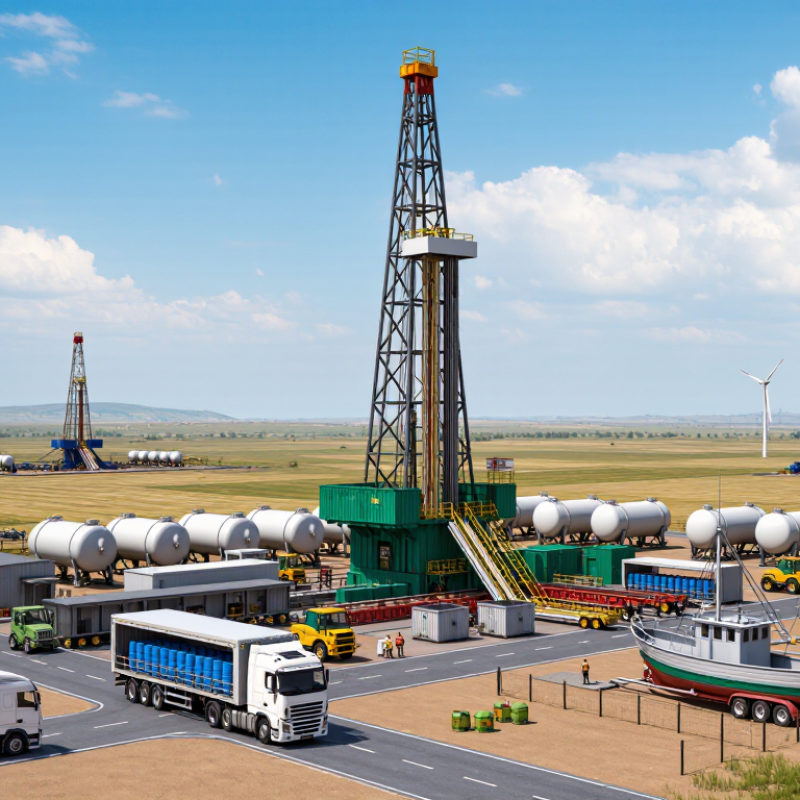
Why Is Oil Drilling Important for Global Energy Supply?

What Oil Drilling Involves and How It Works

Why Is Oil Drilling Important for Global Energy Supply?

What Oil Drilling Involves and How It Works

Oil drilling brings crude oil from rock formations deep underground to the surface. Before drilling begins, geologists study rock samples and seismic data to estimate where oil may be trapped. These clues reduce uncertainty, but they cannot guarantee a productive well. It is not simple. A drilling rig turns a drill bit attached to a long pipe, cutting through layers of rock. Drilling fluid circulates through the pipe, cools the bit, and carries rock fragments back up.

As the well deepens, workers monitor pressure, equipment, and the returning fluid. Steel casing is placed inside the hole and cemented in position to support the well and help isolate underground layers. Conditions change. If measurements suggest a problem, the crew may pause and adjust the operation. Diagrams make the process look neat; real rock formations are less predictable. Once a well is completed, controlled equipment can bring oil to the surface for transport and refining. This supply can support fuel and manufacturing needs, though drilling also carries environmental and safety risks.

Tips: When evaluating a drilling project, look beyond its estimated output. Ask how pressure is monitored, how the well is secured, and how spills or equipment failures are managed. Details matter.

How Drilling Adds Crude Oil to Global Energy Supplies

Oil drilling turns underground reservoirs into crude that can enter global energy supplies. Before a well is drilled, geologists examine rock layers, seismic images, and data from nearby wells. These clues help locate possible deposits, but they cannot guarantee a discovery. A rig then bores through layers of rock, sometimes thousands of metres deep. Steel casing and cement help stabilize the well, while pressure controls manage the flow. If the reservoir can produce oil, natural pressure or pumps bring it to the surface. Some wells disappoint.

The crude then moves by pipeline or tanker to storage terminals and refineries, where it can be processed into fuels and other products. Every new producing well can add barrels to the market, helping replace output from older fields as their production declines. The delay matters. Drilling, testing, connecting, and transporting oil can take months or years, so a discovery does not instantly increase available supply. And a well’s output may fall faster than expected. Drilling is therefore one link in a longer chain, shaped by geology, infrastructure, and careful operating decisions. A useful point to question is whether each new well adds lasting supply, or only postpones a decline elsewhere.

Why Is Oil Drilling Important for Global Energy Supply?

How drilling adds crude oil to global energy supplies

Drilling accesses underground reservoirs and brings crude oil to the surface, adding to the supply available for refining into fuels and other products. Global production fell in 2020 and then recovered. Figures are rounded annual averages and include crude oil and lease condensate.

Source: U.S. Energy Information Administration, International Energy Statistics. Production in million barrels per day.

Where Oil Fits in Transport, Industry, and Power

Oil’s importance is clearest when we look beyond fuel tanks. The Energy Institute’s Statistical Review of World Energy 2024 reports that oil supplied 31.7% of global primary energy in 2023. Transport is its most visible use: the International Energy Agency estimates road transport accounted for about 45% of global oil demand that year. Diesel moves freight along highways; jet fuel keeps aircraft flying. There is a real supply chain behind every trip.

Industry uses oil both as fuel and as a raw material. Petrochemical plants turn oil-derived feedstocks into materials used in packaging, clothing, and medical equipment. Refineries also supply lubricants and asphalt. The categories overlap, and demand is not always easy to separate. Oil-fired power generation plays a smaller role globally than transport, though it can provide electricity in some regions and during periods of tight supply. That picture is not tidy.

Tips: When assessing oil’s role, distinguish fuel burned for energy from feedstocks used to make products. Check the reporting year and whether figures cover road transport or all transport; those details can change the comparison.

How Oil Production Shapes Energy Security and Trade

Oil production shapes energy security by determining how much crude is available, where it comes from, and how reliably it can reach refineries. A steady supply can support transport, heating, and manufacturing. When output falls or shipping routes are disrupted, buyers may compete for fewer barrels, affecting prices across borders. That matters.

Trade also links producers and consumers that may be thousands of miles apart. Tankers, pipelines, storage terminals, and refineries form a chain; a delay at one point can change delivery schedules elsewhere. Countries often reduce risk through varied suppliers, emergency stocks, and domestic production. Yet drilling is not a quick fix: projects can take years, and forecasts about demand or output can be wrong. Security depends on choices beyond the wellhead, too.

Tips: Compare supply sources, transport routes, and storage capacity when assessing energy security. Watch for concentrated dependence on one route or supplier. Consider the trade-off: new production may improve near-term reliability, but it cannot remove every disruption or price risk. I sometimes find this balance easy to oversimplify. It deserves a closer look.

Why Is Oil Drilling Important for Global Energy Supply? — How Oil Production Shapes Energy Security and Trade

Selected global indicators show how oil production connects energy demand, reserves, and international shipping routes.

Dimension Global indicator Period Why it matters for energy security and trade
Oil demand About 102.2 million barrels per day 2023 This scale of demand makes reliable production important to transport, industry, and other parts of the global economy. Drilling helps develop new supply and maintain output from producing fields.
Share of primary energy 31.6% 2022 Oil remained the largest single source in the global primary energy mix. A disruption to production or transport can therefore affect energy markets well beyond the producing region.
Proved oil reserves Approximately 1.57 trillion barrels At the end of 2023 Reserves represent oil estimated to be recoverable under existing economic and operating conditions. Exploration and drilling help determine whether resources can be developed into usable supply.
Strait of Hormuz oil flows About 20.9 million barrels per day 2023 Roughly one-fifth of global petroleum liquids consumption passed through this strategic chokepoint. Production security depends not only on drilling, but also on the safe movement of oil through shipping routes.
Production and trade connection Oil is produced in some regions and consumed in others Ongoing Drilling supports export supply for producing regions, while importing regions rely on international trade to meet demand. Diverse sources, transport routes, and storage can help reduce exposure to localized disruptions.

Sources: International Energy Agency (2023 global oil demand); Energy Institute, Statistical Review of World Energy (2022 energy mix); Organization of the Petroleum Exporting Countries (2023 proved reserves); U.S. Energy Information Administration (2023 Strait of Hormuz flows). Figures are rounded; definitions and coverage can differ across sources.

What Limits Oil Drilling and Influences Its Future

Why Is Oil Drilling Important for Global Energy Supply?

What Limits Oil Drilling and Influences Its Future

Oil drilling supplies crude oil for transport, heating, and many industrial materials. Yet reaching a reservoir does not guarantee profitable production. Geologists estimate where oil may lie, but underground formations are complex and uncertain. A well can be dry, or produce less than expected. Costs rise.

Drilling also depends on access to equipment, skilled crews, roads, pipelines, and reliable water supplies. Remote offshore sites require specialized vessels and careful planning. Storms, equipment failures, and difficult geology can delay work or increase costs. Operators must also manage spills, methane leaks, and other environmental risks. These safeguards take time and investment, but cutting corners can cause lasting harm.

The future of drilling will depend partly on oil demand, market prices, technology, and climate policies. Better sensors and improved well design can help reduce waste, though they cannot remove every risk. Cleaner energy sources may gradually limit demand, but the pace will vary by region and industry. Forecasts can look neat on paper. Field conditions rarely do.

A practical question remains: how much new drilling makes sense when future demand is uncertain?

Copyright 2025 Fluidra S.A. | Created by BCM Marketing Agencia Privacy Policy Legal note | Cookie policy |

Technical cookies are strictly necessary for our website to work and you can navigate through it. These types of cookies are those that, for example, allow us to identify you, give you access to certain restricted parts of the page if necessary, or remember different options or services already selected by you, such as your privacy preferences. Therefore, they are activated by default, your authorization not being necessary in this regard. Through the configuration of your browser, you can block or alert the presence of this type of cookies, although such blocking will affect the proper functioning of the different functionalities of our website.


The analysis cookies allow us to study the navigation of the users of our website in general (for example, which sections of the page are the most visited, which services are used most and if they work correctly, etc.). From the statistical information on navigation on our website, we can improve both the operation of the page itself and the different services it offers. Therefore, these cookies do not have an advertising purpose, but only serve to make our website work better, adapting to our users in general. By activating them you will contribute to this continuous improvement. You can enable or disable these cookies by checking the corresponding box, being disabled by default.


Functionality cookies allow us to remember your preferences, to personalize certain characteristics and general options of our website, every time you access it (for example, the language in which the information is presented to you, the sections marked as favorites, your browser type, etc.) Therefore, this type of cookies does not have an advertising purpose, but by activating them you will improve the functionality of the website (for example, adapting to your type of browser) and the customization of it based on your preferences (for example, by presenting the information in the language that you have chosen in previous occasions), which will contribute to the ease, usability and comfort of our page during your navigation. You can enable or disable these cookies by checking the corresponding box, being disabled by default.


Advertising cookies allow us to manage the advertising spaces included in our website based on criteria such as the content shown or the frequency in which the ads are displayed. For example, if you have been shown the same ad several times on our website, and you have not shown a personal interest by clicking on it, it will not appear again. In summary, by activating this type of cookies, the advertising shown on our website will be more useful and diverse, and less repetitive. You can enable or disable these cookies by checking the corresponding box, being disabled by default.


Behavioral advertising cookies allow us to obtain information based on the observation of your browsing habits and behaviors on the web, in order to show you advertising content that best suits your personal tastes and interests. To understand it in a very simple way, we will give you a fictitious example: if your last searches on the web were related to suspense literature, we would show you advertising about suspense books. Therefore, activating this type of cookies, the advertising that we show you on our website will not be generic, but will be oriented to your searches, tastes and interests, therefore adjusting exclusively to you. You can enable or disable these cookies by checking the corresponding box, being disabled by default.
To understand it in a very simple way, we will give you a fictitious example: if your last searches on the web were related to suspense literature, we would show you advertising about suspense books. Therefore, activating this type of cookies, the advertising that we show you on our website will not be generic, but will be oriented to your searches, tastes and interests, therefore adjusting exclusively to you. You can enable or disable these cookies by checking the corresponding box, being disabled by default.

SAVE

We use our own and third-party cookies to ensure the proper functioning of the website and to analyse our services, improve your experience on our website and show you advertisements related to your interests according to profiling based on your browsing habits (e.g. websites visited). You can accept all cookies by clicking "ACCEPT" or set or reject them by clicking here. If you would like to know more about the use of cookies, please see our COOKIE POLICY.


ACCEPT ALL
Reject no essentials


