
Why Choose Vibration Equipment for Global Buyers?
FLUID HANDLING EXPERTS

Blog, all our news

Why Choose Vibration Equipment for Global Buyers?

For global buyers, selecting Vibration Equipment is rarely a simple price comparison. The right machine must match material properties, production capacity, installation space, and local operating conditions. A compact vibrating screen may suit a recycled aggregate line, while a heavy-duty feeder may be necessary for continuous mining operations. These differences matter.

Experienced buyers examine performance data before approving a purchase. They ask about vibration frequency, amplitude, load limits, motor efficiency, noise levels, and maintenance access. They also review factory testing records, material certificates, warranty terms, and spare-parts availability. A supplier should explain these details clearly, not hide behind general claims. Technical drawings, sample tests, and documented quality procedures can make international cooperation more reliable.

The benefits are practical. Properly selected equipment can improve material flow, reduce manual handling, and support stable production. It may also lower unexpected downtime when components are easy to inspect and replace. Still, no machine is perfect. Catalogue images cannot show every installation challenge, and advertised capacity may change with moisture, particle size, or feeding conditions. Buyers should request realistic test results and confirm after-sales support in their region. Careful evaluation takes time. It prevents expensive assumptions. For global buyers, dependable Vibration Equipment is not merely a machine purchase; it is a long-term decision involving engineering fit, supplier accountability, and measurable operating value.
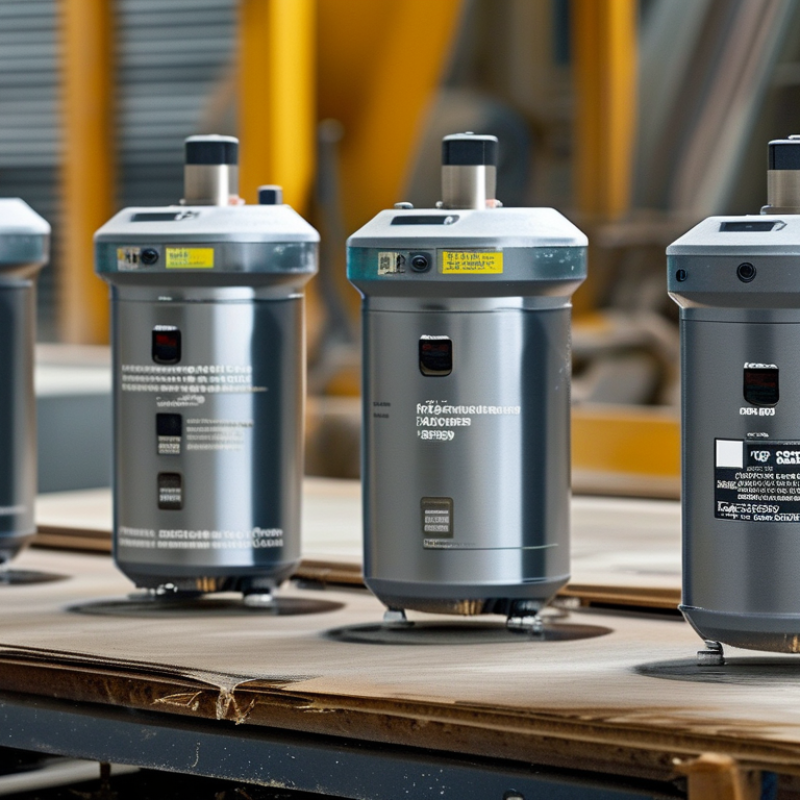
Why Choose Vibration Equipment for Global Buyers?

What Vibration Equipment Is and How It Works

Vibration equipment uses controlled mechanical movement to process, transport, or compact materials. At its core, an electric motor turns eccentric weights inside a drive unit. This rotation creates centrifugal force and transfers repeated motion to a screen, feeder, table, or compaction surface. Operators adjust frequency and amplitude to control the material’s movement. Small changes matter.

In screening applications, vibration helps particles pass through openings according to size. A vibrating feeder delivers a steady flow, while a vibrating table settles material into containers or molds. Compaction equipment removes air pockets by transmitting energy through the surface. Engineers usually check acceleration, operating frequency, load capacity, and mounting strength before selecting a machine. In commissioning work, I have seen uneven feeding caused by poor installation rather than weak equipment. The math is clear; field conditions are not.

Global buyers should match the equipment with local power supply, material properties, climate, and safety requirements. Moisture, dust, temperature, and continuous operation can change performance. A machine suitable for dry aggregate may struggle with sticky powder. Buyers should request drawings, test data, maintenance guidance, and verified electrical specifications. Noise levels and foundation loads also deserve attention. Catalog figures are useful, but a trial using real material is more dependable. Leave room for adjustment.

Which Industries Use Vibration Equipment Worldwide

Why Choose Vibration Equipment for Global Buyers?

Which Industries Use Vibration Equipment Worldwide

Vibration equipment supports material movement, separation, screening, and compaction across many industries. Its value often appears where manual handling becomes slow, inconsistent, or physically demanding.

Mining and quarrying operations use vibrating screens to separate stone, sand, and minerals by size. Construction sites use vibrating compactors to reduce air gaps in soil, asphalt, and concrete. In agriculture, vibrating conveyors help move grains, seeds, and dry crops with controlled flow. These systems can reduce product damage when operators select suitable speed and amplitude.

Food processors use vibration equipment to spread, grade, and transport ingredients such as nuts, vegetables, and frozen products. Hygienic surfaces and accessible cleaning points matter greatly here. Pharmaceutical facilities require accurate feeding and gentle handling of powders, tablets, and capsules. Small variations can affect production records, so calibration and inspection should not be treated as minor tasks.

Chemical plants and recycling facilities also depend on vibration technology. It can separate materials, remove unwanted particles, and maintain steady feeding into processing lines. Wastewater facilities may use vibration-assisted screening for solids management, although site conditions can make performance unpredictable. Humidity, dust, noise, and uneven foundations often change the result. The equipment is not always the problem. Sometimes, the installation needs another look.

Global buyers should review capacity, maintenance access, safety controls, and local operating conditions before purchasing. A technically strong machine may still disappoint if its settings do not match the material. Practical testing remains essential.

Key Benefits of Vibration Equipment for Global Buyers

Global buyers choose vibration equipment for measurable control, not impressive specifications. Properly applied systems reveal imbalance, looseness, bearing wear, and misalignment before visible damage appears. The U.S. Department of Energy’s Operations and Maintenance Best Practices Guide estimates predictive maintenance can reduce costs by 8–12% compared with preventive maintenance. It can also reduce reactive-maintenance costs by 30–40%. That advantage is practical.

For international plants, consistent data is equally valuable. A portable analyzer can check a motor beside a dusty conveyor, while fixed sensors monitor critical assets continuously.

Buyers should examine measurement range, sampling rate, enclosure protection, calibration traceability, and software compatibility. Equipment aligned with ISO 20816 supports clearer machine-condition assessments across sites.

The World Economic Forum’s 2023 Global Lighthouse Network report also connects industrial analytics with measurable productivity improvements. However, one sensor cannot solve poor installation practices. Not magic.

Local service affects the real return. Global purchasers need multilingual manuals, remote diagnostics, replaceable cables, and stable training support. Data formats should export easily for maintenance teams in different countries.

A low purchase price may become expensive after repeated recalibration or delayed spare parts. This is where many buying decisions become too optimistic.

A technically strong device may still fail when operators lack training or when baseline readings are missing. Start with a few critical machines, record operating conditions, and compare results over several maintenance cycles.

How to Evaluate Equipment, Suppliers, and Compliance

Choosing vibration equipment is not only a performance decision. It is a verification exercise. The U.S. Department of Energy reports that motor-driven systems consume about 69% of industrial electricity in the United States. Poor alignment, imbalance, and loose foundations can increase this burden. A suitable vibration platform should therefore show measured frequency range, load capacity, acceleration, noise level, and duty-cycle limits.

Supplier evaluation needs evidence, not polished brochures. Request calibrated test records, material certificates, installation drawings, spare-parts lists, and service response times. Check whether the supplier applies ISO 20816-1 for machine vibration evaluation. For rotating equipment, IEC 60034-14 can also guide motor vibration requirements. These standards do not replace local regulations. They create a common technical language. Ask for a sample factory acceptance test report. Small details matter, such as sensor placement and cable protection.

Compliance should be checked before payment. Confirm electrical ratings, enclosure protection, grounding, emergency-stop design, and regional conformity documents. Documentation should match the exact model and voltage. Not a similar model. A supplier may provide impressive data from controlled conditions. Real factories are dirtier, hotter, and less stable. That difference deserves testing. I would also challenge the assumed capacity. Oversized equipment can waste energy and floor space, while undersized equipment may fail early. The U.S. DOE’s motor-system guidance supports lifecycle assessment because purchase price alone hides operating costs. Still, every calculation needs site measurements. Estimates can be wrong. That is the uncomfortable part.

What Affects Cost, Maintenance, and Long-Term Value

Why Choose Vibration Equipment for Global Buyers?

What Affects Cost, Maintenance, and Long-Term Value

The purchase price is only one part of vibration equipment’s real cost. Freight distance, local voltage, installation space, and safety requirements can change the budget quickly. A compact machine may reduce shipping fees, but limited capacity could increase production time. Small details matter.

Maintenance planning protects long-term value. Buyers should check bearing quality, lubrication access, motor availability, and control-system compatibility. Equipment with simple inspection points usually helps technicians find faults earlier. A clear service manual also reduces training time across different countries. Spare parts matter more than many buyers expect. Delayed delivery can leave a production line silent for weeks.

I once underestimated the effect of cleaning conditions on vibration performance. Dust entered poorly protected areas, and maintenance costs rose sooner than planned. This experience suggests reviewing the operating environment before comparing quotations. Ask about noise levels, foundation needs, replacement intervals, and remote technical support. Also confirm whether local technicians can perform routine repairs safely. The cheapest option is not always economical. A higher initial cost may be reasonable when it improves uptime, energy use, and component life. Still, every claim should be checked against operating data, not attractive specifications.

Why Choose Vibration Equipment for Global Buyers? - What Affects Cost, Maintenance, and Long-Term Value

Equipment Category Typical Application Indicative Purchase Cost
(USD)
Typical Connected Power Routine Maintenance Main Cost Drivers Expected Service Life Long-Term Value Considerations
Vibrating Screen Sizing, scalping, dewatering, and separating bulk materials $15,000–$150,000 5–75 kW Daily visual checks; lubrication weekly to monthly; screen-media inspection every 1–4 weeks Deck size, number of decks, material, screen media, wear protection, and automation 10–20 years with proper maintenance High throughput and replaceable screen media can reduce total cost per processed tonne
Vibratory Feeder Controlled feeding from hoppers, bins, and storage systems $8,000–$80,000 1–30 kW Fastener checks weekly; lubrication monthly where applicable; liner inspection monthly Feeder length, capacity, lining material, duty cycle, controls, and environmental protection 12–20 years Accurate material flow can reduce blockages, spillage, and downstream energy consumption
Vibratory Compactor Soil, asphalt, aggregates, and industrial material compaction $10,000–$100,000 10–100 kW or engine-equivalent output Daily fluid and safety checks; service intervals commonly every 250–500 operating hours Operating weight, compaction width, centrifugal force, travel system, and engine or motor type 8–15 years in heavy-duty use Fewer passes and consistent compaction can lower labor, fuel, and rework costs
Vibrating Table Concrete consolidation, mold filling, packaging, and material densification $5,000–$50,000 0.5–15 kW Fastener inspection weekly; bearing and motor checks monthly; surface inspection quarterly Table dimensions, load capacity, frequency control, isolation mounts, and custom fixtures 10–20 years Simple construction and low energy demand support predictable operating costs
Vibrating Conveyor Horizontal or inclined conveying of bulk solids and packaged goods $12,000–$120,000 2–40 kW Alignment and fastener checks weekly; bearing inspection monthly; liner replacement as required Length, width, capacity, sanitary design, liners, discharge points, and controls 10–20 years Fewer moving parts than many mechanical conveying systems can simplify maintenance
Vibratory Finishing Machine Deburring, polishing, radiusing, and surface finishing of components $8,000–$75,000 1–25 kW Media and lining inspection weekly; lubricant checks monthly; motor and bearing inspection quarterly Working volume, lining type, process controls, separation system, and dust or wastewater handling 8–15 years Repeatable finishing can improve product consistency and reduce manual labor requirements
Planning note: Cost ranges are indicative international budgeting ranges for new equipment and exclude freight, duties, installation, civil works, spare parts, and local taxes. Actual pricing depends on capacity, material characteristics, safety requirements, electrical standards, customization, and service support. Service-life estimates assume correct selection, trained operation, regular inspections, and timely replacement of wear parts.
Copyright 2025 Fluidra S.A. | Created by BCM Marketing Agencia Privacy Policy Legal note | Cookie policy |

Technical cookies are strictly necessary for our website to work and you can navigate through it. These types of cookies are those that, for example, allow us to identify you, give you access to certain restricted parts of the page if necessary, or remember different options or services already selected by you, such as your privacy preferences. Therefore, they are activated by default, your authorization not being necessary in this regard. Through the configuration of your browser, you can block or alert the presence of this type of cookies, although such blocking will affect the proper functioning of the different functionalities of our website.


The analysis cookies allow us to study the navigation of the users of our website in general (for example, which sections of the page are the most visited, which services are used most and if they work correctly, etc.). From the statistical information on navigation on our website, we can improve both the operation of the page itself and the different services it offers. Therefore, these cookies do not have an advertising purpose, but only serve to make our website work better, adapting to our users in general. By activating them you will contribute to this continuous improvement. You can enable or disable these cookies by checking the corresponding box, being disabled by default.


Functionality cookies allow us to remember your preferences, to personalize certain characteristics and general options of our website, every time you access it (for example, the language in which the information is presented to you, the sections marked as favorites, your browser type, etc.) Therefore, this type of cookies does not have an advertising purpose, but by activating them you will improve the functionality of the website (for example, adapting to your type of browser) and the customization of it based on your preferences (for example, by presenting the information in the language that you have chosen in previous occasions), which will contribute to the ease, usability and comfort of our page during your navigation. You can enable or disable these cookies by checking the corresponding box, being disabled by default.


Advertising cookies allow us to manage the advertising spaces included in our website based on criteria such as the content shown or the frequency in which the ads are displayed. For example, if you have been shown the same ad several times on our website, and you have not shown a personal interest by clicking on it, it will not appear again. In summary, by activating this type of cookies, the advertising shown on our website will be more useful and diverse, and less repetitive. You can enable or disable these cookies by checking the corresponding box, being disabled by default.


Behavioral advertising cookies allow us to obtain information based on the observation of your browsing habits and behaviors on the web, in order to show you advertising content that best suits your personal tastes and interests. To understand it in a very simple way, we will give you a fictitious example: if your last searches on the web were related to suspense literature, we would show you advertising about suspense books. Therefore, activating this type of cookies, the advertising that we show you on our website will not be generic, but will be oriented to your searches, tastes and interests, therefore adjusting exclusively to you. You can enable or disable these cookies by checking the corresponding box, being disabled by default.
To understand it in a very simple way, we will give you a fictitious example: if your last searches on the web were related to suspense literature, we would show you advertising about suspense books. Therefore, activating this type of cookies, the advertising that we show you on our website will not be generic, but will be oriented to your searches, tastes and interests, therefore adjusting exclusively to you. You can enable or disable these cookies by checking the corresponding box, being disabled by default.

SAVE

We use our own and third-party cookies to ensure the proper functioning of the website and to analyse our services, improve your experience on our website and show you advertisements related to your interests according to profiling based on your browsing habits (e.g. websites visited). You can accept all cookies by clicking "ACCEPT" or set or reject them by clicking here. If you would like to know more about the use of cookies, please see our COOKIE POLICY.


ACCEPT ALL
Reject no essentials


