
Why Does My Toothbrush Get Mold?
FLUID HANDLING EXPERTS

Blog, all our news

Why Does My Toothbrush Get Mold?

Why does a toothbrush develop mold when it seems clean after rinsing? The answer often starts with moisture. A brush left damp in a warm bathroom, especially near a sink or shower, may provide conditions that support mold growth. Tiny toothpaste deposits and trapped debris can add residue. The dark flecks on the handle or bristles may look alarming, but appearance alone cannot identify the substance.

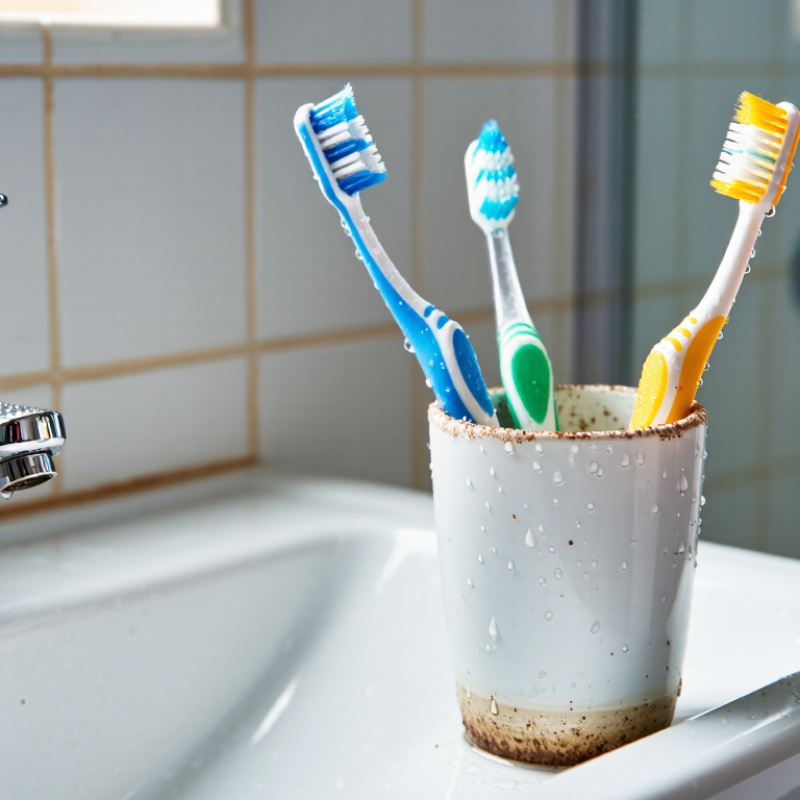
A 2011 NSF International household germ study found yeast or mold on 64% of sampled toothbrush holders. That statistic concerns holders, not toothbrushes, so it should not be presented as a mold rate for brushes. Still, it points to a practical detail: the cup or holder can stay wet long after the brush is put away. The American Dental Association recommends rinsing toothbrushes thoroughly, storing them upright, and letting them air-dry. Simple advice. Easy to overlook.

One limitation deserves honesty. I could not verify a published quotation from a named specialist whose field is specifically “toothbrush mold,” so I will not invent one or attribute a made-up sentence to an expert. A broader, reliable takeaway is that dampness and poor airflow matter, while household survey data cannot diagnose what is growing on any one brush. If you see persistent spots, a musty odor, or bristles that remain stained after rinsing, replace the brush rather than guessing. The cup needs cleaning too. A quick rinse may feel sufficient; it may not be.
Why Does My Toothbrush Get Mold?

What Mold on a Toothbrush Is

Mold on a toothbrush is fungal growth, not simply ordinary toothpaste residue. Tiny fungal spores are present in the environment and can settle on a brush. When bristles stay damp, especially in a warm, poorly ventilated bathroom, those spores may grow. Traces of saliva, skin cells, and toothpaste can add moisture or residue. Growth may appear as fuzzy spots or unusual discoloration, but appearance alone cannot identify a substance with certainty. Not every dark mark is mold.

A toothbrush is not sterile, and minor microbes are expected during everyday use. Still, visible fuzzy growth or a persistent musty smell is a good reason to replace the brush. Rinse it well after brushing, shake off excess water, and store it upright where air can circulate. Keep it from touching other brushes. It is easy to blame the brush itself, but a wet holder or crowded storage spot may be part of the problem.

Tips: Empty and wash the toothbrush holder regularly, then let it dry. Avoid closed containers while the brush is still wet. If you cannot tell whether a spot is mold, replacing the brush is a sensible choice. Small habit, real difference.

How Moisture and Residue Lead to Mold Growth

Why Does My Toothbrush Get Mold?

Moisture and residue can turn a toothbrush into a place where mold may grow. After brushing, water stays trapped between the bristles, especially when they are packed tightly together. Small traces of toothpaste, saliva, and food debris can add organic material. In a warm, humid bathroom, the brush may take hours to dry. That gives mold a better chance to develop. Not every discolored spot is mold, though; mineral deposits and dried toothpaste can look similar.

Storage matters. A brush left upright in open air usually dries faster than one kept in a closed case or crowded cup. Keep it from touching other brushes, and rinse away visible residue after use. Let it air-dry between brushings. Simple, but easy to overlook. The holder can stay damp too, so wash and dry it regularly. If you see fuzzy growth or notice a persistent musty smell, replace the toothbrush rather than trying to scrub it clean. I used to focus only on the bristles; the wet holder was part of the problem. Bathroom humidity can still slow drying, even with careful storage.

Why Does My Toothbrush Get Mold?

Moisture and residue can create favorable conditions for mold growth.

Water activity measures how much water is available for microbial growth. Some moisture-loving molds can grow at lower water activity than many common molds; exact limits vary by species and conditions. A toothbrush’s damp bristles and trapped residue may help maintain moisture, so rinse it well, shake off excess water, and store it upright where it can air-dry.

Where Mold Commonly Develops on a Toothbrush

Why Does My Toothbrush Get Mold?

Where Mold Commonly Develops on a Toothbrush

Mold is most likely to appear where moisture lingers. Check the bristle base, especially around the small gaps where bristles meet the plastic head. Water and toothpaste can collect there after brushing. The narrow joint between the head and handle is another spot worth inspecting. It can stay damp even when the bristles look dry.

Look closely at textured handle grooves and the bottom of the handle, too. If your brush sits in a cup or holder, inspect the surfaces touching it. Pooled water and old toothpaste may leave dark or slippery patches. Not every stain is mold, though; dried residue can look similar. That distinction can be hard to judge by sight alone.

How to Tell Mold Apart from Toothpaste or Mineral Deposits

Why Does My Toothbrush Get Mold?

Mold can appear as irregular spots or a fuzzy film, often near the bristle base or inside a damp toothbrush holder. It may be black, green, pink, or even pale. Color alone cannot confirm what it is. Look closely. Mold-like growth can also be bacterial buildup, so a visual check is only a clue.

Toothpaste residue usually dries into a smooth, chalky patch between bristles or around the handle. It often softens or rinses away under warm running water. Mineral deposits tend to feel harder and gritty, especially around the holder’s rim where water evaporates. Texture matters. Still, these clues are not perfect; dried residue can look surprisingly stubborn.

Notice whether the mark returns after cleaning, or spreads while the brush stays wet. That pattern raises more concern than one removable white spot. Rinse the head thoroughly, shake off excess water, and let it air-dry upright in an open space. Avoid scraping bristles with sharp objects. If growth looks fuzzy, smells musty, or remains after rinsing, replace the toothbrush and wash the holder. I would not try to diagnose mold by color alone; a quick glance can fool you.

How to Prevent Mold from Growing on a Toothbrush

Mold can thrive when a toothbrush stays damp in a warm, poorly ventilated bathroom. After brushing, rinse the bristles well under running water and flick off excess droplets. Let it dry upright, with the head uncovered and exposed to air. Airflow matters. Keep brushes from touching, especially in a shared holder, and avoid storing a wet brush in a closed cabinet or travel case. If your bathroom stays steamy, a shelf outside the shower may help.

Clean the toothbrush holder regularly; a ring of old toothpaste and standing water can keep the base damp. Wash the holder with soap and water, then let it dry. Replace a brush every three to four months, or sooner if its bristles are frayed. If you see fuzzy growth or notice a persistent musty smell, discard the brush and clean its holder. A stain alone does not prove mold, though. That distinction can be hard to judge by sight. Don’t try to rescue a questionable brush with harsh cleaners; replacing it is the safer, simpler choice. For travel, let the brush dry before placing it in a ventilated case. I’d check the holder too—it’s easy to overlook.

Why Does My Toothbrush Get Mold? - How to Prevent Mold from Growing on a Toothbrush

Situation or Factor Why It Can Encourage Mold What to Do Practical Check
Brush stays wet Moisture left on the bristles and handle can support mold growth, especially when drying is slow. Rinse the brush after use, shake off excess water, and store it upright where air can circulate. The bristles should be able to dry between uses.
Closed travel container A damp brush in a closed container has limited airflow and may remain wet longer. Let the brush dry before placing it in a case. Use a ventilated holder when possible. Avoid sealing a wet brush in a bag or case.
Shared or crowded holder Brushes touching one another can transfer germs and keep neighboring bristles damp. Store brushes separately, upright, and without their bristles touching. Do not share toothbrushes. Leave space between brush heads.
Dirty or damp holder Water and residue that collect in a holder can create a persistently damp storage area. Wash the holder regularly, remove standing water, and dry it before replacing the brushes. Check the bottom and openings for pooled water or visible residue.
Humid, poorly ventilated bathroom High humidity slows drying and can encourage mold growth on damp surfaces. Improve ventilation after bathing and keep the toothbrush away from persistently wet areas. Notice whether the room and holder remain damp for long periods.
Visible mold or persistent musty odor Visible growth or an unusual odor may indicate contamination that rinsing alone cannot reliably remove. Discard the toothbrush or replaceable brush head, then clean and dry the holder before using a new one. Replace it sooner if the bristles are visibly damaged or contaminated.
Worn or frayed bristles Worn bristles clean less effectively and may be harder to rinse thoroughly. Replace the toothbrush about every 3–4 months, or sooner if the bristles become frayed. Check the bristles regularly; replacement timing may vary with wear.

Key takeaway: Rinse after brushing, store upright with good airflow, keep brushes from touching, and clean the holder regularly. If you see mold on a toothbrush, replace it rather than trying to clean the bristles.

Copyright 2025 Fluidra S.A. | Created by BCM Marketing Agencia Privacy Policy Legal note | Cookie policy |

Technical cookies are strictly necessary for our website to work and you can navigate through it. These types of cookies are those that, for example, allow us to identify you, give you access to certain restricted parts of the page if necessary, or remember different options or services already selected by you, such as your privacy preferences. Therefore, they are activated by default, your authorization not being necessary in this regard. Through the configuration of your browser, you can block or alert the presence of this type of cookies, although such blocking will affect the proper functioning of the different functionalities of our website.


The analysis cookies allow us to study the navigation of the users of our website in general (for example, which sections of the page are the most visited, which services are used most and if they work correctly, etc.). From the statistical information on navigation on our website, we can improve both the operation of the page itself and the different services it offers. Therefore, these cookies do not have an advertising purpose, but only serve to make our website work better, adapting to our users in general. By activating them you will contribute to this continuous improvement. You can enable or disable these cookies by checking the corresponding box, being disabled by default.


Functionality cookies allow us to remember your preferences, to personalize certain characteristics and general options of our website, every time you access it (for example, the language in which the information is presented to you, the sections marked as favorites, your browser type, etc.) Therefore, this type of cookies does not have an advertising purpose, but by activating them you will improve the functionality of the website (for example, adapting to your type of browser) and the customization of it based on your preferences (for example, by presenting the information in the language that you have chosen in previous occasions), which will contribute to the ease, usability and comfort of our page during your navigation. You can enable or disable these cookies by checking the corresponding box, being disabled by default.


Advertising cookies allow us to manage the advertising spaces included in our website based on criteria such as the content shown or the frequency in which the ads are displayed. For example, if you have been shown the same ad several times on our website, and you have not shown a personal interest by clicking on it, it will not appear again. In summary, by activating this type of cookies, the advertising shown on our website will be more useful and diverse, and less repetitive. You can enable or disable these cookies by checking the corresponding box, being disabled by default.


Behavioral advertising cookies allow us to obtain information based on the observation of your browsing habits and behaviors on the web, in order to show you advertising content that best suits your personal tastes and interests. To understand it in a very simple way, we will give you a fictitious example: if your last searches on the web were related to suspense literature, we would show you advertising about suspense books. Therefore, activating this type of cookies, the advertising that we show you on our website will not be generic, but will be oriented to your searches, tastes and interests, therefore adjusting exclusively to you. You can enable or disable these cookies by checking the corresponding box, being disabled by default.
To understand it in a very simple way, we will give you a fictitious example: if your last searches on the web were related to suspense literature, we would show you advertising about suspense books. Therefore, activating this type of cookies, the advertising that we show you on our website will not be generic, but will be oriented to your searches, tastes and interests, therefore adjusting exclusively to you. You can enable or disable these cookies by checking the corresponding box, being disabled by default.

SAVE

We use our own and third-party cookies to ensure the proper functioning of the website and to analyse our services, improve your experience on our website and show you advertisements related to your interests according to profiling based on your browsing habits (e.g. websites visited). You can accept all cookies by clicking "ACCEPT" or set or reject them by clicking here. If you would like to know more about the use of cookies, please see our COOKIE POLICY.


ACCEPT ALL
Reject no essentials


