
Why Choose Thermal Break Aluminium for Global Projects?
FLUID HANDLING EXPERTS

Blog, all our news

Why Choose Thermal Break Aluminium for Global Projects?

Why Choose Thermal Break Aluminium for Global Projects?

Global construction is facing a measurable energy challenge. The 2023 Global Status Report for Buildings and Construction, published by UNEP and the GlobalABC, states that buildings consume about 30% of global final energy. They also produce roughly 26% of energy-related emissions. These figures make façade performance more than a design preference. It becomes a project responsibility.

Thermal Break Aluminium helps reduce heat transfer through aluminium frames. An insulating polyamide strip separates the inner and outer metal sections. This detail can improve frame U-values and reduce interior surface condensation. It also supports more stable indoor temperatures beside windows and doors. That matters in a glass façade exposed to winter winds or intense summer sun. The International Energy Agency highlights improved building envelopes as a practical route to lower energy demand. Thermal Break Aluminium fits that direction when it is properly engineered.

Performance depends on the whole system. Glazing, gaskets, fasteners, drainage, and installation quality all matter. A strong frame cannot correct poor site sealing. It is not magic. Regional standards also vary, so one specification may fail elsewhere. Designers should verify thermal calculations, air tightness, water resistance, and condensation risks. The Passive House Institute and ISO-based testing methods provide useful benchmarks for this process. Material selection should also consider recycled content and product durability. Aluminium offers long service life, but its embodied carbon requires honest assessment. Choosing Thermal Break Aluminium is therefore not simply choosing a frame. It is choosing a tested envelope strategy, with room for careful review.
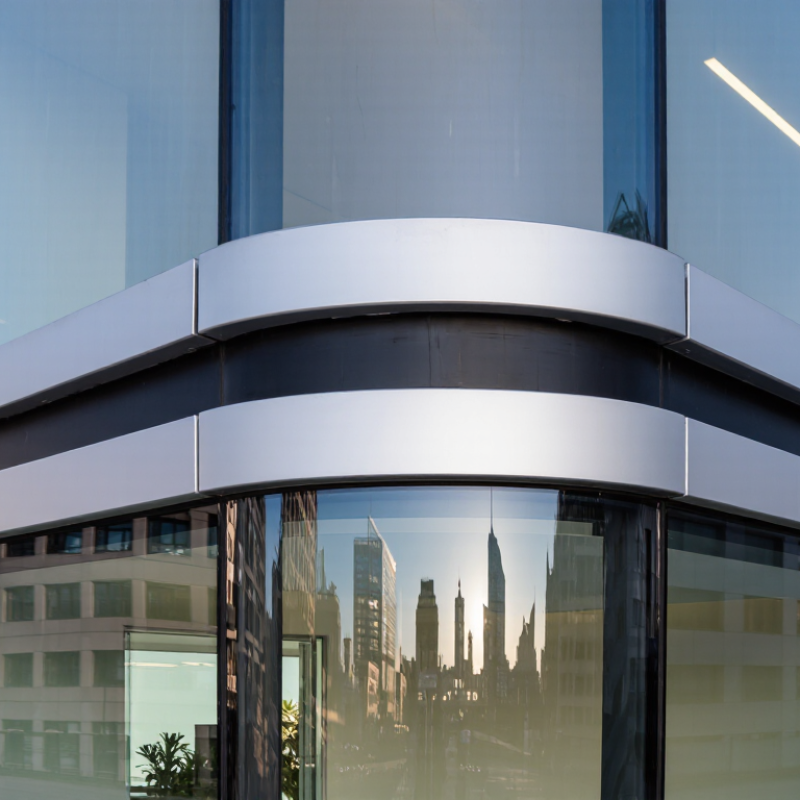
Why Choose Thermal Break Aluminium for Global Projects?

What Thermal Break Aluminium Is and How It Works

Thermal break aluminium uses a low-conductivity polyamide strip between two aluminium profiles. The strip interrupts the metal path that normally transfers outdoor cold indoors. It also reduces heat loss around window frames and doors. The principle is simple. The detailing is not.

Aluminium remains strong, slim, and stable, while the insulated barrier improves frame performance. On a winter site, interior frame surfaces feel less cold. Condensation risk may also decrease when indoor humidity is controlled. However, the frame alone cannot guarantee comfort. Glass selection, gaskets, spacers, installation gaps, and drainage matter equally. Uneven strips or compressed seals can quietly weaken performance.

The United Nations Environment Programme reported in its 2023 Global Status Report that buildings consume about 34% of global energy and produce approximately 37% of energy-related emissions. This pressure makes envelope design increasingly important. Project teams should compare tested U-values, not marketing estimates. For reference, Passive House window targets often use a whole-window Uw value near 0.8 W/m²K, depending on climate and certification details. That figure is not universal.

Thermal imaging can reveal cold corners after installation. Site measurements are worth the effort. Yet thermal breaks are not magic. Poor alignment, missing insulation, or unsuitable glass can still create uncomfortable interiors. Different climates need different profiles, and imported specifications may require careful local review.

Why Choose Thermal Break Aluminium for Global Projects? - What Thermal Break Aluminium Is and How It Works

Data Dimension Thermal Break Aluminium Non-Thermal-Break Aluminium Project Relevance
Basic Construction Two aluminium sections are connected by a low-conductivity insulating strip, commonly reinforced polyamide. Interior and exterior aluminium sections form a continuous metal path. The insulating strip interrupts direct heat flow through the frame.
How the Thermal Break Works The insulating separator reduces conductive heat transfer and helps move the internal surface temperature closer to room temperature. Aluminium provides a continuous heat-conductive path between indoors and outdoors. Lower heat flow can improve energy performance and indoor comfort when the complete window or façade is properly designed.
Thermal Conductivity of Main Materials Aluminium is typically about 160–205 W/m·K; glass-fibre-reinforced polyamide used as a thermal separator is commonly about 0.20–0.35 W/m·K. Aluminium is typically about 160–205 W/m·K throughout the frame section. The large difference in conductivity explains why the separator reduces heat transfer through the frame.
Typical Frame Uf Value Approximately 1.5–2.5 W/m²·K for many thermally improved aluminium systems. Approximately 5.0–7.0 W/m²·K for many basic aluminium systems. Lower Uf values indicate lower heat flow through the frame. Actual values depend on geometry, inserts, dimensions and calculation method.
Whole-Window Uw Value Often approximately 0.8–1.8 W/m²·K when combined with suitable insulating glazing and warm-edge spacers. Often approximately 2.0–3.5 W/m²·K with similar glazing, depending on frame proportion and design. Uw is a whole-product value; it should not be confused with the frame-only Uf value.
Condensation Risk Generally lower at the interior frame surface because the thermal barrier improves the internal surface temperature. Generally higher in cold climates or high-humidity interiors because the inner frame can become colder. Condensation performance still depends on indoor humidity, outdoor temperature, glazing, installation and ventilation.
Energy Performance Can reduce conductive heat loss in heating-dominated buildings and reduce unwanted heat gain in cooling-dominated buildings. More heat can pass through the frame, increasing the thermal load on the building envelope. The final energy impact depends on window area, orientation, glazing, shading, air leakage and local climate.
Structural Capability Retains aluminium’s high strength-to-weight characteristics while adding thermal separation between frame sections. Provides strong, lightweight framing but without a dedicated thermal separation layer. Suitable design allows large openings, curtain walls, doors and façades while supporting project-specific wind and span requirements.
Weather and Air Tightness Can achieve high water and air performance when combined with correctly designed seals, drainage paths and fabrication. Can also achieve good weather performance, but thermal performance remains limited by the continuous metal path. Air leakage and water resistance are system and installation properties, not determined by the thermal break alone.
Fire and Material Considerations Aluminium remains non-combustible as a metal; the polymer separator must be evaluated as part of the complete tested assembly. The frame is primarily aluminium, with no polymer thermal separator in the metal path. Fire classification and compliance must be checked for the complete façade or window assembly under the applicable local regulations.
Acoustic Performance Can support strong sound insulation when paired with suitable laminated or insulating glass, seals and installation details. Acoustic performance is also mainly influenced by glazing, seals, frame configuration and installation quality. The thermal break itself is not a standalone acoustic rating; project requirements should use tested whole-product data.
Durability and Corrosion Protection Aluminium frames can provide long service life when finishes, drainage, fasteners and interfaces are correctly specified and maintained. Similar aluminium durability is possible, but exposure conditions still require appropriate coating, anodising or other protection. Specify finishes and corrosion categories according to coastal, industrial, humid or high-UV exposure conditions.
Climate Suitability Suitable for cold, hot, mixed and humid climates when the frame, glazing, shading and seals are selected for the local design conditions. May be acceptable where thermal requirements are limited, but can be less suitable for high-performance envelopes. Climate-specific modelling should consider heating degree days, cooling degree days, solar exposure and indoor humidity.
Typical Applications High-performance windows, doors, curtain walls, unitized façades, skylights and ventilated façade systems. Interior partitions, low-thermal-demand applications and projects where frame thermal performance is not a primary requirement. Selection should be based on the project’s energy code, envelope targets, dimensions, exposure and lifecycle objectives.
Verification Data to Request Frame Uf, whole-window Uw, solar factor, air permeability, watertightness, wind resistance and acoustic test results. The same performance data should be requested, although thermal values are commonly higher. Use independently calculated or tested values for the exact profile, glazing, hardware, dimensions and installation conditions.

Note: The numerical ranges are typical indicative values rather than guaranteed product ratings. Final performance should be verified using project-specific calculations or tests in accordance with applicable standards such as EN ISO 10077-2, EN 14351-1, ASTM C1363 or relevant local requirements.

Key Performance Benefits for Different Global Climates

Why Choose Thermal Break Aluminium for Global Projects?

Thermal break aluminium helps control heat flow through window and door frames. A polyamide insulation strip separates the inner and outer aluminium sections. This reduces cold bridging in winter and heat transfer in summer. The result is a more stable indoor temperature. Comfort improves near the glass edge.

In cold regions, the system can reduce interior condensation risks. This matters in homes, schools, and offices with humid indoor air. In hot climates, it limits solar heat entering through the frame. Pairing it with suitable glazing and external shading is essential. The frame alone cannot solve every thermal problem.

Humid and coastal locations create another challenge. Aluminium needs durable surface treatment and carefully designed drainage paths. High-altitude projects may face strong ultraviolet exposure and sharp temperature changes. Engineers should review thermal calculations, air leakage, water resistance, and installation details before production.

Site observations often reveal small gaps around corners or seals. These details can weaken an otherwise strong design. Thermal break aluminium is not a magic solution. Its performance depends on the complete façade system, accurate fabrication, and disciplined installation. Real project feedback should guide future specifications, even when the original design appears sound.

Design and Building Applications Across International Projects

Thermal break aluminium supports design and building applications across international projects. Its insulated barrier reduces heat transfer through window and façade frames. This matters in cold cities, humid coasts, and hot, sun-exposed regions. Designers can use slimmer profiles while maintaining practical thermal performance. Large glazed openings also become easier to coordinate with modern architectural concepts.

Project teams should assess local climate data, energy requirements, fire standards, and structural loads before specifying the system. A successful detail depends on more than the frame. Insulation continuity, drainage paths, gaskets, glass selection, and installation tolerances all need review. On complex sites, small gaps around a sill can invite condensation. That detail is easy to underestimate. Factory testing and independent performance checks improve confidence, but site workmanship still matters. Thermal break aluminium is not a magic fix.

Tips:

  • Match the thermal design to the climate zone.
  • Request tested U-values for the complete window assembly.
  • Check corner joints and sill drainage carefully.
  • Coordinate frame depths with insulation and waterproofing layers.
  • Leave room for movement.
  • International projects often involve different contractors, drawings, and expectations.
  • Clear installation sketches reduce mistakes.
  • A mock-up can reveal alignment problems before production, although it may not represent every site condition.
  • Teams should record lessons from each project and refine the next specification.

Material Standards, Energy Codes, and Regional Requirements

Thermal break aluminium supports global projects because performance must survive different climates, codes, and construction practices. The UNEP 2023 Global Status Report states that buildings consumed 34% of global energy in 2022. They also produced 37% of energy and process-related carbon emissions. A continuous polyamide or resin thermal barrier reduces heat flow through the frame. Details decide performance.

Material selection should begin with recognized standards. EN ISO 10077-2 helps calculate thermal transmittance through window frames and junctions. Whole-window values still matter more than frame values alone. Air leakage, glass spacers, seals, and installation quality can change the result. A highly insulated frame can underperform when the perimeter seal is poorly fitted. That lesson is easy to miss.

Energy codes remain regional. ASHRAE 90.1 and the International Energy Conservation Code commonly specify U-factors, solar heat gain, and air leakage limits. European projects may follow national rules aligned with the Energy Performance of Buildings Directive. Hot regions may prioritize solar control, while cold regions demand stronger condensation resistance. Codes are local. Project teams should verify the latest edition, climate zone, and testing method before fabrication. Regional wind loads and fire requirements also affect aluminium profiles, even when thermal targets appear similar. Reality is messier. A responsible specification records tested performance, not only catalogue calculations, and allows site inspections before final approval.

Factors for Selecting Thermal Break Aluminium Systems

Why Choose Thermal Break Aluminium for Global Projects?

Selecting a thermal break aluminium system requires more than comparing frame prices. Start with the project’s climate, glazing size, exposure, and heating or cooling demands. A polyamide thermal barrier reduces heat transfer through the frame. However, its real performance depends on width, continuity, and accurate fabrication.

Check tested U-values, air leakage, water tightness, wind resistance, and acoustic results. These figures should match the intended building use and local requirements. Ask for complete test reports, not isolated laboratory claims. Details decide performance. Corner joints, sliding tracks, drainage paths, and fasteners can weaken an otherwise efficient system. On busy sites, poor cutting or incomplete seals often create cold spots and water risks.

From project experience, early coordination with fabricators and installers prevents expensive revisions. Review section drawings against actual glass thickness, hardware loads, and fixing conditions. A small mock-up can reveal condensation near a sill before production begins. Global projects also need materials suited to different humidity, salt exposure, and temperature changes. No system is perfect. A wider thermal break may improve insulation, but it can increase cost and affect sightlines. Engineers should record these trade-offs openly. Independent testing and documented quality checks offer stronger confidence than attractive brochures. Performance can still fall short when installation training is overlooked.

Copyright 2025 Fluidra S.A. | Created by BCM Marketing Agencia Privacy Policy Legal note | Cookie policy |

Technical cookies are strictly necessary for our website to work and you can navigate through it. These types of cookies are those that, for example, allow us to identify you, give you access to certain restricted parts of the page if necessary, or remember different options or services already selected by you, such as your privacy preferences. Therefore, they are activated by default, your authorization not being necessary in this regard. Through the configuration of your browser, you can block or alert the presence of this type of cookies, although such blocking will affect the proper functioning of the different functionalities of our website.


The analysis cookies allow us to study the navigation of the users of our website in general (for example, which sections of the page are the most visited, which services are used most and if they work correctly, etc.). From the statistical information on navigation on our website, we can improve both the operation of the page itself and the different services it offers. Therefore, these cookies do not have an advertising purpose, but only serve to make our website work better, adapting to our users in general. By activating them you will contribute to this continuous improvement. You can enable or disable these cookies by checking the corresponding box, being disabled by default.


Functionality cookies allow us to remember your preferences, to personalize certain characteristics and general options of our website, every time you access it (for example, the language in which the information is presented to you, the sections marked as favorites, your browser type, etc.) Therefore, this type of cookies does not have an advertising purpose, but by activating them you will improve the functionality of the website (for example, adapting to your type of browser) and the customization of it based on your preferences (for example, by presenting the information in the language that you have chosen in previous occasions), which will contribute to the ease, usability and comfort of our page during your navigation. You can enable or disable these cookies by checking the corresponding box, being disabled by default.


Advertising cookies allow us to manage the advertising spaces included in our website based on criteria such as the content shown or the frequency in which the ads are displayed. For example, if you have been shown the same ad several times on our website, and you have not shown a personal interest by clicking on it, it will not appear again. In summary, by activating this type of cookies, the advertising shown on our website will be more useful and diverse, and less repetitive. You can enable or disable these cookies by checking the corresponding box, being disabled by default.


Behavioral advertising cookies allow us to obtain information based on the observation of your browsing habits and behaviors on the web, in order to show you advertising content that best suits your personal tastes and interests. To understand it in a very simple way, we will give you a fictitious example: if your last searches on the web were related to suspense literature, we would show you advertising about suspense books. Therefore, activating this type of cookies, the advertising that we show you on our website will not be generic, but will be oriented to your searches, tastes and interests, therefore adjusting exclusively to you. You can enable or disable these cookies by checking the corresponding box, being disabled by default.
To understand it in a very simple way, we will give you a fictitious example: if your last searches on the web were related to suspense literature, we would show you advertising about suspense books. Therefore, activating this type of cookies, the advertising that we show you on our website will not be generic, but will be oriented to your searches, tastes and interests, therefore adjusting exclusively to you. You can enable or disable these cookies by checking the corresponding box, being disabled by default.

SAVE

We use our own and third-party cookies to ensure the proper functioning of the website and to analyse our services, improve your experience on our website and show you advertisements related to your interests according to profiling based on your browsing habits (e.g. websites visited). You can accept all cookies by clicking "ACCEPT" or set or reject them by clicking here. If you would like to know more about the use of cookies, please see our COOKIE POLICY.


ACCEPT ALL
Reject no essentials


