
Why Choose a Pallet Banding Kit for Global Shipping?
FLUID HANDLING EXPERTS

Blog, all our news

Why Choose a Pallet Banding Kit for Global Shipping?

Global shipping places severe demands on every pallet. Vibration, humidity, repeated handling, and sudden transfers can loosen poorly secured loads. A Pallet Banding Kit offers a practical control point. It combines strapping, tensioning tools, seals, and protective accessories in one organized solution. Workers can secure cartons around a pallet before the trailer door closes. Small details matter. A loose edge can become a damaged shipment.

The World Bank’s 2023 Logistics Performance Index surveyed 4,090 logistics professionals across 139 countries. Its findings connected reliable logistics with predictable delivery performance. Packaging supports that reliability, especially when loads face several handling stages. The OECD’s Global Plastics Outlook also reported 353 million tonnes of plastic waste in 2019. This figure encourages companies to reduce unnecessary materials without weakening protection. Packaging expert Dr. Susan Selke emphasizes that packaging should balance product protection, cost, and environmental impact. That principle fits pallet banding well.

Still, a Pallet Banding Kit is not automatically the best answer. Band tension, strap width, pallet quality, and operator training influence results. Over-tensioning can crush cartons. Under-tensioning can allow movement. The overlooked part is consistency. A well-designed kit makes the correct process easier, but it cannot replace inspection. Testing the secured pallet, checking corner protection, and reviewing damage records remain essential. For global shippers, this practical balance can reduce handling risks, improve load stability, and support more dependable delivery outcomes. Perfect protection does not exist. Better preparation does.
Why Choose a Pallet Banding Kit for Global Shipping?

Define Global Shipping Risks: Load Shift, Damage, and Rework

Global shipping exposes pallets to vibration, braking, humidity, and repeated handling. A small gap between cartons can become a serious load shift during ocean or road transport. Boxes may lean, crush, or fall when a pallet is moved by forklift.

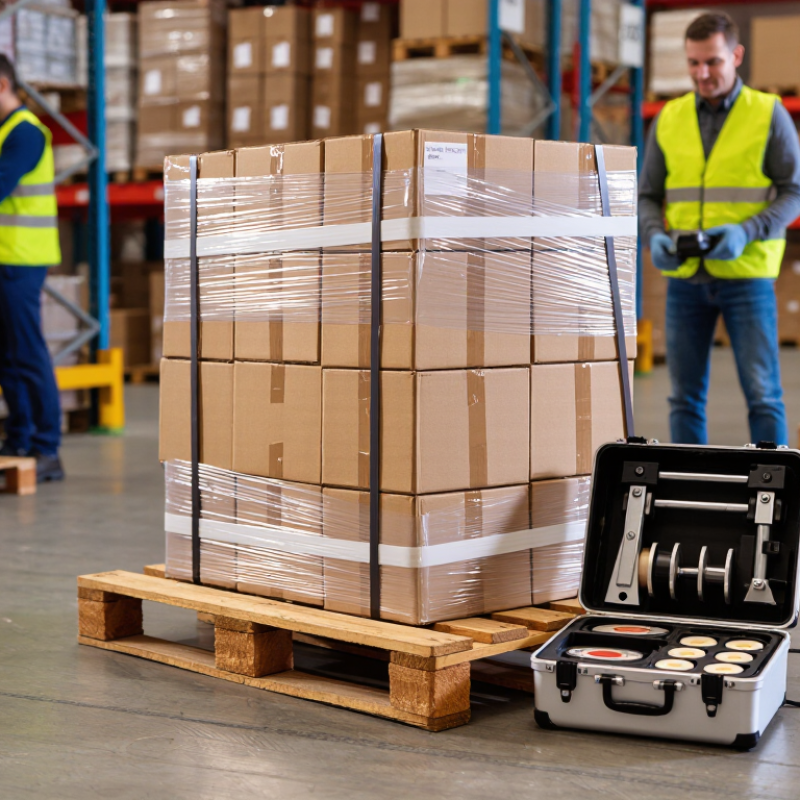
A pallet banding kit helps stabilize the load before it leaves the warehouse. Strapping applies consistent pressure around cartons, while corner protectors reduce crushed edges. Proper tension also limits movement between layers. This can reduce product damage, sorting delays, and expensive rework at the destination. However, banding cannot correct poor stacking or weak packaging. That part is easy to forget.

In practical packing operations, teams should check the pallet from every side. The load should stay square, with heavier cartons placed below lighter ones. Use enough tension to secure the shipment, but avoid cutting into soft cartons. Over-tightening is a common mistake. It can create hidden damage before transit even begins. Weather-resistant materials may also help when pallets face damp docks or changing temperatures.

Tips: Test the secured pallet with a gentle push. Watch for rocking, loose layers, or exposed corners. Record the banding method and inspect one finished pallet from each packing shift. Photos can support training and reveal patterns that busy teams often miss.

Match PP, PET, or Steel Banding to ISO 6780 Pallet Footprints

Why Choose a Pallet Banding Kit for Global Shipping?

Pallet footprints decide whether a load travels securely or wastes valuable space. ISO 6780 identifies six standardized pallet sizes, including 1,000 × 1,200 mm and 1,067 × 1,067 mm. A banding kit should match the selected footprint, not merely the carton weight. During warehouse trials, I have seen loose bands appear after forklifts turn sharply. Small gaps become expensive movement.

PP banding suits lighter unit loads and frequent manual handling. It is lightweight, flexible, and usually easier to apply around mixed cartons. PET provides higher tensile strength and better tension retention for dense, export-bound pallets. Steel banding remains useful for very heavy or rigid loads, especially where sharp edges and high compression demand extra restraint. It also adds weight and may damage poorly protected packaging. That trade-off is easy to underestimate.

The World Bank’s Logistics Performance Index 2023 assessed logistics systems across 139 economies and highlighted reliability as a core performance factor. Reliable restraint supports that goal. UNCTAD’s Review of Maritime Transport 2023 reported that over 80% of global merchandise trade by volume moves by sea, where vibration, humidity, and repeated transfers test every fastening choice. The perfect material does not exist. Select band width, tension, seals, and corner protection together. A technically strong band can still fail when the pallet footprint is mismatched.

Build the Kit: Tensioner, Sealer, Buckles, and Edge Protectors

Why Choose a Pallet Banding Kit for Global Shipping?

Build the Kit: Tensioner, Sealer, Buckles, and Edge Protectors

Global freight needs more than strong pallets. UNCTAD’s Review of Maritime Transport reports that over 80% of global merchandise trade by volume moves by sea. Long transit times expose weak loads to vibration, humidity, and repeated handling. A complete pallet banding kit helps control these risks at the load level.

The tensioner applies consistent force around cartons, drums, or irregular cargo. Manual control still matters. Over-tensioning can crush packaging, while low tension allows movement. The sealer locks the strap joint, and buckles provide a practical option when straps require quick adjustment. Edge protectors spread pressure across corners. They also reduce strap cutting into cardboard during stacking.

In warehouse work, I have found that small details often decide load stability. A corner protector placed too high can slip. A poorly aligned sealer can create a false sense of security. It happens.

The World Bank’s 2023 Logistics Performance Index emphasizes reliability, tracking, and timely delivery across international supply chains. A stable pallet supports all three. Before dispatch, operators should check strap alignment, buckle engagement, corner coverage, and pallet condition. The kit should match the strap material and cargo weight. One kit cannot suit every shipment. That assumption deserves review.

Apply and Verify Bands Using ASTM D3950 and ISTA 3E Test Logic

Why Choose a Pallet Banding Kit for Global Shipping?
A pallet banding kit creates a repeatable way to secure cartons, drums, or mixed cases. It also makes inspection easier at each transfer point. According to UNCTAD’s Review of Maritime Transport 2023, more than 80% of global merchandise trade moves by sea. That journey exposes loads to vibration, impacts, humidity, and repeated handling. A loose band can become a costly failure.
Apply bands using a controlled sequence. Center the load, protect sharp edges, and keep tension consistent. Record the band type, width, joining method, and applied tension. ASTM D3950 helps define suitable nonmetallic strapping and joining requirements. It should guide material selection, not replace practical trials. Then verify the unit load through ISTA 3E test logic. Check compression, vibration, shock, and load stability under representative distribution conditions. A simple visual check is not enough. Test evidence matters. Sometimes, our first banding pattern looks secure but fails after vibration.
Tips:
Photograph the finished pallet from four sides. Measure band tension before release. Recheck corners after conditioning. Use the heaviest realistic load, not an ideal sample. Keep a record of failures, even minor ones. They often reveal weak corners, uneven stacking, or excessive stretch. Avoid assuming one tension setting fits every route. Container loading, climate, and pallet geometry can change performance. This small discipline improves traceability and supports clearer conversations with carriers, inspectors, and packaging engineers.

Compare Total Cost and Compliance Under ASTM D4169 Distribution Risks

A pallet banding kit can reduce rework costs, but its value depends on how a load behaves in transit. The CSCMP’s 2023 State of Logistics report estimated U.S. business logistics costs at $2.3 trillion in 2022, or 9.1% of GDP. That figure covers far more than packaging, yet it shows why small damage and handling costs deserve attention. A slipped carton can mean repacking, inspection, and a delayed delivery.

ASTM D4169-23 provides a framework for evaluating shipping units under distribution hazards, including vibration, shock, and compression. A banding kit should be selected around the actual pallet, load weight, edge protection, and expected handling—not just strap price. For example, a tall mixed-carton load may need tighter, evenly placed bands and corner boards to limit crushing. Test the prepared load against the relevant distribution sequence. Keep records of strap type, tension settings, and test results for repeat shipments. Small details matter.

The kit may lower consumable costs when teams use consistent tools and procedures. But it is not a cure for poor stacking, weak cartons, or excessive tension. That part is easy to overlook. Compare the full cost: equipment, straps, labor, damage claims, and any added packaging. A practical trial on a representative pallet can reveal whether the savings hold up under ASTM D4169 distribution risks.

Copyright 2025 Fluidra S.A. | Created by BCM Marketing Agencia Privacy Policy Legal note | Cookie policy |

Technical cookies are strictly necessary for our website to work and you can navigate through it. These types of cookies are those that, for example, allow us to identify you, give you access to certain restricted parts of the page if necessary, or remember different options or services already selected by you, such as your privacy preferences. Therefore, they are activated by default, your authorization not being necessary in this regard. Through the configuration of your browser, you can block or alert the presence of this type of cookies, although such blocking will affect the proper functioning of the different functionalities of our website.


The analysis cookies allow us to study the navigation of the users of our website in general (for example, which sections of the page are the most visited, which services are used most and if they work correctly, etc.). From the statistical information on navigation on our website, we can improve both the operation of the page itself and the different services it offers. Therefore, these cookies do not have an advertising purpose, but only serve to make our website work better, adapting to our users in general. By activating them you will contribute to this continuous improvement. You can enable or disable these cookies by checking the corresponding box, being disabled by default.


Functionality cookies allow us to remember your preferences, to personalize certain characteristics and general options of our website, every time you access it (for example, the language in which the information is presented to you, the sections marked as favorites, your browser type, etc.) Therefore, this type of cookies does not have an advertising purpose, but by activating them you will improve the functionality of the website (for example, adapting to your type of browser) and the customization of it based on your preferences (for example, by presenting the information in the language that you have chosen in previous occasions), which will contribute to the ease, usability and comfort of our page during your navigation. You can enable or disable these cookies by checking the corresponding box, being disabled by default.


Advertising cookies allow us to manage the advertising spaces included in our website based on criteria such as the content shown or the frequency in which the ads are displayed. For example, if you have been shown the same ad several times on our website, and you have not shown a personal interest by clicking on it, it will not appear again. In summary, by activating this type of cookies, the advertising shown on our website will be more useful and diverse, and less repetitive. You can enable or disable these cookies by checking the corresponding box, being disabled by default.


Behavioral advertising cookies allow us to obtain information based on the observation of your browsing habits and behaviors on the web, in order to show you advertising content that best suits your personal tastes and interests. To understand it in a very simple way, we will give you a fictitious example: if your last searches on the web were related to suspense literature, we would show you advertising about suspense books. Therefore, activating this type of cookies, the advertising that we show you on our website will not be generic, but will be oriented to your searches, tastes and interests, therefore adjusting exclusively to you. You can enable or disable these cookies by checking the corresponding box, being disabled by default.
To understand it in a very simple way, we will give you a fictitious example: if your last searches on the web were related to suspense literature, we would show you advertising about suspense books. Therefore, activating this type of cookies, the advertising that we show you on our website will not be generic, but will be oriented to your searches, tastes and interests, therefore adjusting exclusively to you. You can enable or disable these cookies by checking the corresponding box, being disabled by default.

SAVE

We use our own and third-party cookies to ensure the proper functioning of the website and to analyse our services, improve your experience on our website and show you advertisements related to your interests according to profiling based on your browsing habits (e.g. websites visited). You can accept all cookies by clicking "ACCEPT" or set or reject them by clicking here. If you would like to know more about the use of cookies, please see our COOKIE POLICY.


ACCEPT ALL
Reject no essentials


