
Why Choose a Mobile Generator for Global Procurement?
FLUID HANDLING EXPERTS

Blog, all our news

Why Choose a Mobile Generator for Global Procurement?

Global procurement is entering a less predictable power environment. The International Energy Agency’s Electricity 2024 report forecasts global electricity demand growth of about 4% in 2024 and 2025. Its analysis also expects renewables to supply most new generation through 2026. Yet grids remain uneven across industrial parks, construction zones, events, and emergency-response sites. A stable socket is not guaranteed.

This is where a Mobile Generator becomes a practical procurement asset. It can be transported between facilities, connected during planned maintenance, and deployed when local capacity falls short. The Global Generator Market reports published by MarketsandMarkets and Research and Markets identify rising demand for flexible, reliable backup power across construction, manufacturing, healthcare, and telecommunications. These sectors value uptime, but they also need manageable fuel use, remote monitoring, noise control, and service support.

Aggreko’s former CEO Chris Rötter expressed the operating principle clearly: “We provide power where and when it is needed.” That sentence captures the procurement advantage. Buyers can standardize equipment across regions while adapting output to local conditions. Still, portability does not automatically mean lower cost. Transport, emissions performance, spare parts, operator training, and regional service coverage can change the final result. Procurement teams should compare total cost over the equipment’s working life, not only the purchase price.

The choice is not perfect.

A Mobile Generator may create additional logistics and maintenance demands. However, with verified suppliers, transparent performance data, and documented service agreements, it can reduce operational uncertainty. That balance makes mobile generation worth serious consideration in global sourcing strategies.
Why Choose a Mobile Generator for Global Procurement?

What Is a Mobile Generator in Global Procurement?

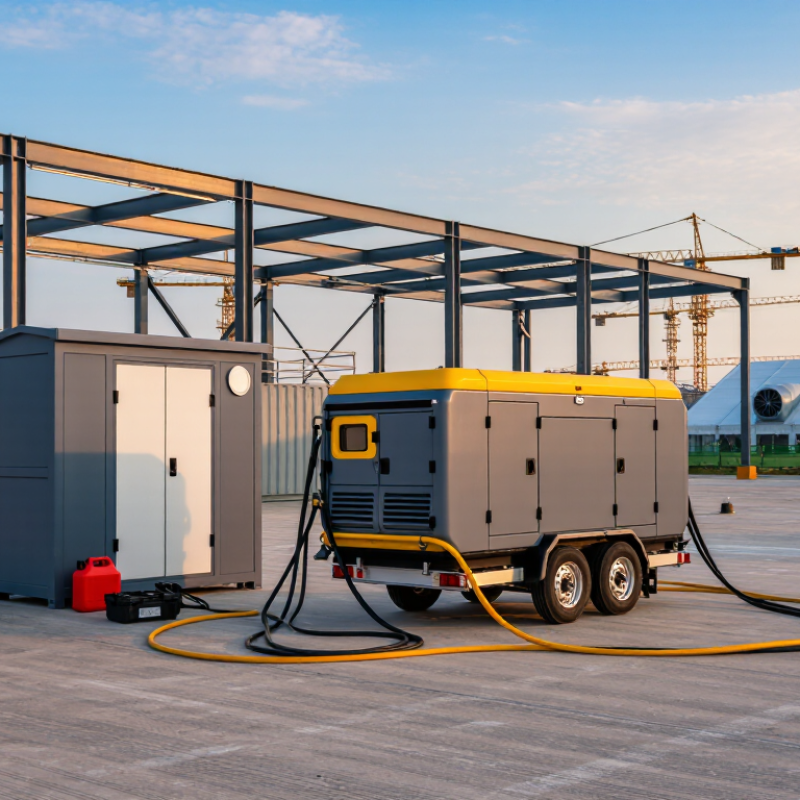
A mobile generator is a transportable power unit designed for temporary or changing work sites. In global procurement, it supports construction, emergency services, events, farms, and remote facilities. Unlike fixed generators, it usually includes a trailer, lifting points, protective housing, and simple connection controls. Procurement teams can move it between locations as project needs change. Real work is rarely predictable. On a remote site, a mobile generator may power lighting, pumps, tools, refrigeration, or temporary offices.

Tips: Define the required output in kilowatts before requesting quotations. Calculate starting loads, not only normal operating loads. Ask for fuel consumption at different load levels. Check dimensions, towing requirements, noise limits, and operating temperature ranges. Request inspection records and a practical load-test report. Do not rely on catalogue figures alone.

From field experience, transport details often affect the final cost more than expected. A compact unit may need special handling equipment or regional electrical adjustments. Fuel planning also matters because long delivery routes can interrupt operations.

A generator with enough capacity can still perform poorly if its voltage, frequency, or connectors do not match the site. Local technicians, spare parts access, and clear maintenance instructions improve reliability. Specifications can be misunderstood. A careful buyer should confirm every technical detail in writing before shipment.

How Mobile Generators Support International Power Needs

Mobile generators support international power needs by delivering electricity where fixed infrastructure is unavailable, delayed, or unreliable. Their transportable frames suit construction sites, emergency facilities, remote workshops, and temporary events. A properly sized unit can power pumps, lighting, refrigeration, and communication equipment without permanent installation.

International procurement requires more than checking output capacity. Teams must confirm voltage, frequency, plug systems, fuel availability, noise limits, and local certification requirements. A generator designed for one grid may perform poorly on another. That assumption fails. Shipping dimensions also matter, especially when equipment passes through crowded ports or moves across rough roads. Clear manuals, spare filters, service access, and multilingual safety labels can reduce downtime for local operators.

Practical planning starts with the real load, not the largest machine available. Motors may demand a sharp starting surge, while medical or data equipment needs stable power. Load testing before deployment can reveal problems that a specification sheet misses. Weather matters too. Dust, humidity, salt air, and extreme temperatures affect cooling and maintenance intervals. A reliable procurement plan includes trained technicians, fuel storage controls, inspection records, and a backup schedule. Even careful plans need review after the first week in operation, because actual demand is often different from the forecast.

Key Benefits of Choosing Mobile Generators

For global procurement, mobile generators offer a practical balance between power access and operational flexibility. Their towable or skid-mounted designs can reach construction sites, emergency facilities, farms, and temporary production areas. A procurement team can relocate one unit as project demands change, reducing dependence on fixed electrical infrastructure. That flexibility matters when delivery schedules shift. It also limits idle equipment, although transport planning remains essential.

The strongest benefit is fast deployment. Operators can position a generator near a load, connect approved cabling, and restore essential operations with less site preparation. Modern units may support automatic voltage regulation, multiple output ranges, and remote monitoring. These features help teams track fuel use, runtime, alarms, and maintenance intervals centrally. In my experience, clear records often prevent small faults from becoming expensive delays. Yet specifications must match local voltage, frequency, emissions rules, and safety requirements. A familiar control panel is not enough.

Mobile generators can also simplify international purchasing. Standardized configurations make supplier comparisons easier, while accessible service points and common spare parts support longer field use. Total cost should include shipping, fuel, technicians, permits, and noise controls. The cheapest quotation can age badly. Procurement decisions should test real load profiles, standby duration, climate, and terrain before approval. One overlooked detail, such as dust exposure or limited lifting access, can change the whole operating plan. For some projects, a fixed system may still be wiser; mobility helps only when the work truly moves.

Factors to Evaluate Before Global Procurement

Why Choose a Mobile Generator for Global Procurement?

Before purchasing a mobile generator, define the jobsite conditions clearly. A unit used at a construction site faces different demands than one supporting emergency operations. Check the required power output, starting load, operating hours, and expected mobility. Small details matter. A trailer may fit local roads but fail on narrow warehouse entrances. Confirm voltage, frequency, plug types, and phase requirements in every destination market. Incorrect specifications can make a functional generator unusable.

Fuel availability deserves careful attention. Diesel may be practical in one region but expensive or restricted in another. Compare fuel efficiency, tank capacity, storage rules, and refueling access. Review emissions requirements, noise limits, and transport documents before placing an order. These requirements can change by country and sometimes by city. Ask for current compliance certificates, test reports, maintenance instructions, and a clear parts list. Do not rely on sales claims alone.

Service support can decide whether mobility becomes an advantage. Evaluate technician coverage, spare-part delivery times, warranty terms, and remote troubleshooting options. A low purchase price may hide costly downtime. Calculate transport, duties, insurance, fuel, maintenance, and operator training together. A spreadsheet helps, but it can still mislead. Real weather, uneven roads, and rushed operators often expose weaknesses that laboratory tests miss. Request practical demonstrations when possible, and allow time for independent inspection before shipment. Reliability is not only a specification; it is proven through documentation, testing, and support after arrival.

How to Purchase, Transport, and Deploy a Mobile Generator

Choosing a mobile generator for global procurement requires more than comparing power ratings. Begin with the actual load profile, including starting currents from pumps, compressors, and cooling systems. Confirm voltage, frequency, phase configuration, fuel availability, noise limits, and operating altitude. A generator that looks suitable on paper may struggle during motor startup.

Request complete technical documents before placing an order. These should include drawings, weight, lifting points, maintenance schedules, test records, and conformity certificates. Check whether local authorities require additional electrical or emissions documentation. Clarify delivery terms, insurance responsibility, spare parts, and remote support. Small omissions can create costly delays.

Transport planning should begin before the unit leaves the factory. Measure the crate, verify axle limits, and inspect the route for narrow gates, weak bridges, and overhead cables. Use sealed controls and suitable protection against rain, dust, and salt air. Shock and tilt indicators can reveal rough handling. They are simple, but useful.

At the destination, prepare a firm level surface with safe ventilation and drainage. Install grounding, cable protection, and an approved transfer arrangement. Keep exhaust gases away from doors and air intakes. Test the generator under gradually increasing loads, then record voltage, frequency, fuel use, and alarm responses. A perfect deployment plan is impossible. We should still question every assumption, especially estimated load growth and local maintenance capacity. The quiet detail often matters most.

Copyright 2025 Fluidra S.A. | Created by BCM Marketing Agencia Privacy Policy Legal note | Cookie policy |

Technical cookies are strictly necessary for our website to work and you can navigate through it. These types of cookies are those that, for example, allow us to identify you, give you access to certain restricted parts of the page if necessary, or remember different options or services already selected by you, such as your privacy preferences. Therefore, they are activated by default, your authorization not being necessary in this regard. Through the configuration of your browser, you can block or alert the presence of this type of cookies, although such blocking will affect the proper functioning of the different functionalities of our website.


The analysis cookies allow us to study the navigation of the users of our website in general (for example, which sections of the page are the most visited, which services are used most and if they work correctly, etc.). From the statistical information on navigation on our website, we can improve both the operation of the page itself and the different services it offers. Therefore, these cookies do not have an advertising purpose, but only serve to make our website work better, adapting to our users in general. By activating them you will contribute to this continuous improvement. You can enable or disable these cookies by checking the corresponding box, being disabled by default.


Functionality cookies allow us to remember your preferences, to personalize certain characteristics and general options of our website, every time you access it (for example, the language in which the information is presented to you, the sections marked as favorites, your browser type, etc.) Therefore, this type of cookies does not have an advertising purpose, but by activating them you will improve the functionality of the website (for example, adapting to your type of browser) and the customization of it based on your preferences (for example, by presenting the information in the language that you have chosen in previous occasions), which will contribute to the ease, usability and comfort of our page during your navigation. You can enable or disable these cookies by checking the corresponding box, being disabled by default.


Advertising cookies allow us to manage the advertising spaces included in our website based on criteria such as the content shown or the frequency in which the ads are displayed. For example, if you have been shown the same ad several times on our website, and you have not shown a personal interest by clicking on it, it will not appear again. In summary, by activating this type of cookies, the advertising shown on our website will be more useful and diverse, and less repetitive. You can enable or disable these cookies by checking the corresponding box, being disabled by default.


Behavioral advertising cookies allow us to obtain information based on the observation of your browsing habits and behaviors on the web, in order to show you advertising content that best suits your personal tastes and interests. To understand it in a very simple way, we will give you a fictitious example: if your last searches on the web were related to suspense literature, we would show you advertising about suspense books. Therefore, activating this type of cookies, the advertising that we show you on our website will not be generic, but will be oriented to your searches, tastes and interests, therefore adjusting exclusively to you. You can enable or disable these cookies by checking the corresponding box, being disabled by default.
To understand it in a very simple way, we will give you a fictitious example: if your last searches on the web were related to suspense literature, we would show you advertising about suspense books. Therefore, activating this type of cookies, the advertising that we show you on our website will not be generic, but will be oriented to your searches, tastes and interests, therefore adjusting exclusively to you. You can enable or disable these cookies by checking the corresponding box, being disabled by default.

SAVE

We use our own and third-party cookies to ensure the proper functioning of the website and to analyse our services, improve your experience on our website and show you advertisements related to your interests according to profiling based on your browsing habits (e.g. websites visited). You can accept all cookies by clicking "ACCEPT" or set or reject them by clicking here. If you would like to know more about the use of cookies, please see our COOKIE POLICY.


ACCEPT ALL
Reject no essentials


