
Why Choose Indoor Acoustic Wall Panels for Your Project?
FLUID HANDLING EXPERTS

Blog, all our news

Why Choose Indoor Acoustic Wall Panels for Your Project?

Noise can make a well-designed room feel tiring. In a meeting room, sharp echoes may blur speech; in a restaurant, clattering dishes can overwhelm conversation. An Indoor Acoustic Wall Panel can help reduce reflected sound when it is selected and positioned for the space. The difference is often noticeable near hard surfaces, where voices otherwise bounce back.

Good results depend on more than appearance. Room size, ceiling height, furnishings, and the source of noise all matter. Panels typically absorb some sound inside a room; they do not automatically block noise passing through walls. That distinction is easy to miss. Before choosing a finish, review available acoustic test data, panel thickness, mounting method, and care instructions. Confirm that the product suits the project’s fire, moisture, and cleaning requirements, especially in busy public spaces.

Placement deserves equal attention. A few panels behind a speaker or along a reflective wall may improve clarity, while scattered pieces can leave problem areas untreated. Still, more coverage is not always better. Each project has limits, including budget, wall space, and the need to preserve a room’s character. A useful plan balances measured performance with practical installation and visual goals. If the room has persistent noise issues, consider an acoustic professional’s assessment before ordering. The right panels can make a space calmer and easier to use, but expectations should stay realistic.
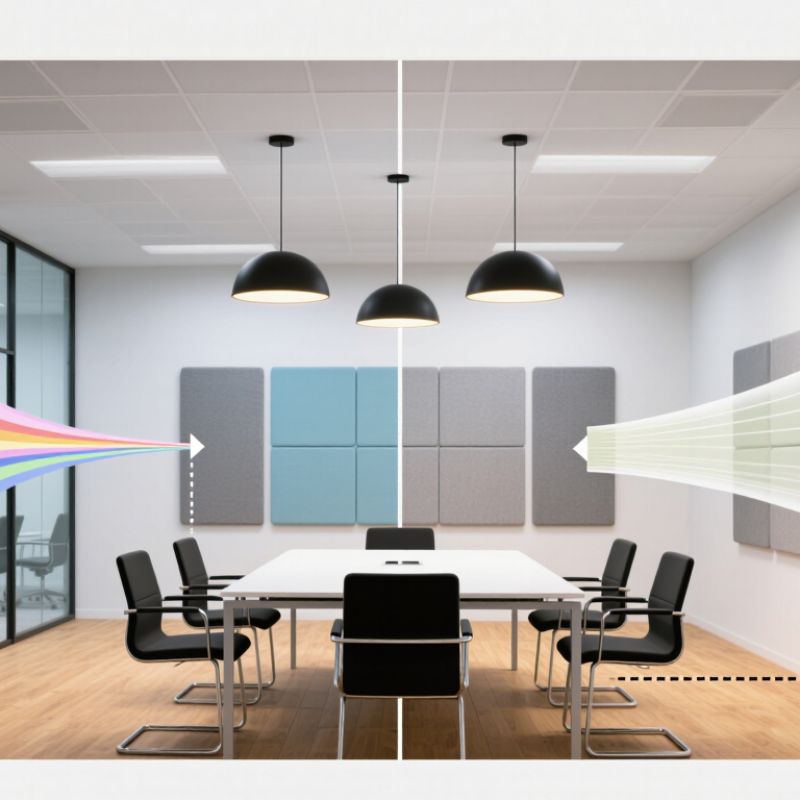
Why Choose Indoor Acoustic Wall Panels for Your Project?

What Indoor Acoustic Wall Panels Are and How They Work

Indoor acoustic wall panels are porous or fibrous surfaces designed to absorb sound energy inside a room. Sound waves enter the panel, where friction within its material converts some energy into small amounts of heat. Less sound returns from the wall, which can reduce reflections and reverberation. They do not block all sound traveling between rooms. That distinction matters.

Panel performance depends on material, thickness, mounting method, coverage, and room shape. A hard-walled meeting room may produce a sharp echo; adding well-placed absorptive panels can make speech clearer. The World Health Organization’s Guidelines for Community Noise (1999) recommend indoor classroom noise levels below 35 dB LAeq during teaching sessions to support speech communication. ANSI/ASA S12.60-2010 also sets a 0.6-second reverberation-time limit for certain smaller core learning spaces. These are room-acoustic targets, not guarantees that panels alone can achieve them. Placement and existing finishes matter. A little humility helps: adding panels without measuring the room can still leave uneven sound, especially near ceilings or glass walls. Good design starts with the room’s actual use, noise sources, and surfaces.

How Acoustic Panels Improve Indoor Sound

Indoor acoustic panels can make a room easier to listen in by reducing reflections from hard walls and ceilings. A sharp handclap may stop ringing so quickly, while spoken words become less smeared across the room. The effect is often noticeable in spaces with glass, tile, bare plaster, or long parallel walls. Panels absorb some sound energy that would otherwise bounce back. They do not block outside noise like a sealed door or insulated wall. Sound still travels through openings and building structures.

Tips: Clap in different parts of the room and listen for lingering echoes. Place panels near reflective surfaces, especially behind speakers or across from them. Leave space for airflow around heating vents.

Results depend on panel thickness, coverage, room shape, and furnishings. A few small panels may soften echo near a desk but do little for a lively dining area. In a meeting room, clearer speech can reduce the effort of following conversation, though placement matters more than appearance alone. Try a small, measured change, then listen again from the seats people actually use. It is easy to expect too much from a neat wall arrangement. Acoustic treatment improves the room’s sound; it does not make every sound disappear.

Key Benefits for Different Types of Projects

Indoor acoustic wall panels can make a room more comfortable to use, not simply quieter. In open offices, panels help reduce reflections from conversations, keyboard taps, and hard floors. People around a meeting table may find speech easier to follow. The effect can be modest. Panels absorb some sound inside a room; they do not soundproof it or stop noise passing through walls.

In classrooms, panels can soften echoes that make a teacher’s instructions harder to understand. In restaurants, they may help diners talk without raising their voices over clattering dishes. The right amount depends on room size, ceiling height, furnishings, and how the space is used. Too few panels may leave noticeable echo. Too many can make a busy room feel acoustically flat.

Home studios and video-call rooms benefit from treating the surfaces that create strong reflections, often walls near a microphone or desk. A panel layout may look balanced on paper and still miss the problem spot. Listen from different seats, or record a short voice sample before and after installation. Consider cleanability and moisture exposure when choosing finishes, especially in kitchens or high-traffic areas. Panels can improve comfort, but placement deserves a second look.

Factors to Consider When Choosing Acoustic Panels

When choosing indoor acoustic wall panels, start with the room’s purpose. A home office may need less echo during calls, while a music room may require more careful control across different frequencies. Note the room’s hard surfaces, ceiling height, and main sound sources. A quick test can help: clap near the center and listen for a sharp, lingering reflection. It is a rough check, not a substitute for measurement.

Compare panel thickness, core material, and tested absorption data. A high absorption rating can be useful, but results depend on frequency and installation conditions. Panels reduce reflected sound; they do not usually block noise traveling through walls. That distinction is easy to miss. Measure the area before ordering, then consider spacing and placement around desks, seating, or speakers. Covering every wall is rarely necessary.

Check the mounting method, surface weight, and access to wiring or outlets. In busy rooms, a durable, cleanable finish may matter more than appearance alone. Ask for clear product specifications and installation guidance, especially when panels will be mounted overhead. Measure twice. Color and texture should fit the room, but acoustic treatment can look different under warm evening light. I would test a small sample first; that extra step can prevent an expensive mismatch.

Where Panels Work Best and How to Plan Installation

Indoor acoustic wall panels work best where sound reflects between hard surfaces and speech needs to stay clear. Meeting rooms, classrooms, dining areas, and home studios are common candidates. Start with listening. Notice whether voices sound sharp near a glass wall, or whether a room becomes tiring when several people talk. Panels absorb some reflected sound; they do not block noise passing through a wall.

Plan placement around the room’s actual use. In a meeting room, treat walls near speakers and listeners, rather than covering every surface. In a studio, a small test setup can reveal troublesome reflections before you commit. Small test panels help. Measure the wall, mark doors and outlets, and check the substrate before choosing fixings. Follow the panel maker’s guidance for spacing, adhesive, and any required air gap. Keep vents, switches, and access points clear.

A careful layout often matters more than adding more material. Check fire-performance documentation and confirm that the mounting method suits the wall. If the room has a persistent hum or sound travels between rooms, wall panels may not address the cause. It is easy to overestimate what they can do; a modest installation may improve speech while leaving low-frequency noise largely unchanged. Read the room before ordering.

Why Choose Indoor Acoustic Wall Panels?

Classroom reverberation-time limits can help identify when acoustic treatment may be needed.

Where panels work best: Consider treating measured reflection zones, such as side walls near the first reflection points and the rear wall. Use room measurements and a project-specific acoustic plan to determine panel placement and coverage; these limits are not a panel-performance rating.

Reference: ANSI/ASA S12.60, Part 1, for core learning spaces. Values shown are maximum reverberation times by room volume.

Copyright 2025 Fluidra S.A. | Created by BCM Marketing Agencia Privacy Policy Legal note | Cookie policy |

Technical cookies are strictly necessary for our website to work and you can navigate through it. These types of cookies are those that, for example, allow us to identify you, give you access to certain restricted parts of the page if necessary, or remember different options or services already selected by you, such as your privacy preferences. Therefore, they are activated by default, your authorization not being necessary in this regard. Through the configuration of your browser, you can block or alert the presence of this type of cookies, although such blocking will affect the proper functioning of the different functionalities of our website.


The analysis cookies allow us to study the navigation of the users of our website in general (for example, which sections of the page are the most visited, which services are used most and if they work correctly, etc.). From the statistical information on navigation on our website, we can improve both the operation of the page itself and the different services it offers. Therefore, these cookies do not have an advertising purpose, but only serve to make our website work better, adapting to our users in general. By activating them you will contribute to this continuous improvement. You can enable or disable these cookies by checking the corresponding box, being disabled by default.


Functionality cookies allow us to remember your preferences, to personalize certain characteristics and general options of our website, every time you access it (for example, the language in which the information is presented to you, the sections marked as favorites, your browser type, etc.) Therefore, this type of cookies does not have an advertising purpose, but by activating them you will improve the functionality of the website (for example, adapting to your type of browser) and the customization of it based on your preferences (for example, by presenting the information in the language that you have chosen in previous occasions), which will contribute to the ease, usability and comfort of our page during your navigation. You can enable or disable these cookies by checking the corresponding box, being disabled by default.


Advertising cookies allow us to manage the advertising spaces included in our website based on criteria such as the content shown or the frequency in which the ads are displayed. For example, if you have been shown the same ad several times on our website, and you have not shown a personal interest by clicking on it, it will not appear again. In summary, by activating this type of cookies, the advertising shown on our website will be more useful and diverse, and less repetitive. You can enable or disable these cookies by checking the corresponding box, being disabled by default.


Behavioral advertising cookies allow us to obtain information based on the observation of your browsing habits and behaviors on the web, in order to show you advertising content that best suits your personal tastes and interests. To understand it in a very simple way, we will give you a fictitious example: if your last searches on the web were related to suspense literature, we would show you advertising about suspense books. Therefore, activating this type of cookies, the advertising that we show you on our website will not be generic, but will be oriented to your searches, tastes and interests, therefore adjusting exclusively to you. You can enable or disable these cookies by checking the corresponding box, being disabled by default.
To understand it in a very simple way, we will give you a fictitious example: if your last searches on the web were related to suspense literature, we would show you advertising about suspense books. Therefore, activating this type of cookies, the advertising that we show you on our website will not be generic, but will be oriented to your searches, tastes and interests, therefore adjusting exclusively to you. You can enable or disable these cookies by checking the corresponding box, being disabled by default.

SAVE

We use our own and third-party cookies to ensure the proper functioning of the website and to analyse our services, improve your experience on our website and show you advertisements related to your interests according to profiling based on your browsing habits (e.g. websites visited). You can accept all cookies by clicking "ACCEPT" or set or reject them by clicking here. If you would like to know more about the use of cookies, please see our COOKIE POLICY.


ACCEPT ALL
Reject no essentials


