
Why Choose an Expandable House for Global Projects?
FLUID HANDLING EXPERTS

Blog, all our news

Why Choose an Expandable House for Global Projects?

Why Choose an Expandable House for Global Projects?

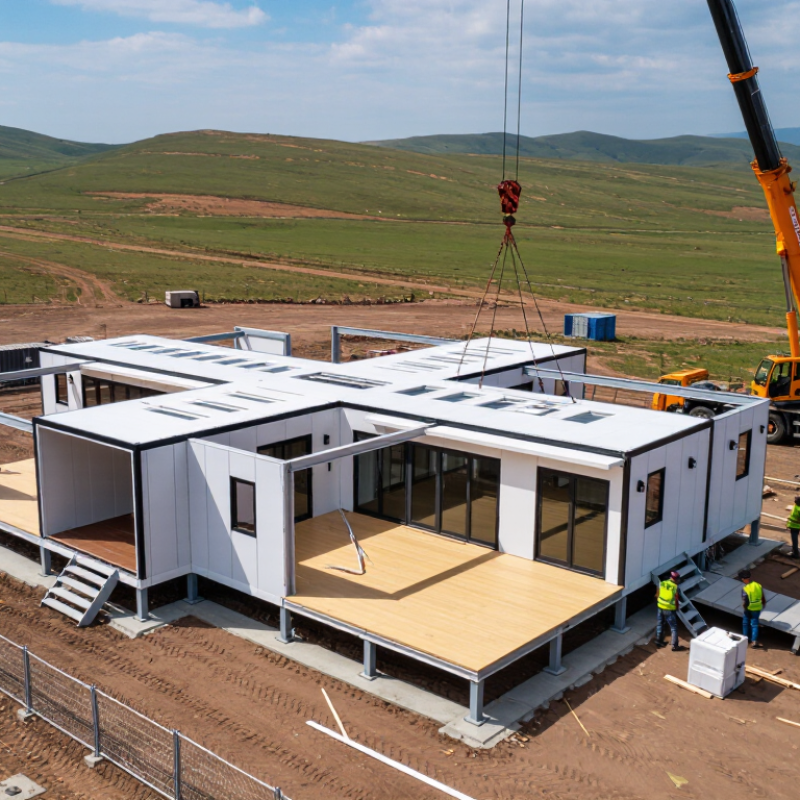
Global construction projects face changing climates, transport limits, labor shortages, and strict time targets. An Expandable House offers a practical response to these pressures. Its compact form can reduce shipping volume before installation. On site, the structure expands into a larger living or working space. This process may shorten setup time and reduce dependence on heavy construction equipment.

Project teams can use expandable housing for remote accommodation, emergency response, workforce facilities, classrooms, and temporary offices. A factory-controlled manufacturing process can improve dimensional accuracy and reduce material waste. Insulated wall systems, sealed windows, and efficient electrical layouts may also support comfort in demanding environments. However, performance depends on design quality, climate adaptation, foundation preparation, and professional installation. A house designed for a mild coastal region may need different insulation and ventilation in a cold mountain area.

Reliable suppliers should provide technical drawings, material specifications, installation guidance, and clear maintenance instructions. Independent inspections can help verify structural safety and fire protection before delivery. Local engineers should review soil conditions, drainage, wind loads, and utility connections. These steps build confidence without assuming that one model suits every country.

The solution is not perfect.

Transport access can still be difficult. Expansion mechanisms require careful maintenance. Local approval processes may also affect schedules. Yet, when suppliers, engineers, and clients cooperate closely, an Expandable House can offer a flexible and scalable option for international projects. Its value comes from balanced planning, not attractive promises alone. Teams should test the design against real site conditions before making a large investment.
Why Choose an Expandable House for Global Projects?

Expandable Houses: Definition, Types, and ISO 21930 Life-Cycle Terms

Why Choose an Expandable House for Global Projects?

An expandable house is a factory-built unit that unfolds or extends after transport. Its compact form reduces shipping volume and simplifies delivery to remote sites. Common types include single-wing, double-wing, and multi-module designs. Each type serves different needs, such as classrooms, clinics, offices, or temporary accommodation. In practice, site access matters as much as floor area. Narrow roads, lifting equipment, drainage, and local weather can change the best choice.

ISO 21930 helps teams describe environmental performance across a building’s life cycle. The product stage, A1 to A3, covers raw materials, transport within production, and manufacturing. The construction stage, A4 to A5, includes delivery and installation. The use stage, B, considers maintenance, repairs, energy use, and replacements. End-of-life stages, C1 to C4, address demolition, transport, processing, and disposal. Module D may report potential benefits beyond the system boundary, such as recovered materials.

These terms support clearer comparisons between expandable houses and conventional construction. They do not replace project-specific evidence. A reliable assessment should use verified material quantities, transport distances, service-life assumptions, and energy data. Real projects often reveal gaps. For example, a lightweight structure may ship efficiently but need frequent repairs in harsh climates. That weakness deserves attention. Experienced teams should document uncertainty instead of hiding it, then review the design with engineers, facility users, and local construction professionals.

Why Choose an Expandable House for Global Projects?

An expandable house is a factory-built modular unit that is transported in a compact configuration and enlarged on site by unfolding or extending its structural elements. Common configurations include single-fold units, double-fold units, and multi-unit modular systems.

The chart shows the number of information modules defined across the ISO 21930 life-cycle stages. The modules cover product manufacturing, construction, use, end-of-life processing, and benefits or loads beyond the system boundary. These categories help project teams compare material choices, logistics, installation, maintenance, reuse, and end-of-life planning for expandable housing projects.

Source framework: ISO 21930 life-cycle terminology. Values represent the number of defined modules in each stage, not environmental-impact scores.

Global Housing Gap: 1.6 Billion People Need Adequate Housing (UN-Habitat)

Why Choose an Expandable House for Global Projects?

Global Housing Gap: 1.6 Billion People Need Adequate Housing (UN-Habitat)

According to UN-Habitat, about 1.6 billion people lack adequate housing. This figure reflects more than a shortage of buildings. It includes unsafe structures, overcrowded rooms, insecure tenure, and limited access to basic services. In fast-growing communities, families may live under patched roofs beside unpaved roads. A practical housing response must consider these daily conditions.

Expandable houses can support phased development. A compact unit arrives with essential living space, then expands as family needs change. This approach may reduce initial costs, transport volume, and construction time. Local teams can often complete assembly with suitable training and standard tools. That matters after disasters, during worker relocation, or near developing infrastructure. The process also creates opportunities for local employment and skills transfer.

The model is not perfect. Transport can be difficult in remote regions, and climate control requires careful design. A house alone cannot solve poverty or replace secure land rights. Planners should assess drainage, sanitation, power access, cultural habits, and long-term maintenance before ordering units. My field experience suggests that simple layouts perform better when repairs are predictable. Yet even a well-designed unit can fail if residents cannot adapt it. Careful consultation is essential. Small details matter, such as shaded entrances, cross-ventilation, and space for cooking safely.

Project Speed: Modular Builds Cut Schedules by 30–50% (MBI)

When global projects face tight deadlines, expandable houses can provide a practical scheduling advantage. Industry research on modular construction reports schedule reductions of 30–50 percent. That difference matters in remote housing, emergency accommodation, and workforce facilities. Factory production can continue while ground preparation happens on site. Not every project moves this quickly.

In practice, crews can assemble wall panels, roof sections, and utility modules under controlled conditions. Meanwhile, site teams prepare foundations, drainage, and access roads. An eight-room unit may arrive partially finished, with wiring and plumbing already installed. Panels arrive labeled, reducing guesswork during installation. This separation shortens waiting time and limits weather-related delays. Heavy rain can still disrupt transport.

Reliable delivery depends on disciplined planning, not the house alone. Engineers should confirm local codes, climate loads, fire safety, and connection details before manufacturing starts. Transport routes also need checking, especially across narrow bridges or uneven terrain. Project teams often underestimate lifting space and temporary storage. That mistake can erase part of the schedule gain.

It is easy to promise a 50 percent reduction. Real projects may achieve less. Design changes, permit reviews, customs procedures, or missing foundations can slow deployment. A reliable contractor should show a clear production timeline, inspection records, and contingency dates. Expandable construction works best when speed is measured from design approval to occupancy, not from factory dispatch.

Cost Planning: Modular Delivery Can Reduce Costs by About 20% (McKinsey)

Why Choose an Expandable House for Global Projects?

Cost Planning: Modular Delivery Can Reduce Costs by About 20% (McKinsey)

For global projects, expandable houses can make cost planning more predictable. Their main components are produced in controlled factory conditions, then transported and installed on site. McKinsey reports that modular delivery can reduce construction costs by about 20% in suitable projects. This figure is not guaranteed. Location, transport distance, labor rates, and design complexity still matter.

A project team can estimate materials, labor, shipping, and installation before ground work begins. For example, a 60-square-meter unit may arrive folded, expand on prepared foundations, and become usable within a short installation period. Fewer wet trades can also reduce delays caused by rain or limited local skills. In my experience, the savings become clearer when many similar units are required. One custom unit may not deliver the same advantage.

Tips: Compare factory pricing with total delivered cost. Include permits, roads, cranes, utility connections, storage, and local taxes. Ask for a detailed cost schedule, not a headline percentage. Test the design against extreme weather and local maintenance skills. Small oversights become expensive later.

The 20% estimate should guide early decisions, not replace a site-specific budget. Currency changes can also weaken the expected savings. A careful team should review the estimate at each design stage. Modular construction is efficient, but it is not automatically cheaper everywhere. That limitation deserves attention.

Environmental Value: Modular Methods Can Cut Waste by 30–40% (MBI)

Why Choose an Expandable House for Global Projects?

Expandable houses can reduce construction waste by 30–40% when modular methods are planned carefully. This range appears in widely cited modular construction research. It is not a guaranteed result. Design quality, factory controls, transport planning, and local assembly all affect performance.

Waste reduction starts before the unit reaches the site. Standardized wall panels can be cut in controlled conditions, where measurements stay consistent. Offcuts may also be sorted for reuse or recycling. On a conventional site, timber, packaging, plasterboard, and insulation often become mixed waste. That material is harder to recover. Cleaner production matters.

An expandable house can arrive partly finished, limiting wet trades and repeated deliveries. This may reduce damaged materials, dust, and short-term site storage. It also helps projects in remote regions, where disposal facilities are limited. However, transport emissions still require honest assessment. A compact unit may save materials but travel a long distance. That trade-off should not be ignored.

Project teams should compare a real waste audit, not just a brochure percentage. They can record material orders, unused components, packaging, and disposal weight. Local recycling rules must be checked early. Small mistakes remain possible. A poorly coordinated module can create waste instead of preventing it. Detailed drawings, trained installers, and careful maintenance planning make the environmental claim more reliable.

Why Choose an Expandable House for Global Projects? – Environmental Value: Modular Methods Can Cut Waste by 30–40% (MBI)

Environmental Dimension Expandable / Modular Method Reference or Comparison Project Relevance
Construction material waste 30–40% lower waste potential when standardized off-site production, accurate cutting, and controlled inventory are used. Industry-reported range cited by the Modular Building Institute; actual performance depends on design, procurement, and site practices. Less discarded timber, packaging, board material, and surplus components at the project site.
Waste planning benchmark For a conventional waste baseline of 100 units, a 30–40% reduction corresponds to approximately 60–70 units of waste. Calculated from the reported 30–40% reduction range; this is a planning index, not a guaranteed project result. Helps teams set measurable waste-reduction targets before manufacturing begins.
Material efficiency Factory-controlled cutting and repeatable components can improve material yield and reduce rework. The benefit is process-dependent and should be verified through material take-offs and delivery records. Useful for projects with repeated room layouts or multiple deployment locations.
Off-site quality control Production in a controlled facility can reduce weather-related damage, installation errors, and material exposure. No universal percentage applies; results depend on factory controls and site installation quality. Particularly valuable in remote, wet, dusty, or logistically difficult locations.
Transport and site disturbance More work is completed before arrival, which can reduce on-site labor activity, storage requirements, and repeated material handling. Transport savings are project-specific and must account for module size, distance, lifting equipment, and route conditions. Can help limit local congestion, soil disturbance, noise, and temporary site storage.
Adaptability and service life Expandable layouts can support phased growth, relocation, repair, or component replacement instead of complete rebuilding. Environmental benefit depends on durable design, maintenance, connection details, and the feasibility of reuse. Supports changing accommodation, education, healthcare, workforce, and emergency-response needs.
Measurement for project reporting Track purchased materials, off-cuts, damaged items, returned materials, recycled waste, and landfill-bound waste by weight. A project-specific waste audit is required to confirm whether the 30–40% target has been achieved. Creates transparent evidence for environmental reporting and future project improvement.

Note: The 30–40% figure is an industry-reported potential reduction associated with modular construction methods. Results vary by design, materials, manufacturing controls, logistics, installation, and end-of-life practices.

Copyright 2025 Fluidra S.A. | Created by BCM Marketing Agencia Privacy Policy Legal note | Cookie policy |

Technical cookies are strictly necessary for our website to work and you can navigate through it. These types of cookies are those that, for example, allow us to identify you, give you access to certain restricted parts of the page if necessary, or remember different options or services already selected by you, such as your privacy preferences. Therefore, they are activated by default, your authorization not being necessary in this regard. Through the configuration of your browser, you can block or alert the presence of this type of cookies, although such blocking will affect the proper functioning of the different functionalities of our website.


The analysis cookies allow us to study the navigation of the users of our website in general (for example, which sections of the page are the most visited, which services are used most and if they work correctly, etc.). From the statistical information on navigation on our website, we can improve both the operation of the page itself and the different services it offers. Therefore, these cookies do not have an advertising purpose, but only serve to make our website work better, adapting to our users in general. By activating them you will contribute to this continuous improvement. You can enable or disable these cookies by checking the corresponding box, being disabled by default.


Functionality cookies allow us to remember your preferences, to personalize certain characteristics and general options of our website, every time you access it (for example, the language in which the information is presented to you, the sections marked as favorites, your browser type, etc.) Therefore, this type of cookies does not have an advertising purpose, but by activating them you will improve the functionality of the website (for example, adapting to your type of browser) and the customization of it based on your preferences (for example, by presenting the information in the language that you have chosen in previous occasions), which will contribute to the ease, usability and comfort of our page during your navigation. You can enable or disable these cookies by checking the corresponding box, being disabled by default.


Advertising cookies allow us to manage the advertising spaces included in our website based on criteria such as the content shown or the frequency in which the ads are displayed. For example, if you have been shown the same ad several times on our website, and you have not shown a personal interest by clicking on it, it will not appear again. In summary, by activating this type of cookies, the advertising shown on our website will be more useful and diverse, and less repetitive. You can enable or disable these cookies by checking the corresponding box, being disabled by default.


Behavioral advertising cookies allow us to obtain information based on the observation of your browsing habits and behaviors on the web, in order to show you advertising content that best suits your personal tastes and interests. To understand it in a very simple way, we will give you a fictitious example: if your last searches on the web were related to suspense literature, we would show you advertising about suspense books. Therefore, activating this type of cookies, the advertising that we show you on our website will not be generic, but will be oriented to your searches, tastes and interests, therefore adjusting exclusively to you. You can enable or disable these cookies by checking the corresponding box, being disabled by default.
To understand it in a very simple way, we will give you a fictitious example: if your last searches on the web were related to suspense literature, we would show you advertising about suspense books. Therefore, activating this type of cookies, the advertising that we show you on our website will not be generic, but will be oriented to your searches, tastes and interests, therefore adjusting exclusively to you. You can enable or disable these cookies by checking the corresponding box, being disabled by default.

SAVE

We use our own and third-party cookies to ensure the proper functioning of the website and to analyse our services, improve your experience on our website and show you advertisements related to your interests according to profiling based on your browsing habits (e.g. websites visited). You can accept all cookies by clicking "ACCEPT" or set or reject them by clicking here. If you would like to know more about the use of cookies, please see our COOKIE POLICY.


ACCEPT ALL
Reject no essentials


