
Why Choose China Stamping Press Manufacturers?
FLUID HANDLING EXPERTS

Blog, all our news

Why Choose China Stamping Press Manufacturers?

China Stamping Press manufacturers are attracting attention as global manufacturers seek reliable forming equipment, shorter delivery cycles, and practical automation support. Grand View Research valued the global metal stamping market at approximately USD 217.9 billion in 2023. Its report also projects continued growth through 2030. China’s manufacturing depth strengthens this opportunity. The World Bank reported that China produced about 31% of global manufacturing value added in 2023.

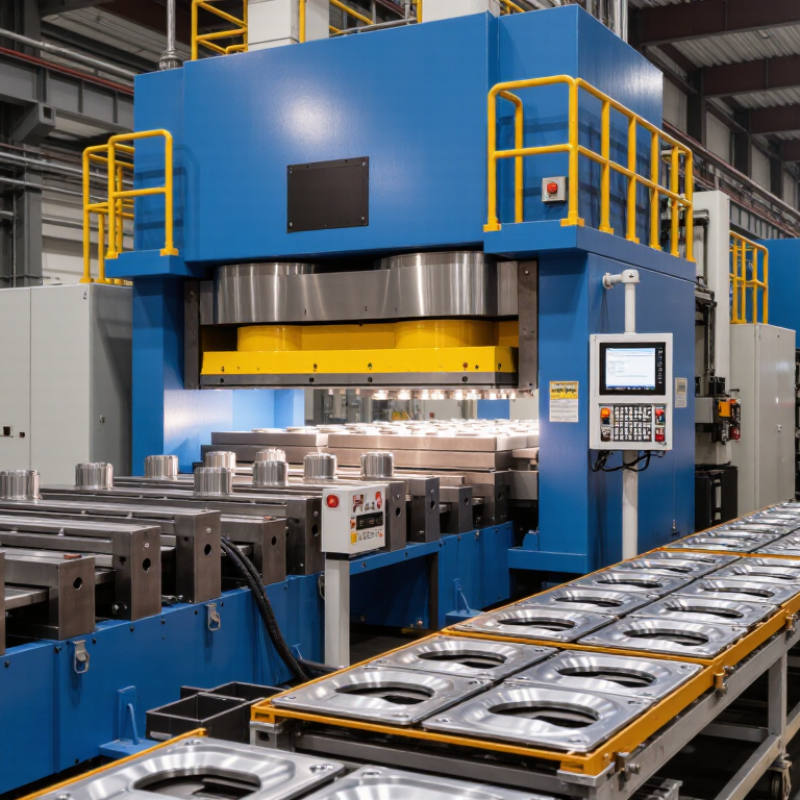
Automotive demand makes the case more concrete. According to the China Association of Automobile Manufacturers, China produced more than 31 million vehicles in 2024. Each vehicle requires stamped panels, brackets, structural parts, and precision components. A modern China Stamping Press line can combine servo control, automatic feeding, and in-line inspection. These features reduce handling between operations. They also improve repeatability on busy production floors.

“Press technology creates value only when accuracy, safety, and service work together,” says Li Jun, an industry specialist associated with China’s metal-forming sector. His point deserves attention. A low purchase price is not enough. Buyers should examine press rigidity, energy consumption, die compatibility, spare-parts access, and technician response times. The China Forging and Press Association frequently emphasizes equipment modernization and intelligent manufacturing in industry discussions.

The evidence is encouraging, but not perfect. Reported market figures differ by research method. Supplier quality also varies widely. A careful buyer should request test-stamped samples, inspection records, and references from comparable factories. In practice, the best China Stamping Press supplier is not always the cheapest. It is the partner that delivers stable parts, clear documentation, and measurable support after installation.
Why Choose China Stamping Press Manufacturers?

China’s 2023 Auto Output Reached 30.16 Million Units (CAAM)

Why Choose China Stamping Press Manufacturers?

China produced 30.16 million vehicles in 2023, according to the China Association of Automobile Manufacturers (CAAM). Vehicle sales also exceeded 30 million units, showing strong demand for body panels, chassis parts, and precision brackets. This scale creates a demanding environment for stamping press manufacturers. Production lines must handle large volumes while maintaining stable dimensions and repeatable forming quality.

The International Energy Agency reported that China sold nearly eight million electric cars in 2023. Electric vehicles often require lighter structures, battery trays, motor housings, and complex aluminum components. These parts place greater pressure on press accuracy, die alignment, and material control. Experienced Chinese manufacturers can support mechanical, hydraulic, and servo press applications across different production requirements.

In practical audits, buyers should inspect frame rigidity, slide parallelism, energy consumption, and after-sales response. A reliable supplier should provide load testing, dimensional records, and clear maintenance procedures. CAAM figures prove market scale, not automatic quality. That distinction matters. Some factories still overstate capacity or underestimate commissioning time. Careful verification remains necessary, especially when a press will run continuously beside automated feeding equipment.

Why Choose China Stamping Press Manufacturers? - China’s 2023 Auto Output Reached 30.16 Million Units (CAAM)

Year Total Vehicle
Production
Total Vehicle
Sales
New Energy Vehicle
Production
New Energy Vehicle
Sales
Vehicle
Exports
2019 25.72 million 25.77 million 1.24 million 1.21 million 1.02 million
2020 25.23 million 25.31 million 1.37 million 1.37 million 0.99 million
2021 26.08 million 26.28 million 3.55 million 3.52 million 2.02 million
2022 27.02 million 26.86 million 7.06 million 6.89 million 3.32 million
2023 30.16 million 30.09 million 9.59 million 9.50 million 4.91 million
2023 Production Growth
11.6% year on year
2023 New Energy Share
31.6% of total vehicle production
2023 Export Growth
57.9% year on year
Five-Year Output Increase
17.3% from 2019 to 2023

Source: China Association of Automobile Manufacturers (CAAM). Figures are rounded to two decimal places; vehicle exports include complete vehicles.

Press Selection by Tonnage, SPM, Stroke, and Bed Dimensions

Why Choose China Stamping Press Manufacturers?

Choosing a stamping press starts with the part, not the catalog. Tonnage must cover cutting, bending, and forming forces, with practical reserve for variation. A common engineering approach adds 20–30% capacity after calculating material strength and contact area. This is not a perfect rule. High-strength steel can punish an undersized frame quickly. The World Steel Association reported that global crude steel production exceeded 1.8 billion tonnes in 2023, showing why material-specific press selection remains important.

SPM affects output, but speed alone can mislead. A 60 SPM press may lose its advantage when the die needs longer dwell time or careful material feeding. Stroke length should exceed the forming depth while protecting die clearance. Bed dimensions also deserve close attention. Allow space for the die, bolster openings, feed equipment, and future maintenance access. The 2024 U.S. Manufacturing Technology Orders report from AMT highlighted continuing investment in production equipment, yet investment value does not replace correct engineering. A larger bed is not automatically better.

Tips: Share the drawing, material grade, thickness, target SPM, stroke, die weight, and coil width with the manufacturer. Request load curves, precision data, acceptance-test records, and safety compliance evidence. Compare measured results, not promises. China stamping press manufacturers can offer flexible configurations and competitive production support, but buyers should verify frame rigidity, servo control response, and after-sales engineering. One overlooked detail? Floor loading. A press can fit the workshop and still exceed its foundation capacity.

Safety Compliance Under ISO 16092-1:2017 and GB/T 5226.1-2019

Why Choose China Stamping Press Manufacturers?

Safety Compliance Under ISO 16092-1:2017 and GB/T 5226.1-2019

A reliable stamping press begins with controlled risk, not attractive specifications. ISO 16092-1:2017 sets safety principles for press design, construction, and operation. It addresses safeguarding, control systems, unexpected start-up, and access to dangerous zones. During a factory inspection, check the fixed guards around the die area. Test the interlocked doors. Press the emergency stop and verify immediate response.

GB/T 5226.1-2019 focuses on electrical equipment for machinery. It covers protective bonding, wiring identification, isolation, control circuits, and electrical documentation. A professional manufacturer should provide clear schematics and durable labels.

The control cabinet should remain clean, organized, and accessible. Operators also need practical instructions, not translated pages that nobody reads.

Ask for risk-assessment records and inspection results. Do not rely on a compliance logo alone. Review safety relay functions, two-hand controls, light curtains, and restart prevention. These details matter during real production, especially when operators change dies or remove scrap. Some suppliers meet the main requirements but leave small documentation gaps. That should not be ignored. No factory is flawless. What matters is whether engineers identify weaknesses, correct them, and record the change. A transparent manufacturer welcomes witness testing before shipment and supports verification after installation. Safety must remain measurable on the factory floor.

Comparing China Suppliers by ISO 9001, CE, Accuracy, and Automation

Why Choose China Stamping Press Manufacturers?

Comparing Chinese stamping press manufacturers requires more than checking price. ISO’s 2022 Survey reported 1,265,216 valid ISO 9001 certificates worldwide, including 394,008 in China. This scale suggests broad quality-management experience, but certification alone proves little about press performance. Ask for current certificates, process-control records, and corrective-action examples. A supplier should explain how it manages material variation, die alignment, and final inspection.

CE marking also needs careful reading. For many machinery products, the manufacturer declares conformity against applicable European requirements. It is not automatically a third-party quality certificate. Request the declaration, risk assessment, technical file summary, and safety-circuit test records. Then compare measurable accuracy: slide parallelism, repeatability, shut height tolerance, and calibration frequency. Numbers matter more than polished photographs.

Automation deserves equal attention. The International Federation of Robotics reported 276,288 industrial robot installations in China during 2023, representing about 51% of global installations. This indicates a strong automation ecosystem around feeders, transfer units, sensors, and production monitoring. Still, a press with many sensors can perform poorly if integration is weak. Watch a live trial with your material and die. Review cycle data, misfeed alarms, changeover time, and operator access. I would question any supplier promising “zero defects.” Real factories produce exceptions. The stronger supplier shows how it detects, records, and corrects them.

Why Choose China Stamping Press Manufacturers?

Comparing suppliers by ISO 9001, CE, accuracy, and automation evidence

This evidence-based comparison uses internationally recognized reference points rather than company or brand data: ISO 9001 is built around seven quality management principles; CE conformity assessment is organized into eight modules; ISO 230-2 evaluates positioning accuracy and repeatability; and IEC 62264 defines five automation hierarchy levels. Buyers should request current certificates, declarations of conformity, inspection records, and automation specifications from each supplier.

Total-Cost Analysis: Equipment Price, Energy Use, Service, and Lead Time

Why Choose China Stamping Press Manufacturers?

A low equipment price attracts attention, but total cost deserves closer inspection. A 160-ton stamping press may fit the budget while consuming more electricity during every production shift. Ask for motor efficiency data, standby consumption, and realistic output figures. Energy costs can quietly exceed the original price over several years. The cheapest machine is not always economical.

Service quality also affects production cost. Confirm remote support hours, technician availability, spare-parts storage, and training arrangements. A delayed replacement sensor can stop an entire line. Lead time should include engineering approval, tooling preparation, factory testing, shipping, installation, and operator training. Some suppliers quote only machine assembly time. That creates an uncomfortable surprise.

Tips: Request a five-year cost comparison. Include electricity, maintenance, tooling, freight, installation, and downtime. Require written testing standards and spare-parts lists before ordering. Ask for references from factories with similar materials and production volumes. Energy estimates should reflect your actual stroke rate, sheet thickness, and working hours. Factory visits can reveal details that brochures miss. Still, every evaluation has limits. Currency changes, freight delays, and future production changes can weaken even a careful calculation. Use a transparent scoring sheet, not price alone.

Copyright 2025 Fluidra S.A. | Created by BCM Marketing Agencia Privacy Policy Legal note | Cookie policy |

Technical cookies are strictly necessary for our website to work and you can navigate through it. These types of cookies are those that, for example, allow us to identify you, give you access to certain restricted parts of the page if necessary, or remember different options or services already selected by you, such as your privacy preferences. Therefore, they are activated by default, your authorization not being necessary in this regard. Through the configuration of your browser, you can block or alert the presence of this type of cookies, although such blocking will affect the proper functioning of the different functionalities of our website.


The analysis cookies allow us to study the navigation of the users of our website in general (for example, which sections of the page are the most visited, which services are used most and if they work correctly, etc.). From the statistical information on navigation on our website, we can improve both the operation of the page itself and the different services it offers. Therefore, these cookies do not have an advertising purpose, but only serve to make our website work better, adapting to our users in general. By activating them you will contribute to this continuous improvement. You can enable or disable these cookies by checking the corresponding box, being disabled by default.


Functionality cookies allow us to remember your preferences, to personalize certain characteristics and general options of our website, every time you access it (for example, the language in which the information is presented to you, the sections marked as favorites, your browser type, etc.) Therefore, this type of cookies does not have an advertising purpose, but by activating them you will improve the functionality of the website (for example, adapting to your type of browser) and the customization of it based on your preferences (for example, by presenting the information in the language that you have chosen in previous occasions), which will contribute to the ease, usability and comfort of our page during your navigation. You can enable or disable these cookies by checking the corresponding box, being disabled by default.


Advertising cookies allow us to manage the advertising spaces included in our website based on criteria such as the content shown or the frequency in which the ads are displayed. For example, if you have been shown the same ad several times on our website, and you have not shown a personal interest by clicking on it, it will not appear again. In summary, by activating this type of cookies, the advertising shown on our website will be more useful and diverse, and less repetitive. You can enable or disable these cookies by checking the corresponding box, being disabled by default.


Behavioral advertising cookies allow us to obtain information based on the observation of your browsing habits and behaviors on the web, in order to show you advertising content that best suits your personal tastes and interests. To understand it in a very simple way, we will give you a fictitious example: if your last searches on the web were related to suspense literature, we would show you advertising about suspense books. Therefore, activating this type of cookies, the advertising that we show you on our website will not be generic, but will be oriented to your searches, tastes and interests, therefore adjusting exclusively to you. You can enable or disable these cookies by checking the corresponding box, being disabled by default.
To understand it in a very simple way, we will give you a fictitious example: if your last searches on the web were related to suspense literature, we would show you advertising about suspense books. Therefore, activating this type of cookies, the advertising that we show you on our website will not be generic, but will be oriented to your searches, tastes and interests, therefore adjusting exclusively to you. You can enable or disable these cookies by checking the corresponding box, being disabled by default.

SAVE

We use our own and third-party cookies to ensure the proper functioning of the website and to analyse our services, improve your experience on our website and show you advertisements related to your interests according to profiling based on your browsing habits (e.g. websites visited). You can accept all cookies by clicking "ACCEPT" or set or reject them by clicking here. If you would like to know more about the use of cookies, please see our COOKIE POLICY.


ACCEPT ALL
Reject no essentials


