
Why Choose Carbon Steel Shafts for Global Sourcing?
FLUID HANDLING EXPERTS

Blog, all our news

Why Choose Carbon Steel Shafts for Global Sourcing?

Global sourcing demands more than a competitive quotation. It requires predictable performance, clear documentation, and dependable communication. A Carbon Steel Shaft can meet these needs when engineers select the grade and process carefully. Its strength, machinability, and broad industrial availability support many applications, including pumps, conveyors, agricultural equipment, and transmission assemblies. The steel also allows practical customization. Diameter, keyways, threads, shoulders, and surface finishes can match specific drawings.

Experienced buyers know that material choice alone does not guarantee quality. Suppliers should provide material certificates, dimensional inspection reports, and traceability records. Heat treatment must match the required hardness and loading conditions. For example, a shaft may need a hardened surface while retaining a tougher core. Sampling can reveal machining marks, runout, or unexpected distortion before full production begins. Small details matter.

Global projects also benefit from established production methods and accessible replacement material. Carbon steel is often easier to machine and repair than more specialized alloys. However, it is not automatically the best solution. Moisture, chemicals, and outdoor storage can cause corrosion. Protective coatings, proper packaging, and realistic service calculations remain essential. No material is perfect. That assumption deserves review. Buyers should compare total cost, not only the unit price. Freight, inspection, lead time, and failure risk can change the decision. With verified specifications and transparent supplier controls, Carbon Steel Shaft sourcing becomes a measurable engineering choice rather than a guess.
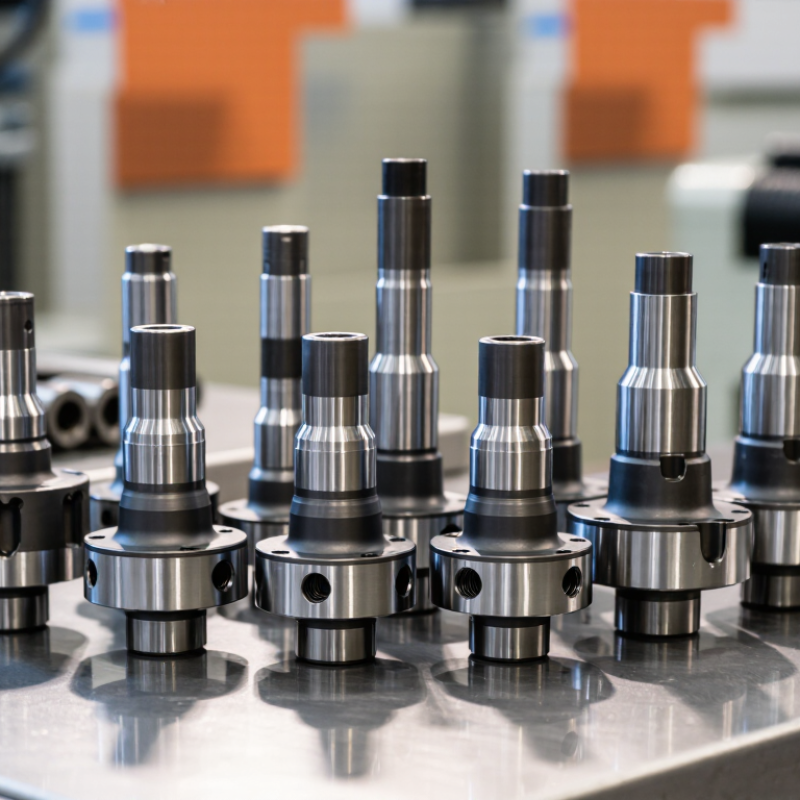
Why Choose Carbon Steel Shafts for Global Sourcing?

What Are Carbon Steel Shafts?

Carbon steel shafts are cylindrical machine components made mainly from iron and carbon. They transmit torque, support rotating loads, or guide moving parts. Carbon content commonly ranges from about 0.05% to 1.00%, depending on the grade and application. Manganese and small alloying additions can improve strength and machinability.

Common shaft grades include 1018 for easy machining and 1045 for higher strength. Heat treatment changes hardness, toughness, and wear resistance.

ASTM A108/A108M provides requirements for cold-finished carbon and alloy steel bars, often used as shaft stock. A shaft is not defined by appearance alone. Its diameter, straightness, keyway accuracy, surface finish, and runout require inspection.

Global sourcing benefits from broad steel availability. The World Steel Association reported approximately 1.89 billion tonnes of crude steel production in 2023. This supports diverse supply channels, but availability does not guarantee consistency. Suppliers should provide material test certificates, hardness results, dimensional records, and heat-treatment details. The U.S. Geological Survey also reported about 2.5 billion tonnes of global iron ore production in 2023, reflecting a substantial raw-material base.

There is a trade-off. The International Energy Agency identifies iron and steel as responsible for roughly 7% of global energy-related emissions. Recycled content and efficient processing can reduce impact, but documentation may be incomplete. A practical sourcing review should verify chemistry, mechanical properties, batch traceability, and packaging protection. One overlooked detail can damage a shaft before installation.

How Carbon Steel Shafts Are Manufactured

Why Choose Carbon Steel Shafts for Global Sourcing?

How Carbon Steel Shafts Are Manufactured

Carbon steel shafts begin with carefully selected steel bars. The grade must match the shaft’s load, speed, and working environment. Bars are cut slightly longer than the finished design. This allowance supports accurate machining. Operators inspect the raw material for cracks, scale, and uneven surfaces. Small errors matter.

Turning usually comes first. A CNC lathe removes excess metal while controlling diameter and concentricity. Machinists then create shoulders, threads, grooves, or keyways. Each feature needs the correct tolerance. After machining, shafts may receive heat treatment. Hardening improves wear resistance, while tempering reduces brittleness. Heat can cause distortion, though. Technicians measure the shaft again and correct it through controlled grinding.

Surface finishing gives the shaft its final working quality. Grinding removes fine machining marks and improves dimensional accuracy. Some applications also require polishing or protective treatment. Inspectors check diameter, straightness, hardness, and surface defects. They use calibrated gauges, micrometers, and hardness testers. Test records should follow each production batch. This traceability supports dependable global sourcing.

No process is flawless. Even experienced teams can miss a minor deviation. Continuous inspection reduces that risk. Clear drawings and practical tolerances also prevent costly misunderstandings between buyers and factories. Packaging matters too. Shafts need oil protection, separators, and rigid support during shipment. A well-made shaft should arrive ready for installation, not correction.

Why Choose Carbon Steel Shafts for Global Sourcing?

How Carbon Steel Shafts Are Manufactured

The chart shows typical carbon-content ranges for widely used carbon-steel shaft grades. Lower-carbon grades generally offer easier machining and welding, while higher-carbon grades can provide greater hardness and strength after suitable heat treatment.

A typical shaft manufacturing route includes steel bar inspection, cutting, turning, drilling or milling, heat treatment when specified, grinding, dimensional inspection, and surface protection. Selecting the grade and condition according to load, wear, machinability, and sourcing requirements helps maintain consistent performance across suppliers.

Which Performance Benefits Do Carbon Steel Shafts Provide?

Carbon steel shafts provide a practical balance of strength, stiffness, and manufacturing flexibility. In drive assemblies, their rigidity helps transfer torque with less twisting. This matters when a shaft carries repeated loads from gears, pulleys, or couplings. A properly selected grade can also resist bending during short-term overloads. That extra margin supports steadier machine operation.

The performance depends on more than the material name. Heat treatment can improve hardness and fatigue resistance, while controlled machining supports accurate fits. In production checks, engineers commonly inspect diameter, straightness, surface finish, and runout. A shaft that looks acceptable may still create vibration if its runout is excessive. Small errors matter.

Carbon steel also responds well to surface treatments. Induction hardening can protect bearing seats from wear, while plating or coating can slow surface corrosion. However, carbon steel is not automatically suitable for wet or chemical environments. Without protection, rust can develop around keyways and machined edges. Heat treatment may also introduce distortion if process control is weak. These limitations deserve honest review during global sourcing. Requesting material certificates, hardness results, dimensional reports, and batch traceability improves purchasing reliability. Samples should be tested under realistic torque, speed, and load conditions rather than judged by appearance alone. Suppliers may provide strong data, but independent verification remains valuable.

How Do Carbon Steel Shafts Support Global Sourcing?

Why Choose Carbon Steel Shafts for Global Sourcing?

Carbon steel shafts support global sourcing through availability, machinability, and practical cost control. The World Steel Association reported 1.88 billion tonnes of crude steel production in 2024. This broad production base helps buyers compare mills across regions. It also supports more flexible purchasing during supply disruptions.

For international procurement, standard steel grades simplify supplier qualification and drawing reviews. Carbon steel shafts can be turned, keyed, threaded, heat-treated, and inspected using familiar methods. UNCTAD’s Review of Maritime Transport 2024 states that maritime shipping carries over 80% of global merchandise trade by volume. Therefore, shaft dimensions, packaging, and corrosion protection need attention before shipment. A scratched surface inside a wooden crate can create expensive rework. Material certificates, hardness results, dimensional reports, and batch traceability strengthen purchasing reliability. Yet, lower unit pricing can mislead. Freight, customs delays, rejected samples, and replacement machining may change the final cost.

Tips: Specify the grade, diameter tolerance, hardness range, surface finish, and inspection method. Request mill certificates and sample photos before mass production. Compare total landed cost, not only the factory quotation. Use protective oil, sealed wrapping, and rigid separators for long-distance transport. Review one trial batch honestly. It may reveal drawing gaps, unrealistic tolerances, or weak communication before larger orders.

What Factors Should Buyers Consider Before Importing?

Why Choose Carbon Steel Shafts for Global Sourcing?

Carbon steel shafts offer strength, machinability, and broad availability. These benefits can support stable global sourcing. However, buyers should examine more than the quoted unit price. Specify the steel grade, diameter, length, hardness, tensile strength, and surface finish. Confirm dimensional tolerances with clear drawings. A shaft that looks acceptable may fail after installation.

Import planning requires careful supplier verification. Request recent material certificates, heat-treatment records, and inspection reports. Check whether testing follows recognized standards. Samples should be measured independently when possible. Review production capacity, minimum order quantities, lead times, packaging, and replacement procedures. Calculate the landed cost, including freight, insurance, duties, port charges, and possible rework. A cheap quotation can become expensive after delays.

Tips: Ask for a pre-production sample and define acceptance criteria in writing. Protect machined surfaces with suitable oil, wrapping, and strong internal supports. Confirm corrosion protection before long sea transport. Do not rely on one document alone. Even experienced buyers can overlook shaft straightness or keyway accuracy. I would also compare suppliers by total risk, not price alone. One practical weakness remains: forecasts may be wrong, especially for new markets. Start with a controlled order, record performance, and adjust specifications after real inspection data.

Copyright 2025 Fluidra S.A. | Created by BCM Marketing Agencia Privacy Policy Legal note | Cookie policy |

Technical cookies are strictly necessary for our website to work and you can navigate through it. These types of cookies are those that, for example, allow us to identify you, give you access to certain restricted parts of the page if necessary, or remember different options or services already selected by you, such as your privacy preferences. Therefore, they are activated by default, your authorization not being necessary in this regard. Through the configuration of your browser, you can block or alert the presence of this type of cookies, although such blocking will affect the proper functioning of the different functionalities of our website.


The analysis cookies allow us to study the navigation of the users of our website in general (for example, which sections of the page are the most visited, which services are used most and if they work correctly, etc.). From the statistical information on navigation on our website, we can improve both the operation of the page itself and the different services it offers. Therefore, these cookies do not have an advertising purpose, but only serve to make our website work better, adapting to our users in general. By activating them you will contribute to this continuous improvement. You can enable or disable these cookies by checking the corresponding box, being disabled by default.


Functionality cookies allow us to remember your preferences, to personalize certain characteristics and general options of our website, every time you access it (for example, the language in which the information is presented to you, the sections marked as favorites, your browser type, etc.) Therefore, this type of cookies does not have an advertising purpose, but by activating them you will improve the functionality of the website (for example, adapting to your type of browser) and the customization of it based on your preferences (for example, by presenting the information in the language that you have chosen in previous occasions), which will contribute to the ease, usability and comfort of our page during your navigation. You can enable or disable these cookies by checking the corresponding box, being disabled by default.


Advertising cookies allow us to manage the advertising spaces included in our website based on criteria such as the content shown or the frequency in which the ads are displayed. For example, if you have been shown the same ad several times on our website, and you have not shown a personal interest by clicking on it, it will not appear again. In summary, by activating this type of cookies, the advertising shown on our website will be more useful and diverse, and less repetitive. You can enable or disable these cookies by checking the corresponding box, being disabled by default.


Behavioral advertising cookies allow us to obtain information based on the observation of your browsing habits and behaviors on the web, in order to show you advertising content that best suits your personal tastes and interests. To understand it in a very simple way, we will give you a fictitious example: if your last searches on the web were related to suspense literature, we would show you advertising about suspense books. Therefore, activating this type of cookies, the advertising that we show you on our website will not be generic, but will be oriented to your searches, tastes and interests, therefore adjusting exclusively to you. You can enable or disable these cookies by checking the corresponding box, being disabled by default.
To understand it in a very simple way, we will give you a fictitious example: if your last searches on the web were related to suspense literature, we would show you advertising about suspense books. Therefore, activating this type of cookies, the advertising that we show you on our website will not be generic, but will be oriented to your searches, tastes and interests, therefore adjusting exclusively to you. You can enable or disable these cookies by checking the corresponding box, being disabled by default.

SAVE

We use our own and third-party cookies to ensure the proper functioning of the website and to analyse our services, improve your experience on our website and show you advertisements related to your interests according to profiling based on your browsing habits (e.g. websites visited). You can accept all cookies by clicking "ACCEPT" or set or reject them by clicking here. If you would like to know more about the use of cookies, please see our COOKIE POLICY.


ACCEPT ALL
Reject no essentials


