
Choosing a circuit breaker is not just a matter of selecting equipment from a catalogue. It affects protection, operating continuity, maintenance planning, and the space required in a substation. A Vcb Circuit Breaker interrupts current inside a vacuum interrupter, where the arc is extinguished as contacts separate. This design is widely used in medium-voltage systems, but its benefits depend on the application. A product that suits one installation may not suit another.
Fit matters. Engineers should confirm the system voltage, fault current, switching duties, and protection settings before choosing a breaker. Indoor conditions, ambient temperature, access for servicing, and compatibility with the switchgear also deserve attention. In many installations, vacuum breakers can offer compact construction and reduced routine maintenance compared with some other designs. Actual performance depends on the equipment and the maintenance schedule. No breaker is maintenance-free.
A sound selection process also checks operating mechanisms, interlocks, relay coordination, spare-part availability, and the manufacturer’s service guidance. These details can seem less exciting than headline ratings, yet they often shape day-to-day reliability. A careful review of project data and supplier documentation helps avoid costly mismatches. Even then, specifications may leave practical questions unanswered, so site conditions and operator needs should be reviewed. The following discussion explains where a VCB can be a strong choice, what limits to consider, and which checks help make the decision more dependable.
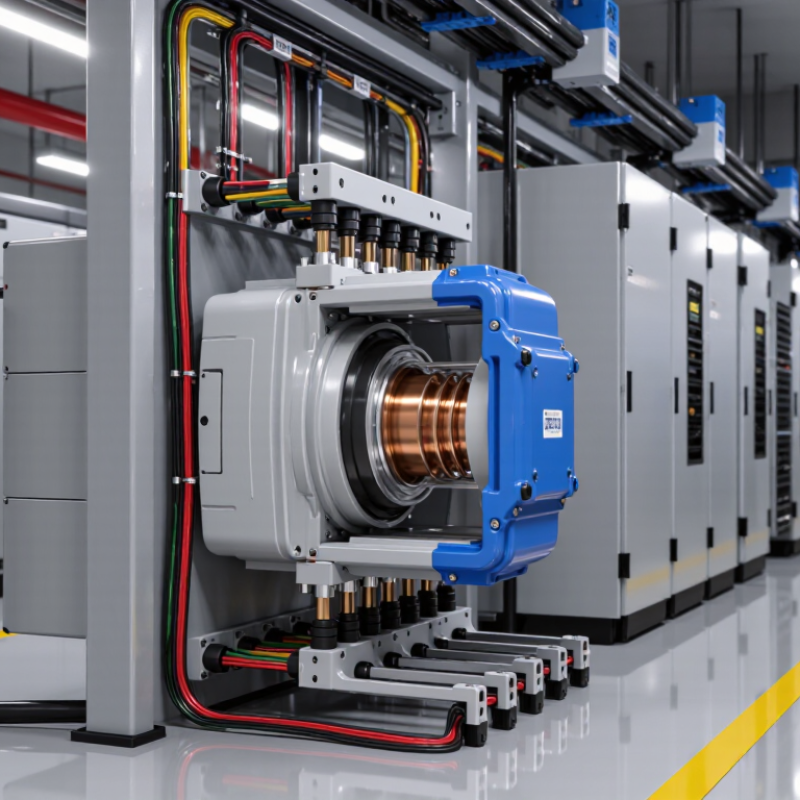
A vacuum circuit breaker, or VCB, interrupts electrical current inside a sealed vacuum interrupter. Its contacts sit apart when the breaker is open and meet to carry current during normal operation. When a protection relay detects a fault, it sends a trip signal to the operating mechanism. The contacts then separate. A brief arc forms as metal vapor leaves their surfaces.
The arc lasts briefly. At the next current zero, the arc usually extinguishes, and the vapor condenses on the interrupter’s internal surfaces. The vacuum helps the gap regain its insulating strength quickly, limiting the chance that current will continue across the separated contacts. The VCB interrupts the current; it does not identify faults on its own. Relay settings and system design matter.
In a project, check the system voltage, fault level, switching duty, and installation conditions against the breaker’s rated capabilities. A compact panel can make a VCB look simple, but coordination with relays and upstream equipment still needs careful review. One detail is easy to overlook: “sealed” does not mean “never inspect.” Follow the manufacturer’s maintenance guidance, and account for contact wear and operating cycles. The practical choice depends on the network, not just the interrupter.

A vacuum circuit breaker (VCB) interrupts current inside a sealed vacuum interrupter. When its contacts separate, a brief arc forms from metal vapor. Near the current’s natural zero point, the arc extinguishes, and the vacuum quickly regains insulating strength. This helps stop fault current before it causes further damage to cables, transformers, or switchgear. The interrupter also avoids using oil or gas as its arc-quenching medium.
A VCB is not a cure-all. Its protection depends on correct ratings, suitable protective relays, and coordination with other devices. For example, a breaker must be selected for the system’s voltage and expected fault current. A relay must also detect a fault and send the trip command promptly. One detail is easy to overlook: installation conditions and regular inspections matter, too. Dust, loose connections, or a poorly set relay can undermine an otherwise capable breaker.
Tips: Check the equipment’s rated voltage and breaking capacity against the project data. Confirm relay settings with a qualified electrical engineer. Keep inspection records, and follow the manufacturer’s maintenance instructions. Small checks matter.
A vacuum circuit breaker (VCB) can suit medium-voltage projects where dependable switching and manageable maintenance matter. When its contacts separate, the arc is extinguished inside a sealed vacuum interrupter. This limits contact wear and avoids using oil or gas as the arc-quenching medium. For operators, that can mean fewer routine servicing tasks and less equipment space to plan around. A smaller footprint helps in a compact substation room. That matters.
VCBs are also designed for repeated switching, which can be useful in industrial plants, commercial buildings, and utility distribution systems. Their performance still depends on choosing the right ratings. Check the system voltage, fault current, switching frequency, and protection settings against the project requirements. Coordination with relays and upstream equipment is essential; a capable breaker cannot compensate for poor system design. Installation quality and periodic inspection matter, too. Dust, loose connections, or neglected mechanisms can undermine reliability. A VCB is not automatically the best choice for every site. Compare operating conditions, service support, and lifecycle costs before deciding. Even then, load patterns can change, so the initial assumptions deserve a second look.
| Benefit | Technical basis | Potential project value | Selection note |
|---|---|---|---|
| Effective medium-voltage arc interruption | The interrupter extinguishes the arc in a sealed vacuum chamber. VCBs are widely used in medium-voltage distribution systems, with product ratings varying by design and standard. | Suitable for switching and protection duties in many industrial, commercial, and utility installations. | Confirm rated voltage, normal current, short-circuit breaking current, and the applicable system duty. |
| Reduced routine maintenance needs | The vacuum interrupter is sealed, and the design does not require routine handling of insulating oil or SF6 gas in the interrupter. | Can reduce inspection and consumable-maintenance tasks compared with some oil- or gas-based designs. | Operating mechanisms, controls, interlocks, and switchgear still require inspection and maintenance according to the manufacturer’s schedule. |
| No oil in the interrupter | Vacuum provides the arc-interruption medium, so the breaker does not use insulating oil for that function. | Avoids oil-related leakage and spill-management concerns associated with oil circuit breakers. | Assess the complete installation for other fire, environmental, and containment requirements; the absence of oil does not eliminate all site risks. |
| Does not use SF6 as the interrupting medium | A VCB’s interrupter uses vacuum rather than sulfur hexafluoride gas. | Avoids SF6 inventory and gas-handling requirements for the breaker interrupter. | Check the full switchgear design: other equipment or compartments may use different insulating media. |
| Well suited to frequent switching | Vacuum interrupters are used in applications with repeated switching; mechanical and electrical endurance ratings depend on the specific breaker and duty. | Can support feeders and equipment that require regular operation, when the selected model is rated for the expected switching frequency. | Compare the required operating class and endurance ratings with the load type, switching frequency, and expected fault duty. |
| Compact integration options | Vacuum interrupters can be incorporated into metal-enclosed and withdrawable medium-voltage switchgear designs. | May help planners create space-efficient switchgear lineups and simplify breaker replacement arrangements. | Overall dimensions depend on rated voltage, insulation design, bus arrangement, protection equipment, and enclosure requirements. |
| Flexible protection-system integration | VCBs can be paired with protection relays, current transformers, and control systems selected for the application. | Supports coordinated protection schemes for feeders, transformers, motors, and other medium-voltage loads. | Verify relay functions, instrument-transformer ratios, trip-circuit requirements, and coordination settings during system design. |
Ratings and maintenance intervals vary by product and application. Confirm all selection details against the applicable standards, project specifications, and manufacturer documentation.
VCB circuit breakers are commonly installed in medium-voltage substations, where they protect transformers, feeders, and busbars. Their vacuum interrupters extinguish arcs inside sealed chambers, making them suitable for frequent switching in many indoor installations. They need careful coordination. A breaker must match the system voltage, fault level, operating duty, and protection settings; “medium voltage” alone is not enough to specify one.
Industrial plants use VCBs to isolate motors, pumps, and production-area feeders, often in compact switchgear rooms. Commercial campuses and hospitals also use them at incoming supplies and distribution points, where a fault must be cleared without unnecessarily shutting down other loads. Renewable-energy sites may use them in collector substations and grid connections. The International Energy Agency’s Electricity 2024 report forecasts global electricity demand growth averaging 3.4% per year from 2024 to 2026. That wider demand trend makes reliable distribution equipment important, but it does not mean every project needs the same breaker. Dust, humidity, switching frequency, maintenance access, and relay settings all matter. A site survey can reveal awkward details—like a cramped panel or limited service access—that a one-line diagram may miss.
A VCB circuit breaker should match the electrical demands and physical conditions of the project. Check the system’s rated voltage and continuous current, then compare its short-circuit breaking capacity with the fault level at the installation point. A mismatch can leave equipment inadequately protected. Consider switching frequency, too; duties involving frequent operation may call for different operating mechanisms and maintenance intervals. Small details matter.
The installation environment is equally important. Confirm whether the breaker is intended for indoor or outdoor use, and account for ambient temperature, altitude, dust, and available space. Check that its insulation level, control voltage, protection scheme, and connection arrangement suit the existing switchgear. Compatibility is practical, not cosmetic. There is no universal best choice, and a specification sheet cannot reveal every site constraint. A panel drawing may be outdated, so verify dimensions and interfaces before ordering.
Tips: Ask the project engineer to confirm the expected fault current and protection coordination. Compare the breaker’s rated values with the system study, not just the existing equipment label. Check interlocks and operating access on the actual panel layout. Keep a little room for inspection and cable clearance. Measure twice.

Cepex is the brand for the fluid handling market belonging to the Fluidra group. One of the leading european manufacturer of valves and fittings in thermoplastic materials.
Dedicated to the swimming pool, irrigation and industrial markets, we distribute our products worldwide with the Fluidra commercial network and presence in 46 countries with 136 sales branches.


