
Why Choose a Roll Crusher for Your Business?
FLUID HANDLING EXPERTS

Blog, all our news

Why Choose a Roll Crusher for Your Business?

Choosing the right crushing equipment can shape product quality, operating costs, and daily workflow. A Roll Crusher is often considered when a plant needs controlled size reduction and a consistent product from suitable feed materials. Its paired rotating rolls draw material through a narrowing gap, where compression breaks it down. The result can be useful in mineral processing, aggregate production, and other operations that value predictable output.

Fit matters. Before selecting a model, operators should compare feed size, material hardness, moisture, required capacity, and target particle size. For example, damp or sticky feed may behave differently from dry, free-flowing rock, while abrasive material can increase wear on roll surfaces. Check the manufacturer’s specifications, maintenance requirements, guarding, and available service support. A machine that looks efficient on paper may not suit a particular plant layout or feed stream.

A careful evaluation also considers energy use, replacement parts, and access for inspection. Ask suppliers for performance information based on material conditions similar to yours, and confirm what assumptions their figures rely on. Not every time. Sometimes a different crusher type is the better choice, especially when feed characteristics or reduction needs fall outside the unit’s intended range. This guide explains where a Roll Crusher can add value, what trade-offs to examine, and which practical questions can help a business make a well-grounded decision. A site trial or qualified engineering review may reveal limitations that brochures cannot.
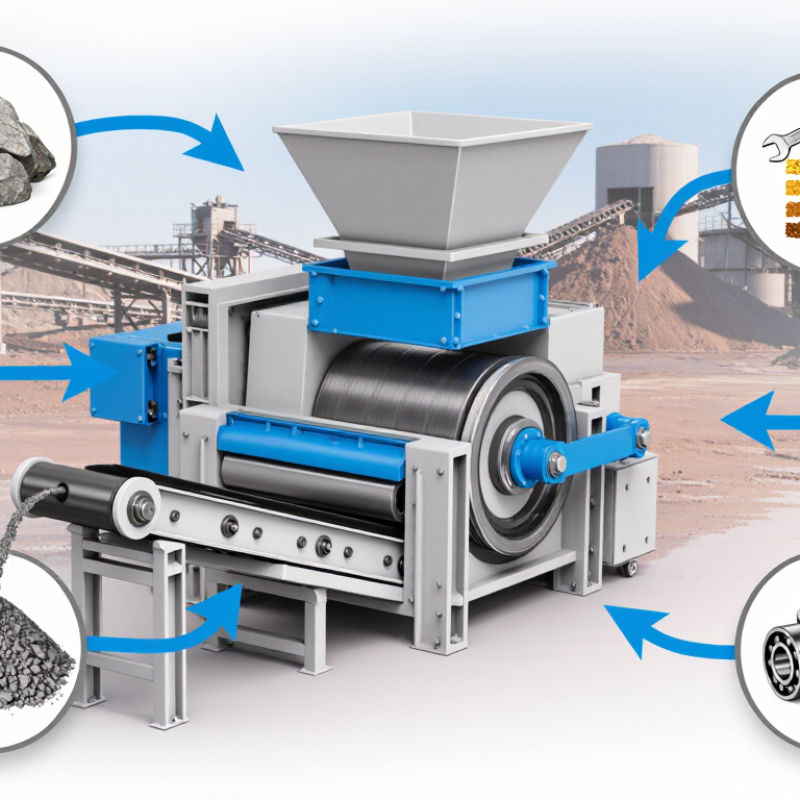
Why Choose a Roll Crusher for Your Business?

What Is a Roll Crusher?

A roll crusher is a machine that reduces rock, ore, or other bulk material between rotating rolls. Two cylindrical rolls turn toward each other, drawing feed into the narrow space between them. The material breaks under compression and, in some designs, shearing action. The gap between the rolls helps determine the product size, though the output is not perfectly uniform.

Roll surfaces may be smooth or fitted with teeth. Smooth rolls are commonly used for smaller, more even feed, while toothed rolls can grip larger pieces. The right design depends on the material’s hardness, moisture, feed size, and required capacity. In practice, feed is rarely perfectly consistent. Wet, sticky material may cling to the rolls, while unusually large pieces can create uneven loading. Small details matter.

Operators often check the roll gap, surface wear, bearings, and feed flow during routine inspections. Adjustments can help maintain a steady product, but they cannot correct every problem upstream. A roll crusher may produce a relatively controlled size, yet it is not a fine-grinding machine. A screen may be needed when the process requires tighter sizing. The actual result depends on the material and operating conditions, so trial runs and regular checks are more useful than assumptions.

How Does a Roll Crusher Work?

Why Choose a Roll Crusher for Your Business?

How Does a Roll Crusher Work?

A roll crusher reduces material by pulling it through the narrow space between two rotating cylinders. The rolls turn toward each other, gripping incoming rock or other feed and compressing it until pieces fracture. Some designs also use surface teeth to help break material through a mix of compression and shearing. The crushed material then falls beneath the rolls for collection or further processing.

The gap matters. It helps determine the approximate product size, though feed shape and material properties also affect the result. Many machines allow operators to adjust the gap or roll speed to suit changing requirements. For example, a steady stream of evenly sized feed may produce more consistent output than irregular, oversized chunks. In practice, the neat diagram gets less neat: damp or sticky material can build up, while very hard feed may increase wear. Operators should check roll surfaces, clearances, and bearings regularly, and follow the machine’s operating limits. Small changes count. A trial run with representative feed can reveal whether the settings deliver the desired size and throughput.

What Types of Roll Crushers Are Available?

Roll crushers reduce material between rotating surfaces, making them useful when a process needs controlled sizing and relatively little fines. The main options differ in roll count, surface design, and applied pressure. Feed size, moisture, and hardness all affect performance.

A single-roll crusher presses material against a stationary breaker plate. It is often used for coarse reduction, especially when feed contains larger pieces. Double-roll crushers use two rolls that turn inward. Smooth rolls suit friable materials and produce a more consistent product; toothed rolls grip larger, tougher lumps. The difference matters. A wet, sticky feed may still cling to the teeth or housing.

High-pressure grinding rolls compress a packed layer of material between two counter-rotating rolls. They are used in mineral processing when finer reduction or improved energy efficiency is important, though results depend on ore properties and operating conditions. Before choosing a type, check the feed’s maximum size, target product size, and expected throughput. Inspect wear patterns during trials, too: uneven teeth or roll surfaces can change the product distribution. Dust still escapes. Real installations may need extra controls, and those details are easy to underestimate.

Why Choose a Roll Crusher? Common Types and Reduction Ratios

Roll crushers use compression to reduce material size and are available with smooth or toothed roll surfaces.

How to read this chart: Typical reduction-ratio guides are approximately 4:1 for smooth-roll crushers and up to 6:1 for toothed-roll crushers. Actual results depend on feed material, feed size, moisture, and roll-gap settings. Choose a crusher type based on the material and the required product size.

What Business Benefits Can a Roll Crusher Offer?

A roll crusher can support steadier production by reducing material between two rotating rolls. Its controlled crushing action often produces a more consistent particle size, which can simplify handling and improve the next processing step. Fewer oversized pieces may also mean less rework. That matters. For businesses moving bulk materials, predictable output can help operators plan shifts, storage, and delivery more accurately.

Tips: Match roll settings to the material’s hardness, moisture, and target size. Check wear regularly, and record output changes after adjustments. Small checks can prevent avoidable downtime.

The business benefit depends on the actual feed and operating conditions. A roll crusher may be a poor fit for very abrasive material or a process requiring extensive size reduction in one pass. Review sample test results, energy use, maintenance access, and expected throughput before choosing equipment. In practice, the numbers can look less attractive once wear parts and cleaning time are included. It is worth checking those details, not just the purchase price.

How Do You Choose and Maintain a Roll Crusher?

Choosing a roll crusher starts with the material, not the advertised capacity. Measure the largest feed pieces and note their hardness, moisture, and abrasiveness. These properties affect throughput, wear, and the risk of plugging. Check the required product size against the roll gap and the crusher’s adjustment range. A machine that handles peak tonnage may still produce too many oversized pieces. Small details matter.

Consider how the crusher will fit your process. Compare expected feed rate with the capacity of upstream and downstream equipment, and ask how quickly rolls or wear components can be inspected and replaced. Uneven feed can cause uneven wear, so look for a design that supports steady feeding. There is no perfect setting; the best gap may change as roll surfaces wear or the feed changes. In practice, operating records can be incomplete, so leave room to verify assumptions with a controlled trial.

Maintenance should be routine and specific. Inspect roll surfaces, bearings, seals, and fasteners for wear, heat, or unusual vibration. Keep lubrication clean and follow the equipment maker’s service intervals. Clean it daily. Before opening guards or working near moving parts, shut down and isolate the machine according to site procedures. Track gap settings, feed conditions, and product size in a simple log. If readings drift, check alignment and wear before increasing the gap; that shortcut can hide the real problem.

Copyright 2025 Fluidra S.A. | Created by BCM Marketing Agencia Privacy Policy Legal note | Cookie policy |

Technical cookies are strictly necessary for our website to work and you can navigate through it. These types of cookies are those that, for example, allow us to identify you, give you access to certain restricted parts of the page if necessary, or remember different options or services already selected by you, such as your privacy preferences. Therefore, they are activated by default, your authorization not being necessary in this regard. Through the configuration of your browser, you can block or alert the presence of this type of cookies, although such blocking will affect the proper functioning of the different functionalities of our website.


The analysis cookies allow us to study the navigation of the users of our website in general (for example, which sections of the page are the most visited, which services are used most and if they work correctly, etc.). From the statistical information on navigation on our website, we can improve both the operation of the page itself and the different services it offers. Therefore, these cookies do not have an advertising purpose, but only serve to make our website work better, adapting to our users in general. By activating them you will contribute to this continuous improvement. You can enable or disable these cookies by checking the corresponding box, being disabled by default.


Functionality cookies allow us to remember your preferences, to personalize certain characteristics and general options of our website, every time you access it (for example, the language in which the information is presented to you, the sections marked as favorites, your browser type, etc.) Therefore, this type of cookies does not have an advertising purpose, but by activating them you will improve the functionality of the website (for example, adapting to your type of browser) and the customization of it based on your preferences (for example, by presenting the information in the language that you have chosen in previous occasions), which will contribute to the ease, usability and comfort of our page during your navigation. You can enable or disable these cookies by checking the corresponding box, being disabled by default.


Advertising cookies allow us to manage the advertising spaces included in our website based on criteria such as the content shown or the frequency in which the ads are displayed. For example, if you have been shown the same ad several times on our website, and you have not shown a personal interest by clicking on it, it will not appear again. In summary, by activating this type of cookies, the advertising shown on our website will be more useful and diverse, and less repetitive. You can enable or disable these cookies by checking the corresponding box, being disabled by default.


Behavioral advertising cookies allow us to obtain information based on the observation of your browsing habits and behaviors on the web, in order to show you advertising content that best suits your personal tastes and interests. To understand it in a very simple way, we will give you a fictitious example: if your last searches on the web were related to suspense literature, we would show you advertising about suspense books. Therefore, activating this type of cookies, the advertising that we show you on our website will not be generic, but will be oriented to your searches, tastes and interests, therefore adjusting exclusively to you. You can enable or disable these cookies by checking the corresponding box, being disabled by default.
To understand it in a very simple way, we will give you a fictitious example: if your last searches on the web were related to suspense literature, we would show you advertising about suspense books. Therefore, activating this type of cookies, the advertising that we show you on our website will not be generic, but will be oriented to your searches, tastes and interests, therefore adjusting exclusively to you. You can enable or disable these cookies by checking the corresponding box, being disabled by default.

SAVE

We use our own and third-party cookies to ensure the proper functioning of the website and to analyse our services, improve your experience on our website and show you advertisements related to your interests according to profiling based on your browsing habits (e.g. websites visited). You can accept all cookies by clicking "ACCEPT" or set or reject them by clicking here. If you would like to know more about the use of cookies, please see our COOKIE POLICY.


ACCEPT ALL
Reject no essentials


