
Why Choose a One Phase Transformer for Global Projects?
FLUID HANDLING EXPERTS

Blog, all our news

Why Choose a One Phase Transformer for Global Projects?

Global projects rarely fail because of one dramatic electrical mistake. They fail through small mismatches: unstable supply voltage, limited installation space, difficult maintenance access, or unclear local requirements. A One Phase Transformer can address these challenges with a focused, practical design. It supports single-phase loads in homes, remote facilities, workshops, communication sites, and compact commercial buildings. It is not the answer to every project.

Field experience matters. Engineers must examine load capacity, frequency, voltage variation, insulation class, cooling method, enclosure protection, and expected duty cycle. A transformer selected only from a catalog may perform poorly under tropical heat, dusty conditions, or long cable runs. Site reality is often less tidy.

Martin J. Heathcote, author of The J&P Transformer Book, describes a transformer as “a static electrical machine with no moving parts.” That simplicity can support dependable operation across different markets. However, simple construction does not remove design responsibility. IEC or IEEE references may guide the specification, but local utility rules and installation practices still require careful review. A One Phase Transformer can also simplify replacement planning, especially when standardized ratings and accessible spare units are available. This reduces downtime when a project operates far from major service centers.

The practical question is not merely, “Is it cheaper?” It is more useful to ask whether the transformer matches the load, environment, and maintenance capability. Small assumptions can become expensive. Even experienced teams sometimes overlook future load growth. A careful comparison creates a stronger foundation for global deployment.
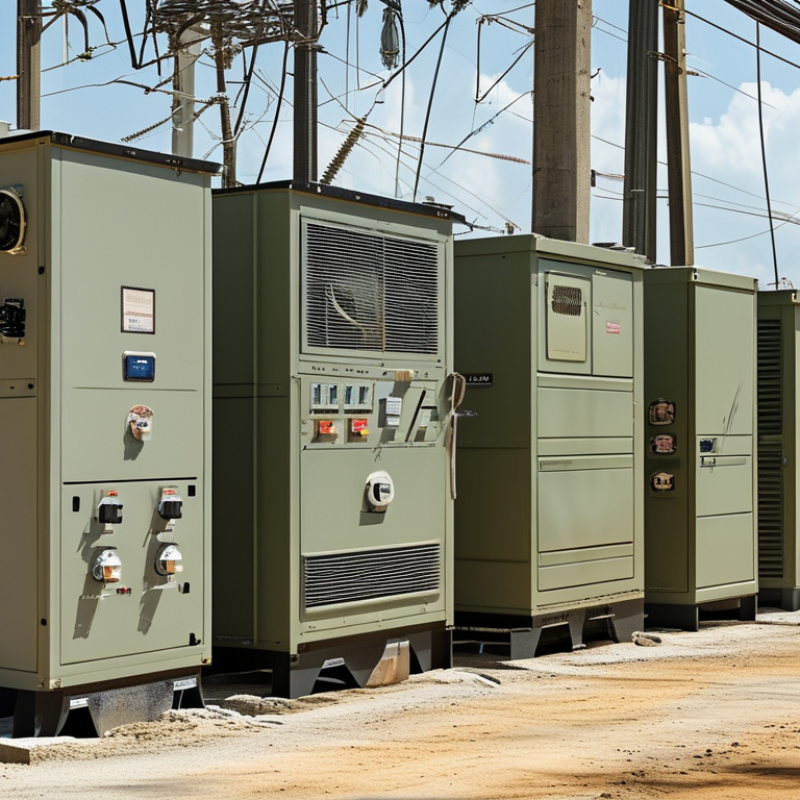
Why Choose a One Phase Transformer for Global Projects?

What Is a One-Phase Transformer?

Why Choose a One Phase Transformer for Global Projects?

What Is a One-Phase Transformer?

A one-phase transformer transfers alternating-current energy between circuits through magnetic induction. It usually has a primary winding, a secondary winding, and a laminated iron core. The winding ratio changes the voltage while keeping the frequency unchanged. It is compact, reliable, and practical for lighting, control panels, small motors, and residential equipment. It is compact. However, it does not automatically suit heavy, balanced three-phase loads. Project engineers should check the required power, input voltage, output voltage, frequency, and expected load pattern before selection. These details differ between regions and installations.

Tips: Confirm local electrical requirements before ordering. Check rated power in volt-amperes, not only watts. Leave room for ventilation and cable bending. Consider inrush current, especially when supplying motors or sensitive equipment. A qualified engineer should verify insulation, grounding, enclosure protection, and short-circuit coordination. Small drawings often hide large installation problems.

For global projects, a one-phase transformer can simplify replacement and reduce panel space. Standardized specifications also help contractors compare equipment across locations. Yet, “global” does not mean universal. A transformer designed for one supply system may perform poorly elsewhere. Field experience shows that heat, dust, altitude, and unstable source voltage can affect service life. I would also question an oversized unit; it may cost more and operate inefficiently under light loads. Careful site data remains more valuable than a convenient assumption.

Why Choose a One-Phase Transformer for Global Projects?

A one-phase transformer transfers electrical energy between circuits while increasing or reducing AC voltage through electromagnetic induction. It is commonly used for residential buildings, lighting systems, control equipment, and small commercial loads.

The chart shows representative nominal single-phase supply voltages used in selected markets. Actual site requirements should always be confirmed against local electrical standards and utility specifications.

How One-Phase Transformers Support Global Power Systems

One-phase transformers support global power systems by adapting electricity to local operating conditions. In field projects, engineers often face different voltage levels, frequencies, and grounding practices. A properly specified unit can isolate sensitive loads and provide stable voltage near the point of use. This matters in clinics, control rooms, workshops, and remote communications shelters. Smaller footprints help when transport routes are narrow or lifting equipment is limited. That practical advantage is easy to underestimate.

Their flexibility also simplifies phased construction. A project team can install several modest units instead of one large transformer. Each unit can serve a defined load, reducing cable runs and limiting disruption during maintenance. Protection settings still require careful coordination. Engineers should verify inrush current, insulation class, thermal performance, enclosure rating, and short-circuit withstand. Local codes and utility rules must guide the final design. Testing should include ratio checks, insulation resistance, polarity, and load measurements.

Experience shows that documentation can prevent more trouble than hardware changes. Clear labels, test records, and spare-fuse schedules help local technicians work safely. Training must match the site language and skill level. Not every project needs the smallest transformer. A higher-capacity model may provide useful headroom for pumps, lighting, or future equipment. Yet oversizing can increase cost and reduce efficiency under light loads. This trade-off deserves a real load survey, not an optimistic estimate. Conditions change. Good designs leave room for that fact.

Key Benefits for International Project Applications

Why Choose a One Phase Transformer for Global Projects?

Key Benefits for International Project Applications

A one phase transformer can simplify power distribution across many international projects. It is useful for lighting, control panels, offices, clinics, and small production areas. Its compact structure supports easier transport and installation, especially on remote sites with limited lifting equipment. Technicians can often inspect connections quickly. That matters when local maintenance resources are limited.

Voltage adaptation is a major benefit. A suitable transformer can match incoming power with equipment requirements, reducing avoidable electrical stress. Engineers should verify voltage, frequency, insulation level, load type, and local safety requirements before selection. International projects may follow different technical standards. A careful review of IEC, regional, or project-specific rules improves reliability. Do not rely on voltage values alone.

One phase units also support flexible expansion. Separate transformers can serve lighting, communication systems, or sensitive control equipment. This arrangement may limit the effect of a fault in one area. However, it is not always the best answer. Large motors, heavy industrial loads, and unbalanced systems may require another configuration. In field applications, incomplete load data can create expensive surprises. A practical design includes spare capacity, proper grounding, suitable enclosure protection, and clear labeling. Small details matter. They are easy to overlook.

Voltage, Frequency, and Safety Considerations

Why Choose a One Phase Transformer for Global Projects?

Voltage, Frequency, and Safety Considerations

A single-phase transformer can simplify power conversion at remote sites, workshops, clinics, and small commercial buildings. Global projects rarely share one electrical standard. IEC 60038 lists different nominal voltages, while many countries use 50 Hz and others use 60 Hz. The nameplate must state both values clearly. A 230 V, 50 Hz transformer may not suit a 120 V, 60 Hz installation. Frequency mismatch can increase magnetizing current, heating, and audible noise. It may fail quietly.

Project engineers should verify supply voltage, load voltage, frequency, phase arrangement, and expected inrush current. IEC 60076-1 provides core transformer requirements, but local codes still control installation. The International Energy Agency reported that global electricity demand increased by about 2.2% in 2023. More equipment is crossing borders, often with tighter efficiency expectations. Small losses matter. A transformer operating near 70–80% of its rated load may offer a practical balance between efficiency and future capacity, although the final choice requires measured load data.

Safety needs physical detail. Use correctly rated fuses, protective earthing, separation barriers, and clear terminal labels. IEC 61558 addresses transformer safety and electrical separation. Enclosures should match dust, moisture, and impact conditions. A dusty construction room is not a clean laboratory. Commissioning teams should test insulation resistance, polarity, grounding continuity, and temperature rise. One overlooked issue remains common: frequency is checked on paper, but not at the site socket. Recheck it.

Why Choose a One Phase Transformer for Global Projects? - Voltage, Frequency, and Safety Considerations
Selection Dimension Typical Data or Range Why It Matters in Global Projects Recommended Design or Verification
Electrical Phase Single-phase input and output Suitable for lighting, control panels, office equipment, small machinery, instrumentation, and other loads that do not require a three-phase supply. Confirm the connected load is genuinely single-phase and check the inrush current of motors, solenoids, power supplies, and other inductive equipment.
Common Primary Voltages 100 V, 110 V, 115 V, 120 V, 220 V, 230 V, and 240 V nominal systems Different countries and facilities use different nominal voltages. A transformer can adapt the project supply to the voltage required by the equipment. Use the destination site's measured or officially specified nominal voltage rather than relying only on the country name.
Common Secondary Voltages 12 V, 24 V, 48 V, 110 V, 115 V, 120 V, 220 V, and 230 V Lower secondary voltages can simplify control-power distribution and may reduce electrical risk in suitable applications. Match the secondary voltage, tolerance, and available power to the equipment nameplate and applicable installation rules.
Operating Frequency 50 Hz or 60 Hz Utility frequency varies by region. Frequency affects magnetic flux, no-load current, losses, heating, and the operation of frequency-sensitive loads. Specify the rated frequency clearly. A transformer designed for 50/60 Hz operation should be verified for both frequencies at the intended voltage.
50 Hz / 60 Hz Compatibility Possible when explicitly rated for both frequencies Operating a 50 Hz-only transformer at 60 Hz is generally less magnetically demanding, while operating at a lower frequency can increase core flux and heating if the voltage is not reduced. Check the manufacturer's rating, volts-per-hertz limit, temperature rise, and no-load current before approving dual-frequency use.
Capacity Selection VA or kVA rating based on the connected load Transformer capacity must cover the normal load and temporary starting or inrush demand without excessive voltage drop or overheating. Calculate the simultaneous load, add the applicable inrush requirement, and allow a practical engineering margin without excessive oversizing.
Voltage Regulation Depends on winding design, load power factor, and transformer size Voltage at the secondary terminals can fall as the load increases, which may affect motors, relays, lamps, and electronic power supplies. Compare the required loaded voltage with the transformer's regulation data and consider taps where the supply voltage is variable.
Isolation Requirement Galvanic isolation available with an isolation transformer Electrical separation between primary and secondary circuits can help limit the transfer of certain faults and reduce common-mode electrical noise. Specify reinforced or basic insulation as required, and do not treat isolation as a substitute for grounding, overcurrent protection, or safe work practices.
Protection Against Overcurrent Primary and secondary protective devices selected for the circuit Short circuits, overloads, and transformer inrush can damage windings and connected equipment if protection is incorrectly sized. Coordinate fuses or circuit breakers with the transformer inrush current, rated current, short-circuit withstand, and local electrical rules.
Grounding and Bonding Protective earth connection required for exposed conductive parts A reliable protective-earth path helps ensure that an insulation fault operates the protective device and reduces touch-voltage risk. Bond the enclosure and any required secondary reference point according to the system design and the applicable installation standard.
Insulation and Safety Standard Verify compliance with the applicable transformer and installation standards, such as IEC 61558 or IEC 60076 where relevant Standards address insulation, temperature rise, dielectric strength, construction, marking, testing, and protection against electric shock. Select the standard according to the transformer's application, construction, voltage level, and installation environment; confirm test documentation before shipment.
Environmental Protection IP rating selected for the installation location Dust, moisture, water spray, chemicals, altitude, and ambient temperature can affect insulation life, cooling, and enclosure safety. Define the ambient temperature, humidity, altitude, indoor or outdoor location, and required IP rating before finalizing the enclosure.
Thermal Performance Temperature rise depends on load, cooling method, ambient temperature, and enclosure Excessive heat accelerates insulation aging and can reduce reliability, especially in enclosed panels or hot climates. Check the rated ambient conditions, ventilation, derating requirements, and temperature-rise limits for the complete installation.
Installation and Serviceability Compact footprint with accessible terminals and clear identification Single-phase units are often easier to integrate into distributed control panels and local equipment than larger multi-phase systems. Provide working clearance, strain relief, terminal protection, circuit labels, isolation points, and access for inspection and testing.
Global Project Documentation Nameplate, wiring diagram, ratings, terminal markings, test records, and local-language requirements Consistent documentation reduces wiring errors and simplifies approval, commissioning, maintenance, and replacement across different locations. Document primary and secondary voltage, frequency, VA/kVA, insulation class, protection requirements, connection configuration, and applicable standards.
Important note: Voltage values shown are common nominal system values, not universal operating limits. Actual permissible tolerances, earthing arrangements, protection rules, and certification requirements vary by jurisdiction and installation type. Final selection should be verified against the destination site's electrical specifications and applicable regulations.

How to Select the Right One-Phase Transformer for a Project

Why Choose a One-Phase Transformer for Global Projects?

How to Select the Right One-Phase Transformer for a Project

A one-phase transformer can suit lighting systems, control panels, small machinery, and remote facilities. Its compact design often simplifies transport and installation. However, selection should begin with site data, not appearance. Confirm the local input voltage, output voltage, frequency, and connection method. A transformer designed for 230 volts may not perform correctly on a 220-volt supply.

Calculate the real load in kilovolt-amperes, then allow room for motor starting currents and future expansion. Check the load profile carefully. Heaters, pumps, and electronic equipment behave differently. In project reviews, I have seen undersized units overheat during startup, even when normal running loads looked acceptable. A small oversight can become expensive. Consider ambient temperature, altitude, humidity, enclosure protection, insulation class, and expected efficiency. Verify applicable electrical standards with a qualified engineer before purchase.

Tips: Keep a clear load schedule. Include cable length and voltage drop. Confirm whether the load needs isolation or voltage adjustment. Check spare capacity, but avoid excessive oversizing. It can increase cost and reduce operating efficiency. Ask for certified test data and installation guidance. Measure the actual site voltage when possible. Assumptions are useful, but measurements are safer. One detail may still be missed, so record every design decision.

Copyright 2025 Fluidra S.A. | Created by BCM Marketing Agencia Privacy Policy Legal note | Cookie policy |

Technical cookies are strictly necessary for our website to work and you can navigate through it. These types of cookies are those that, for example, allow us to identify you, give you access to certain restricted parts of the page if necessary, or remember different options or services already selected by you, such as your privacy preferences. Therefore, they are activated by default, your authorization not being necessary in this regard. Through the configuration of your browser, you can block or alert the presence of this type of cookies, although such blocking will affect the proper functioning of the different functionalities of our website.


The analysis cookies allow us to study the navigation of the users of our website in general (for example, which sections of the page are the most visited, which services are used most and if they work correctly, etc.). From the statistical information on navigation on our website, we can improve both the operation of the page itself and the different services it offers. Therefore, these cookies do not have an advertising purpose, but only serve to make our website work better, adapting to our users in general. By activating them you will contribute to this continuous improvement. You can enable or disable these cookies by checking the corresponding box, being disabled by default.


Functionality cookies allow us to remember your preferences, to personalize certain characteristics and general options of our website, every time you access it (for example, the language in which the information is presented to you, the sections marked as favorites, your browser type, etc.) Therefore, this type of cookies does not have an advertising purpose, but by activating them you will improve the functionality of the website (for example, adapting to your type of browser) and the customization of it based on your preferences (for example, by presenting the information in the language that you have chosen in previous occasions), which will contribute to the ease, usability and comfort of our page during your navigation. You can enable or disable these cookies by checking the corresponding box, being disabled by default.


Advertising cookies allow us to manage the advertising spaces included in our website based on criteria such as the content shown or the frequency in which the ads are displayed. For example, if you have been shown the same ad several times on our website, and you have not shown a personal interest by clicking on it, it will not appear again. In summary, by activating this type of cookies, the advertising shown on our website will be more useful and diverse, and less repetitive. You can enable or disable these cookies by checking the corresponding box, being disabled by default.


Behavioral advertising cookies allow us to obtain information based on the observation of your browsing habits and behaviors on the web, in order to show you advertising content that best suits your personal tastes and interests. To understand it in a very simple way, we will give you a fictitious example: if your last searches on the web were related to suspense literature, we would show you advertising about suspense books. Therefore, activating this type of cookies, the advertising that we show you on our website will not be generic, but will be oriented to your searches, tastes and interests, therefore adjusting exclusively to you. You can enable or disable these cookies by checking the corresponding box, being disabled by default.
To understand it in a very simple way, we will give you a fictitious example: if your last searches on the web were related to suspense literature, we would show you advertising about suspense books. Therefore, activating this type of cookies, the advertising that we show you on our website will not be generic, but will be oriented to your searches, tastes and interests, therefore adjusting exclusively to you. You can enable or disable these cookies by checking the corresponding box, being disabled by default.

SAVE

We use our own and third-party cookies to ensure the proper functioning of the website and to analyse our services, improve your experience on our website and show you advertisements related to your interests according to profiling based on your browsing habits (e.g. websites visited). You can accept all cookies by clicking "ACCEPT" or set or reject them by clicking here. If you would like to know more about the use of cookies, please see our COOKIE POLICY.


ACCEPT ALL
Reject no essentials


