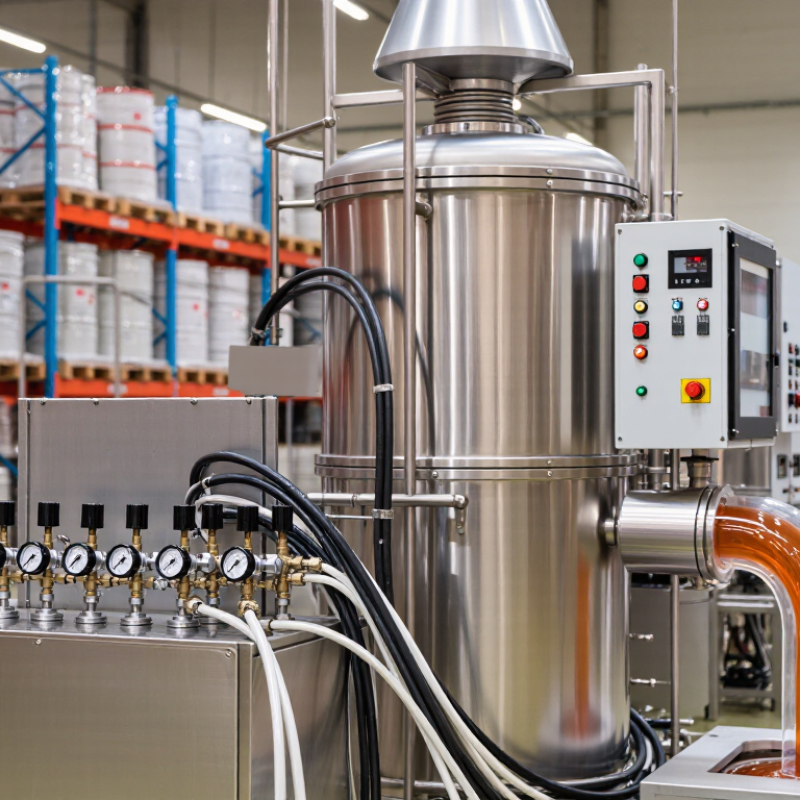
Why Choose a Drum Melter for Global Industrial Use?
Why Choose a Drum Melter for Global Industrial Use?
Global manufacturers need dependable melting systems as production becomes more regional, automated, and quality-sensitive. Grand View Research valued the global hot melt adhesives market at approximately USD 11.6 billion in 2023. It also projects continued growth through 2030. MarketsandMarkets reports similar expansion across industrial adhesives, packaging, construction, and transportation. These figures matter because every production delay can leave a costly block of material cooling inside a drum.
A Drum Melter heats solid adhesive, sealant, or other compatible materials directly inside standard containers. It can reduce manual transfer, contamination exposure, and material waste. Operators can monitor temperature, pressure, and dispensing speed from one controlled station. That sounds simple. It is not always simple. Drum size, material viscosity, heating zones, and local power standards require careful evaluation. A machine that performs well in Germany may need different controls for India, Brazil, or Canada.
According to industrial melting-systems specialist Dr. Michael J. Kline, “The best melter is not the hottest machine; it is the one that protects material consistency from drum to application.” This principle supports a practical purchasing decision. Reliable insulation, accessible controls, replaceable seals, and documented safety procedures often matter more than impressive heating speed. The U.S. Department of Energy continues to identify process heating as a major industrial energy user, making thermal efficiency increasingly important. A Drum Melter cannot solve every factory problem. However, when matched with the right material and workflow, it can create cleaner handling, steadier output, and more predictable international operations.
A drum melter is industrial equipment that heats solid or semi-solid material inside a standard drum. It commonly handles adhesives, waxes, resins, sealants, and other temperature-sensitive compounds. The machine uses a heated platen, which rests against the drum’s open surface. Heat moves gradually through the material, while a follower plate helps maintain contact as the level drops.
It starts simply. Operators place the drum beneath the platen and set a controlled temperature. Sensors monitor heating zones and help prevent overheating near the drum wall. Once the material softens, hydraulic pressure pushes the platen downward. A pump then transfers the melted compound through a hose to a filling, coating, or dispensing line. In well-maintained systems, this process reduces manual handling and limits exposure to dust or spills.
Practical experience shows that material testing matters. Different viscosities melt at different rates, even under identical settings. A compound may flow well near the platen but remain firm in the drum’s center. That can slow production and increase energy use. Operators should verify drum dimensions, material compatibility, heating requirements, and local electrical standards before installation. Cleaning also deserves attention. Residue left in the outlet can harden overnight and restrict flow the next morning. A drum melter is efficient, but it is not a universal solution. Careful setup still determines whether the equipment performs reliably across changing industrial environments.
Key Advantages of Drum Melters in Industrial Processing
A drum melter supports controlled heating for materials stored in standard drums. It is useful for waxes, adhesives, resins, oils, and other temperature-sensitive compounds. The system warms the container gradually, helping reduce manual handling and uneven melting. Consistent heat can improve pumping, mixing, and downstream filling.
Key advantages include better process control, reduced material waste, and more predictable production cycles. Many units use adjustable temperature zones, sensors, insulation, and safety alarms. These features help operators respond before overheating affects material quality. Drum melters also support cleaner workflows because the material can move directly from its container into the production line. In global industrial use, practical design matters. Equipment should suit local power conditions, maintenance skills, drum sizes, and documented safety procedures. No setup is perfect. A small temperature overshoot can still damage sensitive materials, especially when operators rely only on displayed settings.
Tips: Confirm material compatibility before heating. Check viscosity at operating temperature. Keep sensors clean and calibrated. Train operators to inspect hoses, seals, and alarms before each shift. Trial runs are valuable, even when the process looks familiar. Teams sometimes skip this step and later discover uneven melting near the drum wall. Regular records can reveal these patterns early.
Materials and Industries Suited to Drum Melting
Materials and Industries Suited to Drum Melting
Drum melters work well with materials that arrive solid or highly viscous in standard drums. Common examples include waxes, hot-melt adhesives, resins, bitumen, grease, and selected polymer compounds. The heating process softens the material gradually, allowing controlled pumping into production lines. Temperature accuracy matters. Overheating can change viscosity, color, or curing behavior.
Packaging, construction, automotive, and furniture manufacturers often use drum melting systems. Packaging plants may melt adhesive blocks for carton sealing or labeling. Construction sites can process bituminous compounds for roofing and joint applications. Automotive facilities may handle sealants, damping materials, and protective coatings. Food and pharmaceutical operations require stricter controls, including suitable contact surfaces, documented cleaning, and validated temperature limits.
The drum itself also influences performance. Steel drums suit many industrial compounds, while approved alternative containers may suit sensitive materials. Operators should check melting temperature, residence time, moisture sensitivity, and pump compatibility before installation. A practical trial with the actual material can reveal issues that a datasheet misses. The fit is not always perfect. Some blends separate during heating, and some products form a skin near the surface. Insulation, agitation, or staged heating may help, but each solution needs verification. Safety procedures should address hot surfaces, pressure buildup, ventilation, and material-specific handling requirements.
Why Choose a Drum Melter for Global Industrial Use?
Drum melters are well suited to solid materials that are shipped, stored, and processed in drums. Controlled heating helps convert temperature-sensitive solids into pumpable liquids while reducing manual material handling.
The chart shows representative melting or softening-point midpoints in degrees Celsius. Actual values vary by grade, purity, additives, and processing conditions. These materials are commonly encountered in adhesives, packaging, coatings, construction, chemical processing, and electrical applications.
Global Factors Influencing Drum Melter Selection
Global drum melter selection is rarely a simple capacity decision. A unit must match local power, climate, transport, and safety conditions. The International Energy Agency reports that industry consumed about 37% of global final energy in 2022. Therefore, heating efficiency deserves serious attention. Insulated vessels, accurate temperature controls, and low-idle operation can reduce avoidable energy use.
Voltage and frequency vary across markets. A 400-volt, 50-hertz supply may suit one site, but not another facility. Engineers should verify electrical infrastructure before shipment. At a coastal warehouse, salt air can corrode exposed steel. In colder regions, a viscous material may need longer heating time. These details affect throughput, maintenance, and operator safety. They are not minor specifications.
Transport also shapes the decision. UNCTAD’s Review of Maritime Transport 2023 states that around 80% of global merchandise trade by volume moves by sea. A drum melter therefore needs secure packaging, manageable dimensions, and accessible replacement parts. Local service capability matters. Very much.
Yet no selection spreadsheet captures every site condition. Assuming identical performance across continents can be wrong. A practical evaluation should combine supplier documentation, on-site measurements, regional electrical standards, and trial heating data. The final choice should reflect real operating habits, not only laboratory ratings.
Safety, Maintenance, and Operational Considerations
A drum melter can simplify bulk heating, but its value depends on controlled heat, stable lifting, and disciplined operator access. Hot surfaces, viscous spills, and suspended drums create predictable exposure points. The U.S. Bureau of Labor Statistics recorded 5,283 workplace deaths in 2023. That figure shows why routine controls still matter. Interlocks, guarding, emergency stops, and thermal cutouts should be checked before every shift. Small checks prevent ugly surprises.
Maintenance requires more than replacing heaters. Inspect lid seals, hydraulic hoses, thermocouples, insulation, grounding, and drum-contact plates for wear. ISO 12100 recommends risk reduction through safer design, guarding, and clear operating information. A 2021 industrial maintenance analysis estimated that predictive maintenance may reduce downtime by 30–50% and maintenance costs by 20–30%. Results vary. Poor sensors produce poor decisions. Record temperature drift, warm-up time, and leakage. Data exposes drift.
Operating procedures should define material compatibility, fill level, ventilation, and transfer temperature. IEC 60204-1 provides guidance for safer electrical equipment practices, while local regulations may add requirements. Train operators with real cold and hot scenarios, not slides alone. Human factors are easy to underestimate. One awkward drum position can defeat a perfect procedure. Review alarms after near misses, and question whether “normal” production quietly bypasses safeguards. Global deployment also requires translated instructions and region-appropriate inspections. Not always easy.
Why Choose a Drum Melter for Global Industrial Use? - Safety, Maintenance, and Operational Considerations
Evaluation Dimension
Typical Drum Melter Consideration
Operational Benefit
Recommended Control or Practice
Material Compatibility
Designed for bulk materials supplied in standard steel, fiber, or plastic drums, subject to equipment and material compatibility checks.
Reduces manual transfer steps and helps preserve material identity from storage through processing.
Confirm drum dimensions, liner construction, viscosity, melting range, and chemical compatibility before installation.
Heating Method
Common configurations use an electrically heated platen, heating jacket, or a combination of controlled heat-transfer surfaces.
Provides controlled melting without requiring the entire storage area to be heated.
Use independent temperature control, high-temperature cut-outs, and sensors positioned to reflect actual material temperature.
Temperature Control
Temperature settings depend on the product’s softening or melting point and its allowable thermal exposure.
Helps limit overheating, thermal degradation, discoloration, and changes in product performance.
Set operating limits from the material safety data sheet and process qualification data; verify calibration periodically.
Worker Safety
Heated surfaces, molten material, lifting operations, and pressurized transfer systems may create hazards.
A properly guarded and interlocked system can reduce direct operator contact with hot equipment and material.
Provide thermal insulation, guarding, warning labels, emergency stops, lockout/tagout procedures, and appropriate personal protective equipment.
Drum Handling
Drums can be heavy and may require a pallet truck, drum lifter, hoist, or other approved handling equipment.
Supports safer loading and unloading while reducing manual handling of heavy containers.
Define maximum drum weight, use rated lifting equipment, secure drums during positioning, and keep access routes clear.
Energy Use
Energy demand varies with drum size, insulation, material properties, ambient conditions, and heating temperature.
Localized heating can reduce unnecessary heat loss compared with warming an entire room or tank area.
Use insulation, standby controls, automatic shutoff, and energy monitoring to identify avoidable consumption.
Throughput Planning
Melting time depends on material type, starting temperature, drum geometry, fill level, and target flow rate.
Allows production teams to size capacity around batch requirements and avoid unnecessary oversizing.
Validate cycle time under actual operating conditions and maintain buffer capacity for peak demand and material variability.
Pump and Transfer System
Heated hoses, gear pumps, progressive cavity pumps, or other transfer devices may be used according to viscosity and flow requirements.
Enables consistent delivery to filling, coating, dispensing, or mixing equipment.
Match pump materials and seals to the product; control hose temperature and inspect connections for leaks.
Maintenance Access
Key service points typically include heating elements, temperature sensors, pumps, valves, hoses, seals, and electrical controls.
Accessible components can shorten troubleshooting and planned maintenance downtime.
Create inspection intervals, keep critical spare parts available, and isolate electrical and thermal energy before service.
Cleaning and Changeover
Residual material may remain in the drum, platen, pump, valve, or heated hose after processing.
A defined cleaning method helps reduce cross-contamination and production delays.
Use product-approved cleaning agents and procedures; allow hot components to reach a safe handling temperature before cleaning.
Environmental Conditions
Ambient temperature, humidity, dust, ventilation, and local electrical conditions can affect performance and safety.
Proper environmental planning supports reliable operation across different facilities and climates.
Assess site ventilation, ingress protection, grounding, electrical supply, and hazardous-area requirements before deployment.
Regulatory Readiness
Applicable requirements differ by country, industry, electrical system, workplace, and material hazard classification.
Early compliance review reduces installation delays and supports safer international deployment.
Review local electrical, machinery, pressure, occupational safety, and hazardous-material requirements with qualified personnel.
Spare Parts and Service
Wear items may include seals, hoses, valves, heating elements, sensors, and pump components.
A planned parts strategy helps maintain uptime when facilities operate far from service centers.
Standardize consumables where practical, document part specifications, and maintain a location-based critical-spares list.
Note: Actual performance depends on the material, drum size, heating configuration, installation conditions, and applicable safety requirements. Equipment selection should be confirmed through application testing and a site-specific risk assessment.
Cepex is the brand for the fluid handling market belonging to the Fluidra group. One of the leading european manufacturer of valves and fittings in thermoplastic materials.
Dedicated to the swimming pool, irrigation and industrial markets, we distribute our products worldwide with the Fluidra commercial network and presence in 46 countries with 136 sales branches.
Your data will be processed by CEPEX S.A., with address at C. Lluís Companys, 51-53, 08400, Granollers (Barcelona), and C.I.F. nº A-08928707, to send you communications about our products based on your interests. You can consult more information about the processing of your data and how to exercise your rights as described in the Privacy Policy.
Technical cookies are strictly necessary for our website to work and you can navigate through it. These types of cookies are those that, for example, allow us to identify you, give you access to certain restricted parts of the page if necessary, or remember different options or services already selected by you, such as your privacy preferences. Therefore, they are activated by default, your authorization not being necessary in this regard. Through the configuration of your browser, you can block or alert the presence of this type of cookies, although such blocking will affect the proper functioning of the different functionalities of our website.
The analysis cookies allow us to study the navigation of the users of our website in general (for example, which sections of the page are the most visited, which services are used most and if they work correctly, etc.). From the statistical information on navigation on our website, we can improve both the operation of the page itself and the different services it offers. Therefore, these cookies do not have an advertising purpose, but only serve to make our website work better, adapting to our users in general. By activating them you will contribute to this continuous improvement. You can enable or disable these cookies by checking the corresponding box, being disabled by default.
Functionality cookies allow us to remember your preferences, to personalize certain characteristics and general options of our website, every time you access it (for example, the language in which the information is presented to you, the sections marked as favorites, your browser type, etc.) Therefore, this type of cookies does not have an advertising purpose, but by activating them you will improve the functionality of the website (for example, adapting to your type of browser) and the customization of it based on your preferences (for example, by presenting the information in the language that you have chosen in previous occasions), which will contribute to the ease, usability and comfort of our page during your navigation. You can enable or disable these cookies by checking the corresponding box, being disabled by default.
Advertising cookies allow us to manage the advertising spaces included in our website based on criteria such as the content shown or the frequency in which the ads are displayed. For example, if you have been shown the same ad several times on our website, and you have not shown a personal interest by clicking on it, it will not appear again. In summary, by activating this type of cookies, the advertising shown on our website will be more useful and diverse, and less repetitive. You can enable or disable these cookies by checking the corresponding box, being disabled by default.
Behavioral advertising cookies allow us to obtain information based on the observation of your browsing habits and behaviors on the web, in order to show you advertising content that best suits your personal tastes and interests. To understand it in a very simple way, we will give you a fictitious example: if your last searches on the web were related to suspense literature, we would show you advertising about suspense books. Therefore, activating this type of cookies, the advertising that we show you on our website will not be generic, but will be oriented to your searches, tastes and interests, therefore adjusting exclusively to you. You can enable or disable these cookies by checking the corresponding box, being disabled by default. To understand it in a very simple way, we will give you a fictitious example: if your last searches on the web were related to suspense literature, we would show you advertising about suspense books. Therefore, activating this type of cookies, the advertising that we show you on our website will not be generic, but will be oriented to your searches, tastes and interests, therefore adjusting exclusively to you. You can enable or disable these cookies by checking the corresponding box, being disabled by default.
We use our own and third-party cookies to ensure the proper functioning of the website and to analyse our services, improve your experience on our website and show you advertisements related to your interests according to profiling based on your browsing habits (e.g. websites visited). You can accept all cookies by clicking "ACCEPT" or set or reject them by clicking here. If you would like to know more about the use of cookies, please see our COOKIE POLICY.