
Why Choose a Commercial Food Sealer Machine?
FLUID HANDLING EXPERTS

Blog, all our news

Why Choose a Commercial Food Sealer Machine?

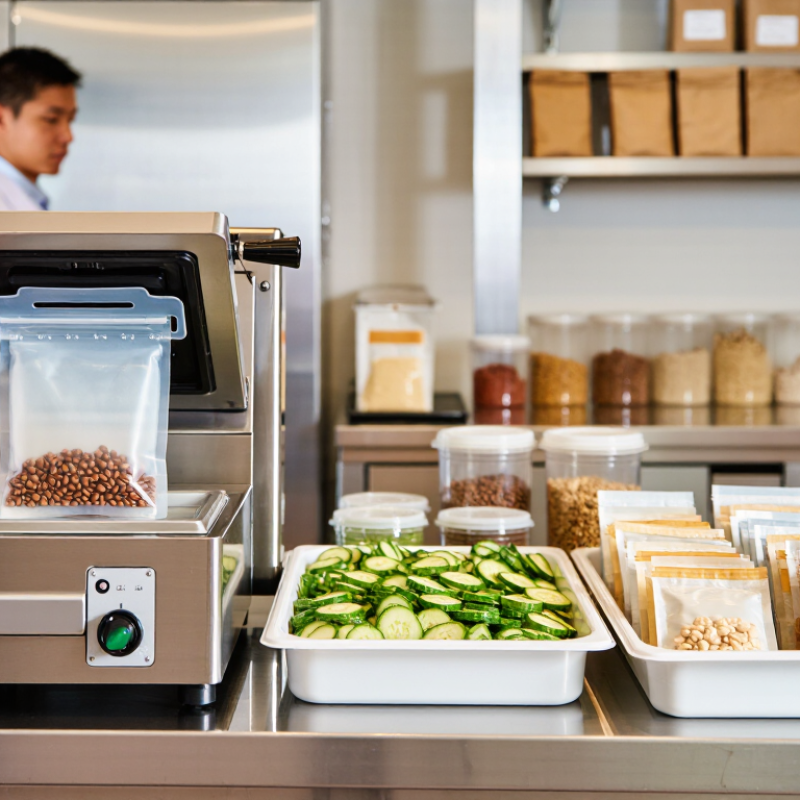
Choosing a Commercial Food Sealer Machine is a practical decision about product protection, daily workflow, and consistent packaging. A well-matched machine can help reduce air exposure, limit spills, and keep portions neat on the shelf or in a delivery box. Think of a bag of roasted coffee, a tray of prepared vegetables, or a pouch of dried fruit. Each product may need a different seal width, film type, and operating rhythm. The machine should fit the work, not just look impressive in a catalog.

“A dependable seal starts with matching the machine to the product, packaging material, and pace of work.” This is an illustrative expert-style quotation, not a sourced statement, attributed here to packaging specialist Alex Morgan. It captures a point buyers can easily overlook: sealing performance depends on more than heat or pressure. Bag thickness, moisture, fill level, and operator technique all matter. Small details matter.

This guide explores why businesses choose commercial sealing equipment, which features deserve close attention, and how to compare options without overbuying. It also considers routine cleaning, training, and the space available beside the production line. A machine may seal quickly during a demonstration, yet feel awkward after hours of real use. That deserves reflection. The right choice is the one your team can operate consistently, maintain responsibly, and adjust when products or packaging needs change.
Why Choose a Commercial Food Sealer Machine?

What Commercial Food Sealers Do: Vacuum, Heat, and Modified-Atmosphere Packaging

A commercial food sealer does more than close a bag. It controls how air and heat interact with packaging, helping food businesses protect portions during storage and handling. Vacuum sealing removes much of the air around food before the pouch is sealed. This can slow oxidation and reduce freezer burn, but it does not sterilize food or replace safe refrigeration. A pump draws air through a chamber or nozzle, then a heated bar presses the pouch layers together. A continuous seam matters. Even a small wrinkle can allow air to enter.

Heat sealing works differently. It joins compatible packaging materials using controlled temperature, pressure, and contact time, often without removing air. For foods that bruise or compress easily, modified-atmosphere packaging may be a better fit. The machine removes some air and replaces it with a selected gas mixture. The right mixture depends on the food, film, and storage conditions. Testing helps. A neat-looking seal can still fail during transport or refrigeration. Operators should check seal width, pouch cleanliness, and machine settings during routine runs. Not always. One setting may not suit every product, since film thickness and surface moisture can change the result. That extra check takes time, but it can prevent costly product loss.

How Sealing Can Reduce Losses: USDA Estimates 30–40% of U.S. Food Is Wasted

Why Choose a Commercial Food Sealer Machine?

How Sealing Can Reduce Losses: USDA Estimates 30–40% of U.S. Food Is Wasted

A commercial food sealer can help kitchens protect usable inventory, but it cannot prevent every loss. USDA commonly estimates that 30–40% of the U.S. food supply is wasted. Its 2014 Economic Research Service report estimated 31% was lost at retail and consumer levels—about 133 billion pounds, worth $161 billion in 2010. Those numbers are sobering. A tray of sliced cheese left exposed overnight is a small example of how quality can slip before food reaches a customer.

Sealing limits exposure to air and moisture, which can slow oxidation and reduce freezer burn when food is stored correctly. For busy kitchens, portioning and sealing ingredients can also make dates and stock easier to manage. The FAO’s 2011 report estimated that roughly one-third of food produced worldwide was lost or wasted. Still, a sealed pouch does not make food safe indefinitely. Refrigeration, clean handling, and suitable storage times remain essential.

Which Sealer Fits Your Operation: Chamber, Nozzle, Tray, or Band Models

A commercial food sealer can reduce leaks, protect product quality, and make packing more consistent. The right model depends on what you pack and how quickly you work.

Chamber sealers suit bagged portions, including moist foods, because the entire pouch sits inside the vacuum chamber.

Nozzle models draw air from larger bags outside the machine, but liquids may need careful handling.

Tray sealers work well for portioned meals and display-ready packs; check that trays and lidding film match the machine.

Band sealers continuously close bags and can help with steady runs of dry products.

Compare your largest package, daily volume, cleaning routine, and available bench space. A fast cycle means little if staff must stop often to reload or clean. Ask about seal width, temperature control, and compatible packaging, then test samples with your actual food.

Small details matter. I once underestimated how much bag size affected workflow; the first estimate was too optimistic. That is worth checking before purchase.

Tips: Keep a few filled sample packs on hand during testing. Look for wrinkles, trapped food near the seal, and leaks after cooling. Test again after adjusting the settings.

Food-Safety Controls: FDA Food Code Guidance for Reduced-Oxygen Packaging

A commercial food sealer machine can slow exposure to air, but vacuum packaging does not kill pathogens. The reduced-oxygen environment also changes which hazards need attention. In its 2011 burden estimates, the CDC reported about 48 million foodborne illnesses, 128,000 hospitalizations, and 3,000 deaths annually in the United States (Scallan et al., Emerging Infectious Diseases). These figures cover foodborne illness broadly, not vacuum-packed foods alone. A tight seal is not proof of safety.

The FDA Food Code 2022, Section 3-502.12, generally calls for a variance and a written HACCP plan for retail reduced-oxygen packaging, unless a listed exception applies. It is a model code; local adoption and requirements can differ, so operators should check with their regulatory authority. Keep clear records of product temperatures, cooling times, packaging dates, and cleaning. Train staff to inspect seals and prevent raw-food contact with ready-to-eat items. Small gaps matter. A pouch may look perfect and still need scrutiny. A sealer supports the process; it cannot replace safe handling or documented controls.

How to Compare Machines: Throughput, Seal Quality, Packaging Costs, and Maintenance

Why Choose a Commercial Food Sealer Machine?

How to Compare Machines: Throughput, Seal Quality, Packaging Costs, and Maintenance

Compare throughput using your own products, not just a machine’s advertised cycle rate. Record finished, acceptable packs per hour during a realistic shift. Include loading, film changes, and brief stops. A fast cycle means little if staff must constantly clear jams. That matters.

Check seal quality with several package shapes and fill levels. Look for wrinkles, uneven seal widths, trapped crumbs, or product near the seal area. Run leak checks after sealing, then repeat them after packages cool. Small leaks add up. A short trial with your actual packaging film can reveal issues that a showroom sample will miss.

Estimate packaging cost per usable pack, including film waste, rejected seals, labor, and energy. Ask how quickly operators can change settings and replace routine wear parts.

Inspect guards, seal bars, and cleaning access; sticky residue in hard-to-reach corners can slow sanitation. No scorecard is perfect. A machine may perform well on one product and poorly on another, so keep trial conditions consistent and note every adjustment.

Maintenance access may seem minor until a shift is waiting on a replacement part.

Copyright 2025 Fluidra S.A. | Created by BCM Marketing Agencia Privacy Policy Legal note | Cookie policy |

Technical cookies are strictly necessary for our website to work and you can navigate through it. These types of cookies are those that, for example, allow us to identify you, give you access to certain restricted parts of the page if necessary, or remember different options or services already selected by you, such as your privacy preferences. Therefore, they are activated by default, your authorization not being necessary in this regard. Through the configuration of your browser, you can block or alert the presence of this type of cookies, although such blocking will affect the proper functioning of the different functionalities of our website.


The analysis cookies allow us to study the navigation of the users of our website in general (for example, which sections of the page are the most visited, which services are used most and if they work correctly, etc.). From the statistical information on navigation on our website, we can improve both the operation of the page itself and the different services it offers. Therefore, these cookies do not have an advertising purpose, but only serve to make our website work better, adapting to our users in general. By activating them you will contribute to this continuous improvement. You can enable or disable these cookies by checking the corresponding box, being disabled by default.


Functionality cookies allow us to remember your preferences, to personalize certain characteristics and general options of our website, every time you access it (for example, the language in which the information is presented to you, the sections marked as favorites, your browser type, etc.) Therefore, this type of cookies does not have an advertising purpose, but by activating them you will improve the functionality of the website (for example, adapting to your type of browser) and the customization of it based on your preferences (for example, by presenting the information in the language that you have chosen in previous occasions), which will contribute to the ease, usability and comfort of our page during your navigation. You can enable or disable these cookies by checking the corresponding box, being disabled by default.


Advertising cookies allow us to manage the advertising spaces included in our website based on criteria such as the content shown or the frequency in which the ads are displayed. For example, if you have been shown the same ad several times on our website, and you have not shown a personal interest by clicking on it, it will not appear again. In summary, by activating this type of cookies, the advertising shown on our website will be more useful and diverse, and less repetitive. You can enable or disable these cookies by checking the corresponding box, being disabled by default.


Behavioral advertising cookies allow us to obtain information based on the observation of your browsing habits and behaviors on the web, in order to show you advertising content that best suits your personal tastes and interests. To understand it in a very simple way, we will give you a fictitious example: if your last searches on the web were related to suspense literature, we would show you advertising about suspense books. Therefore, activating this type of cookies, the advertising that we show you on our website will not be generic, but will be oriented to your searches, tastes and interests, therefore adjusting exclusively to you. You can enable or disable these cookies by checking the corresponding box, being disabled by default.
To understand it in a very simple way, we will give you a fictitious example: if your last searches on the web were related to suspense literature, we would show you advertising about suspense books. Therefore, activating this type of cookies, the advertising that we show you on our website will not be generic, but will be oriented to your searches, tastes and interests, therefore adjusting exclusively to you. You can enable or disable these cookies by checking the corresponding box, being disabled by default.

SAVE

We use our own and third-party cookies to ensure the proper functioning of the website and to analyse our services, improve your experience on our website and show you advertisements related to your interests according to profiling based on your browsing habits (e.g. websites visited). You can accept all cookies by clicking "ACCEPT" or set or reject them by clicking here. If you would like to know more about the use of cookies, please see our COOKIE POLICY.


ACCEPT ALL
Reject no essentials


