
Why Choose a Cold Foil Printing Machine?
FLUID HANDLING EXPERTS

Blog, all our news

Why Choose a Cold Foil Printing Machine?

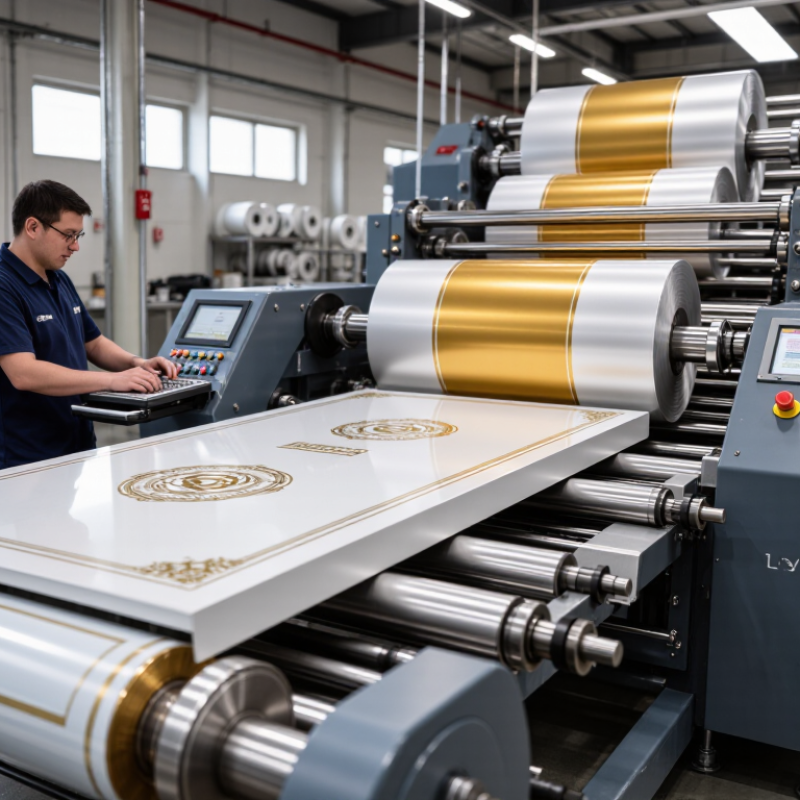
Choosing a Cold Foil Printing Machine is about more than adding a metallic shine. It is a production decision that affects setup, registration, substrate handling, and the finished pack’s appearance. On a well-tuned press, foil can pick out a logo or fine border with crisp edges, while the surrounding colors remain visible. That contrast can make a label or carton easier to notice without covering it in decoration. A small detail matters.

The right machine depends on the work you actually run. Consider typical job sizes, print speed, foil coverage, compatible inks and coatings, and how quickly operators can change jobs. Ask suppliers for samples produced on comparable materials, then inspect fine lines, solid areas, adhesion, and waste during setup. A showroom sample is useful, but it cannot tell the whole story. Real jobs can be less tidy.

A useful expert-style line for this introduction is: “Cold foil rewards process control; it does not replace it.” This wording is an editorial draft, not a verified quotation from a named specialist, so confirm an expert’s identity and exact words before publishing it as a direct quote. That distinction matters for trustworthy product content. A careful evaluation should also include service support, operator training, and the cost of consumables. The best choice is not automatically the fastest machine. It is the one that delivers repeatable results on your materials, at a pace your team can sustain.
Why Choose a Cold Foil Printing Machine?

What Is a Cold Foil Printing Machine?

A cold foil printing machine is a press setup that transfers metallic foil onto selected areas of a printed substrate. It typically applies UV-curable adhesive, brings foil into contact through a pressure nip, and cures the adhesive so the foil stays where intended. The carrier film is then rewound. No heated stamping die is needed. That makes the process suitable for inline decoration on labels and cartons, where fine details and quick job changes matter.

Smithers’ report The Future of Global Printing to 2028 valued worldwide print production at about US$818.4 billion in 2023, with packaging among its important end-use sectors. This figure describes the wider print industry, not cold foil sales. Still, it helps explain why presses increasingly combine decoration with conventional printing. In practice, operators check adhesive coverage, foil tension, curing, and registration; a slight shift can leave a bright edge visibly out of place. The finish can look premium. It is not effortless. Stock surface and ink compatibility affect the result, so press trials remain necessary, even when the setup seems straightforward.

How Does Cold Foil Printing Work?

Cold foil printing transfers a thin metallic layer onto paper or board without a heated die. A printing unit lays down a UV-curable adhesive only where the foil effect is needed. The substrate then meets a foil web at a pressure roller. Think of a clean, even nip: poor pressure can leave gaps or uneven edges. The adhesive is exposed to UV light, bonding the foil to the printed areas. The carrier film is peeled away, while the metallic layer stays on the adhesive pattern. That is the basic sequence. Press designs vary, so curing and web handling should follow the machine’s specifications.

The result depends on more than the foil itself. Paper porosity, surface coatings, adhesive coverage, and registration all affect transfer quality. A slight shift between the adhesive image and nearby print can make fine borders look untidy. Operators often check a test sheet under angled light, where pinholes and dull patches are easier to spot. Not every stock behaves the same. A coated sample may transfer cleanly, while a rough uncoated sheet can show small breaks. That can be frustrating. Adjustments to adhesive laydown, tension, or pressure may help, but the best settings come from a short production trial rather than guesswork. Foil can also be printed over with compatible inks, though drying and adhesion need testing on the actual material.

What Benefits Does Cold Foil Printing Offer?

Cold foil printing brings a bright metallic finish to labels, cartons, and other printed materials without a heated stamping die. The foil bonds to selected areas through a printed adhesive, creating crisp highlights alongside ordinary ink. Fine lines, small lettering, and layered color effects can work well when the artwork and press settings are carefully prepared. The result catches light quickly.

For packaging, this effect can help distinguish a product on a crowded shelf. Cold foil can also fit into an inline printing workflow, which may reduce separate finishing steps for suitable jobs. It offers flexibility in foil placement and can pair with printed colors for a wider range of visual effects. Still, results depend on the stock, adhesive, and registration. Metallic areas may look less striking on some surfaces, and setup waste can occur. That deserves attention.

Tips: Test the exact substrate before a full run. Check registration, adhesive coverage, and foil adhesion on finished samples, not just on screen. Small adjustments matter. A simple proof under store lighting can reveal dull patches or details that disappear.

Which Materials and Applications Suit Cold Foil Printing?

Why Choose a Cold Foil Printing Machine?

Cold foil suits paperboard cartons, label stock, and selected plastic films when the surface accepts the adhesive and foil transfer. It adds metallic detail without a heated stamping die, making it practical for fine lines, small text, and inline decoration. Think of a silver border on a folding carton or a reflective accent on a pressure-sensitive label. Clean results depend on coating, ink, adhesive, and press registration. Test the actual stock; one setup rarely works equally well on every substrate.

Smithers’ 2023 report, The Future of Global Printing to 2028, values worldwide print at $818.2 billion in 2022 and forecasts $846.3 billion in 2027. This broad-market estimate is not specific to cold foil, but it reflects a large print sector serving packaging and labels. Cold foil can suit short-run or variable designs where detailed metallic effects matter. Still, it is not a cure-all: rough, dusty, or highly absorbent surfaces can weaken transfer or dull the finish.

Tips: Run a press test on the exact material. Check adhesion, registration, scuff resistance, and appearance after finishing. A foil patch may look excellent fresh off press, then disappoint after handling.

Why Choose Cold Foil Printing?

Cold foil can add metallic detail inline during printing, making it a practical option for decorative packaging and labels. Suitability depends on surface smoothness, adhesive choice, ink system, and press setup.

How to read this chart: Relative suitability is a qualitative guide, not a measured performance score. Smooth coated stocks and label materials are generally strong candidates; films typically require suitable surface treatment and process testing.

What Factors Should Guide Machine Selection?

When selecting a cold foil printing machine, start with the jobs you actually run. Compare your usual substrate, sheet or web width, and production volume. A machine suited to thin paper may need different setup for coated stock or flexible packaging. Ask whether it works with your adhesive and curing process, too. Small details matter.

Check registration accuracy, foil tension control, and adjustment range. Misalignment can leave a visible edge around fine type or narrow lines. Short runs need quick changeovers. Check how easily operators can load foil rolls and clean adhesive from rollers. There is no perfect spec sheet. Real samples tell more.

Ask for a test using your own artwork and substrate. Inspect fine details, solid areas, and the foil’s adhesion after handling. Compare setup waste and changeover time, not just rated speed. A fast machine may not be efficient if frequent jobs require long adjustments. Also consider spare-part availability, operator training, and routine maintenance. A practical checklist can still miss something; leave room for a trial run before committing.

Copyright 2025 Fluidra S.A. | Created by BCM Marketing Agencia Privacy Policy Legal note | Cookie policy |

Technical cookies are strictly necessary for our website to work and you can navigate through it. These types of cookies are those that, for example, allow us to identify you, give you access to certain restricted parts of the page if necessary, or remember different options or services already selected by you, such as your privacy preferences. Therefore, they are activated by default, your authorization not being necessary in this regard. Through the configuration of your browser, you can block or alert the presence of this type of cookies, although such blocking will affect the proper functioning of the different functionalities of our website.


The analysis cookies allow us to study the navigation of the users of our website in general (for example, which sections of the page are the most visited, which services are used most and if they work correctly, etc.). From the statistical information on navigation on our website, we can improve both the operation of the page itself and the different services it offers. Therefore, these cookies do not have an advertising purpose, but only serve to make our website work better, adapting to our users in general. By activating them you will contribute to this continuous improvement. You can enable or disable these cookies by checking the corresponding box, being disabled by default.


Functionality cookies allow us to remember your preferences, to personalize certain characteristics and general options of our website, every time you access it (for example, the language in which the information is presented to you, the sections marked as favorites, your browser type, etc.) Therefore, this type of cookies does not have an advertising purpose, but by activating them you will improve the functionality of the website (for example, adapting to your type of browser) and the customization of it based on your preferences (for example, by presenting the information in the language that you have chosen in previous occasions), which will contribute to the ease, usability and comfort of our page during your navigation. You can enable or disable these cookies by checking the corresponding box, being disabled by default.


Advertising cookies allow us to manage the advertising spaces included in our website based on criteria such as the content shown or the frequency in which the ads are displayed. For example, if you have been shown the same ad several times on our website, and you have not shown a personal interest by clicking on it, it will not appear again. In summary, by activating this type of cookies, the advertising shown on our website will be more useful and diverse, and less repetitive. You can enable or disable these cookies by checking the corresponding box, being disabled by default.


Behavioral advertising cookies allow us to obtain information based on the observation of your browsing habits and behaviors on the web, in order to show you advertising content that best suits your personal tastes and interests. To understand it in a very simple way, we will give you a fictitious example: if your last searches on the web were related to suspense literature, we would show you advertising about suspense books. Therefore, activating this type of cookies, the advertising that we show you on our website will not be generic, but will be oriented to your searches, tastes and interests, therefore adjusting exclusively to you. You can enable or disable these cookies by checking the corresponding box, being disabled by default.
To understand it in a very simple way, we will give you a fictitious example: if your last searches on the web were related to suspense literature, we would show you advertising about suspense books. Therefore, activating this type of cookies, the advertising that we show you on our website will not be generic, but will be oriented to your searches, tastes and interests, therefore adjusting exclusively to you. You can enable or disable these cookies by checking the corresponding box, being disabled by default.

SAVE

We use our own and third-party cookies to ensure the proper functioning of the website and to analyse our services, improve your experience on our website and show you advertisements related to your interests according to profiling based on your browsing habits (e.g. websites visited). You can accept all cookies by clicking "ACCEPT" or set or reject them by clicking here. If you would like to know more about the use of cookies, please see our COOKIE POLICY.


ACCEPT ALL
Reject no essentials


