
Why Choose a Car Garage Lift for Your Garage?
FLUID HANDLING EXPERTS

Blog, all our news

Why Choose a Car Garage Lift for Your Garage?

A Car Garage Lift can transform a crowded garage into a practical workspace. It raises a vehicle, opening floor space beneath it and improving access to wheels, brakes, and underbody components. For owners who service vehicles at home, that extra access can make routine work less awkward. It can also make a small garage feel more organized. The benefit is real, but so are the space and safety requirements.

The need for dependable maintenance is easy to see. S&P Global Mobility reported that the average age of vehicles in the United States reached 12.6 years in 2024. Older vehicles may need more frequent repairs, though a lift is not the right solution for every owner. Ceiling height, concrete condition, vehicle weight, and the lift’s rated capacity all matter. Measure twice. A tape measure and the manufacturer’s specifications are more useful than guesswork.

Safety deserves equal attention. The Automotive Lift Institute (ALI) recommends choosing certified equipment and following proper installation, inspection, and operating practices. ALI president R.W. (Bob) O’Gorman has emphasized that lift safety depends on correct installation, regular inspection, and proper use. That guidance is worth taking seriously: a lift is not simply a tool to bolt down and forget. In this article, we’ll look at the main advantages, common lift types, space considerations, and safety checks that help buyers decide whether a Car Garage Lift suits their garage and workload.
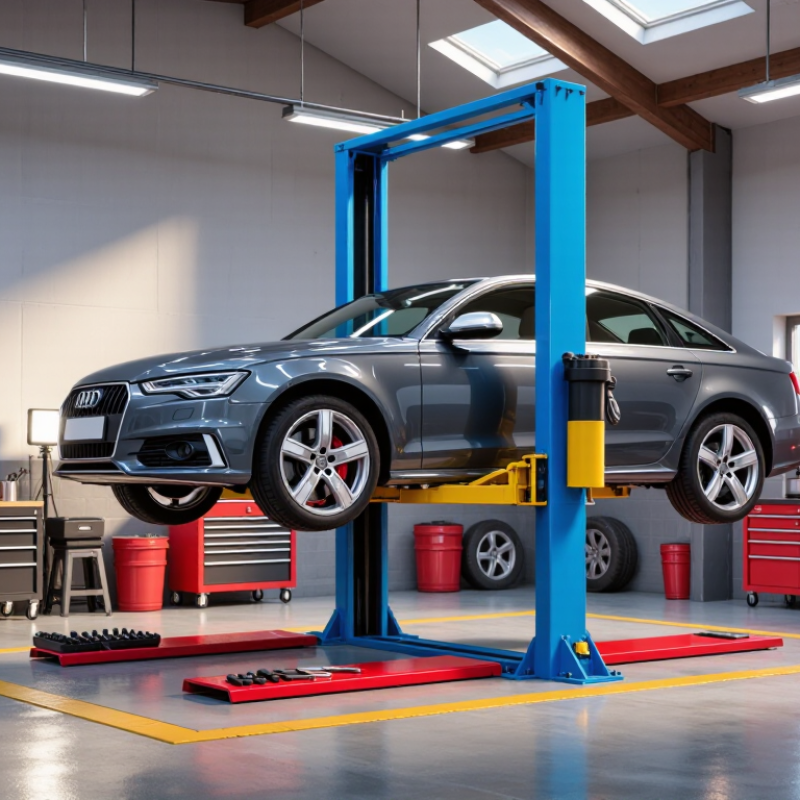
Why Choose a Car Garage Lift for Your Garage?

What a Car Garage Lift Is and How It Works

A car garage lift is a mechanical platform that raises a vehicle so you can work beneath it or use the floor space below. Common designs include two-post lifts, four-post lifts, and compact scissor lifts. Each supports a vehicle differently, so the right choice depends on your garage layout, ceiling height, vehicle weight, and the tasks you plan to do. It is not just a matter of buying the tallest lift.

Most lifts use an electric motor to drive a hydraulic pump. The pump sends fluid into cylinders, which move the arms or platform upward. Mechanical safety locks engage at set heights to help hold the vehicle if hydraulic pressure changes. On a two-post model, adjustable arms contact approved lifting points on the vehicle. A four-post model supports the tires on runways. Keep the car balanced. That detail matters.

Before lifting, check the lift’s rated capacity, the vehicle’s weight distribution, and the manufacturer’s lifting-point guidance. The floor must also meet the lift’s foundation requirements; a smooth-looking slab is not proof that it is suitable. Installation and inspection by qualified professionals can reduce risks from poor anchoring, misalignment, or worn components. Lower the lift onto its locks before working underneath, and never rely on hydraulic pressure alone. Even careful owners can miss a small issue, so routine checks are worth the time.

Common Types of Car Garage Lifts for Home Garages

Why Choose a Car Garage Lift for Your Garage?

Common Types of Car Garage Lifts for Home Garages

A two-post lift raises a vehicle by its frame, leaving the wheels accessible for brake and tire work. It suits garages with enough ceiling height and a sound, properly rated concrete floor. The arms must be positioned correctly; uneven contact can make lifting unsafe.

A four-post lift supports the tires on runways instead. It often feels steadier for storage, though it takes up more floor space and may need a separate jack for wheel work.

Scissor lifts use a compact platform that rises beneath the vehicle. Some models can be moved or stored, but lifting height and access beneath the car vary. They can be handy in a low garage. Still, “compact” does not mean suitable for every vehicle. Check the lift’s rated capacity, platform width, and required floor conditions against your car and workspace. A careful fit matters more than a tempting price.

Tips: Measure the ceiling, vehicle height, and available floor area before choosing. Check the installation requirements and safety-lock operation in the lift’s manual. Keep the car centered, use the specified lifting points, and never work beneath a raised vehicle supported only by hydraulics. If your slab or wiring is uncertain, ask a qualified installer to assess it. That step can feel inconvenient, but guessing is worse.

How a Garage Lift Improves Vehicle Access and Storage

Why Choose a Car Garage Lift for Your Garage?

A garage lift changes how you use vertical space. It can raise one vehicle to create room below for another car, bicycles, or a workbench. That can make a narrow garage feel less crowded and keep tools off the floor. The U.S. Census Bureau’s 2023 American Community Survey estimates that roughly nine in ten U.S. households have access to a vehicle. For households with two cars, a lift may help when driveway space is limited. It can also make routine checks easier when the vehicle is raised on a suitable service lift.

The trade-off is real: retrieving the lower car means moving the upper one. A lift is useful, but it is not extra floor space without compromises.

Tips: Measure ceiling height, vehicle weight, door tracks, and overhead lights before choosing a lift. Check the lift’s rated capacity and have it installed according to its safety instructions. Use its mechanical safety locks; never rely on hydraulics alone. Leave room to open doors and walk around the parked vehicles. Small measurements matter. A few inches can change whether the setup feels practical or frustrating.

Key Factors to Consider When Choosing a Garage Lift

Why Choose a Car Garage Lift for Your Garage?

Key Factors to Consider When Choosing a Garage Lift

Choosing a garage lift starts with the vehicles you actually own, not the ones you might buy someday. The U.S. EPA’s 2023 Automotive Trends Report puts the average new vehicle weight for model year 2022 at about 4,303 pounds. That is an average, not a safe capacity target. Check each vehicle’s weight and choose a lift rated comfortably above your heaviest one. An electric pickup can change the calculation quickly.

Next, measure the garage before comparing lift styles. Record ceiling height, door tracks, floor space, and the locations of lights and storage. Check the slab requirements in the lift’s installation instructions; concrete thickness and condition matter. Check the fit. A lift that technically fits may still leave too little room to open a door or reach a tool cart. The Automotive Lift Institute recommends using lifts certified to applicable safety standards and following installation and inspection guidance. Don’t skip that paperwork.

Think about how you will work underneath the vehicle. Two-post lifts offer broad access, while four-post models can suit storage or particular maintenance tasks. Arm reach, locking positions, power supply, and vehicle clearance all affect daily use. I would not choose by price alone; a cramped setup becomes frustrating fast. And measurements can be wrong. Recheck them before ordering.

Why Choose a Car Garage Lift? Key Factors to Consider

Typical rated-capacity ranges for common lift types (pounds). Actual capacities vary by model; always check the lift’s specifications and your vehicle’s weight.

Capacity is only one consideration. Before choosing a lift, check your garage’s ceiling clearance and floor requirements, along with installation needs and how you plan to access the vehicle.

Installation, Maintenance, and Safe Lift Operation

A car garage lift is only as dependable as its installation. Before work begins, confirm the concrete slab meets the lift’s specified thickness, strength, and condition. A qualified installer should position the posts, secure the anchors to the required torque, and test the locks with no vehicle raised. Allow concrete to cure as specified; rushing this step can undermine the whole setup.

Maintenance needs a routine, not guesswork. Check cables or chains, hydraulic lines, anchor bolts, and safety locks for wear, leaks, looseness, or unusual noise. Follow the lift maker’s service schedule and arrange periodic inspection by a qualified professional. The Automotive Lift Institute’s guidance and ANSI/ALI ALOIM standard emphasize regular inspection and maintenance.

The U.S. Bureau of Labor Statistics recorded 5,283 fatal work injuries in 2023, including 1,942 transportation incidents. These figures are not lift-specific, but they underline why careful hazard checks matter in work areas.

Tips: Park centrally, use the correct lifting points, and raise the vehicle just enough to confirm stable contact before lifting higher. Keep people clear, engage the mechanical locks, and never rely on hydraulics alone. I’d still pause before every lift, even when the routine feels familiar.

Copyright 2025 Fluidra S.A. | Created by BCM Marketing Agencia Privacy Policy Legal note | Cookie policy |

Technical cookies are strictly necessary for our website to work and you can navigate through it. These types of cookies are those that, for example, allow us to identify you, give you access to certain restricted parts of the page if necessary, or remember different options or services already selected by you, such as your privacy preferences. Therefore, they are activated by default, your authorization not being necessary in this regard. Through the configuration of your browser, you can block or alert the presence of this type of cookies, although such blocking will affect the proper functioning of the different functionalities of our website.


The analysis cookies allow us to study the navigation of the users of our website in general (for example, which sections of the page are the most visited, which services are used most and if they work correctly, etc.). From the statistical information on navigation on our website, we can improve both the operation of the page itself and the different services it offers. Therefore, these cookies do not have an advertising purpose, but only serve to make our website work better, adapting to our users in general. By activating them you will contribute to this continuous improvement. You can enable or disable these cookies by checking the corresponding box, being disabled by default.


Functionality cookies allow us to remember your preferences, to personalize certain characteristics and general options of our website, every time you access it (for example, the language in which the information is presented to you, the sections marked as favorites, your browser type, etc.) Therefore, this type of cookies does not have an advertising purpose, but by activating them you will improve the functionality of the website (for example, adapting to your type of browser) and the customization of it based on your preferences (for example, by presenting the information in the language that you have chosen in previous occasions), which will contribute to the ease, usability and comfort of our page during your navigation. You can enable or disable these cookies by checking the corresponding box, being disabled by default.


Advertising cookies allow us to manage the advertising spaces included in our website based on criteria such as the content shown or the frequency in which the ads are displayed. For example, if you have been shown the same ad several times on our website, and you have not shown a personal interest by clicking on it, it will not appear again. In summary, by activating this type of cookies, the advertising shown on our website will be more useful and diverse, and less repetitive. You can enable or disable these cookies by checking the corresponding box, being disabled by default.


Behavioral advertising cookies allow us to obtain information based on the observation of your browsing habits and behaviors on the web, in order to show you advertising content that best suits your personal tastes and interests. To understand it in a very simple way, we will give you a fictitious example: if your last searches on the web were related to suspense literature, we would show you advertising about suspense books. Therefore, activating this type of cookies, the advertising that we show you on our website will not be generic, but will be oriented to your searches, tastes and interests, therefore adjusting exclusively to you. You can enable or disable these cookies by checking the corresponding box, being disabled by default.
To understand it in a very simple way, we will give you a fictitious example: if your last searches on the web were related to suspense literature, we would show you advertising about suspense books. Therefore, activating this type of cookies, the advertising that we show you on our website will not be generic, but will be oriented to your searches, tastes and interests, therefore adjusting exclusively to you. You can enable or disable these cookies by checking the corresponding box, being disabled by default.

SAVE

We use our own and third-party cookies to ensure the proper functioning of the website and to analyse our services, improve your experience on our website and show you advertisements related to your interests according to profiling based on your browsing habits (e.g. websites visited). You can accept all cookies by clicking "ACCEPT" or set or reject them by clicking here. If you would like to know more about the use of cookies, please see our COOKIE POLICY.


ACCEPT ALL
Reject no essentials


