
Why Do Businesses Use RFID Inventory Software?
FLUID HANDLING EXPERTS

Blog, all our news

Why Do Businesses Use RFID Inventory Software?

A busy stockroom can change quickly. A carton moves from a receiving dock to a shelf, then disappears into a crowded aisle. When staff rely only on manual counts or barcode scans, locating items and updating records can take time. Rfid Inventory Software helps businesses track tagged goods through radio-frequency identification readers and inventory systems. Depending on the setup, teams can capture item movements without scanning every label one by one. That can make routine tasks faster.

The value goes beyond speed. More timely inventory records can help teams spot misplaced stock, prepare replenishment orders, and check whether physical items match system records. A retailer might use readers near a back-room doorway to record tagged products moving between storage and sales areas. A warehouse could review movement data before investigating a missing carton. Small details matter. Better visibility can support clearer decisions, but it does not guarantee perfect counts or eliminate every error.

Results depend on practical choices: tag quality, reader placement, software integration, and staff training. A poorly positioned reader may miss a movement, while duplicate or incomplete records can still require human review. The first rollout may feel messy. That is worth admitting. Businesses should test the system in a defined area, compare its records with physical counts, and adjust procedures before expanding. This article explores why organizations adopt RFID inventory software, what benefits they can reasonably expect, and which limitations deserve attention before they invest.
Why Do Businesses Use RFID Inventory Software?

RFID Inventory Software: How Tags, Readers, and Data Work Together

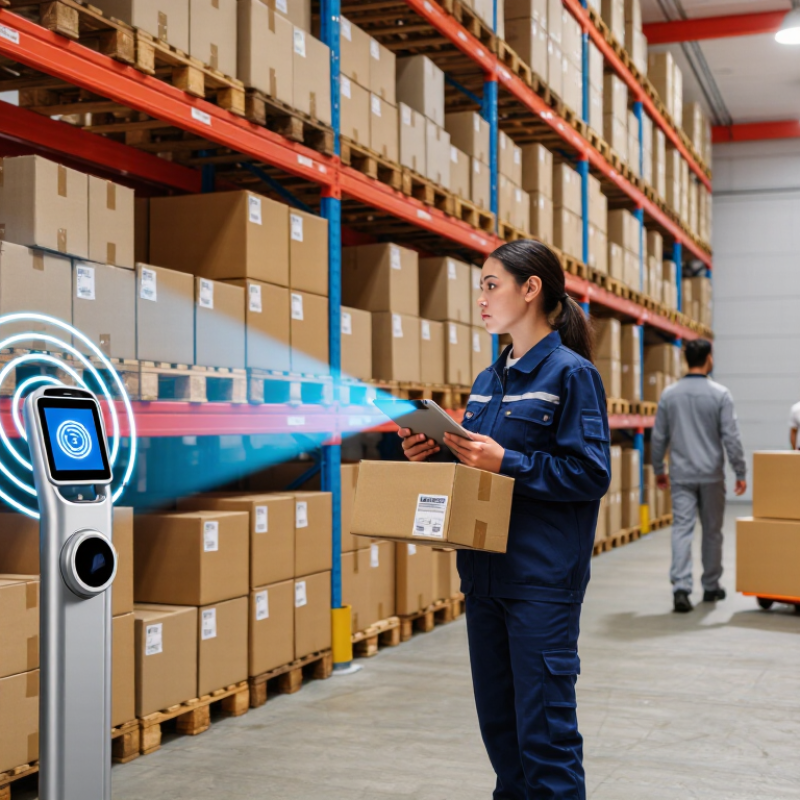
RFID inventory software connects item-level tags, readers, and a shared data record. A tag carries an identifier, not a full product history. Handheld readers scan shelves; fixed portals can register cartons moving through a stockroom doorway. The software matches each read to an item, location, and timestamp. A worker can then check a screen against the shelf in front of them.

The Auburn University RFID Lab’s retail research, cited in GS1 US materials, has reported inventory accuracy improving from roughly 63% to 95% in RFID-enabled operations. IHL Group’s 2023 Inventory Distortion report estimated that global retail inventory distortion costs about $1.8 trillion annually. These figures show the stakes, but they are not guarantees for every store. Tagging coverage, reader placement, and staff routines all affect results.

Small details matter. A missed read can leave an item recorded in the wrong aisle. Metal shelving and liquid products may also interfere with signals, so teams often test placement before a full rollout. Not magic. Software should flag stale counts and uncertain reads, rather than quietly treating every scan as truth. Even a well-designed system still needs people to investigate mismatches.

Inventory Accuracy: Auburn RFID Lab Reports a Rise from 63% to 95%

Businesses use RFID inventory software to replace repeated manual counts with faster, more consistent item tracking. The Auburn RFID Lab reports inventory accuracy rising from 63% to 95%. That 32-point increase can mean fewer empty shelf spaces, misplaced products, and rushed corrections. It is a notable result, not a guarantee for every operation.

RFID tags let readers capture item data without scanning each barcode individually. Staff can check tagged goods as they move through a receiving area or sit on a shelf. The software then compares recorded stock with physical counts, helping teams spot mismatches sooner. Small details matter: a poorly placed reader, damaged tag, or incomplete product record can still create errors. Not magic.

A reliable rollout needs clear procedures, staff training, and regular checks against actual stock. Teams should test the system in a limited area and compare its readings with careful manual counts. Accuracy depends on the setup and the way people use it. Even 95% leaves room for miscounts, so businesses should investigate recurring discrepancies rather than assume the software is always right.

Faster Stocktakes: How Automated Reads Replace Manual Scanning

RFID inventory software turns a stocktake from a one-item-at-a-time task into a quick sweep. Staff move handheld readers past shelves or cartons; radio signals capture multiple tagged items without aiming at each label. The system logs the reads, flags mismatches, and gives teams a list to verify. Fewer pauses at the scanner. Less time spent counting the same shelf twice.

The 2014 GS1 US and Kurt Salmon report, The Value of RFID, found that retailers using RFID improved inventory accuracy from about 65% to 95%. That matters during stocktakes: more reliable records mean fewer recounts and clearer decisions about replenishment. But a fast read is not automatically a correct count. Metal fixtures, densely packed goods, damaged tags, or missed areas can still distort results. Teams should test reader settings in real aisles, compare sample counts with physical stock, and investigate recurring gaps. The technology helps; it does not remove the need for judgment. A little skepticism pays off.

Business Uses Across Retail, Warehousing, Healthcare, and Manufacturing

Retail teams use RFID inventory software to locate items across sales floors, stockrooms, and checkout areas. A handheld reader can reveal that a jacket is still in the back room, even when its barcode is hidden inside a crowded carton. Staff can spend less time counting shelves and more time correcting mismatches. That matters. Yet a tag read is not proof that a product is in perfect condition or ready to sell.

In warehouses, readers at receiving doors can register tagged cartons as they move between docks and storage zones. This creates a clearer record of where stock was last seen. Workers can investigate a missing tote before a rush order leaves the building. Healthcare teams use similar workflows for supplies, such as tracking sterile packs between storage rooms and procedure areas. Alerts can help flag low quantities or items nearing their recorded expiry dates. The software still needs careful setup; a poorly placed reader can miss a scan.

Manufacturers use RFID records to follow components and work-in-progress through assembly steps. A tagged bin can show which station handled it and when, helping supervisors spot delays or misplaced parts. Useful, but not magical. Metal surfaces, liquids, tag placement, and busy workflows can affect reads. Teams should compare system records with physical checks and adjust processes when the two disagree.

Measuring Business Value: Accuracy, Stockouts, Labor, and Shrinkage

RFID inventory software creates value when its readings improve everyday decisions, not merely when it produces more data. Teams can compare tag scans with physical counts and track how often records match. For example, a morning scan may reveal that a shelf shows twelve units while only nine are present. Better accuracy helps purchasing staff avoid ordering from unreliable figures. That matters. Still, tagged items can be missed or recorded twice, so periodic checks remain important.

Stockout performance can be measured through unavailable-item incidents, time to replenish, and sales that could not be fulfilled. A store might compare these measures before and after adopting RFID, while accounting for seasonal demand. Results vary. A system may identify an empty display sooner, but it cannot replace sensible reorder settings or supplier follow-up. The data needs context.

Labor savings are visible in hours spent counting, searching, and correcting records. Managers can compare those hours across similar shifts, rather than assuming every scan saves time. Shrinkage can be assessed by tracking unexplained inventory differences over time. Yet discrepancies do not automatically prove theft; receiving errors, misplaced goods, and scan gaps can also contribute. That distinction deserves care. Even a small improvement may matter, but implementation, training, and tag costs should be included when estimating business value.

Copyright 2025 Fluidra S.A. | Created by BCM Marketing Agencia Privacy Policy Legal note | Cookie policy |

Technical cookies are strictly necessary for our website to work and you can navigate through it. These types of cookies are those that, for example, allow us to identify you, give you access to certain restricted parts of the page if necessary, or remember different options or services already selected by you, such as your privacy preferences. Therefore, they are activated by default, your authorization not being necessary in this regard. Through the configuration of your browser, you can block or alert the presence of this type of cookies, although such blocking will affect the proper functioning of the different functionalities of our website.


The analysis cookies allow us to study the navigation of the users of our website in general (for example, which sections of the page are the most visited, which services are used most and if they work correctly, etc.). From the statistical information on navigation on our website, we can improve both the operation of the page itself and the different services it offers. Therefore, these cookies do not have an advertising purpose, but only serve to make our website work better, adapting to our users in general. By activating them you will contribute to this continuous improvement. You can enable or disable these cookies by checking the corresponding box, being disabled by default.


Functionality cookies allow us to remember your preferences, to personalize certain characteristics and general options of our website, every time you access it (for example, the language in which the information is presented to you, the sections marked as favorites, your browser type, etc.) Therefore, this type of cookies does not have an advertising purpose, but by activating them you will improve the functionality of the website (for example, adapting to your type of browser) and the customization of it based on your preferences (for example, by presenting the information in the language that you have chosen in previous occasions), which will contribute to the ease, usability and comfort of our page during your navigation. You can enable or disable these cookies by checking the corresponding box, being disabled by default.


Advertising cookies allow us to manage the advertising spaces included in our website based on criteria such as the content shown or the frequency in which the ads are displayed. For example, if you have been shown the same ad several times on our website, and you have not shown a personal interest by clicking on it, it will not appear again. In summary, by activating this type of cookies, the advertising shown on our website will be more useful and diverse, and less repetitive. You can enable or disable these cookies by checking the corresponding box, being disabled by default.


Behavioral advertising cookies allow us to obtain information based on the observation of your browsing habits and behaviors on the web, in order to show you advertising content that best suits your personal tastes and interests. To understand it in a very simple way, we will give you a fictitious example: if your last searches on the web were related to suspense literature, we would show you advertising about suspense books. Therefore, activating this type of cookies, the advertising that we show you on our website will not be generic, but will be oriented to your searches, tastes and interests, therefore adjusting exclusively to you. You can enable or disable these cookies by checking the corresponding box, being disabled by default.
To understand it in a very simple way, we will give you a fictitious example: if your last searches on the web were related to suspense literature, we would show you advertising about suspense books. Therefore, activating this type of cookies, the advertising that we show you on our website will not be generic, but will be oriented to your searches, tastes and interests, therefore adjusting exclusively to you. You can enable or disable these cookies by checking the corresponding box, being disabled by default.

SAVE

We use our own and third-party cookies to ensure the proper functioning of the website and to analyse our services, improve your experience on our website and show you advertisements related to your interests according to profiling based on your browsing habits (e.g. websites visited). You can accept all cookies by clicking "ACCEPT" or set or reject them by clicking here. If you would like to know more about the use of cookies, please see our COOKIE POLICY.


ACCEPT ALL
Reject no essentials


