
Why Are Automobile Bushings Important?
FLUID HANDLING EXPERTS

Blog, all our news

Why Are Automobile Bushings Important?

Automobile Bushing components rarely attract attention, yet they influence how a vehicle feels on every drive. Pressed between suspension parts, these compact sleeves help control movement, reduce vibration, and limit harsh metal-to-metal contact. A worn bushing may announce itself with a dull knock over a pothole, uneven tire wear, or vague steering. Small parts. Noticeable effects.

Their importance depends on more than comfort. Bushings help suspension arms move along intended paths while supporting stable handling under braking, cornering, and acceleration. Rubber designs can soften road impacts, while polyurethane versions may feel firmer and resist certain kinds of wear. Neither material is automatically best. Vehicle design, driving conditions, and correct installation all matter.

A credible named expert quotation should be verified before publication; I can’t responsibly invent one or attribute unverified words to a real person. A useful engineering takeaway is: “A bushing is small, but its job is to control movement where the suspension needs it most.” Treat that as a general explanation, not a quotation from a named expert.

This guide explores what bushings do, how wear changes vehicle behavior, and which inspection signs deserve attention. A cracked edge or loosened sleeve can be easy to miss beneath a car. And diagnosis is not always obvious: similar noises may come from other suspension components. Careful inspection, vehicle-specific service information, and sound repair judgment matter.
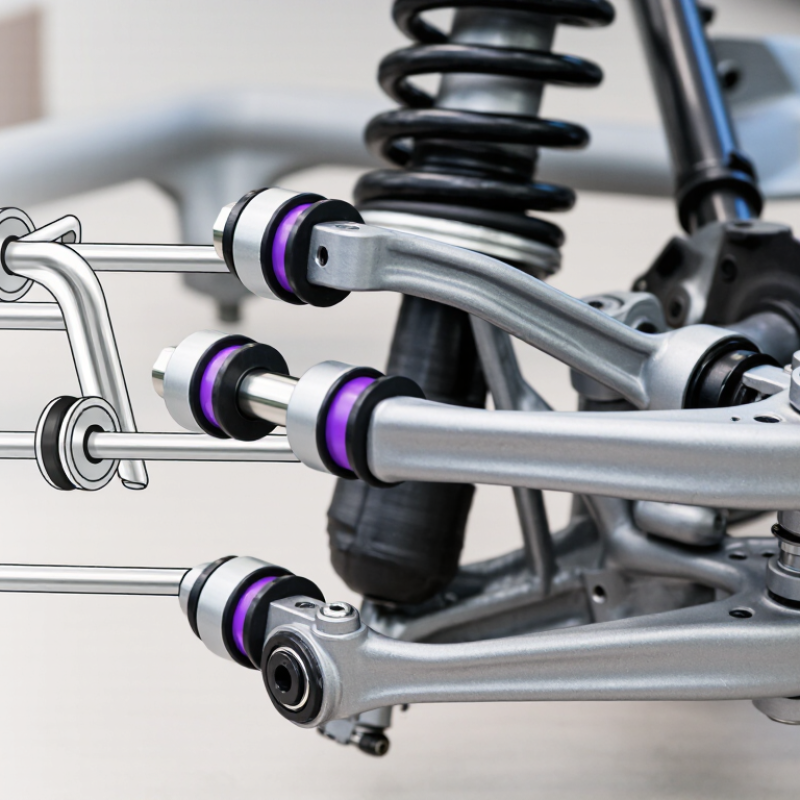
Why Are Automobile Bushings Important?

What Automobile Bushings Are and Where They Are Used

Automobile bushings are flexible joints, usually made from rubber or elastomer, that sit between moving suspension parts and the vehicle body. A metal sleeve is often bonded inside the material. As the wheel rises over a pothole, the bushing twists slightly, helping control movement while reducing vibration and knocking. You will find them in control-arm pivots, stabilizer-bar links, subframes, and some engine and transmission mounts. Small parts. Big consequences.

Their job is not simply to soften the ride. Bushings also help keep suspension geometry consistent under braking, cornering, and rough-road loads. The U.S. Environmental Protection Agency’s Automotive Trends Report 2023 puts the average new vehicle weight at 4,329 pounds for model year 2022, a useful reminder of the forces these joints must manage. The U.S. Department of Energy’s Vehicle Technologies Office notes that a 10 percent reduction in vehicle weight can improve fuel economy by about 6–8 percent; bushing design must balance durability, mass, and vibration control rather than optimize just one. Worn rubber can crack or separate, but a clunk does not prove a bushing has failed. Diagnosis can mislead. Inspect the joint for visible damage and excess movement, and compare findings with the vehicle’s service specifications.

How Bushings Absorb Vibration and Control Movement

Automobile bushings are small flexible joints found in suspension and steering connections. They often use rubber or polyurethane to cushion contact between moving parts. When a wheel hits a pothole, the bushing flexes and helps absorb the sharp vibration before it travels through the chassis. That controlled movement can reduce rattles and harshness inside the cabin. Small parts, noticeable effects.

Bushings also help keep suspension components moving along their intended paths. During braking or cornering, they allow limited motion while resisting excessive shifting. If a bushing cracks, softens, or separates, the wheel’s position may change slightly under load. A driver might notice clunks over bumps, vague steering, or uneven tire wear. These clues are not proof of bushing failure; worn tires or other suspension parts can create similar symptoms. A careful inspection matters.

Tips: Look for visible cracks, missing rubber, or metal-to-metal contact during routine service. Ask a qualified technician to check unusual noises or steering changes. Don’t rely on appearance alone; some wear is hard to spot with the vehicle parked.

Why Are Automobile Bushings Important? - How Bushings Absorb Vibration and Control Movement

Bushing Location Movement It Helps Control How It Absorbs Vibration Common Construction Possible Signs of Wear Inspection Considerations
Control arm Allows the suspension arm to pivot while helping keep the wheel aligned. Flexible material cushions road impacts and limits the transfer of noise and vibration into the body. Often a bonded rubber bushing with an inner sleeve; some applications use other elastomers. Clunks over bumps, uneven tire wear, or visibly cracked, torn, or separated material. Check for splits, separation, excessive movement, and related suspension or alignment changes.
Stabilizer bar Permits the bar to rotate as the suspension moves and helps limit body roll during cornering. Elastomer around the bar helps isolate small movements and reduce rattling or road noise. Typically a rubber or elastomer bushing fitted around the bar and held by a bracket. Rattling or knocking over uneven roads; the bar may show looseness at its mounts. Look for cracks, deformation, missing pieces, or excessive clearance between the bushing and bar.
Engine or transmission mount Supports the powertrain while allowing limited movement under acceleration, braking, and gear changes. Rubber or fluid-filled sections dampen engine vibration before it reaches the vehicle structure. May combine rubber with metal brackets; some designs use hydraulic damping. Excessive vibration at idle, a thump during load changes, or visible mount damage. Inspect for cracks, fluid leakage where applicable, and movement beyond the vehicle manufacturer’s limits.
Rear suspension link Allows controlled articulation while helping locate the wheel and maintain suspension geometry. Compliant material softens impacts and reduces the transmission of vibration through the link. Commonly a rubber bushing bonded to an inner sleeve; designs vary by suspension. Clunks, handling changes, uneven tire wear, or looseness in the affected suspension area. Check the bushing and surrounding link for damage, separation, and abnormal play.
Steering rack mount Holds the steering rack in position while allowing limited compliance. Elastomer helps reduce steering vibration and road harshness transmitted through the rack. Usually rubber or another elastomer, secured by mounting brackets. Steering-area clunks, unusual vibration, or movement of the rack relative to its mounts. Inspect mounting security and bushing condition; confirm any looseness using the vehicle’s service procedure.

Why Bushings Matter for Ride Comfort and Vehicle Handling

Automobile bushings are small cushions fitted between suspension or steering components. They are commonly made from rubber or polyurethane. Their job is to absorb vibration while allowing controlled movement. Small parts. Big effects. As a wheel meets a pothole, bushings help keep the impact from traveling directly through the chassis and into the cabin.

That cushioning affects ride comfort, but bushings also help hold suspension parts in position. When they soften or crack, a driver may feel extra vibration, hear a dull knock over bumps, or notice less precise steering. Tire wear can also become uneven if worn bushings allow components to shift. Still, a noise alone does not identify the cause. Loose hardware, damaged joints, or other suspension problems can sound similar. A careful inspection matters.

Fresh bushings can restore tighter movement and reduce harshness, though the result depends on the part and the vehicle. Very stiff bushings may sharpen responses but pass more road vibration into the cabin. Softer ones can feel smoother, yet allow more movement. The right balance is not always obvious. Checking for splits, looseness, and uneven tire wear gives a more useful picture than judging comfort from one short drive.

How Worn Bushings Can Affect Safety and Performance

Automobile bushings are small, but they help keep suspension parts moving in a controlled way. Made from rubber or similar materials, they cushion vibration and maintain alignment as wheels travel over bumps. When they crack, soften, or separate, the suspension may shift more than intended. A driver might feel steering wander, hear a dull clunk over a pothole, or notice uneven tire wear. These signs are not proof of a failed bushing. Still, they deserve attention.

Worn bushings can change how the tires meet the road, especially during braking, cornering, or quick lane changes. The car may feel less predictable. NHTSA’s 2008 National Motor Vehicle Crash Causation Survey assigned a vehicle-related critical reason to about 2% of investigated crashes. The report did not isolate bushing failures, so that figure cannot measure their specific risk. It does show why vehicle condition belongs in safety checks. A technician can inspect bushings for splits, excess movement, and metal contact, then compare findings with steering and tire symptoms. Some wear is hard to spot from outside. I would not judge a bushing by age or noise alone; other suspension parts can produce similar clues.

What Influences Bushing Wear and When Replacement Is Needed

Automobile bushings cushion the connection between suspension parts, helping control vibration and unwanted movement. Their wear depends on more than mileage. Heat, road salt, water, heavy loads, and repeated pothole impacts can all speed deterioration. Oil or other fluid leaks may also soften some rubber compounds. A car used on rough roads may need closer inspection than one driven gently on smooth pavement. Small differences matter.

Watch for new clunks over bumps, steering that feels loose, or tires wearing unevenly. These symptoms can have other causes, so they do not prove a bushing has failed. A technician can check for excessive play, torn rubber, separation, or metal contact. It is tempting to treat every surface crack as a failure, but that can be misleading; age, location, and movement matter too. Not always. Replacement is more likely when damage allows parts to shift beyond specification or affects safe handling. Follow the vehicle’s service guidance, and ask whether an alignment check is needed after suspension work. A visual check helps, but it cannot always reveal movement under load.

Copyright 2025 Fluidra S.A. | Created by BCM Marketing Agencia Privacy Policy Legal note | Cookie policy |

Technical cookies are strictly necessary for our website to work and you can navigate through it. These types of cookies are those that, for example, allow us to identify you, give you access to certain restricted parts of the page if necessary, or remember different options or services already selected by you, such as your privacy preferences. Therefore, they are activated by default, your authorization not being necessary in this regard. Through the configuration of your browser, you can block or alert the presence of this type of cookies, although such blocking will affect the proper functioning of the different functionalities of our website.


The analysis cookies allow us to study the navigation of the users of our website in general (for example, which sections of the page are the most visited, which services are used most and if they work correctly, etc.). From the statistical information on navigation on our website, we can improve both the operation of the page itself and the different services it offers. Therefore, these cookies do not have an advertising purpose, but only serve to make our website work better, adapting to our users in general. By activating them you will contribute to this continuous improvement. You can enable or disable these cookies by checking the corresponding box, being disabled by default.


Functionality cookies allow us to remember your preferences, to personalize certain characteristics and general options of our website, every time you access it (for example, the language in which the information is presented to you, the sections marked as favorites, your browser type, etc.) Therefore, this type of cookies does not have an advertising purpose, but by activating them you will improve the functionality of the website (for example, adapting to your type of browser) and the customization of it based on your preferences (for example, by presenting the information in the language that you have chosen in previous occasions), which will contribute to the ease, usability and comfort of our page during your navigation. You can enable or disable these cookies by checking the corresponding box, being disabled by default.


Advertising cookies allow us to manage the advertising spaces included in our website based on criteria such as the content shown or the frequency in which the ads are displayed. For example, if you have been shown the same ad several times on our website, and you have not shown a personal interest by clicking on it, it will not appear again. In summary, by activating this type of cookies, the advertising shown on our website will be more useful and diverse, and less repetitive. You can enable or disable these cookies by checking the corresponding box, being disabled by default.


Behavioral advertising cookies allow us to obtain information based on the observation of your browsing habits and behaviors on the web, in order to show you advertising content that best suits your personal tastes and interests. To understand it in a very simple way, we will give you a fictitious example: if your last searches on the web were related to suspense literature, we would show you advertising about suspense books. Therefore, activating this type of cookies, the advertising that we show you on our website will not be generic, but will be oriented to your searches, tastes and interests, therefore adjusting exclusively to you. You can enable or disable these cookies by checking the corresponding box, being disabled by default.
To understand it in a very simple way, we will give you a fictitious example: if your last searches on the web were related to suspense literature, we would show you advertising about suspense books. Therefore, activating this type of cookies, the advertising that we show you on our website will not be generic, but will be oriented to your searches, tastes and interests, therefore adjusting exclusively to you. You can enable or disable these cookies by checking the corresponding box, being disabled by default.

SAVE

We use our own and third-party cookies to ensure the proper functioning of the website and to analyse our services, improve your experience on our website and show you advertisements related to your interests according to profiling based on your browsing habits (e.g. websites visited). You can accept all cookies by clicking "ACCEPT" or set or reject them by clicking here. If you would like to know more about the use of cookies, please see our COOKIE POLICY.


ACCEPT ALL
Reject no essentials


