
What Is the Best HPLC Column in 2026?
FLUID HANDLING EXPERTS

Blog, all our news

What Is the Best HPLC Column in 2026?

Choosing the best HPLC Column in 2026 is not about selecting the most expensive model. It is about matching chemistry, pressure tolerance, particle design, and sample behavior. A column that performs beautifully for clean pharmaceutical standards may struggle with dirty food extracts or biological matrices. The “best” option changes with the method.

Lloyd R. Snyder, a leading authority in liquid chromatography, often emphasized that “the column is the heart of the HPLC system.” That principle still matters. A modern C18 column may provide excellent reversed-phase retention, but it is not automatically suitable for every compound. Analysts must examine pH stability, pore size, surface modification, temperature limits, and expected backpressure. Small details matter. A 2.1 × 100 mm column packed with sub-2-micron particles can deliver sharp peaks, yet it may demand stronger system control.

Real method development also involves compromise. Faster analysis can reduce resolution. Higher temperature can improve peak shape but shorten column life. A low-cost HPLC Column may appear attractive until repeated injections expose poor lot consistency. No ranking stays perfect. Even experienced analysts can choose poorly when sample complexity is underestimated.

This guide compares leading column technologies through practical criteria, including selectivity, robustness, reproducibility, and application fit. It considers pharmaceutical, environmental, food, and research workflows. The goal is not to promote one universal winner. Instead, it helps readers make a defensible choice using evidence, manufacturer data, and laboratory performance tests. Always verify results with real samples. Theory can mislead.
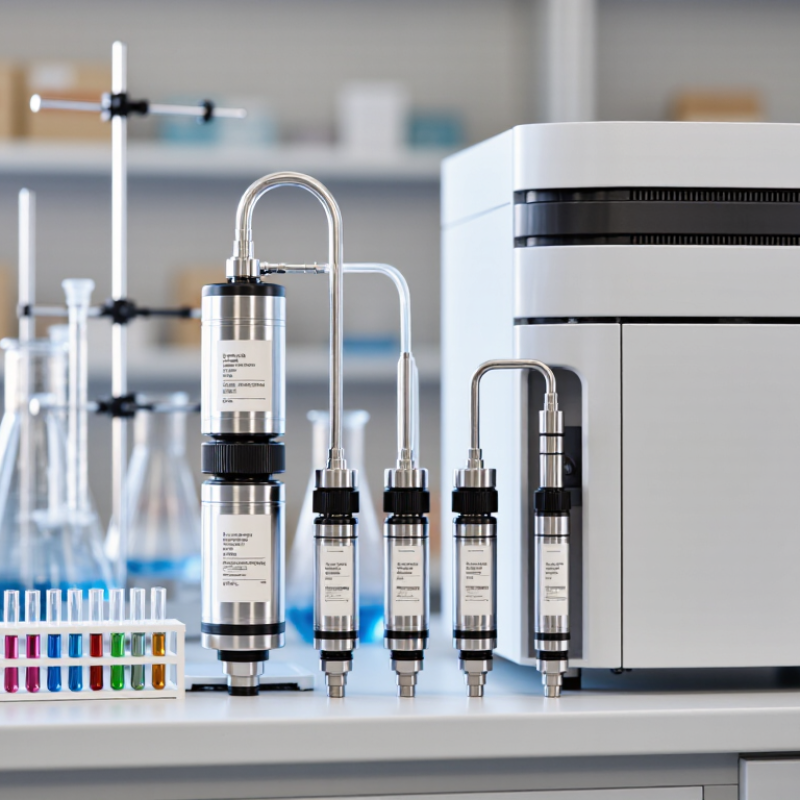
What Is the Best HPLC Column in 2026?

What Makes an HPLC Column the Best Choice in 2026?

The best HPLC column in 2026 will not be the most expensive or fashionable option. It will match the method, sample, and reporting requirements. In daily laboratory work, selectivity usually matters more than small efficiency gains. A column that separates critical peaks at a stable pressure can outperform a faster column with poor robustness.

Industry data supports this practical view. Grand View Research estimated the global HPLC market at about USD 5 billion in 2023, with continued growth through 2030. This expansion reflects demand for reliable pharmaceutical, environmental, food, and clinical testing. Yet market growth does not prove that one column fits every application. USP General Chapter <621> emphasizes system suitability, including resolution, repeatability, and retention performance. These checks should guide column selection, not advertising language. A perfect column rarely exists. I have seen promising methods weaken after matrix changes or repeated injections.

Tips: Compare critical-pair resolution, backpressure, peak shape, and lifetime using your real samples. Record results across several batches. Test temperature and mobile-phase tolerance before validation. Do not judge performance from one attractive chromatogram. A 2024 analytical laboratory trends report from SelectScience also highlighted productivity and reproducibility as major laboratory priorities, making durable performance increasingly important. Still, analysts should challenge vendor specifications with their own data. That extra step takes time, but it can prevent costly method transfers and unexplained failures.

How HPLC Column Chemistry Determines Separation Performance

What Is the Best HPLC Column in 2026?
How HPLC Column Chemistry Determines Separation Performance

The best HPLC column is not universal. Its chemistry must match the analyte, solvent, pH, and detection method. A 2024 market report from MarketsandMarkets estimated the global HPLC market at approximately USD 4.8 billion. Reversed-phase systems represented the largest application area, reflecting their broad use in pharmaceutical and environmental analysis.

C18 chemistry remains practical for many moderately nonpolar compounds. It retains analytes through hydrophobic interactions. Phenyl-based phases can add π–π interactions, improving selectivity for aromatic molecules. Polar-embedded phases may reduce unwanted interactions with basic compounds. Small changes matter. A one-unit pH shift can alter ionization and retention dramatically.

HILIC chemistry often benefits polar analytes that elute too quickly in reversed-phase mode. Ion-exchange phases separate charged molecules through electrostatic attraction. Pore size also matters, especially for proteins and large biomolecules. According to the 2023 Bioanalytical Chromatography market analysis by Grand View Research, growing biomolecule testing is increasing demand for specialized separation materials.

Particle size can improve efficiency, but it may increase backpressure. That trade-off is easy to underestimate. In practice, I would compare retention, peak symmetry, pressure, and recovery across several injections. Selectivity should guide the decision, not marketing language. A column that gives sharp peaks today may fail after repeated exposure to unsuitable pH or aggressive solvents. Method development remains partly experimental, and that is where many confident predictions become unreliable.

Which Column Dimensions and Particle Sizes Fit Your Method?

What Is the Best HPLC Column in 2026?

Column dimensions should match your method, sample load, and detector. A 4.6 × 150 mm column remains practical for routine assays. It offers familiar flow rates and easier method transfer. For faster separations, a 2.1 × 100 mm column reduces solvent use by roughly 80% at equal linear velocity. This estimate follows the internal-area difference between both formats. It is useful, but not universal.

Particle size changes pressure, efficiency, and robustness. Three to five micrometre particles suit conventional instruments and complex matrices. Sub-2-micrometre particles can sharpen peaks and shorten runtime, but pressure rises sharply. The 2024 ICH Q2(R2) guideline emphasizes demonstrated precision, accuracy, and robustness, not speed alone. USP General Chapter <621> also supports system suitability as a practical control point. Industry application surveys published in 2024 commonly report 2.1 mm formats with 1.7–2.6 µm particles for high-throughput LC workflows. Still, survey results can overrepresent modern laboratories.

My own method-development mistake was choosing the smallest particles too early. The peaks looked excellent, but backpressure limited daily use. A 100 mm column may save time. A 150 mm column may protect resolution when closely related compounds overlap. Check dwell volume, injection solvent, extra-column dispersion, and maximum pressure before changing dimensions. A column that performs beautifully on paper can disappoint beside real tubing, a crowded sample tray, and inconsistent temperature control.

What Is the Best HPLC Column in 2026? - Which Column Dimensions and Particle Sizes Fit Your Method?
Comparison of HPLC column dimensions and particle sizes for common analytical methods
Method Profile Typical Column Dimensions
(Inside Diameter × Length)
Particle Size Particle Type Typical Pore Size Starting Flow Rate Best Fit for Main Advantages Important Limitations
Routine analytical HPLC 4.6 × 150 mm 5 µm Fully porous 80–120 Å 0.8–1.2 mL/min General small-molecule assays, impurity testing, quality control and method transfer Broad instrument compatibility, moderate backpressure and strong method robustness Longer run times and lower efficiency than smaller-particle columns
Routine method with moderate speed 4.6 × 100 mm 3–3.5 µm Fully porous 80–120 Å 0.8–1.2 mL/min Established pharmaceutical and environmental methods requiring shorter analysis times Good balance of resolution, runtime and pressure on conventional HPLC systems Higher pressure than 5 µm columns; system dwell volume can affect fast gradients
High-efficiency conventional HPLC 4.6 × 100 mm 2.5–3 µm Fully porous 80–120 Å 0.7–1.0 mL/min Complex small-molecule samples when extra resolving power is needed Higher theoretical plate count and improved separation of closely eluting compounds Pressure can approach the practical limit of older HPLC instruments
Fast, high-efficiency HPLC 4.6 × 100 mm 2.6–2.7 µm Superficially porous (core-shell) 80–120 Å 0.6–1.0 mL/min Rapid pharmaceutical assays and high-throughput small-molecule screening High efficiency with lower pressure than many fully porous particles of similar performance Requires careful extra-column-volume control to preserve efficiency
Reduced-solvent analytical HPLC 3.0 × 100 mm 2.6–2.7 µm Superficially porous (core-shell) 80–120 Å 0.3–0.5 mL/min Methods that need lower solvent consumption without moving fully to UHPLC Lower mobile-phase use while maintaining useful efficiency and sensitivity Injection volume, tubing dimensions and detector cell volume must be scaled appropriately
UHPLC maximum efficiency 2.1 × 100 mm 1.7–1.9 µm Fully porous 80–120 Å 0.2–0.4 mL/min Fast gradients, trace analysis and high-resolution small-molecule separations Excellent efficiency, narrow peaks and short analysis times Requires a low-dispersion, high-pressure system and well-filtered samples
UHPLC fast screening 2.1 × 50 mm 1.7–1.9 µm Fully porous 80–120 Å 0.2–0.4 mL/min High-throughput screening and methods where speed is more important than maximum peak capacity Very short runtime and low solvent consumption Lower total resolving capacity than a 100–150 mm column; selectivity becomes critical
High-resolution complex mixture 4.6 × 250 mm 3–5 µm Fully porous 80–120 Å 0.6–1.0 mL/min Samples containing many structurally similar compounds or difficult impurity profiles Greater resolving capacity from the longer bed length Longer runtime, greater solvent use and increased pressure compared with shorter columns
Peptides and larger biomolecules 2.1–4.6 × 100–150 mm 2.6–5 µm Wide-pore fully porous or wide-pore superficially porous 200–300 Å 0.2–1.0 mL/min Peptides, oligonucleotides and other analytes that require larger pores Improved access to the stationary phase for larger molecules Small-molecule efficiency may be lower than with 80–120 Å pores; adsorption and recovery require evaluation
Preparative or semi-preparative purification 10–21.2 × 150–250 mm 5–10 µm Fully porous 80–300 Å, depending on analyte size Flow must be scaled to column diameter and pressure Purification and fraction collection rather than routine analytical quantitation Higher sample-loading capacity and practical fraction collection Lower efficiency per unit length and substantially higher solvent consumption
Selection rule: There is no single best HPLC column for every method. Choose the stationary-phase chemistry first, then select dimensions and particle size according to required resolution, instrument pressure capability, sample load, solvent consumption and acceptable runtime. The listed flow rates are practical starting points, mainly for analytical columns; optimize them using retention, resolution and system backpressure data.

How to Match HPLC Columns with Different Sample Types

What Is the Best HPLC Column in 2026?

How to Match HPLC Columns with Different Sample Types

The best HPLC column in 2026 is not universal. It is the column that fits your sample, solvent, and detection method. Reversed-phase columns suit many nonpolar and moderately polar compounds. They work well with water and organic solvent gradients. A polar compound may show weak retention, however. In that case, hydrophilic interaction chromatography can provide better separation. Keep it simple.

I usually examine sample polarity, charge, molecular size, and matrix complexity before choosing a column. Ionic compounds often respond well to ion-exchange phases. Proteins and polymers require size-exclusion columns, where pore size matters more than surface chemistry. Chiral samples need a stationary phase designed to distinguish molecular mirror images. A guard column can protect the analytical column when samples contain oils, salts, or fine particles.

Small tests matter. I prefer screening two or three column chemistries with the same sample preparation. Check peak shape, retention stability, pressure, and recovery after repeated injections. A theoretical match can fail when the sample contains unexpected impurities. I have seen a clean standard become difficult after extraction from a real matrix. That result deserves investigation, not a quick column replacement. Temperature, pH, injection volume, and solvent strength can also change performance dramatically. Good method development remains partly experimental.

How to Compare Column Efficiency, Durability, and Cost

What Is the Best HPLC Column in 2026?
How to Compare Column Efficiency, Durability, and Cost

The best HPLC column depends on your method, sample type, and daily workload. In routine laboratory work, I compare efficiency under actual conditions, not only catalog specifications. A column may produce sharp peaks during a short test but lose performance with complex samples. That difference matters.

Measure efficiency through theoretical plates, peak symmetry, and resolution between critical compounds. Use the same mobile phase, flow rate, temperature, and injection volume. Record pressure after equilibration. Small pressure increases can reveal contamination before retention times visibly change. I prefer several replicate injections because one attractive chromatogram proves very little. It is easy to overvalue initial efficiency.

Durability requires controlled stress testing. Inject representative samples repeatedly and track resolution, backpressure, and peak shape. A guard cartridge may extend column life, but it also adds cost and pressure. Calculate cost per usable injection, including solvents, cleaning, downtime, and failed batches. The cheapest purchase can become expensive after frequent replacement. I once focused too heavily on price and ignored recovery time after maintenance. That was a poor assumption. Method requirements should lead the decision, while efficiency, durability, and cost must be judged together.

Copyright 2025 Fluidra S.A. | Created by BCM Marketing Agencia Privacy Policy Legal note | Cookie policy |

Technical cookies are strictly necessary for our website to work and you can navigate through it. These types of cookies are those that, for example, allow us to identify you, give you access to certain restricted parts of the page if necessary, or remember different options or services already selected by you, such as your privacy preferences. Therefore, they are activated by default, your authorization not being necessary in this regard. Through the configuration of your browser, you can block or alert the presence of this type of cookies, although such blocking will affect the proper functioning of the different functionalities of our website.


The analysis cookies allow us to study the navigation of the users of our website in general (for example, which sections of the page are the most visited, which services are used most and if they work correctly, etc.). From the statistical information on navigation on our website, we can improve both the operation of the page itself and the different services it offers. Therefore, these cookies do not have an advertising purpose, but only serve to make our website work better, adapting to our users in general. By activating them you will contribute to this continuous improvement. You can enable or disable these cookies by checking the corresponding box, being disabled by default.


Functionality cookies allow us to remember your preferences, to personalize certain characteristics and general options of our website, every time you access it (for example, the language in which the information is presented to you, the sections marked as favorites, your browser type, etc.) Therefore, this type of cookies does not have an advertising purpose, but by activating them you will improve the functionality of the website (for example, adapting to your type of browser) and the customization of it based on your preferences (for example, by presenting the information in the language that you have chosen in previous occasions), which will contribute to the ease, usability and comfort of our page during your navigation. You can enable or disable these cookies by checking the corresponding box, being disabled by default.


Advertising cookies allow us to manage the advertising spaces included in our website based on criteria such as the content shown or the frequency in which the ads are displayed. For example, if you have been shown the same ad several times on our website, and you have not shown a personal interest by clicking on it, it will not appear again. In summary, by activating this type of cookies, the advertising shown on our website will be more useful and diverse, and less repetitive. You can enable or disable these cookies by checking the corresponding box, being disabled by default.


Behavioral advertising cookies allow us to obtain information based on the observation of your browsing habits and behaviors on the web, in order to show you advertising content that best suits your personal tastes and interests. To understand it in a very simple way, we will give you a fictitious example: if your last searches on the web were related to suspense literature, we would show you advertising about suspense books. Therefore, activating this type of cookies, the advertising that we show you on our website will not be generic, but will be oriented to your searches, tastes and interests, therefore adjusting exclusively to you. You can enable or disable these cookies by checking the corresponding box, being disabled by default.
To understand it in a very simple way, we will give you a fictitious example: if your last searches on the web were related to suspense literature, we would show you advertising about suspense books. Therefore, activating this type of cookies, the advertising that we show you on our website will not be generic, but will be oriented to your searches, tastes and interests, therefore adjusting exclusively to you. You can enable or disable these cookies by checking the corresponding box, being disabled by default.

SAVE

We use our own and third-party cookies to ensure the proper functioning of the website and to analyse our services, improve your experience on our website and show you advertisements related to your interests according to profiling based on your browsing habits (e.g. websites visited). You can accept all cookies by clicking "ACCEPT" or set or reject them by clicking here. If you would like to know more about the use of cookies, please see our COOKIE POLICY.


ACCEPT ALL
Reject no essentials


