
What Is an Intermittent Pressure Device?
FLUID HANDLING EXPERTS

Blog, all our news

What Is an Intermittent Pressure Device?

What Is an Intermittent Pressure Device?

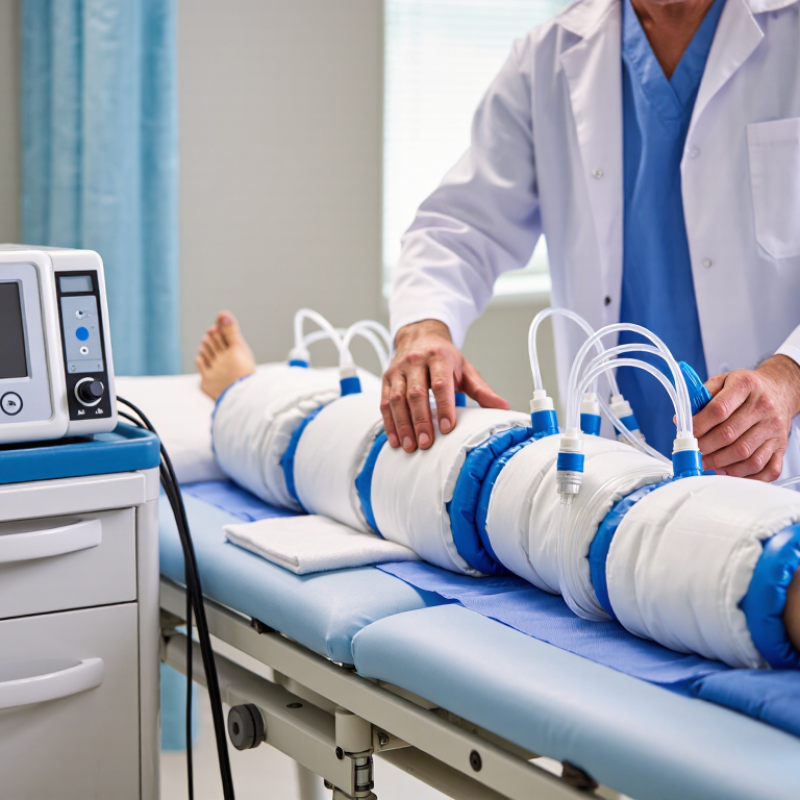
An Intermittent Pressure Device is a therapeutic system that applies controlled, repeated pressure through an inflatable sleeve. Air chambers fill and release in sequence. This action can support fluid movement, improve venous circulation, and reduce swelling in selected patients. The sleeve may cover an arm, leg, foot, or another treatment area. Its pressure should feel firm, not sharply painful.

The device is commonly discussed in lymphedema care, chronic venous disease, postoperative recovery, and mobility-related swelling. However, it is not a universal solution. A clinician should assess circulation, skin condition, sensation, and the cause of swelling before use. Incorrect pressure may irritate fragile skin or hide a worsening medical problem. That detail is easy to overlook.

Lymphedema specialist Dr. Joachim Zuther offers a useful clinical principle: “Compression is the most important component of lymphedema treatment.” An Intermittent Pressure Device can support compression care, but it should not replace professional assessment or a broader treatment plan. Real-world results vary. Some users notice lighter limbs after a session, while others experience limited change. Fit matters. Timing matters. Patient feedback matters even more.

This guide explains how the device works, where it may help, and what limitations deserve attention. It also examines pressure settings, treatment routines, safety checks, and questions worth asking before purchase or clinical use.
What Is an Intermittent Pressure Device?

Definition and Purpose of an Intermittent Pressure Device

An intermittent pressure device is a medical device that applies controlled pressure to a selected body area, then releases it at set intervals. This repeated cycle may support circulation, reduce swelling, or assist fluid movement through soft tissues. Unlike constant compression, it creates periods of pressure and relaxation. That difference can improve comfort for some users.

Its purpose depends on the treatment plan. Clinicians may recommend intermittent compression for certain circulation concerns, recovery needs, or swelling management. The pressure level, treatment time, and cuff position matter greatly. A poorly fitted sleeve may cause discomfort or uneven pressure. It is not a cure. It should not replace professional assessment, especially when pain, numbness, skin color changes, or sudden swelling appears. The device seems simple, but its safe use requires careful judgment.

Tips: Check the skin before and after each session. Keep the sleeve smooth, not twisted. Follow the prescribed settings. Stop if unusual pain develops. Ask a qualified healthcare professional before use if you have vascular disease, reduced sensation, or an unexplained swelling problem. Admittedly, home instructions can feel incomplete. That is a reason to request clarification, not guess.

How an Intermittent Pressure Device Works

An intermittent pressure device uses timed air compression to press gently against a limb. A sleeve wraps around the calf, thigh, or arm, then connects to a small control unit. The unit fills air chambers in a planned sequence. Pressure rises, holds briefly, and releases. This cycle repeats at set intervals.

Many devices inflate the chamber farthest from the body first. Other chambers follow, creating a gradual wave toward the torso. The pressure may help move venous blood and tissue fluid when normal movement is limited. Between cycles, the sleeve relaxes, allowing the limb to refill comfortably. You may feel a firm squeeze, followed by several quiet seconds.

The exact setting depends on the person, treatment goal, limb size, and clinical assessment. It is not simply a stronger massage. Too much pressure can cause pain, numbness, skin irritation, or swelling changes. That part deserves attention.

A clinician should check circulation, sensation, skin condition, and possible contraindications before use. The sleeve should fit evenly, without folds or exposed gaps. In practice, people sometimes focus on the machine and overlook the skin underneath. Regular checks matter, especially for reduced sensation or fragile skin.

The device supports circulation, but it does not replace movement, medical care, or an individualized treatment plan.

Main Types and Pressure Control Methods

An intermittent pressure device applies air pressure in repeated cycles, then releases it. It is commonly used to support venous circulation, manage limb swelling, or reduce venous stasis during limited mobility. The sleeve may contain one chamber or several overlapping chambers. Single-chamber systems inflate together. Multi-chamber systems usually inflate from the ankle upward, creating a gradual “milking” effect.

Pressure control is the central safety feature. A clinician may set the peak pressure, inflation time, release time, and cycle frequency. Sequential compression can begin distally and move proximally. Some devices adjust pressure according to limb size or measured resistance. Others use fixed settings, which can be less responsive. Pressure should match the patient’s vascular status, skin condition, sensation, and treatment goal. Higher pressure is not automatically better. It can cause discomfort, numbness, or localized skin injury.

Evidence is useful, but not perfect. The CLOTS 3 randomized trial included 2,876 patients after acute stroke. Intermittent pneumatic compression reduced proximal deep-vein thrombosis from 12.1% to 8.5% during follow-up. A Cochrane review also reported benefits for selected hospital patients, while noting variation between devices and protocols. That matters in practice. A sleeve that feels tight may still be poorly positioned. A normal-looking limb may still need reassessment. Clinical teams should inspect the skin, confirm arterial circulation when indicated, and document pressure settings. Device performance should be checked regularly, because pressure readings can drift with tubing leaks, movement, or incorrect sleeve placement.

Medical and Therapeutic Applications

What Is an Intermittent Pressure Device?
Medical and Therapeutic Applications

An intermittent pressure device uses inflatable sleeves to apply repeated pressure to an arm, leg, or foot. Air-filled chambers inflate and deflate in timed cycles. This action supports venous blood flow when movement is limited. In hospitals, clinicians may use these devices during recovery after surgery or prolonged bed rest. They can help reduce venous stasis, a factor linked with blood clot risk.

Therapeutic use extends beyond prevention. Sequential compression may reduce swelling related to chronic venous insufficiency or selected cases of lymphedema. A patient might notice a sleeve tightening around the calf, then relaxing before the next chamber activates. This rhythm can encourage fluid movement toward functioning lymphatic and venous pathways. Treatment often works best with mobility, skin care, elevation, and professional lymphedema management. It is not a replacement for every prescribed therapy.

Clinical assessment matters. People with suspected acute thrombosis, severe arterial disease, uncontrolled heart failure, infection, or fragile skin may need another approach. Pressure levels should match the patient’s condition, comfort, and treatment goal. A clinician should check circulation, sensation, skin color, and pain before and after use. Stop if there is numbness, unusual coldness, sharp pain, or worsening swelling. Small details matter.

Evidence is useful, but responses vary. Some patients experience clear relief; others notice little change. Device fit, treatment timing, and daily activity can influence results. In practice, assuming stronger pressure is better can be a costly mistake. Regular reassessment keeps therapy safer and more personalized.

This illustrative pressure profile shows how an intermittent pneumatic compression device repeatedly inflates and deflates an air chamber. Pressure is measured in millimetres of mercury (mmHg), and actual treatment settings vary according to the device, body region, and clinical assessment.

Benefits, Risks, and Usage Considerations

What Is an Intermittent Pressure Device?

Benefits, Risks, and Usage Considerations

An intermittent pressure device uses inflatable sleeves to apply rhythmic pressure around an arm, leg, or foot. The chambers inflate and release in cycles. This action can support venous return and reduce fluid buildup. Clinicians may recommend these devices after surgery, during limited mobility, or for selected swelling conditions. Some users notice lighter legs and less evening tightness. Results vary.

The benefits are not automatic. A sleeve may improve comfort, but it does not treat every cause of swelling. Incorrect pressure can cause pain, numbness, bruising, or skin irritation. People with suspected blood clots, poor arterial circulation, uncontrolled heart failure, or active skin infection need medical assessment first. Reduced sensation also increases risk. The device can feel harmless. It is not always harmless.

Use the prescribed pressure and fit the sleeve evenly, without folds. Check the skin before and after each session, especially near bony areas. Stop if you develop chest pain, sudden shortness of breath, severe pain, unusual coldness, or color changes. Ask a qualified clinician how long each session should last. Keeping a simple symptom record can help reveal patterns. Still, personal experience is not proof; swelling may fluctuate naturally, and I would not mistake temporary relief for recovery.

Copyright 2025 Fluidra S.A. | Created by BCM Marketing Agencia Privacy Policy Legal note | Cookie policy |

Technical cookies are strictly necessary for our website to work and you can navigate through it. These types of cookies are those that, for example, allow us to identify you, give you access to certain restricted parts of the page if necessary, or remember different options or services already selected by you, such as your privacy preferences. Therefore, they are activated by default, your authorization not being necessary in this regard. Through the configuration of your browser, you can block or alert the presence of this type of cookies, although such blocking will affect the proper functioning of the different functionalities of our website.


The analysis cookies allow us to study the navigation of the users of our website in general (for example, which sections of the page are the most visited, which services are used most and if they work correctly, etc.). From the statistical information on navigation on our website, we can improve both the operation of the page itself and the different services it offers. Therefore, these cookies do not have an advertising purpose, but only serve to make our website work better, adapting to our users in general. By activating them you will contribute to this continuous improvement. You can enable or disable these cookies by checking the corresponding box, being disabled by default.


Functionality cookies allow us to remember your preferences, to personalize certain characteristics and general options of our website, every time you access it (for example, the language in which the information is presented to you, the sections marked as favorites, your browser type, etc.) Therefore, this type of cookies does not have an advertising purpose, but by activating them you will improve the functionality of the website (for example, adapting to your type of browser) and the customization of it based on your preferences (for example, by presenting the information in the language that you have chosen in previous occasions), which will contribute to the ease, usability and comfort of our page during your navigation. You can enable or disable these cookies by checking the corresponding box, being disabled by default.


Advertising cookies allow us to manage the advertising spaces included in our website based on criteria such as the content shown or the frequency in which the ads are displayed. For example, if you have been shown the same ad several times on our website, and you have not shown a personal interest by clicking on it, it will not appear again. In summary, by activating this type of cookies, the advertising shown on our website will be more useful and diverse, and less repetitive. You can enable or disable these cookies by checking the corresponding box, being disabled by default.


Behavioral advertising cookies allow us to obtain information based on the observation of your browsing habits and behaviors on the web, in order to show you advertising content that best suits your personal tastes and interests. To understand it in a very simple way, we will give you a fictitious example: if your last searches on the web were related to suspense literature, we would show you advertising about suspense books. Therefore, activating this type of cookies, the advertising that we show you on our website will not be generic, but will be oriented to your searches, tastes and interests, therefore adjusting exclusively to you. You can enable or disable these cookies by checking the corresponding box, being disabled by default.
To understand it in a very simple way, we will give you a fictitious example: if your last searches on the web were related to suspense literature, we would show you advertising about suspense books. Therefore, activating this type of cookies, the advertising that we show you on our website will not be generic, but will be oriented to your searches, tastes and interests, therefore adjusting exclusively to you. You can enable or disable these cookies by checking the corresponding box, being disabled by default.

SAVE

We use our own and third-party cookies to ensure the proper functioning of the website and to analyse our services, improve your experience on our website and show you advertisements related to your interests according to profiling based on your browsing habits (e.g. websites visited). You can accept all cookies by clicking "ACCEPT" or set or reject them by clicking here. If you would like to know more about the use of cookies, please see our COOKIE POLICY.


ACCEPT ALL
Reject no essentials


