
What Is an Aluminum Machining Part?
FLUID HANDLING EXPERTS

Blog, all our news

What Is an Aluminum Machining Part?

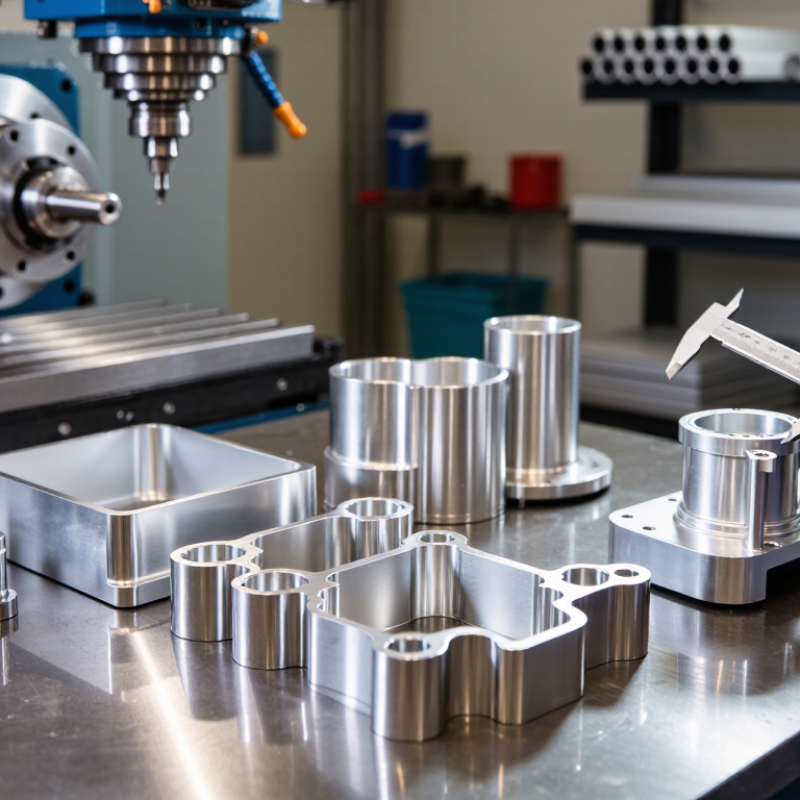
An Aluminum Machining Part is a component shaped from aluminum stock through controlled cutting processes. It may begin as a plate, bar, tube, or near-net-shape blank. CNC mills, lathes, and drilling tools remove material with measured precision. The result can be a bracket, housing, spacer, connector, or custom structural piece. Simple in appearance. Its performance depends on more than its bright surface.

Aluminum is valued for its low density, corrosion resistance, and practical machinability. Different alloys behave differently under cutting, heat, vibration, and finishing. For example, 6061-T6 often suits general structural components, while 7075-T6 offers higher strength with different manufacturing considerations. A reliable supplier checks drawings, tolerances, tool access, burrs, and surface requirements before production. Measurements should be verified with calibrated instruments, not visual confidence alone. That detail matters.

This article explains how an Aluminum Machining Part is designed, produced, inspected, and selected for real applications. It also considers cost, lead time, alloy choice, and finishing options. Practical experience shows that a tight tolerance is not automatically a better specification. It may increase machining time without improving service performance. That is worth questioning. Readers will find clear terminology and realistic guidance for discussing parts with engineers or manufacturers. Still, every application has limits. Load, temperature, environment, and assembly conditions must be reviewed before approval.
What Is an Aluminum Machining Part?

Definition and Core Characteristics of an Aluminum Machining Part

What Is an Aluminum Machining Part?

Definition and Core Characteristics of an Aluminum Machining Part

An aluminum machining part is a component shaped from aluminum stock through controlled cutting operations. A machine removes material until the part matches a technical drawing or digital model. Common operations include milling, turning, drilling, tapping, and reaming. The result may be a small spacer, housing, bracket, shaft, or precision fixture.

Its core characteristics begin with low weight and useful strength. Aluminum also transfers heat efficiently and resists corrosion in many environments. Its natural machinability supports clean cuts and relatively fast production. However, it is not automatically easy to machine. Thin walls can vibrate, and sharp tools can leave burrs or smeared edges. These details matter.

Dimensional accuracy is another defining feature. Critical holes, flat surfaces, and bearing seats may require tight tolerances. Surface finish depends on tool condition, cutting speed, coolant control, and material grade. Experienced machinists inspect parts with calipers, micrometers, gauges, or coordinate measuring equipment. They also check threads, edge condition, and distortion after clamping.

Design affects the final result. Deep narrow pockets may trap chips and increase tool deflection. Very small internal corners may require special cutters. In practice, a drawing can appear reasonable but still create production problems. Reviewing tolerances early often prevents rework. Anodizing or another protective finish may improve appearance and surface performance, but it can slightly change dimensions. That adjustment is easy to overlook.

What Is an Aluminum Machining Part? - Definition and Core Characteristics of an Aluminum Machining Part

Dimension Core Characteristic Typical Data or Range Practical Significance
Definition A component produced by removing material from an aluminum workpiece using cutting tools or abrasive processes. Common processes include CNC milling, CNC turning, drilling, tapping, reaming, and grinding. Allows accurate production of housings, brackets, shafts, plates, fixtures, and other engineered components.
Material Composition Aluminum machining parts are usually made from wrought aluminum alloys containing controlled amounts of elements such as magnesium, silicon, copper, zinc, or manganese. Aluminum content is commonly above 90% by mass, depending on the alloy family. Alloy selection affects strength, corrosion resistance, machinability, weldability, and surface finish.
Density Aluminum has a relatively low density compared with steel and many other engineering metals. Approximately 2.66–2.85 g/cm³ for common wrought aluminum alloys. Parts can be significantly lighter than steel equivalents, supporting weight reduction in machinery and transport applications.
Strength Mechanical strength varies substantially with alloy type and temper condition. Typical ultimate tensile strength is approximately 120–570 MPa for commonly machined wrought alloys. The selected grade and temper must match the required load, fatigue performance, and dimensional stability.
Machinability Many aluminum alloys are relatively easy to cut because of their low density and moderate hardness. High cutting speeds are commonly possible, subject to tool geometry, rigidity, cooling, and alloy condition. Efficient machining can reduce cycle time, but built-up edge and chip control must still be managed.
Thermal Conductivity Aluminum transfers heat efficiently from the cutting zone and from operating components. Approximately 120–235 W/m·K for many commonly used wrought alloys. Good heat dissipation is useful for heat sinks, enclosures, and thermal-management components, but cutting temperatures can change quickly.
Corrosion Resistance Aluminum naturally forms a thin oxide layer that helps protect the surface from further oxidation. Generally good in many atmospheric environments; performance depends on alloy, surface condition, and exposure. Suitable for many outdoor and industrial applications, although harsh chemicals, galvanic contact, and saltwater may require added protection.
Dimensional Accuracy CNC machining can produce close tolerances when the machine, tooling, workholding, and process are properly controlled. General CNC tolerances are often around ±0.05 mm; tighter tolerances require specific process control and inspection. Tolerance requirements should be specified only where functionally necessary to control cost and manufacturing risk.
Surface Finish Machined aluminum can provide a clean, reflective, or satin surface depending on tooling and finishing operations. A typical CNC-milled finish may be approximately Ra 1.6–6.3 µm; finer finishes require additional control or finishing. Surface requirements influence tool selection, feed rate, cutting strategy, and post-machining treatment.
Common Alloy Families Different alloy families provide different balances of machinability, strength, corrosion resistance, and weldability. Common families include 2xxx, 5xxx, 6xxx, and 7xxx series wrought alloys. 6xxx alloys are widely used for general machining; 2xxx and 7xxx often provide higher strength; 5xxx alloys are valued for corrosion resistance and weldability.
Typical Machining Operations The final part geometry determines the combination of material-removal operations. Facing, pocketing, contouring, slotting, drilling, boring, tapping, turning, and chamfering are commonly used. A suitable process sequence improves accuracy, tool life, chip evacuation, and production efficiency.
Post-Machining Treatments Additional treatments can modify appearance, hardness, wear resistance, or corrosion performance. Common options include anodizing, chemical conversion coating, powder coating, painting, polishing, and bead blasting. Treatment selection should consider dimensional change, electrical conductivity, service environment, and appearance.
Typical Applications Aluminum machining parts are used where low weight, corrosion resistance, thermal performance, and precise geometry are important. Examples include equipment frames, robotic components, electronic enclosures, heat sinks, vehicle parts, fixtures, and prototypes. The final design should balance material properties, tolerances, manufacturability, operating conditions, and total cost.

Note: Material properties and machining results vary according to alloy, temper, stock form, equipment, tooling, cutting parameters, and inspection method.

Aluminum Alloys Commonly Used in Machined Parts

What Is an Aluminum Machining Part?

Aluminum Alloys Commonly Used in Machined Parts

An aluminum machining part is shaped from solid aluminum stock using tools such as mills, lathes, or drills. The process creates accurate features, including holes, threads, pockets, and narrow channels. Aluminum removes material efficiently, but the alloy strongly affects the final result.

6061 aluminum is a practical choice for housings, brackets, frames, and general machine components. It offers balanced strength, corrosion resistance, and machinability. Its chips usually break predictably, while its surface can produce a clean finish with sharp tools. For stronger parts, 7075 aluminum is often considered. It has excellent tensile strength and suits lightweight structural components. However, it can cost more and may need extra attention to corrosion protection.

2024 aluminum provides high strength and useful fatigue performance. It is common in demanding applications, although its corrosion resistance is lower than 6061. Alloy 5052 bends well and resists corrosion, but it may not be the best option for detailed machining. It can create stringy chips and less stable finishes. There is no perfect alloy.

Temper condition matters too. A T6 material may machine differently from a softer condition, even when the alloy name is identical. In production, machinists should confirm the material certificate, hardness, wall thickness, and required tolerance. A part that looks correct can still fail if internal stress causes distortion after machining. The practical choice depends on strength, finish, cost, corrosion exposure, and how much material must be removed.

How Aluminum Machining Parts Are Manufactured

What Is an Aluminum Machining Part?

How Aluminum Machining Parts Are Manufactured

An aluminum machining part is shaped from a solid billet, plate, or casting. Its final form comes from controlled cutting, not molding. The process usually begins with a 3D CAD model and a material specification. Engineers select an alloy based on strength, corrosion resistance, weight, and machinability. The choice matters.

A CNC mill or lathe removes material with rotating carbide tools. Cutting speed, feed rate, and tool geometry must match the alloy. Excessive heat can create burrs, dimensional drift, or a rough surface. Operators often use coolant and staged cutting to control these problems. Drilling, tapping, pocketing, and contouring may occur in one setup. Multiple setups can reduce accuracy, though one setup is not always practical. The weak point is often workholding.

According to the USGS Mineral Commodity Summaries 2024, global primary aluminum production reached approximately 70 million metric tons in 2023. This large supply supports broad use in lightweight industrial components. After machining, parts are deburred, cleaned, and inspected with calipers, gauges, or coordinate measuring equipment. Surface treatments may improve wear or corrosion resistance. The International Aluminium Institute reports that recycled aluminum requires about 5% of the energy used for primary production. Recycled stock can therefore reduce environmental impact, but its chemistry must be verified before machining. A polished finish can hide small errors. Careful inspection remains essential.

Key Benefits and Limitations of Aluminum Machined Components

What Is an Aluminum Machining Part?

An aluminum machining part is shaped from solid aluminum using cutting tools, drills, or computer-controlled equipment. Common examples include housings, brackets, manifolds, and lightweight structural fittings. ASM Handbook data places aluminum density near 2.7 g/cm³, roughly one-third that of steel. This low mass helps reduce equipment weight and handling effort. Aluminum also transfers heat efficiently. That benefit suits heat sinks, fluid components, and enclosures. It is light.

Key Benefits and Limitations of Aluminum Machined Components

Aluminum machines quickly when tooling, speed, and chip evacuation are properly controlled. It also resists atmospheric corrosion through a thin oxide layer. The U.S. Geological Survey estimated 2024 global primary aluminum production at approximately 72 million metric tons, showing the material’s broad industrial importance. Recycling can further improve its resource profile. However, primary production remains energy-intensive. The International Aluminium Institute identifies aluminum production as responsible for about 2% of global greenhouse-gas emissions.

Limitations become visible during precision work. Aluminum is softer than steel, so clamping can leave marks or distort thin walls. Its thermal expansion coefficient is about 23 µm/m·K, according to ASM data. Temperature changes can therefore affect tight tolerances. Sticky chips may also create burrs or damage a finish. Not always. In shop-floor practice, thicker ribs, sharper tools, and moderate clamping pressure often improve results. Yet designers sometimes overestimate aluminum’s stiffness. That mistake can produce vibration, warping, or premature failure. Material selection should reflect load, temperature, surface requirements, and the actual machining process.

What Is an Aluminum Machining Part?

An aluminum machining part is a precision component produced by removing material from an aluminum workpiece using processes such as milling, turning, drilling, or CNC machining.

Key benefit: Aluminum 6061-T6 has a density of approximately 2.70 g/cm³, making machined aluminum components significantly lighter than comparable steel or stainless-steel parts. Aluminum is also corrosion resistant, electrically conductive, and relatively easy to machine.

Key limitations: Aluminum generally has lower hardness, stiffness, wear resistance, and high-temperature strength than steel. Its thermal expansion and lower elastic modulus may also require tighter design controls in precision applications.

Reference values are typical room-temperature material properties and may vary with alloy, temper, processing condition, and test method.

Common Applications and Quality Standards for Aluminum Parts

What Is an Aluminum Machining Part?

An aluminum machining part is a component cut from aluminum stock using milling, turning, drilling, or grinding. Its low density, corrosion resistance, and thermal conductivity suit aircraft brackets, vehicle housings, medical fixtures, and electronic enclosures. International Aluminium Institute scenarios published in 2024 project global aluminum demand could rise from about 86 million tonnes in 2020 to nearly 120 million tonnes by 2030. This growth increases pressure for reliable, repeatable parts.

Applications often decide the quality standard.

A camera housing may need clean threads and a controlled sealing surface. An aerospace bracket may require alloy traceability, tight positional tolerances, and documented inspection. ASTM B221 supports requirements for extruded aluminum shapes, while ISO 2768 helps define general machining tolerances. ISO 9001 supports controlled processes, but certification alone does not prove that every part is accurate. That distinction matters.

A camera housing may need clean threads and a controlled sealing surface. An aerospace bracket may require alloy traceability, tight positional tolerances, and documented inspection.

Good suppliers verify dimensions with calibrated gauges or coordinate measuring machines.

They may also record surface roughness, hardness, burr condition, and material certificates. Statistical process control can reveal tool wear before holes become visibly oversized.

A useful warning: tighter tolerances are not automatically better.

They can increase cutting time, scrap, and cost without improving performance. Industry reports also use different demand scenarios, so their figures should be treated as planning references, not guarantees. Real quality depends on design intent, inspection evidence, and consistent shop-floor control.

Copyright 2025 Fluidra S.A. | Created by BCM Marketing Agencia Privacy Policy Legal note | Cookie policy |

Technical cookies are strictly necessary for our website to work and you can navigate through it. These types of cookies are those that, for example, allow us to identify you, give you access to certain restricted parts of the page if necessary, or remember different options or services already selected by you, such as your privacy preferences. Therefore, they are activated by default, your authorization not being necessary in this regard. Through the configuration of your browser, you can block or alert the presence of this type of cookies, although such blocking will affect the proper functioning of the different functionalities of our website.


The analysis cookies allow us to study the navigation of the users of our website in general (for example, which sections of the page are the most visited, which services are used most and if they work correctly, etc.). From the statistical information on navigation on our website, we can improve both the operation of the page itself and the different services it offers. Therefore, these cookies do not have an advertising purpose, but only serve to make our website work better, adapting to our users in general. By activating them you will contribute to this continuous improvement. You can enable or disable these cookies by checking the corresponding box, being disabled by default.


Functionality cookies allow us to remember your preferences, to personalize certain characteristics and general options of our website, every time you access it (for example, the language in which the information is presented to you, the sections marked as favorites, your browser type, etc.) Therefore, this type of cookies does not have an advertising purpose, but by activating them you will improve the functionality of the website (for example, adapting to your type of browser) and the customization of it based on your preferences (for example, by presenting the information in the language that you have chosen in previous occasions), which will contribute to the ease, usability and comfort of our page during your navigation. You can enable or disable these cookies by checking the corresponding box, being disabled by default.


Advertising cookies allow us to manage the advertising spaces included in our website based on criteria such as the content shown or the frequency in which the ads are displayed. For example, if you have been shown the same ad several times on our website, and you have not shown a personal interest by clicking on it, it will not appear again. In summary, by activating this type of cookies, the advertising shown on our website will be more useful and diverse, and less repetitive. You can enable or disable these cookies by checking the corresponding box, being disabled by default.


Behavioral advertising cookies allow us to obtain information based on the observation of your browsing habits and behaviors on the web, in order to show you advertising content that best suits your personal tastes and interests. To understand it in a very simple way, we will give you a fictitious example: if your last searches on the web were related to suspense literature, we would show you advertising about suspense books. Therefore, activating this type of cookies, the advertising that we show you on our website will not be generic, but will be oriented to your searches, tastes and interests, therefore adjusting exclusively to you. You can enable or disable these cookies by checking the corresponding box, being disabled by default.
To understand it in a very simple way, we will give you a fictitious example: if your last searches on the web were related to suspense literature, we would show you advertising about suspense books. Therefore, activating this type of cookies, the advertising that we show you on our website will not be generic, but will be oriented to your searches, tastes and interests, therefore adjusting exclusively to you. You can enable or disable these cookies by checking the corresponding box, being disabled by default.

SAVE

We use our own and third-party cookies to ensure the proper functioning of the website and to analyse our services, improve your experience on our website and show you advertisements related to your interests according to profiling based on your browsing habits (e.g. websites visited). You can accept all cookies by clicking "ACCEPT" or set or reject them by clicking here. If you would like to know more about the use of cookies, please see our COOKIE POLICY.


ACCEPT ALL
Reject no essentials


