
What Is a Transformer Core Cutting Line?
FLUID HANDLING EXPERTS

Blog, all our news

What Is a Transformer Core Cutting Line?

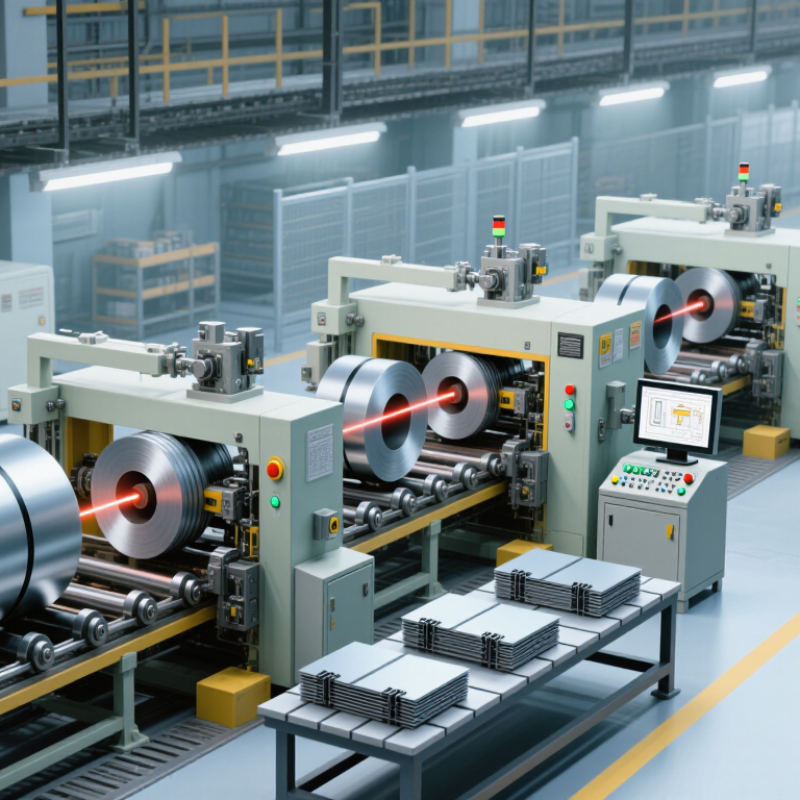
A Transformer Core Cutting Line is an integrated production system for converting electrical steel coils into precise laminations. These laminations form the magnetic core inside distribution and power transformers. The line usually combines decoiling, feeding, measuring, cutting, stacking, and scrap collection equipment. Its purpose is not simply to cut metal. It must protect magnetic performance while maintaining stable dimensions.

In practical production, grain-oriented electrical steel passes through guided rollers before high-speed blades create mitred or step-lap joints. A small cutting error can increase assembly gaps, noise, and no-load losses. Operators therefore monitor blade condition, strip tension, burr height, stacking alignment, and insulation coating damage. Experienced technicians also compare actual measurements with drawings and approved process limits. Modern equipment may include servo drives, automatic length control, laser positioning, and data recording. These features improve repeatability, but they do not remove the need for human judgment.

No line is perfect. Material variation, worn tooling, or poor calibration can still affect results. That is easy to underestimate. A reliable manufacturer validates cutting accuracy through routine inspections, trial runs, and documented maintenance. Engineers should also consider transformer size, steel grade, joint design, production volume, and factory space before selecting equipment. Safety guarding and controlled access remain essential around moving coils and cutting tools. This guide explains how a Transformer Core Cutting Line works, which components influence quality, and why careful process control matters. Some details vary between suppliers, so technical claims should be checked against equipment specifications, standards, and verified production records.
What Is a Transformer Core Cutting Line?

Definition and Purpose of a Transformer Core Cutting Line

A transformer core cutting line is an integrated production system for preparing electrical steel sheets. It cuts, trims, and stacks thin strips into accurate core sections. These sections guide magnetic flux inside a transformer. The main purpose is to reduce energy loss, improve core assembly, and support stable transformer performance. By controlling strip length, angle, and alignment, the line creates repeatable shapes for different core designs. In practice, even a small cutting error can affect the final assembly.

A typical line includes a decoiler, feeding unit, precision shear, scrap collection system, and stacking equipment. Sensors monitor position and movement during operation. Accurate cutting reduces burrs and limits unwanted gaps between steel pieces. This matters. Gaps can increase noise, vibration, and magnetic losses. Experienced technicians still need to check blade condition, material tension, and stacking quality. No machine removes every risk. Settings may work well today but require adjustment tomorrow.

Tips: Inspect cut edges under good lighting before production continues. Keep the feeding path clean and free from loose steel fragments. Record key settings for each material thickness. Do not judge quality by speed alone. A clean edge helps. Small errors accumulate. Reviewing actual results remains essential, because production conditions are rarely perfect.

Materials and Components Used in Core Production

What Is a Transformer Core Cutting Line?

Materials and Components Used in Core Production

A transformer core cutting line processes electrical steel into precise laminations. The usual material is grain-oriented electrical steel, often supplied in coils. Its thin sheets reduce eddy-current losses inside the finished core. An insulating coating separates adjacent laminations and limits unwanted current flow. Clean edges matter. Oil, dust, and moisture can damage surface quality, so storage conditions require careful control.

The line begins with a decoiler, which holds and releases the steel coil. A straightening unit removes coil memory before cutting begins. Slitting knives may divide wide material into narrower strips. Servo-driven feeders then control length and position.

High-speed shears create mitred, step-lap, or rectangular laminations. A stacking table collects each piece in a programmed sequence. Sensors check alignment, sheet presence, and possible feeding errors. Small errors multiply.

In practical production, operators also inspect burr height, corner angles, and coating damage. Excessive burrs can increase losses and create poor contact between layers. The control system records dimensions and production settings for traceability.

A stable cutting line needs rigid frames, accurate guides, reliable drives, and properly maintained blades. It sounds simple. Yet material tension changes during a coil, and even experienced technicians may need to adjust speed or pressure.

Not always.

A perfect setting for one steel grade may perform poorly with another thickness, so trial data and regular measurement remain essential.

Main Cutting Processes and Equipment

A transformer core cutting line converts electrical steel coils into accurately shaped laminations for transformer assembly. The line usually begins with a decoiler, which releases the coil under controlled tension. A leveling unit removes coil memory and keeps the strip stable during feeding. This step matters because uneven tension can create waviness, inaccurate dimensions, and stacking problems.

The main cutting processes include longitudinal slitting, cross-cutting, V-notching, and corner cutting. Slitting creates the required strip widths. A precision shear then cuts laminations to programmed lengths. V-notching and corner cutting form the joint geometry used in step-lap core construction. Servo-driven feeding systems control movement before each cut. Sensors check strip position, while automatic scrap collection keeps the working area clear. Burr inspection is also important. Excessive burrs may damage insulation or increase losses between laminations.

Operators normally verify length, width, notch position, and edge quality with calibrated tools. They also inspect the first pieces after coil changes. In practice, alignment is never perfect. Small deviations can appear when material thickness, tension, or tool wear changes. This is where experienced adjustment helps. A well-designed line still needs human judgment. Sometimes, slower feeding produces better stacking accuracy than maximum speed. That trade-off is easy to overlook. Clean guides, sharp tooling, and recorded inspection results make the process more reliable over repeated production runs.

Step-by-Step Operation of the Production Line

What Is a Transformer Core Cutting Line?

Step-by-Step Operation of the Production Line

A transformer core cutting line converts grain-oriented electrical steel into precise magnetic core laminations. The process matters because core losses affect transformer efficiency. The U.S. Department of Energy estimates that distribution transformers consume about 2.5% of total U.S. electricity use. The IEA’s Electricity 2024 report also expects global electricity demand to grow strongly through 2026. Better core manufacturing is becoming less optional.

The operation starts with coil loading and controlled decoiling. Operators check strip width, surface condition, and material direction. The line then slits or cuts the steel into programmed lengths. High-speed blades create step-lap joints, reducing magnetic resistance at the corners. Sensors monitor strip position during feeding. A small deviation can damage the final stack.

After cutting, each lamination moves to a collecting or stacking station. Operators arrange pieces according to the core design, often using an alternating overlap pattern. The stack is measured for height, squareness, and joint quality. Burr height receives careful attention because sharp edges can increase losses and damage insulation. Many lines use automatic vision inspection, but it is not perfectly reliable. I would not trust a clean-looking stack alone. Manual checks still matter, especially after tool changes or unusual noise. Final records should include material grade, dimensions, cutting speed, defect readings, and operator approval. That traceability supports consistent production and easier root-cause analysis.

Quality Control and Performance Considerations

What Is a Transformer Core Cutting Line?

Quality Control and Performance Considerations

A transformer core cutting line converts electrical steel coils into precise laminations. Its performance depends on cutting accuracy, stable feeding, and careful material handling. Even a small burr can increase assembly gaps and local losses. Operators should check blade condition, strip alignment, and cutting pressure during every production shift. These checks sound basic. They prevent expensive rework.

Quality control should begin with incoming steel inspection. Measure thickness, coating condition, width, and mechanical damage before loading the coil. During cutting, sensors can monitor length, angle, speed, and stacking position. Samples should be measured with calibrated tools, not visual judgment alone. A clean edge matters, but dimensional consistency matters more. Poor stacking can distort the finished core and create uneven clamping pressure.

Performance also depends on software settings and operator response. Cutting speed must match material grade, thickness, and equipment capacity. Excessive speed may reduce accuracy and increase burr formation. Low speed can reduce output without improving quality. Maintenance records should connect defects with specific settings, tools, and production times. This creates useful evidence for corrective action.

However, inspection systems are not perfect. Dust, vibration, and sensor drift can produce misleading readings. Periodic manual verification remains necessary, even in automated lines. A practical improvement is to review rejected laminations weekly and question repeated assumptions. Some defects may come from handling, not cutting.

Copyright 2025 Fluidra S.A. | Created by BCM Marketing Agencia Privacy Policy Legal note | Cookie policy |

Technical cookies are strictly necessary for our website to work and you can navigate through it. These types of cookies are those that, for example, allow us to identify you, give you access to certain restricted parts of the page if necessary, or remember different options or services already selected by you, such as your privacy preferences. Therefore, they are activated by default, your authorization not being necessary in this regard. Through the configuration of your browser, you can block or alert the presence of this type of cookies, although such blocking will affect the proper functioning of the different functionalities of our website.


The analysis cookies allow us to study the navigation of the users of our website in general (for example, which sections of the page are the most visited, which services are used most and if they work correctly, etc.). From the statistical information on navigation on our website, we can improve both the operation of the page itself and the different services it offers. Therefore, these cookies do not have an advertising purpose, but only serve to make our website work better, adapting to our users in general. By activating them you will contribute to this continuous improvement. You can enable or disable these cookies by checking the corresponding box, being disabled by default.


Functionality cookies allow us to remember your preferences, to personalize certain characteristics and general options of our website, every time you access it (for example, the language in which the information is presented to you, the sections marked as favorites, your browser type, etc.) Therefore, this type of cookies does not have an advertising purpose, but by activating them you will improve the functionality of the website (for example, adapting to your type of browser) and the customization of it based on your preferences (for example, by presenting the information in the language that you have chosen in previous occasions), which will contribute to the ease, usability and comfort of our page during your navigation. You can enable or disable these cookies by checking the corresponding box, being disabled by default.


Advertising cookies allow us to manage the advertising spaces included in our website based on criteria such as the content shown or the frequency in which the ads are displayed. For example, if you have been shown the same ad several times on our website, and you have not shown a personal interest by clicking on it, it will not appear again. In summary, by activating this type of cookies, the advertising shown on our website will be more useful and diverse, and less repetitive. You can enable or disable these cookies by checking the corresponding box, being disabled by default.


Behavioral advertising cookies allow us to obtain information based on the observation of your browsing habits and behaviors on the web, in order to show you advertising content that best suits your personal tastes and interests. To understand it in a very simple way, we will give you a fictitious example: if your last searches on the web were related to suspense literature, we would show you advertising about suspense books. Therefore, activating this type of cookies, the advertising that we show you on our website will not be generic, but will be oriented to your searches, tastes and interests, therefore adjusting exclusively to you. You can enable or disable these cookies by checking the corresponding box, being disabled by default.
To understand it in a very simple way, we will give you a fictitious example: if your last searches on the web were related to suspense literature, we would show you advertising about suspense books. Therefore, activating this type of cookies, the advertising that we show you on our website will not be generic, but will be oriented to your searches, tastes and interests, therefore adjusting exclusively to you. You can enable or disable these cookies by checking the corresponding box, being disabled by default.

SAVE

We use our own and third-party cookies to ensure the proper functioning of the website and to analyse our services, improve your experience on our website and show you advertisements related to your interests according to profiling based on your browsing habits (e.g. websites visited). You can accept all cookies by clicking "ACCEPT" or set or reject them by clicking here. If you would like to know more about the use of cookies, please see our COOKIE POLICY.


ACCEPT ALL
Reject no essentials


