
What Is a Temperature and Humidity Monitor?
FLUID HANDLING EXPERTS

Blog, all our news

What Is a Temperature and Humidity Monitor?

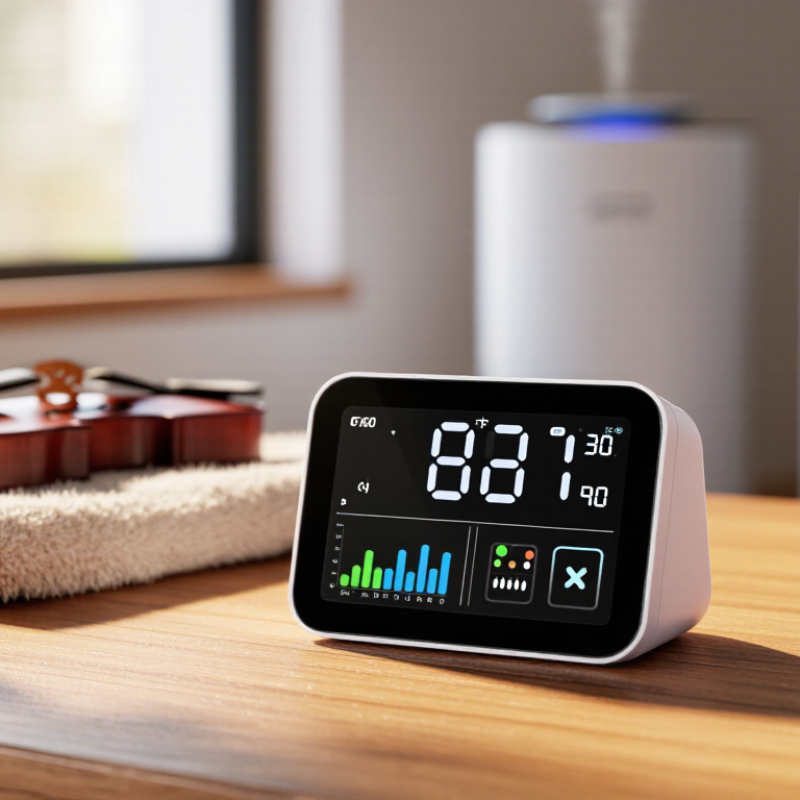
A Temp And Humidity Monitor measures two conditions that strongly affect comfort, safety, and product quality. Temperature shows how warm or cold an environment is. Relative humidity shows how much moisture the air contains compared with its maximum capacity. Together, these readings help people understand changing indoor conditions instead of relying on guesswork.

A typical monitor uses electronic sensors, a display, and sometimes an alarm or mobile connection. You might place one beside stored medicine, near a musical instrument, or inside a nursery. In a greenhouse, it can reveal when plants face excessive heat or dry air. In a basement, it may warn about moisture linked to mold growth. Placement matters. A monitor near a window, heater, vent, or damp wall may report conditions that do not represent the whole room.

Small details matter. Check the sensor’s stated accuracy, measurement range, update speed, and data-recording options. Some models need calibration over time. Others show impressive numbers but provide limited evidence of long-term reliability. A reading is useful only when you understand its context. That part is often overlooked.

It is not a perfect tool. Sensor drift can occur. Batteries can weaken. Wireless connections may fail. Regular checks against a trusted reference can improve confidence, especially where stable conditions matter. Used thoughtfully, a temperature and humidity monitor turns invisible environmental changes into practical information. It supports better decisions, but it cannot replace professional inspection when serious damage or health concerns appear.
What Is a Temperature and Humidity Monitor?

Definition and Core Functions of a Temperature and Humidity Monitor

What Is a Temperature and Humidity Monitor?

Definition and Core Functions of a Temperature and Humidity Monitor

A temperature and humidity monitor is a device that measures air temperature and relative humidity in a specific environment. It usually uses sensors, a screen, memory, and an alarm system. Relative humidity shows how much moisture air holds compared with its maximum capacity. The monitor may also calculate dew point, record changes, and send alerts when readings exceed set limits.

Its value is practical, not decorative. The U.S. Environmental Protection Agency recommends maintaining indoor relative humidity between 30% and 50% for healthier indoor air. Outside this range, moisture can encourage mold, while very dry air may irritate skin and breathing passages. The World Meteorological Organization reported that 2023 was about 1.45°C above the pre-industrial average. This wider climate shift makes local environmental measurement more useful in homes, warehouses, laboratories, and archives.

Accuracy depends on placement, calibration, and maintenance. A sensor beside a heater can produce a misleadingly high reading. A poorly sealed storage room can also hide moisture pockets. In practice, ISO/IEC 17025-calibrated instruments provide stronger measurement confidence, especially when records support quality audits. Yet no monitor is perfect. Sensors drift. Batteries weaken. Human decisions can still be careless. Reviewing trends, checking calibration dates, and comparing unusual readings with a second instrument can expose errors before they damage materials or comfort.

How Temperature and Relative Humidity Sensors Measure Environmental Conditions

What Is a Temperature and Humidity Monitor?

A temperature and humidity monitor uses sensors to measure environmental conditions continuously. The temperature sensor detects heat by tracking changes in electrical resistance or voltage. Thermistors respond quickly, while resistance-based sensors often provide stable readings across wider ranges. The monitor converts these signals into a temperature value, usually shown in degrees Celsius or Fahrenheit.

Relative humidity sensors measure moisture in the air, not liquid water directly. A capacitive sensor contains a moisture-sensitive material that changes its electrical properties as water vapor increases. The device compares this moisture level with the maximum vapor pressure possible at the same temperature. It then reports relative humidity as a percentage.

At 25°C, air holding 50% relative humidity contains half its possible moisture load.

Placement affects accuracy more than many users expect. Avoid direct sunlight, vents, heaters, and cold metal surfaces. A sensor near a doorway may record repeated spikes from outdoor air. Condensation can also distort readings or damage sensitive components.

During a storage-room inspection, moving the monitor only one meter changed the humidity result noticeably.

Calibration matters. A two-percent error may seem minor, but it can affect food storage, archives, laboratories, and indoor comfort decisions. Sensors also need time to stabilize after relocation. They are not perfect. Dust, aging, and rapid temperature changes create uncertainty, so readings should be checked against a trusted reference periodically.

Key Accuracy Standards: ±0.3°C Temperature and ±2% RH Humidity

What Is a Temperature and Humidity Monitor?

Key Accuracy Standards: ±0.3°C Temperature and ±2% RH Humidity

A temperature and humidity monitor measures air temperature and relative humidity continuously. It may use digital sensors, a display, alarms, and data logging. For dependable decisions, look for ±0.3°C temperature accuracy and ±2% RH humidity accuracy. These figures describe allowable measurement error under stated test conditions. They are not permanent guarantees. The ASHRAE Handbook—Fundamentals (2021) identifies 30–60% RH as a common indoor comfort range. A monitor showing 45% RH could therefore represent roughly 43–47% RH within its stated tolerance. That difference matters near storage or comfort limits.

The WMO Guide to Instruments and Methods of Observation, WMO-No. 8 (2021), stresses calibration, sensor placement, and measurement uncertainty. A probe beside a supply vent may read cooler and drier than the room center. Condensation, dust, airflow, and sensor aging can also reduce accuracy. A neat specification can still mislead. In practical inspections, ±0.3°C may apply only within a defined temperature range. Check the technical report, calibration method, and operating limits before trusting the number.

Tips: Place the sensor at breathing height, away from windows and vents. Compare it with a calibrated reference during commissioning. Record readings for several days, not just one convenient moment. Recheck calibration after unusual heat, moisture, or physical movement.

Common Applications in HVAC, Food Storage, Healthcare, and Data Centers

A temperature and humidity monitor measures two conditions that strongly affect comfort, safety, and equipment performance. It uses sensors to track air temperature and moisture levels, then displays or records the readings. Many systems can send alerts when conditions move outside a chosen range. The device seems simple, but sensor placement matters. A monitor near a vent may report a misleading result.

In HVAC systems, monitoring helps technicians identify uneven cooling, excessive moisture, or possible ventilation problems. A reading near a damp wall can reveal condensation before it becomes visible. In food storage, steady records support safer handling of chilled goods, dry ingredients, and packaged products. Staff can notice a refrigerator warming overnight or a storage room becoming unusually humid. Local procedures still determine acceptable limits.

Healthcare spaces use monitoring in medicine storage areas, laboratories, and patient environments. Reliable records can support quality checks, although a monitor does not replace trained staff or validated equipment. Data centers use these devices to watch server-room conditions and reduce risks from heat or condensation. Small changes matter there. I have found that alarms are useful only when someone responds to them. Poor calibration, weak batteries, and blocked sensors can create false confidence. Regular checks against a trusted reference improve reliability, but no monitoring setup is perfect.

Choosing Monitoring Ranges, Calibration, Alerts, and Data-Logging Features

A temperature and humidity monitor measures the conditions around stored goods, equipment, or occupied spaces. A useful device does more than display two numbers. It helps staff notice gradual changes before moisture damage, spoilage, or equipment stress occurs.

Choosing the correct monitoring range matters. A storage room may need a tighter humidity range than a general office. Set limits from product requirements, not personal comfort. Place sensors near vulnerable shelves, doors, or vents. One sensor may miss a cold corner. That mistake is common.

Calibration supports trustworthy readings. Compare the monitor with a certified reference instrument at scheduled intervals. Record the date, method, results, and any adjustment. Calibration checks should also follow drops, battery failures, or unusual readings. A perfect-looking screen proves little. I have seen stable displays hide sensors that slowly drifted.

Alerts should match real risk. Use separate warning and critical limits, with a short delay for temporary door opening. Send alerts to people who can respond, not just a shared inbox. Test the notification path regularly. Silent alerts are useless.

Data logging adds context. Choose a suitable recording interval, enough memory, and protected data export. Clear timestamps and audit trails make investigations easier. Review graphs, not only alarm events. Patterns often reveal a failing seal or poor ventilation. Still, more data does not guarantee better decisions. Someone must interpret it and document the response.

Copyright 2025 Fluidra S.A. | Created by BCM Marketing Agencia Privacy Policy Legal note | Cookie policy |

Technical cookies are strictly necessary for our website to work and you can navigate through it. These types of cookies are those that, for example, allow us to identify you, give you access to certain restricted parts of the page if necessary, or remember different options or services already selected by you, such as your privacy preferences. Therefore, they are activated by default, your authorization not being necessary in this regard. Through the configuration of your browser, you can block or alert the presence of this type of cookies, although such blocking will affect the proper functioning of the different functionalities of our website.


The analysis cookies allow us to study the navigation of the users of our website in general (for example, which sections of the page are the most visited, which services are used most and if they work correctly, etc.). From the statistical information on navigation on our website, we can improve both the operation of the page itself and the different services it offers. Therefore, these cookies do not have an advertising purpose, but only serve to make our website work better, adapting to our users in general. By activating them you will contribute to this continuous improvement. You can enable or disable these cookies by checking the corresponding box, being disabled by default.


Functionality cookies allow us to remember your preferences, to personalize certain characteristics and general options of our website, every time you access it (for example, the language in which the information is presented to you, the sections marked as favorites, your browser type, etc.) Therefore, this type of cookies does not have an advertising purpose, but by activating them you will improve the functionality of the website (for example, adapting to your type of browser) and the customization of it based on your preferences (for example, by presenting the information in the language that you have chosen in previous occasions), which will contribute to the ease, usability and comfort of our page during your navigation. You can enable or disable these cookies by checking the corresponding box, being disabled by default.


Advertising cookies allow us to manage the advertising spaces included in our website based on criteria such as the content shown or the frequency in which the ads are displayed. For example, if you have been shown the same ad several times on our website, and you have not shown a personal interest by clicking on it, it will not appear again. In summary, by activating this type of cookies, the advertising shown on our website will be more useful and diverse, and less repetitive. You can enable or disable these cookies by checking the corresponding box, being disabled by default.


Behavioral advertising cookies allow us to obtain information based on the observation of your browsing habits and behaviors on the web, in order to show you advertising content that best suits your personal tastes and interests. To understand it in a very simple way, we will give you a fictitious example: if your last searches on the web were related to suspense literature, we would show you advertising about suspense books. Therefore, activating this type of cookies, the advertising that we show you on our website will not be generic, but will be oriented to your searches, tastes and interests, therefore adjusting exclusively to you. You can enable or disable these cookies by checking the corresponding box, being disabled by default.
To understand it in a very simple way, we will give you a fictitious example: if your last searches on the web were related to suspense literature, we would show you advertising about suspense books. Therefore, activating this type of cookies, the advertising that we show you on our website will not be generic, but will be oriented to your searches, tastes and interests, therefore adjusting exclusively to you. You can enable or disable these cookies by checking the corresponding box, being disabled by default.

SAVE

We use our own and third-party cookies to ensure the proper functioning of the website and to analyse our services, improve your experience on our website and show you advertisements related to your interests according to profiling based on your browsing habits (e.g. websites visited). You can accept all cookies by clicking "ACCEPT" or set or reject them by clicking here. If you would like to know more about the use of cookies, please see our COOKIE POLICY.


ACCEPT ALL
Reject no essentials


