
What Is a Fuel Generator and How Does It Work?
FLUID HANDLING EXPERTS

Blog, all our news

What Is a Fuel Generator and How Does It Work?

A Fuel Generator converts energy stored in fuel into electricity. It can provide backup power during an outage or supply electricity at a worksite without grid access. You may recognize the sound: a steady engine rumble, perhaps accompanied by the warm smell of exhaust outdoors. The basic idea is straightforward. The details matter.

Most fuel generators use an internal combustion engine connected to an alternator. Fuel burns inside the engine, driving a shaft. The alternator then converts that rotation into electrical current. A control panel typically provides outlets and displays useful information, such as voltage or operating hours. Depending on the model, the generator may run on gasoline, diesel, propane, or another specified fuel. These options differ in storage needs, runtime, maintenance, and operating costs. They are not interchangeable unless the manufacturer says so.

Understanding the process helps you choose and use equipment more thoughtfully. A generator’s rated output, fuel consumption, and intended duty cycle should match the devices it will power. A refrigerator and a small lamp place different demands on a unit, especially when appliances start up. Check the manual, keep the generator outdoors, and follow its clearance and grounding instructions. Carbon monoxide is invisible and odorless. That risk is easy to underestimate. Even a quiet model needs careful placement and routine maintenance. No single generator suits every situation, and product specifications can be confusing. This guide explains the main components, how electricity is produced, and what practical factors deserve attention before operation.
What Is a Fuel Generator and How Does It Work?

Fuel Generators: Engine–Alternator Systems for On-Site Electricity

What Is a Fuel Generator and How Does It Work?

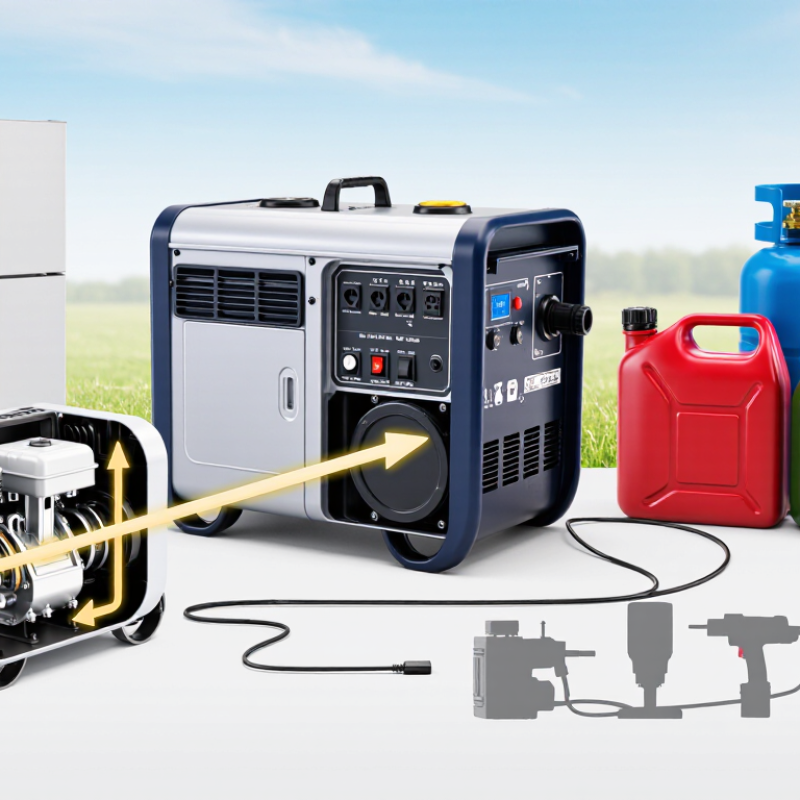
A fuel generator converts energy from burning fuel into on-site electricity. Its two main parts are an engine and an alternator. The engine burns fuel to turn a shaft, much like a small vehicle engine. That rotating shaft drives the alternator, where magnetic fields induce electrical current in the windings. The result can power lights, tools, or selected building circuits, depending on the unit’s output and setup.

The system also includes a fuel supply, cooling, exhaust, and controls. A voltage regulator helps keep output within a usable range as loads change. When a pump starts or a heater switches on, demand can rise sharply. The engine must respond without stalling, while the alternator supplies the required current. In practice, noise, exhaust heat, and maintenance needs are easy to underestimate. A generator may appear simple, but its performance depends on matching its capacity to the equipment being powered.

Tips: Check each appliance’s running and starting wattage before connecting it. Keep the generator outdoors, away from doors and windows, and follow its operating manual. Let the engine cool before refueling. Small details matter. Regularly inspect fuel lines, air filters, and electrical connections; skipped checks can become expensive surprises.

Fuel Types and Energy Conversion: From Chemical Energy to Shaft Power

A fuel generator stores energy in a combustible fuel such as gasoline, diesel, propane, or natural gas. Each fuel behaves differently. Gasoline is easy to ignite, while diesel engines rely on compressed, heated air to ignite injected fuel. Propane and natural gas enter the engine as gases, so their delivery systems differ from liquid-fuel systems.

Combustion releases chemical energy as heat and expanding gases. Inside the engine, that pressure pushes a piston, turning a connecting rod and crankshaft. The rotating shaft then drives an alternator, where magnetic fields and copper windings produce electrical current. That is the conversion path: chemical energy, heat, motion, and electricity. Not all fuel energy becomes useful output. Some escapes as exhaust heat, engine warmth, friction, and sound.

Fuel choice affects storage, starting, runtime, and performance under changing loads. A diesel unit may suit long, steady operation, while a propane model can be convenient where fuel storage matters. Real results depend on engine design and maintenance, not fuel type alone. A clogged air filter or stale fuel can reduce output. Small details matter. Keep the generator level, follow its operating instructions, and provide outdoor ventilation; exhaust gases can be dangerous indoors. Even a well-matched generator wastes energy when it runs far below its rated load.

What Is a Fuel Generator and How Does It Work? - Fuel Types and Energy Conversion: From Chemical Energy to Shaft Power
Fuel Type Approximate Lower Heating Value (LHV) How the Fuel Releases Energy Conversion to Shaft Power Practical Considerations
Gasoline About 43–44 MJ/kg; approximately 32 MJ/L Vaporized or injected fuel mixes with air and burns in a spark-ignition engine. Combustion raises cylinder pressure, pushing pistons that turn a crankshaft. Common in smaller portable generators. It is volatile, so safe storage and ventilation are important.
Diesel About 42–43 MJ/kg; approximately 35–36 MJ/L Fuel is injected into highly compressed, hot air and ignites without a spark plug. Expanding combustion gases drive pistons and the crankshaft; the engine shaft turns the generator rotor. Often used for larger or continuous-duty equipment. Fuel can gel in very cold conditions.
Liquefied petroleum gas (propane) About 46 MJ/kg; approximately 25 MJ/L as liquid propane Liquid propane vaporizes, mixes with air, and burns in a spark-ignition engine. The engine converts combustion pressure into reciprocating motion and then rotating crankshaft power. Stored under pressure in a tank. Its energy per litre is lower than that of liquid gasoline or diesel.
Natural gas Typically about 35–40 MJ per standard cubic metre, depending on composition Metered gas mixes with air and burns in a spark-ignition or purpose-designed gas engine. Combustion drives pistons or, in some systems, a turbine; the rotating shaft drives the generator. Usually supplied by pipeline or stored as compressed gas. Energy content varies with gas composition and reference conditions.
Hydrogen About 120 MJ/kg; approximately 10.8 MJ per normal cubic metre Hydrogen can be burned with air in a suitably designed engine; it can also produce electricity in a fuel cell. In an engine, combustion drives a shaft. A fuel cell produces electricity electrochemically and does not provide shaft power directly. Very low energy per unit volume at ordinary pressure, so storage generally requires compression or liquefaction and specialized equipment.
Biomass pellets Typically about 16–19 MJ/kg, depending on moisture and composition Solid biomass is burned to produce heat; the heat may create steam to drive a turbine. A steam turbine converts steam energy into rotating shaft power, which can drive an electrical generator. Requires fuel handling and ash management. Moisture content affects usable energy and combustion performance.
Typical energy-conversion chain: fuel’s chemical energy → heat from combustion (or electrochemical conversion in a fuel cell) → engine or turbine motion → rotating shaft power → electrical power from the generator. In an engine-driven generator, shaft power is greater than electrical output because the engine and generator both have losses.

Heating values are approximate lower heating values; actual values vary with fuel composition, temperature, pressure, and moisture. MJ/L figures apply to liquid fuels at ordinary storage conditions.

Alternator Operation: Producing AC Electricity at 50 or 60 Hz

Inside a fuel generator, the engine turns a shaft connected to an alternator. The alternator converts rotational energy into electrical energy through electromagnetic induction. A rotating magnetic field passes the stationary copper windings, called the stator, and induces alternating current. The current reverses direction repeatedly, creating AC electricity. That reversal is normal. It is what powers common AC equipment.

Frequency depends on rotor speed and the number of magnetic poles. A two-pole alternator generally needs to turn at 3,600 revolutions per minute for 60 Hz, or 3,000 rpm for 50 Hz. A four-pole design can produce those frequencies at 1,800 or 1,500 rpm, respectively. These figures assume steady rotation. When a heavy load starts, the engine may slow briefly, causing frequency and voltage to dip. A governor adjusts engine speed, while voltage regulation helps keep output within its intended range. They work together, but they cannot make every generator’s output perfectly steady. That detail is easy to overlook. Check the unit’s rated frequency and voltage before connecting sensitive equipment, and avoid exceeding its stated load capacity.

Generator Speed: 1,500 rpm at 50 Hz or 1,800 rpm at 60 Hz

What Is a Fuel Generator and How Does It Work?

A fuel generator uses an engine to turn chemical energy into electrical power. Fuel burns inside the engine, producing motion that spins an alternator. The alternator’s rotating magnetic field induces current in its windings. In many common synchronous generators, speed determines output frequency. A four-pole unit typically runs at 1,500 rpm for 50 Hz or 1,800 rpm for 60 Hz. That relationship matters. If engine speed drifts, frequency can drift too, affecting sensitive equipment.

The speed and frequency pairing depends on the alternator’s pole count. A two-pole generator, for example, needs twice the speed of a four-pole unit for the same frequency. The engine governor helps maintain steady rotation as electrical loads change. When a motor starts, it may briefly demand much more power than during normal operation. The generator can slow slightly before the governor responds. Real performance varies with load, maintenance, and design, so the rated speed is not the whole story.

Tips: Check the nameplate for frequency, rated speed, and pole count before connecting equipment. Keep loads within the generator’s capacity, and listen for uneven engine speed. It can be easy to overlook small changes. A basic frequency meter can help reveal them.

Output Ratings: kW, kVA, and ISO 8528 Generator Classes

A fuel generator converts engine power into electricity, but its output label needs careful reading. Kilowatts (kW) measure real power available to run equipment. Kilovolt-amperes (kVA) measure apparent power, which includes the effect of electrical current and voltage. The relationship depends on power factor: at 0.8, a 100 kVA generator can provide about 80 kW. Check both figures before connecting motors, pumps, or other loads.

Ratings also describe how long and under what conditions a generator can operate. Standby output is intended for emergency use during an outage; prime output supports variable loads for extended periods, subject to the manufacturer’s limits. Continuous output is generally for steady loads. Names and rating conditions can vary, so compare the stated duty, ambient temperature, and maintenance requirements. The small print matters.

ISO 8528 performance classes address how well a generating set responds to changing electrical loads, rather than how much power it produces. G1 suits relatively simple loads with modest requirements. G2 and G3 cover progressively more demanding performance needs, including tighter voltage and frequency behavior; G4 applies to specialized requirements agreed between user and manufacturer. A motor starting with a heavy thump can cause a brief dip. That may be acceptable for a heater, but disruptive to sensitive controls. Select a class based on the actual equipment and its start-up demands, not just the largest kW number.

Copyright 2025 Fluidra S.A. | Created by BCM Marketing Agencia Privacy Policy Legal note | Cookie policy |

Technical cookies are strictly necessary for our website to work and you can navigate through it. These types of cookies are those that, for example, allow us to identify you, give you access to certain restricted parts of the page if necessary, or remember different options or services already selected by you, such as your privacy preferences. Therefore, they are activated by default, your authorization not being necessary in this regard. Through the configuration of your browser, you can block or alert the presence of this type of cookies, although such blocking will affect the proper functioning of the different functionalities of our website.


The analysis cookies allow us to study the navigation of the users of our website in general (for example, which sections of the page are the most visited, which services are used most and if they work correctly, etc.). From the statistical information on navigation on our website, we can improve both the operation of the page itself and the different services it offers. Therefore, these cookies do not have an advertising purpose, but only serve to make our website work better, adapting to our users in general. By activating them you will contribute to this continuous improvement. You can enable or disable these cookies by checking the corresponding box, being disabled by default.


Functionality cookies allow us to remember your preferences, to personalize certain characteristics and general options of our website, every time you access it (for example, the language in which the information is presented to you, the sections marked as favorites, your browser type, etc.) Therefore, this type of cookies does not have an advertising purpose, but by activating them you will improve the functionality of the website (for example, adapting to your type of browser) and the customization of it based on your preferences (for example, by presenting the information in the language that you have chosen in previous occasions), which will contribute to the ease, usability and comfort of our page during your navigation. You can enable or disable these cookies by checking the corresponding box, being disabled by default.


Advertising cookies allow us to manage the advertising spaces included in our website based on criteria such as the content shown or the frequency in which the ads are displayed. For example, if you have been shown the same ad several times on our website, and you have not shown a personal interest by clicking on it, it will not appear again. In summary, by activating this type of cookies, the advertising shown on our website will be more useful and diverse, and less repetitive. You can enable or disable these cookies by checking the corresponding box, being disabled by default.


Behavioral advertising cookies allow us to obtain information based on the observation of your browsing habits and behaviors on the web, in order to show you advertising content that best suits your personal tastes and interests. To understand it in a very simple way, we will give you a fictitious example: if your last searches on the web were related to suspense literature, we would show you advertising about suspense books. Therefore, activating this type of cookies, the advertising that we show you on our website will not be generic, but will be oriented to your searches, tastes and interests, therefore adjusting exclusively to you. You can enable or disable these cookies by checking the corresponding box, being disabled by default.
To understand it in a very simple way, we will give you a fictitious example: if your last searches on the web were related to suspense literature, we would show you advertising about suspense books. Therefore, activating this type of cookies, the advertising that we show you on our website will not be generic, but will be oriented to your searches, tastes and interests, therefore adjusting exclusively to you. You can enable or disable these cookies by checking the corresponding box, being disabled by default.

SAVE

We use our own and third-party cookies to ensure the proper functioning of the website and to analyse our services, improve your experience on our website and show you advertisements related to your interests according to profiling based on your browsing habits (e.g. websites visited). You can accept all cookies by clicking "ACCEPT" or set or reject them by clicking here. If you would like to know more about the use of cookies, please see our COOKIE POLICY.


ACCEPT ALL
Reject no essentials


