
What Is a Custom ABS Electronics Enclosure?
FLUID HANDLING EXPERTS

Blog, all our news

What Is a Custom ABS Electronics Enclosure?

A custom ABS electronics enclosure is a molded or fabricated housing designed around a device’s circuit board, connectors, controls, and operating environment. ABS is popular because it combines impact resistance, rigidity, and practical moldability. Yet the resin alone does not make an enclosure reliable. Wall thickness, screw bosses, ventilation slots, and cable openings all affect fit and performance.

Market reports show why this material remains relevant. Grand View Research estimated the global acrylonitrile butadiene styrene (ABS) market at about USD 29.1 billion in 2023, with continued growth projected through 2030. Its broader plastics-market analysis also reflects sustained demand across manufactured products. These figures describe markets, not enclosure quality. For fire performance, designers must check the specific resin grade and test classification; UL 94 ratings should never be assumed from the word “ABS” alone.

Injection-molding author Robert A. Malloy’s published design work supports a practical principle: geometry, material, and processing need to be considered together. That is a paraphrase, not a direct quotation. A good enclosure might protect a board from a dropped tool while leaving a USB port easy to reach. Small details matter. A tight boss can crack; a poorly placed vent can admit dust. And prototypes sometimes expose mistakes the CAD model missed. That is useful evidence, not failure. A well-specified custom ABS electronics enclosure starts with real dimensions, realistic use conditions, and testing of the finished part.
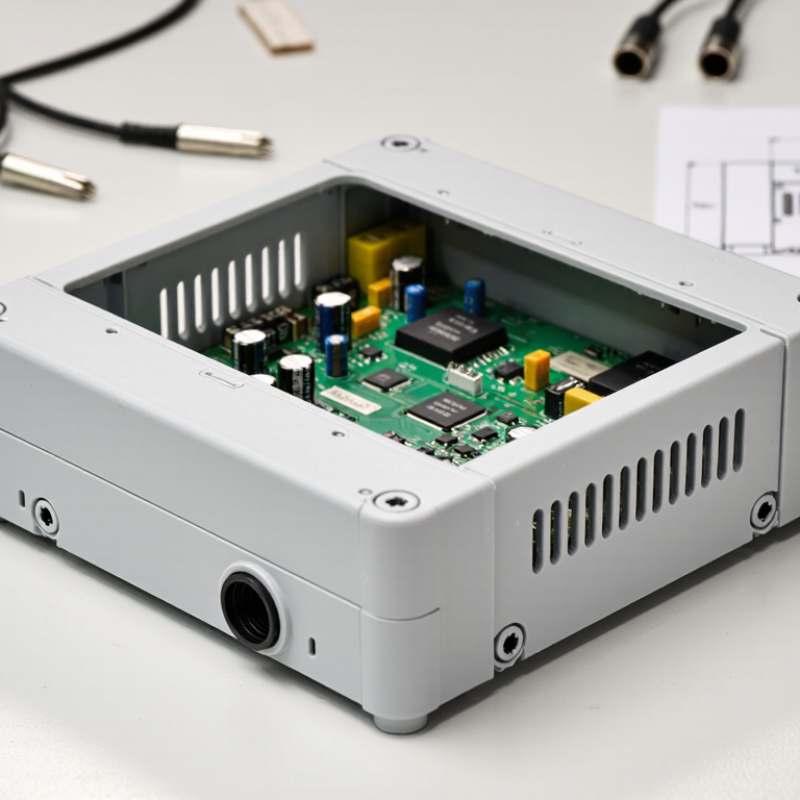
What Is a Custom ABS Electronics Enclosure?

Definition and Purpose of a Custom ABS Electronics Enclosure

A custom ABS electronics enclosure is a housing designed around specific electronic parts, rather than a standard, off-the-shelf box. ABS means acrylonitrile butadiene styrene, a lightweight thermoplastic commonly used for durable housings. A custom design can match a circuit board’s dimensions and include tailored openings for switches, cable glands, displays, and mounting points. Fit matters. The goal is to keep components organized and reduce exposure to dust, bumps, and accidental contact.

Its purpose is both protective and practical. A well-planned enclosure holds components securely, gives connectors room, and allows users to reach controls without opening the case. Ventilation slots may help manage heat, but they can also admit dust or moisture. ABS offers useful impact resistance and electrical insulation, yet it is not ideal for every temperature, chemical, or outdoor condition. Material choice and wall thickness should reflect the actual operating environment. A tidy CAD model alone cannot confirm that a design will fit or stay cool in use; prototypes can reveal awkward cable bends or blocked airflow.

Tips: Check board dimensions, connector clearance, and screw locations before finalizing the enclosure. Leave space for wires to bend gently, and test heat buildup during realistic operation. Small details matter. A few millimeters can make assembly easier—or frustrating.

Key Material Properties of ABS Plastic

A custom ABS electronics enclosure is shaped around a device’s board, connectors, and mounting points. ABS is a thermoplastic valued for its balance of impact resistance, stiffness, and workable cost. A dropped handheld unit may survive a minor knock, though sharp corners can still crack. The material can be molded into ribs, bosses, and textured surfaces. It can also be machined for prototypes. That flexibility helps when a standard box leaves awkward gaps.

ABS provides electrical insulation, but the finished enclosure’s safety depends on wall thickness, openings, assembly, and the device itself. Heat is a key limitation: prolonged warmth may soften or distort some grades. Sunlight can also cause fading or embrittlement unless the selected formulation offers suitable UV resistance. Flame-retardant properties vary by grade; do not assume ordinary ABS provides them. Small details matter.

Tips: Check the grade’s data sheet for heat and impact ratings. Test a sample with the actual connectors and fasteners. A tight screw can split a thin boss.

Choose material and geometry together. Deep ribs may improve stiffness, but they can complicate molding and create uneven wall sections. Sharp internal corners also concentrate stress; rounded transitions are usually more forgiving. I have seen a neat-looking enclosure become difficult to assemble because cable clearance was overlooked. Measure the real components, then review the fit before committing to production. Even a careful design can need revision.

Design Features and Customization Options

A custom ABS electronics enclosure is shaped around a device’s circuit board, connectors, and operating environment. ABS offers useful impact resistance and molding flexibility, but its performance depends on material grade and wall design. Small details matter. Screw bosses need enough room for fasteners without crowding nearby components. Rounded internal corners can reduce stress, while ribs add stiffness without making every wall excessively thick.

Customization can include connector cutouts, ventilation slots, cable entries, mounting tabs, and molded labels. Surface texture and color also affect grip, appearance, and visibility of marks. A gasket may help limit dust entry, though enclosure seams and cable openings still need careful attention. A tidy layout can still frustrate assembly. Check tool access and wire bend space before fixing the design.

Prototype fit checks reveal problems that drawings often miss. Confirm that connectors align, screws seat evenly, and the lid closes without pinching wires. If the electronics generate heat, test temperatures under realistic operating conditions; vents may improve airflow but reduce protection from dust. ABS can also be less suitable for prolonged heat or strong sunlight, depending on the grade. A slightly awkward first prototype is useful evidence, not a failure.

What Is a Custom ABS Electronics Enclosure?

A custom ABS enclosure is a housing designed around an electronic assembly, with features such as tailored mounting bosses, connector cutouts, ventilation, and cover fasteners.

Representative nominal resin densities (g/cm³); values vary by grade and formulation. Density is one factor in material selection, alongside strength, heat resistance, and the enclosure’s operating environment.

Manufacturing Processes and Quality Standards

A custom ABS electronics enclosure begins with the device’s dimensions, connector locations, heat output, and mounting needs. These details guide the design of wall thickness, ribs, bosses, and openings. Injection molding suits repeat production, while CNC machining can help validate early prototypes. Mold flow, cooling, and material shrinkage affect the final fit, so a first sample often needs adjustment. Small changes matter.

Quality checks should follow a written specification, not visual judgment alone. Inspectors can measure critical dimensions with calipers or gauges, then test how the lid, fasteners, and connectors fit together. A smooth surface may still hide warped walls or weak screw posts. Material records and any required flammability rating should be verified for the selected ABS grade and end use. Requirements vary by application.

Production controls may include checking sample parts at setup, tracking process changes, and keeping inspection records. Color, texture, and wall thickness should remain consistent across batches. A practical test also checks assembly after repeated opening and closing. No inspection catches everything; tight tolerances can raise cost, while loose ones may cause poor fit. The specification needs a careful balance.

Common Applications and Selection Considerations

A custom ABS electronics enclosure is a molded or fabricated housing shaped around a device’s circuit board, connectors, and mounting needs. Its design can include screw posts, cable openings, display windows, and snap-fit features. These enclosures commonly protect indoor control modules, sensor interfaces, small networking devices, and prototype instruments. In a workshop, for example, a compact enclosure might keep a circuit board clear of dust while leaving room for a side-mounted power connector. ABS is practical and easy to customize, but it is not a solution for every environment. Not automatically.

Selection starts with the operating conditions. Check the expected temperature, exposure to sunlight or cleaning chemicals, and the force applied to mounting points. ABS can soften under sustained heat, and standard grades may age outdoors; confirm material properties for the intended use. Then compare enclosure dimensions with the actual board, cable bend radius, and tool access for servicing. A tight fit can look tidy but leave connectors difficult to reach. Consider ventilation, too: openings may help manage heat, while seals and carefully designed joints help limit dust or moisture. Required protection depends on the complete enclosure design, not the plastic alone. Revisit assumptions before finalizing the shape.

What Is a Custom ABS Electronics Enclosure? — Common Applications and Selection Considerations

Topic Typical Use or Feature Why ABS May Be Suitable Key Selection Considerations Practical Design Note
What it is A protective housing designed around electronic components, controls, connectors, and the intended installation. ABS is a thermoplastic commonly used for molded housings because it is lightweight, impact-resistant, and readily formed into detailed shapes. Confirm the required dimensions, wall thickness, access points, mounting features, finish, and operating environment. Material performance depends on the ABS grade, enclosure design, manufacturing process, and conditions of use.
Control panels and operator interfaces Housings for buttons, switches, indicator lights, small displays, and control electronics. The material can be molded or fabricated with openings, recessed areas, and internal supports for components. Check panel cutouts, button clearance, viewing angles, mounting method, and resistance to cleaning agents. Specify cutout locations and tolerances against the actual components and assembly drawings.
Sensors and monitoring devices Enclosures for indoor environmental sensors, data loggers, and monitoring modules. ABS can provide a compact, lightweight housing and can accommodate vents, cable entries, and mounting features. Consider airflow, sensor exposure, condensation, dust, sunlight, and whether the installation is indoors or outdoors. Vents and openings can affect dust and moisture protection; select the enclosure layout to suit the sensing function.
Networking and communications equipment Small indoor housings for interface modules, gateways, and low-power communication devices. Complex shapes and integrated clips or standoffs may help organize circuit boards and connectors. Review antenna placement, connector access, heat dissipation, cable routing, and any radio-frequency requirements. Enclosure material and geometry can influence antenna performance; validate the assembled device in its intended configuration.
Consumer and household electronics Casings for small appliances, chargers, accessories, and electronic accessories used in controlled environments. ABS supports a range of molded shapes and surface finishes and is commonly used for consumer product housings. Assess impact exposure, surface appearance, assembly method, electrical safety requirements, and contact with heat sources. Material selection should account for the product's applicable safety standards and expected use conditions.
Light industrial instruments Enclosures for portable meters, small controllers, and instruments installed away from severe hazards. Its low weight and design flexibility can suit equipment that needs custom mounting or a shaped user interface. Check vibration, impact, dust, moisture, chemicals, temperature, and exposure to oils or solvents. For harsh environments, verify the complete enclosure assembly rather than relying on the plastic material alone.
Indoor wall-mounted devices Housings for thermostats, access-control modules, and building monitoring equipment. ABS can be shaped to include mounting bosses, cable entries, and a finished front face. Confirm wall-mounting points, cable entry direction, service access, and compatibility with the mounting surface. Plan access to fasteners and connectors so routine installation and maintenance do not damage the housing.
Ingress protection Protection from dust or water is determined by the complete enclosure design and test configuration. ABS can be used in designs that include joints, gaskets, and suitable covers, but the resin itself does not establish an IP rating. Define the required IP rating, gasket arrangement, seam design, cable glands, and test conditions. Do not assume a rating from material choice; confirm it through testing of the finished, assembled enclosure.
Heat and flame requirements Applications may have limits for operating temperature, component heat, or flame behavior. ABS grades vary, and specified grades may be available for particular performance requirements. Check the selected grade's technical data, thermal limits, flame classification, and applicable regulatory requirements. Allow for heat generated by internal components and confirm performance in the actual enclosure geometry.
Manufacturing and customization Custom features may include bosses, ribs, snap-fits, labels, windows, mounting brackets, and connector openings. ABS is compatible with common enclosure manufacturing approaches, including injection molding and some fabrication methods. Choose the process based on quantity, tooling budget, dimensional tolerances, finish, and design complexity. Injection molding generally requires production tooling; fabricated or prototype approaches may suit lower-volume needs.

Selection reminder: Choose an enclosure based on the complete product requirements, including environment, component layout, safety standards, assembly, and testing—not on material name alone.

Copyright 2025 Fluidra S.A. | Created by BCM Marketing Agencia Privacy Policy Legal note | Cookie policy |

Technical cookies are strictly necessary for our website to work and you can navigate through it. These types of cookies are those that, for example, allow us to identify you, give you access to certain restricted parts of the page if necessary, or remember different options or services already selected by you, such as your privacy preferences. Therefore, they are activated by default, your authorization not being necessary in this regard. Through the configuration of your browser, you can block or alert the presence of this type of cookies, although such blocking will affect the proper functioning of the different functionalities of our website.


The analysis cookies allow us to study the navigation of the users of our website in general (for example, which sections of the page are the most visited, which services are used most and if they work correctly, etc.). From the statistical information on navigation on our website, we can improve both the operation of the page itself and the different services it offers. Therefore, these cookies do not have an advertising purpose, but only serve to make our website work better, adapting to our users in general. By activating them you will contribute to this continuous improvement. You can enable or disable these cookies by checking the corresponding box, being disabled by default.


Functionality cookies allow us to remember your preferences, to personalize certain characteristics and general options of our website, every time you access it (for example, the language in which the information is presented to you, the sections marked as favorites, your browser type, etc.) Therefore, this type of cookies does not have an advertising purpose, but by activating them you will improve the functionality of the website (for example, adapting to your type of browser) and the customization of it based on your preferences (for example, by presenting the information in the language that you have chosen in previous occasions), which will contribute to the ease, usability and comfort of our page during your navigation. You can enable or disable these cookies by checking the corresponding box, being disabled by default.


Advertising cookies allow us to manage the advertising spaces included in our website based on criteria such as the content shown or the frequency in which the ads are displayed. For example, if you have been shown the same ad several times on our website, and you have not shown a personal interest by clicking on it, it will not appear again. In summary, by activating this type of cookies, the advertising shown on our website will be more useful and diverse, and less repetitive. You can enable or disable these cookies by checking the corresponding box, being disabled by default.


Behavioral advertising cookies allow us to obtain information based on the observation of your browsing habits and behaviors on the web, in order to show you advertising content that best suits your personal tastes and interests. To understand it in a very simple way, we will give you a fictitious example: if your last searches on the web were related to suspense literature, we would show you advertising about suspense books. Therefore, activating this type of cookies, the advertising that we show you on our website will not be generic, but will be oriented to your searches, tastes and interests, therefore adjusting exclusively to you. You can enable or disable these cookies by checking the corresponding box, being disabled by default.
To understand it in a very simple way, we will give you a fictitious example: if your last searches on the web were related to suspense literature, we would show you advertising about suspense books. Therefore, activating this type of cookies, the advertising that we show you on our website will not be generic, but will be oriented to your searches, tastes and interests, therefore adjusting exclusively to you. You can enable or disable these cookies by checking the corresponding box, being disabled by default.

SAVE

We use our own and third-party cookies to ensure the proper functioning of the website and to analyse our services, improve your experience on our website and show you advertisements related to your interests according to profiling based on your browsing habits (e.g. websites visited). You can accept all cookies by clicking "ACCEPT" or set or reject them by clicking here. If you would like to know more about the use of cookies, please see our COOKIE POLICY.


ACCEPT ALL
Reject no essentials


