
What Does a Ring Mechanism Manufacturer Make?
FLUID HANDLING EXPERTS

Blog, all our news

What Does a Ring Mechanism Manufacturer Make?

A Ring Mechanism Manufacturer turns formed metal components into the opening and closing hardware inside binders and presentation folders. Its work may include stamping steel strips, shaping rings, fitting levers, and attaching the mechanism to a metal baseplate. A finished unit can look simple. The fit must still be precise: rings should meet cleanly, open without excessive force, and remain aligned after repeated use.

The scale of steel production provides useful context, though it does not measure binder hardware output. World Steel Association’s World Steel in Figures 2024 reports that global crude steel production reached 1,892.2 million tonnes in 2023. That figure describes the wider material supply chain, not ring mechanisms specifically. This distinction matters. A manufacturer’s quality depends on its own tooling, material specifications, and inspection routines—not on steel output alone.

In practice, buyers may compare ring shape, capacity, mounting-hole spacing, finish, and compatibility with the binder cover. Manufacturers often produce different configurations, such as round-ring and D-ring mechanisms, for different filing needs. They may also inspect samples for smooth movement, secure rivets, and consistent alignment. Small flaws show up quickly. A stiff lever or uneven ring gap can frustrate users, even when the binder looks polished. It is worth noting that testing methods and quality thresholds vary between suppliers. This article explains what manufacturers make, how the components are produced, and which details buyers should verify before choosing a supplier.
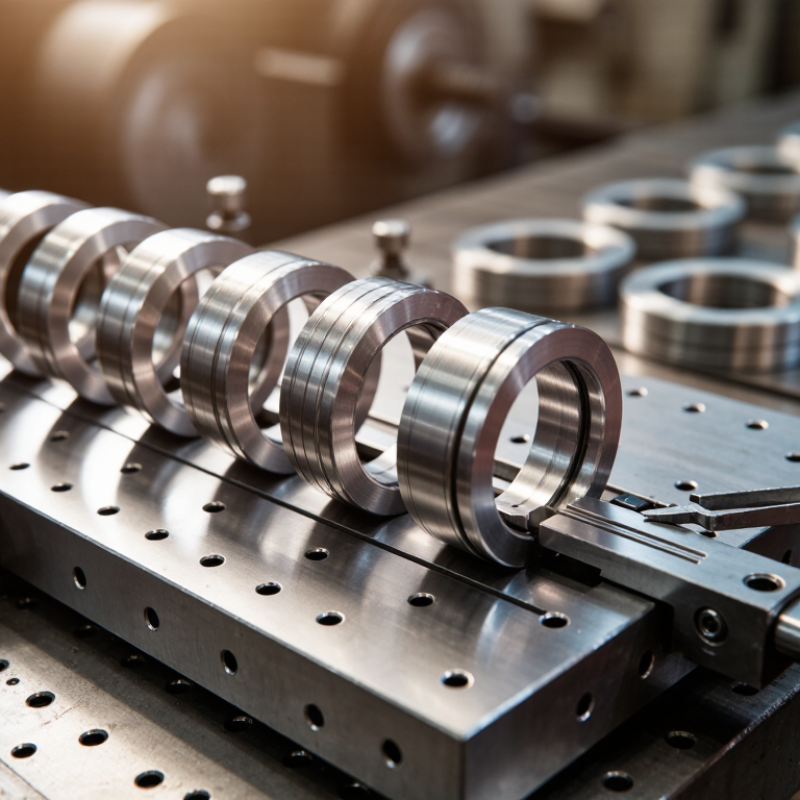
What Does a Ring Mechanism Manufacturer Make?

What a Ring Mechanism Manufacturer Produces

A ring mechanism manufacturer produces the metal assembly that holds punched sheets inside a binder. Its main parts are steel rings, a mounting plate, and an opening lever. Depending on the design, the mechanism may have two, three, or four rings. Ring diameter and spacing determine how much paper the binder can hold and which punched pages will fit.

Production often involves cutting and stamping sheet steel, then forming each ring into a smooth curve. Workers or automated equipment join the rings to a base plate and fit the release lever. Edges are checked for burrs that could catch paper or scratch fingers. Some mechanisms receive a protective finish to limit corrosion and improve appearance. The details matter. A ring that sits slightly out of line may make pages turn unevenly.

Manufacturers also inspect opening and closing action, ring alignment, and attachment strength. A practical check is to load sample pages, operate the lever several times, and look for gaps where paper might slip out. Small details count. A mechanism can look polished and still feel stiff in use, so real handling reveals issues that a quick visual check may miss. The finished assembly is then supplied for installation in a binder cover.

What Does a Ring Mechanism Manufacturer Make? — What a Ring Mechanism Manufacturer Produces

Product or Component Typical Materials Common Configurations Purpose Typical Applications
Ring mechanisms Formed steel rings attached to a metal mounting plate Two-, three-, and four-ring layouts; round or D-shaped rings Hold loose sheets in place while allowing pages to be added, removed, or rearranged Ring binders, presentation folders, planners, and document files
Ring assemblies Steel rings, a base plate, and a movable opening mechanism Lever-operated or manually opened designs; ring spacing matched to the intended binder format Provide a complete page-holding unit ready to be mounted inside a cover Office binders, school folders, and archival filing products
Mounting plates and backplates Stamped or formed steel, sometimes with a protective finish Different lengths, widths, hole patterns, and plate profiles Support the rings and provide attachment points for installation in a binder cover Hard-cover binders, portfolio folders, and custom document holders
Ring-opening hardware Steel components, including levers, hinges, and linkages Lever-actuated or direct manual opening, depending on the mechanism design Open and close the rings so users can insert or remove punched sheets Binders designed for frequent page changes
Fastening and attachment parts Metal rivets, eyelets, or other mechanical fasteners Fastener size and placement selected to suit the mechanism and cover construction Secure the mechanism assembly to the binder or folder Production of finished binders and folders
Custom mechanism specifications Material and finish selected for the intended product requirements Specified ring count, ring shape, plate dimensions, mounting-hole pattern, and finish Match the mechanism to a particular cover format, paper size, or product design Special-format binders, planners, and presentation products

Note: Exact dimensions, ring spacing, finishes, and sheet capacity vary by mechanism design. Sheet capacity also depends on paper weight, hole punch pattern, and how the pages are used.

Key Components of a Ring Mechanism

What Does a Ring Mechanism Manufacturer Make?

Key Components of a Ring Mechanism

A ring mechanism is more than a set of metal loops. Its cover plate supports the assembly and provides mounting points for the binder’s spine. Steel rings attach to a hinge, which lets them open and close together. A lever or trigger moves the hinge, while rivets or other fasteners hold the parts in place. Small details matter.

Manufacturers typically stamp or form metal components, remove sharp edges, and apply a finish to help resist wear and corrosion. During assembly, ring alignment and closing pressure need careful checks. Rings that sit unevenly can leave pages skewed or make turning difficult. The hinge should move without excessive force, yet close firmly enough to keep sheets secure. That balance can be easy to underestimate on a drawing. Testing with actual punched paper can reveal issues that measurements alone may miss. Mounting holes also deserve attention: a slight mismatch can make installation frustrating, even when the rings work well.

How Ring Mechanisms Are Designed and Made

What Does a Ring Mechanism Manufacturer Make?

How Ring Mechanisms Are Designed and Made

Design starts with the binder’s dimensions, sheet capacity, and intended use. Engineers choose ring shape, spacing, opening force, and mounting points. A small change in ring alignment can make pages snag or sit unevenly. Prototypes help reveal these problems before production begins. A CAD drawing can look perfect, but real paper often exposes flaws.

Production commonly involves forming steel wire or strip, stamping the base plate, smoothing sharp edges, and applying a protective finish. The components are then assembled and tested for alignment, opening action, and repeated use. World Steel Association’s World Steel in Figures 2025 reports global crude steel production of 1,882.6 million tonnes in 2024. This figure describes the wider material supply chain, not ring mechanisms specifically. Still, it highlights why consistent material quality matters. Small tolerances matter. A slightly uneven base can affect the whole mechanism.

Tips: Check the mechanism with the actual cover board and paper stack, not just a sample drawing. Open and close it repeatedly, and inspect for sticking, loose rivets, or sharp edges. Test the motion. If a ring closes unevenly, review both the forming process and assembly alignment.

Options for Size, Shape, and Configuration

Ring mechanism manufacturers produce the metal fittings that hold pages inside binders, planners, and presentation folders. Their options often start with ring diameter, which affects both page capacity and how easily pages turn. A compact mechanism may suit a slim notebook, while a larger ring can hold thicker manuals. Bigger is not always better. Oversized rings may make a light folder awkward to carry.

Ring shape changes how pages sit and move. Round rings are familiar and work well for general documents. D-shaped rings can keep pages flatter and may offer more usable space along the spine. Manufacturers also vary ring count, spacing, base-plate length, and mounting style. These details matter: a mechanism with the wrong spacing may not fit existing cover holes, even if its rings look right. For custom projects, buyers can specify measurements and test a sample with their actual paper stock. That step can reveal uneven page turns or a clasp that feels stiff. It may seem fussy, but drawings do not always show how a mechanism behaves in hand.

Quality Standards and Common Applications

Ring Mechanism Quality Standards and Common Applications

A ring mechanism manufacturer produces metal assemblies that hold loose pages together in binders, planners, and sample books. Quality checks often begin with dimensions: ring spacing, wire diameter, base length, and mounting-hole position. Even a small mismatch can make installation difficult or cause pages to sit unevenly.

Manufacturers may also inspect the metal finish, rivet security, and opening action. Rings should align neatly and close without excessive force. Cycle testing can reveal weak hinges or inconsistent movement before mechanisms reach customers. Requirements vary by product, so there is no single test that suits every design. A mechanism for a lightweight planner may not need the same load capacity as one for a thick catalog. A polished surface is useful, but it cannot compensate for poor alignment.

Common applications include office binders, presentation folders, recipe books, planners, and fabric or color-swatch collections. In these products, ring capacity and page size affect daily use. Small details matter.

Tips: Check ring spacing against the intended paper format, and test a loaded sample before ordering. Consider the cover and mounting method, too; those details are easy to overlook.

Copyright 2025 Fluidra S.A. | Created by BCM Marketing Agencia Privacy Policy Legal note | Cookie policy |

Technical cookies are strictly necessary for our website to work and you can navigate through it. These types of cookies are those that, for example, allow us to identify you, give you access to certain restricted parts of the page if necessary, or remember different options or services already selected by you, such as your privacy preferences. Therefore, they are activated by default, your authorization not being necessary in this regard. Through the configuration of your browser, you can block or alert the presence of this type of cookies, although such blocking will affect the proper functioning of the different functionalities of our website.


The analysis cookies allow us to study the navigation of the users of our website in general (for example, which sections of the page are the most visited, which services are used most and if they work correctly, etc.). From the statistical information on navigation on our website, we can improve both the operation of the page itself and the different services it offers. Therefore, these cookies do not have an advertising purpose, but only serve to make our website work better, adapting to our users in general. By activating them you will contribute to this continuous improvement. You can enable or disable these cookies by checking the corresponding box, being disabled by default.


Functionality cookies allow us to remember your preferences, to personalize certain characteristics and general options of our website, every time you access it (for example, the language in which the information is presented to you, the sections marked as favorites, your browser type, etc.) Therefore, this type of cookies does not have an advertising purpose, but by activating them you will improve the functionality of the website (for example, adapting to your type of browser) and the customization of it based on your preferences (for example, by presenting the information in the language that you have chosen in previous occasions), which will contribute to the ease, usability and comfort of our page during your navigation. You can enable or disable these cookies by checking the corresponding box, being disabled by default.


Advertising cookies allow us to manage the advertising spaces included in our website based on criteria such as the content shown or the frequency in which the ads are displayed. For example, if you have been shown the same ad several times on our website, and you have not shown a personal interest by clicking on it, it will not appear again. In summary, by activating this type of cookies, the advertising shown on our website will be more useful and diverse, and less repetitive. You can enable or disable these cookies by checking the corresponding box, being disabled by default.


Behavioral advertising cookies allow us to obtain information based on the observation of your browsing habits and behaviors on the web, in order to show you advertising content that best suits your personal tastes and interests. To understand it in a very simple way, we will give you a fictitious example: if your last searches on the web were related to suspense literature, we would show you advertising about suspense books. Therefore, activating this type of cookies, the advertising that we show you on our website will not be generic, but will be oriented to your searches, tastes and interests, therefore adjusting exclusively to you. You can enable or disable these cookies by checking the corresponding box, being disabled by default.
To understand it in a very simple way, we will give you a fictitious example: if your last searches on the web were related to suspense literature, we would show you advertising about suspense books. Therefore, activating this type of cookies, the advertising that we show you on our website will not be generic, but will be oriented to your searches, tastes and interests, therefore adjusting exclusively to you. You can enable or disable these cookies by checking the corresponding box, being disabled by default.

SAVE

We use our own and third-party cookies to ensure the proper functioning of the website and to analyse our services, improve your experience on our website and show you advertisements related to your interests according to profiling based on your browsing habits (e.g. websites visited). You can accept all cookies by clicking "ACCEPT" or set or reject them by clicking here. If you would like to know more about the use of cookies, please see our COOKIE POLICY.


ACCEPT ALL
Reject no essentials


