
What Is a Ceramic Ball Used For?
FLUID HANDLING EXPERTS

Blog, all our news

What Is a Ceramic Ball Used For?

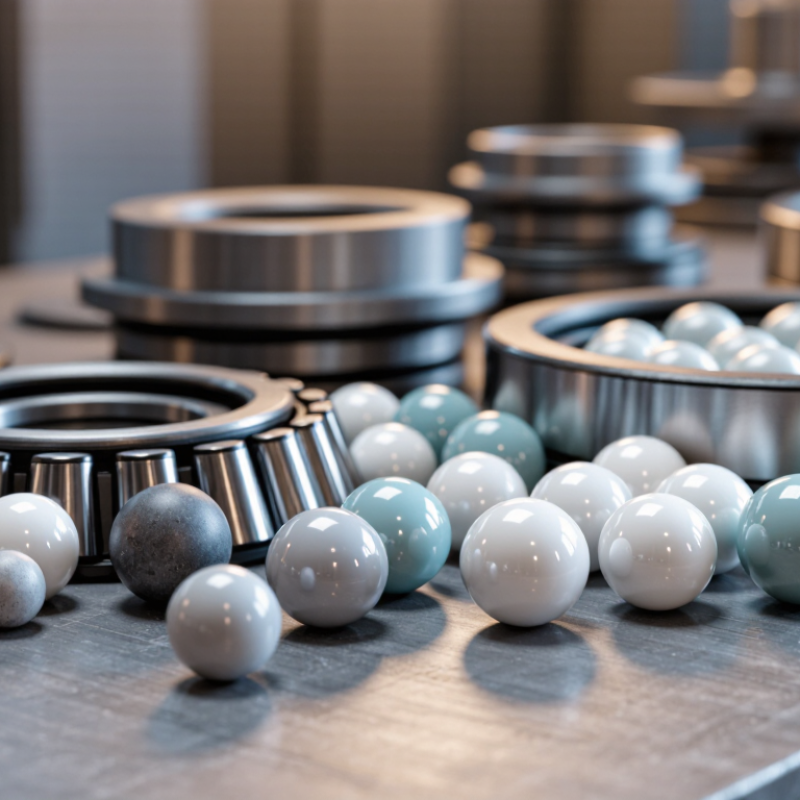
A Ceramic Ball may look simple: a smooth sphere, often white or gray, resting in a bearing or grinding mill. Its job depends on its material, size, and operating environment. Alumina and zirconia balls can offer hardness, wear resistance, and chemical stability, while silicon nitride balls are valued in demanding bearing applications. The right choice is never universal.

Industry references help explain the engineering context. ISO 3290-2:2014 defines requirements for ceramic bearing balls, including dimensional and grade specifications. The U.S. Geological Survey’s Mineral Commodity Summaries tracks alumina-related mineral supply, an upstream factor for many alumina ceramic products. These sources do not report a single global count of ceramic balls in service. That data gap matters: claims about market size or service life should be checked against the application.

Ceramic balls are used in bearings, valves, pumps, grinding equipment, and catalyst-support systems. In a bearing, a ball rolls between raceways; in a mill, it impacts and abrades material. Small details matter. Surface finish, load, temperature, and contamination can change performance. A useful overview should distinguish these roles instead of treating every ball as interchangeable.

Professor John Binner is a ceramic-materials researcher, but I cannot verify a published verbatim quotation from him about ceramic-ball uses. I will not invent one. A sound engineering takeaway is simple: select the ball for its actual service conditions, then verify the specification. Real systems can still surprise you. That deserves attention.
What Is a Ceramic Ball Used For?

What Ceramic Balls Are: Alumina and Silicon Nitride Material Grades

What Is a Ceramic Ball Used For?

Ceramic balls serve as rolling elements in bearings, sealing parts in valves, and grinding media in mills. Their performance depends on the ceramic grade, ball size, surface finish, and operating conditions. Alumina and silicon nitride are common choices, but they are not interchangeable. The material matters.

Alumina Balls are typically selected for wear resistance, electrical insulation, and good resistance to many corrosive environments. They are often used in pumps, chemical equipment, and grinding applications where steel could contaminate the material being processed. However, alumina is relatively brittle, so impact loads or poor alignment can cause chipping. A lower purchase price does not automatically make it the better choice.

Silicon nitride balls are lighter than steel and can handle high speeds, repeated rolling contact, and temperature changes well. These qualities make them useful in precision bearings and demanding machinery. They also tend to cost more, and the surrounding bearing design still matters. A premium ball cannot compensate for poor lubrication.

The distinction is not always neat: load, temperature, contamination, and maintenance may outweigh a material’s headline properties. Small, but important. A careful comparison of operating conditions is more reliable than choosing by material name alone.

How Ceramic Balls Work in Bearings: Si₃N₄ Density Is About 3.2 g/cm³

What Is a Ceramic Ball Used For?

How Ceramic Balls Work in Bearings: Si₃N₄ Density Is About 3.2 g/cm³

Silicon nitride ceramic balls are used in bearings that need low mass, high stiffness, and reliable operation at speed. Their density is about 3.2 g/cm³, compared with roughly 7.8 g/cm³ for bearing steel. A lighter ball creates lower centrifugal forces as it rolls, which can reduce stress where the ball meets the raceway. That matters. In a hybrid bearing, ceramic balls run between steel rings; they do not make the whole bearing ceramic. Si₃N₄ also resists corrosion and does not conduct electricity, but performance still depends on bearing design, fit, and lubrication.

The reduced mass can help limit heat and wear in some high-speed applications. It is not a guarantee: poor lubrication or misalignment can still damage a bearing. Ceramic is also hard and stiff, so it may not suit every load or impact condition. The right choice depends on the operating speed, load, temperature, and surrounding equipment. A density figure helps explain the material, but it cannot tell the whole story.

Tips: Check the bearing maker’s load and speed limits before choosing a ceramic-ball design. Keep lubricant clean, and watch for unusual noise or rising temperature. One detail is easy to miss: the raceway matters just as much as the ball.

Where Ceramic Balls Are Used: Bearings, Pumps, Valves, and Mills

Ceramic balls are used in bearings when low weight, hardness, and resistance to corrosion are important. In a hybrid bearing, ceramic balls run against steel rings, helping reduce friction and heat at suitable speeds. Full ceramic bearings can suit demanding environments, but they need careful load and fit selection. Less weight is not always the answer.

In pumps, ceramic balls may serve as check-valve elements or moving parts exposed to abrasive or corrosive fluids. Their smooth, hard surfaces can resist wear, yet sudden impacts may chip some ceramics. Fluid chemistry, pressure, and temperature all matter. A material that performs well in clean water may behave differently in a slurry.

Valves use ceramic balls where a durable sealing surface and chemical resistance are useful. The ball and seat must match closely; tiny surface defects can cause leakage.

In mills, ceramic balls act as grinding media, breaking material through repeated impact and abrasion. Their wear resistance can help limit contamination, though density affects grinding energy and speed. Choosing the right size takes testing. Small details matter. A trial batch may reveal what a specification sheet misses.

How Hardness Shapes Use: Alumina Reaches Mohs 9; Si₃N₄ About 1,500 HV

A ceramic ball is a precision-made sphere used for rolling, grinding, or sealing. Its performance depends on material, size, finish, load, and temperature—not hardness alone. Hardness matters.

Alumina reaches Mohs 9, making it highly resistant to scratching and abrasion. Alumina balls can serve as grinding media or wear-resistant parts in some valves. Silicon nitride is commonly rated near 1,500 HV on the Vickers scale. Mohs and Vickers are different scales, so their numbers cannot be compared directly. That detail is easy to overlook.

In precision bearings, silicon nitride balls combine high hardness with low mass, which can reduce rolling inertia. Alumina may be a better fit where abrasion resistance and chemical stability are priorities. Neither material is unbreakable. Impact, poor lubrication, or uneven loading can still cause damage. A hardness value alone cannot predict service life; check material data against the actual load, speed, temperature, and operating conditions.

What Is a Ceramic Ball Used For? — How Hardness Shapes Use
Ceramic Material Typical Hardness Useful Material Traits Common Ceramic-Ball Uses How Hardness Affects the Choice
Alumina (Al₂O₃) About 9 on the Mohs scale; commonly around 1,500–2,000 HV, depending on grade and test conditions High wear resistance, electrical insulation, and good resistance to many chemical environments Grinding and milling media; wear-resistant components; some valve and fluid-handling applications Its high hardness helps resist abrasion during milling and repeated contact with hard particles.
Silicon nitride (Si₃N₄) About 1,400–1,600 HV for many grades; approximately 1,500 HV is a commonly cited value Low density, high strength, good fatigue resistance, and strong performance at elevated temperatures Rolling elements in precision bearings; high-speed or electrically insulated bearing applications Hardness supports wear resistance, while low density can reduce centrifugal forces in fast-running bearings.
Zirconia (ZrO₂) Typically about 1,200–1,400 HV, depending on composition and test conditions High toughness for a ceramic, good corrosion resistance, and relatively high density Grinding media; check-valve balls; metering and sealing components Its hardness provides wear resistance, while its comparatively high toughness can help reduce chipping.
Silicon carbide (SiC) Often about 2,200–2,800 HV, depending on grade and measurement method Very high hardness, low density, high thermal conductivity, and strong high-temperature capability Abrasive or wear-resistant components; selected high-temperature and chemically demanding applications Its exceptional hardness suits severe abrasion, though component design must account for ceramic brittleness.

Hardness values are typical approximate ranges, not guaranteed specifications. Mohs hardness is a scratch-resistance scale, whereas HV is measured by a Vickers indentation test; the two scales are not directly interchangeable. Actual performance also depends on material grade, surface finish, load, lubrication, temperature, and operating conditions.

How to Select Ceramic Balls: Match Material, Size, Grade, and Service Conditions

Ceramic balls are used in grinding mills, valves, bearings, and other equipment that needs hard, wear-resistant components. The best choice depends on the job, not just the material name. Alumina is often selected for abrasive environments and general industrial use. Zirconia can offer greater toughness, while silicon nitride suits some high-speed, high-temperature applications. Check the supplier’s technical data for the specific grade.

Size affects performance. Smaller balls provide more contact points and can improve fine grinding, but may be less effective on large particles. Larger balls deliver stronger impacts, yet can increase equipment wear. Grade also matters: roundness, surface finish, and dimensional consistency can influence movement and sealing. Match these details to the machine’s clearances and expected load. A ball that looks smooth may still be out of tolerance.

Service conditions deserve equal attention. Consider operating temperature, chemical exposure, impact, lubrication, and contamination limits. A ceramic ball that performs well in a dry test may behave differently in a wet, abrasive process. Tips: Confirm the actual operating range, then request a sample or test data. Record wear and temperature during a trial. It is easy to over-specify hardness; I would review the real failure mode before paying for a higher grade.

Article Source:

Copyright 2025 Fluidra S.A. | Created by BCM Marketing Agencia Privacy Policy Legal note | Cookie policy |

Technical cookies are strictly necessary for our website to work and you can navigate through it. These types of cookies are those that, for example, allow us to identify you, give you access to certain restricted parts of the page if necessary, or remember different options or services already selected by you, such as your privacy preferences. Therefore, they are activated by default, your authorization not being necessary in this regard. Through the configuration of your browser, you can block or alert the presence of this type of cookies, although such blocking will affect the proper functioning of the different functionalities of our website.


The analysis cookies allow us to study the navigation of the users of our website in general (for example, which sections of the page are the most visited, which services are used most and if they work correctly, etc.). From the statistical information on navigation on our website, we can improve both the operation of the page itself and the different services it offers. Therefore, these cookies do not have an advertising purpose, but only serve to make our website work better, adapting to our users in general. By activating them you will contribute to this continuous improvement. You can enable or disable these cookies by checking the corresponding box, being disabled by default.


Functionality cookies allow us to remember your preferences, to personalize certain characteristics and general options of our website, every time you access it (for example, the language in which the information is presented to you, the sections marked as favorites, your browser type, etc.) Therefore, this type of cookies does not have an advertising purpose, but by activating them you will improve the functionality of the website (for example, adapting to your type of browser) and the customization of it based on your preferences (for example, by presenting the information in the language that you have chosen in previous occasions), which will contribute to the ease, usability and comfort of our page during your navigation. You can enable or disable these cookies by checking the corresponding box, being disabled by default.


Advertising cookies allow us to manage the advertising spaces included in our website based on criteria such as the content shown or the frequency in which the ads are displayed. For example, if you have been shown the same ad several times on our website, and you have not shown a personal interest by clicking on it, it will not appear again. In summary, by activating this type of cookies, the advertising shown on our website will be more useful and diverse, and less repetitive. You can enable or disable these cookies by checking the corresponding box, being disabled by default.


Behavioral advertising cookies allow us to obtain information based on the observation of your browsing habits and behaviors on the web, in order to show you advertising content that best suits your personal tastes and interests. To understand it in a very simple way, we will give you a fictitious example: if your last searches on the web were related to suspense literature, we would show you advertising about suspense books. Therefore, activating this type of cookies, the advertising that we show you on our website will not be generic, but will be oriented to your searches, tastes and interests, therefore adjusting exclusively to you. You can enable or disable these cookies by checking the corresponding box, being disabled by default.
To understand it in a very simple way, we will give you a fictitious example: if your last searches on the web were related to suspense literature, we would show you advertising about suspense books. Therefore, activating this type of cookies, the advertising that we show you on our website will not be generic, but will be oriented to your searches, tastes and interests, therefore adjusting exclusively to you. You can enable or disable these cookies by checking the corresponding box, being disabled by default.

SAVE

We use our own and third-party cookies to ensure the proper functioning of the website and to analyse our services, improve your experience on our website and show you advertisements related to your interests according to profiling based on your browsing habits (e.g. websites visited). You can accept all cookies by clicking "ACCEPT" or set or reject them by clicking here. If you would like to know more about the use of cookies, please see our COOKIE POLICY.


ACCEPT ALL
Reject no essentials


