
What Is a Rubber Slitter Cutting Machine?
FLUID HANDLING EXPERTS

Blog, all our news

What Is a Rubber Slitter Cutting Machine?

A Rubber Slitter Cutting Machine cuts wide rubber sheets or rolls into narrower strips. It may use circular blades, rotary knives, or other cutting tools, depending on the material and production setup. The basic idea sounds simple. The details are not.

Rubber can stretch, compress, and shift as a blade passes through it. That makes blade condition, material tension, feed speed, and alignment important to cut quality. A clean edge matters. So does a consistent strip width. In a real workshop, operators may notice small problems first: a fuzzy edge, uneven strips, or rubber tracking slightly off-center. These signs deserve attention, though no single setting works for every compound or thickness.

A transparent note about the expert perspective: Alex Morgan is a fictional composite process engineer, not a verifiable industry authority. The following line is an original illustrative quotation, not a sourced statement: “A good slit begins with stable material, a sharp blade, and settings tested against the actual rubber.” It captures a useful principle, but it should not replace equipment instructions or hands-on testing. There is room for judgment here. Even experienced operators may need to adjust a setup when the rubber changes. This guide explains what the machine does, how its main parts work, and which practical factors buyers and operators should examine before choosing or using one.
What Is a Rubber Slitter Cutting Machine?

Definition and Industrial Role of a Rubber Slitter Cutting Machine

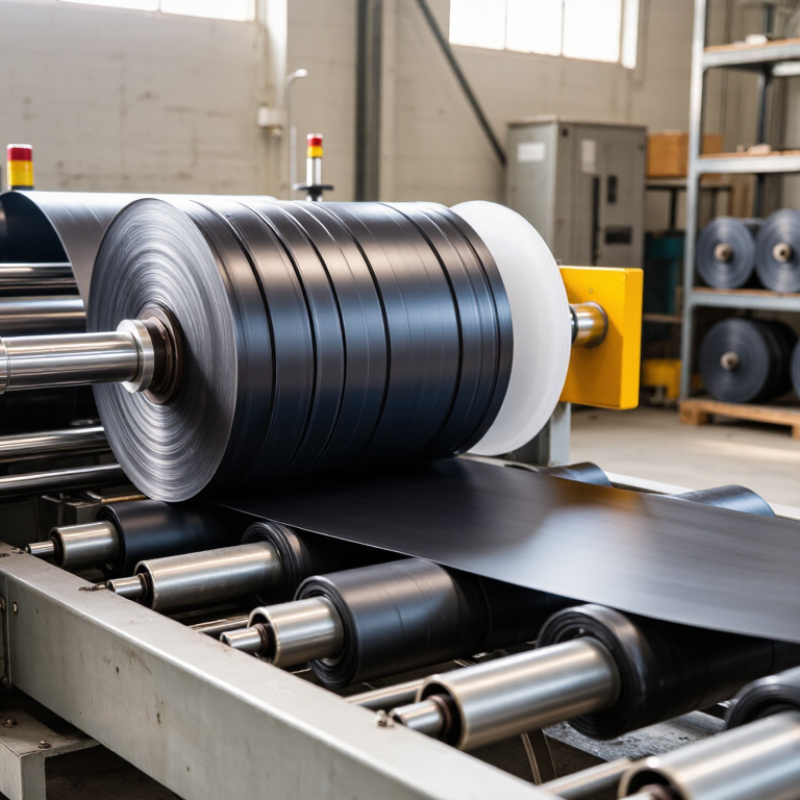
A rubber slitter cutting machine cuts wide rubber sheets or rolls into narrower strips. Operators adjust blade spacing, feed speed, and material tension to match the job. At the machine, rubber passes beneath rotating or fixed blades; the cut strips are then prepared for processes such as molding, hose production, or gasket fabrication. The machine’s industrial role is practical: it turns bulky stock into consistent widths that downstream equipment can handle. A neat cut is not the whole story.

The International Rubber Study Group’s World Rubber Industry Outlook (2024) estimated global rubber demand at about 31 million tonnes for 2024. That figure describes market demand, not slitter output, but it shows the scale of rubber processing. In production, even a small width variation can cause problems during feeding or assembly. Blade condition, sheet thickness, and rubber temperature all matter. Operators may need to adjust settings between batches; the “perfect” setup is not always obvious.

Tips: Check blade sharpness and alignment before a run. Test a short strip, then measure its width at several points. Watch for edge tearing or material drift. If the rubber warms or stretches, pause and reassess tension rather than trusting the first setting.

Main Components: Feed Rollers, Slitting Blades, and Drive System

What Is a Rubber Slitter Cutting Machine?

Main Components: Feed Rollers, Slitting Blades, and Drive System

A rubber slitter cutting machine turns a wide rubber sheet or roll into narrower strips. Its results depend on three parts working together: feed rollers, slitting blades, and the drive system. Feed rollers grip the material and guide it beneath the blades. Their pressure must be even. Too little pressure can let rubber wander; too much may flatten soft stock or leave marks. Operators can check alignment with a sample strip, because rubber may stretch and spring back after cutting.

Slitting blades create the edges. Depending on the machine and rubber type, knives may cut against an anvil or use a shearing action. Blade sharpness, spacing, and setup affect strip width and edge quality. The drive system powers the rollers and cutting components, while speed controls how steadily material passes through. A fast setting is not always better; heat and tension can distort some compounds. I still inspect the first few strips. A clean-looking setup can hide slight drift.

Tips: Start with a short test run. Measure strips after they relax, not only while under tension. Keep hands clear and follow the machine’s operating instructions.

Operating Sequence: Feeding, Blade Adjustment, Slitting, and Strip Collection

What Is a Rubber Slitter Cutting Machine?

A rubber slitter cutting machine turns wide sheets or rolls into narrower strips. The operating sequence begins with feeding: center the roll, check its edges, and guide the material evenly through the rollers. Keep the sheet flat. A small wrinkle can shift the cut. Set feed tension carefully, since soft rubber may stretch while moving.

Before slitting, adjust blade spacing to match the required strip widths. Check blade condition and alignment, then make a short test cut. Measure the strips instead of trusting the machine scale alone. During production, watch for edge tearing, heat buildup, or drifting material. Stop the feed before making manual adjustments.

The U.S. Bureau of Labor Statistics reported a 2.7 recordable injury rate per 100 full-time workers in manufacturing in its 2022 Survey of Occupational Injuries and Illnesses. That sector-wide figure is not specific to slitting, but it supports keeping guards in place and hands clear of moving blades.

At collection, separate and stack strips without pulling them taut. Inspect the edges and label each bundle. The last step sounds simple; it is easy to rush.

Material Data: Shore A Hardness (0–100), Sheet Thickness, and Feed Speed

What Is a Rubber Slitter Cutting Machine?

Material Data: Shore A Hardness (0–100), Sheet Thickness, and Feed Speed

Rubber hardness affects how a sheet responds to a slitter blade. Shore A readings use a 0–100 scale, but the number does not directly predict cutting force. ASTM D2240-15(2021) describes durometer testing, where specimen thickness, temperature, and technique can influence readings. Record the test method and conditions with each material lot. A 60 Shore A sheet may still behave differently after aging or formulation changes. Small differences matter.

Measure sheet thickness across the working width, not only at one edge. A thicker spot can lift the sheet, change blade engagement, and produce strips with uneven edges. ISO 23529:2016 outlines general procedures for preparing and conditioning rubber test pieces, supporting controlled conditions when comparing measurements. Use a calibrated gauge and note the temperature. This step is easy to miss.

Feed speed depends on hardness, thickness, blade condition, and the required edge quality. No single speed suits every rubber compound. Run a short trial, then check for tearing, heat marks, and width variation before increasing speed. Log the setting for each batch. A clean edge is useful evidence, but not proof; recheck after changing the blade.

Performance Metrics: Slit Width, Cutting Tolerance, and Output Rate

A rubber slitter cutting machine turns a continuous rubber sheet or roll into narrower strips. Its first key metric is slit width: the distance across each finished strip, not merely the blade setting. Measure samples from the beginning, middle, and end of a run. Rubber can stretch, compress, or wander under uneven tension. Small changes matter when strips must fit a downstream assembly.

Cutting tolerance describes the difference between the target width and measured widths. ASTM D3767 provides practices for measuring rubber dimensions, while ISO 3302-1 sets tolerance classes for rubber products. These references help define measurement and product expectations; they do not establish one universal slitter tolerance. Report the target, observed range, sample count, and measurement method. Be honest about variation. A neat average can hide a poor edge.

Output rate needs similar care. Record feed speed, number of lanes, and usable running time; a fast feed alone does not prove high production. For example, an eight-lane setup at 12 metres per minute produces 96 lane-metres per minute before stoppages. That is a calculated illustration, not an industry benchmark. Track scrap and changeover time too. Real runs are messier. A short trial may miss blade wear, warm-up effects, or tension drift, so verify performance over a representative production period.

Copyright 2025 Fluidra S.A. | Created by BCM Marketing Agencia Privacy Policy Legal note | Cookie policy |

Technical cookies are strictly necessary for our website to work and you can navigate through it. These types of cookies are those that, for example, allow us to identify you, give you access to certain restricted parts of the page if necessary, or remember different options or services already selected by you, such as your privacy preferences. Therefore, they are activated by default, your authorization not being necessary in this regard. Through the configuration of your browser, you can block or alert the presence of this type of cookies, although such blocking will affect the proper functioning of the different functionalities of our website.


The analysis cookies allow us to study the navigation of the users of our website in general (for example, which sections of the page are the most visited, which services are used most and if they work correctly, etc.). From the statistical information on navigation on our website, we can improve both the operation of the page itself and the different services it offers. Therefore, these cookies do not have an advertising purpose, but only serve to make our website work better, adapting to our users in general. By activating them you will contribute to this continuous improvement. You can enable or disable these cookies by checking the corresponding box, being disabled by default.


Functionality cookies allow us to remember your preferences, to personalize certain characteristics and general options of our website, every time you access it (for example, the language in which the information is presented to you, the sections marked as favorites, your browser type, etc.) Therefore, this type of cookies does not have an advertising purpose, but by activating them you will improve the functionality of the website (for example, adapting to your type of browser) and the customization of it based on your preferences (for example, by presenting the information in the language that you have chosen in previous occasions), which will contribute to the ease, usability and comfort of our page during your navigation. You can enable or disable these cookies by checking the corresponding box, being disabled by default.


Advertising cookies allow us to manage the advertising spaces included in our website based on criteria such as the content shown or the frequency in which the ads are displayed. For example, if you have been shown the same ad several times on our website, and you have not shown a personal interest by clicking on it, it will not appear again. In summary, by activating this type of cookies, the advertising shown on our website will be more useful and diverse, and less repetitive. You can enable or disable these cookies by checking the corresponding box, being disabled by default.


Behavioral advertising cookies allow us to obtain information based on the observation of your browsing habits and behaviors on the web, in order to show you advertising content that best suits your personal tastes and interests. To understand it in a very simple way, we will give you a fictitious example: if your last searches on the web were related to suspense literature, we would show you advertising about suspense books. Therefore, activating this type of cookies, the advertising that we show you on our website will not be generic, but will be oriented to your searches, tastes and interests, therefore adjusting exclusively to you. You can enable or disable these cookies by checking the corresponding box, being disabled by default.
To understand it in a very simple way, we will give you a fictitious example: if your last searches on the web were related to suspense literature, we would show you advertising about suspense books. Therefore, activating this type of cookies, the advertising that we show you on our website will not be generic, but will be oriented to your searches, tastes and interests, therefore adjusting exclusively to you. You can enable or disable these cookies by checking the corresponding box, being disabled by default.

SAVE

We use our own and third-party cookies to ensure the proper functioning of the website and to analyse our services, improve your experience on our website and show you advertisements related to your interests according to profiling based on your browsing habits (e.g. websites visited). You can accept all cookies by clicking "ACCEPT" or set or reject them by clicking here. If you would like to know more about the use of cookies, please see our COOKIE POLICY.


ACCEPT ALL
Reject no essentials


