
What is Ultrafiltration Water Purifiers and How Do They Work?
FLUID HANDLING EXPERTS

Blog, all our news

What is Ultrafiltration Water Purifiers and How Do They Work?

In today's quest for clean water, Ultrafiltration Water Purifiers have gained significant attention. These purifiers use a unique membrane technology to remove bacteria, viruses, and various contaminants. Renowned expert Dr. Sarah Thompson states, “Ultrafiltration systems play a crucial role in ensuring safe drinking water.” Her insights highlight the importance of understanding how these systems operate.

The technology behind Ultrafiltration Water Purifiers is remarkable. They utilize semi-permeable membranes that allow water to pass while blocking harmful particles. This process ensures that what reaches your glass is both clean and safe. However, despite their effectiveness, not everyone is aware of their capabilities. Some misconceptions linger about their filtration levels.

Moreover, consumers often wonder about maintenance. Regular upkeep is required for optimal performance. This might seem daunting, yet it’s manageable and enhances the system's longevity. As we explore Ultrafiltration Water Purifiers further, understanding both their potential and limitations becomes essential.
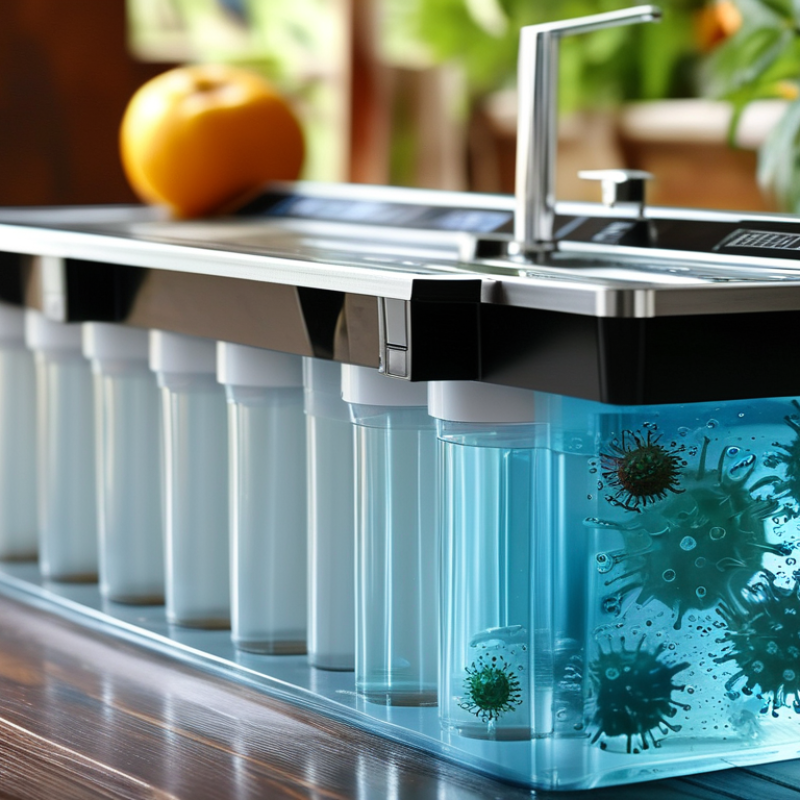
What is Ultrafiltration Water Purifiers and How Do They Work?

What is Ultrafiltration in Water Purification?

Ultrafiltration is a specialized water purification technology. It uses a membrane filtration process to separate particles from water. The pores in the ultrafiltration membrane are small enough to block bacteria and viruses. This filtration method also removes suspended solids. Many households choose this process for cleaner water.

In ultrafiltration, water is pushed through the membrane under pressure. This allows clean water to pass while contaminants are retained. The efficiency of this method lies in its ability to filter out particles as small as 0.01 microns. It effectively removes harmful substances. However, not all ultrafiltration systems can eliminate every pathogen. Some microorganisms might still get through. Continuous research is needed to improve these designs and enhance effectiveness.

People often overlook maintenance in filtering systems. Regular replacement of membranes is essential for optimal performance. Neglect can lead to a decline in water quality. Consumers should be aware of their system's limitations and do their own research. Understanding the nuances of ultrafiltration can help ensure safe drinking water. Investing time in education on this topic is crucial.

The Mechanism of Ultrafiltration Water Purifiers

Ultrafiltration water purifiers operate using a specialized membrane that effectively separates contaminants from water. The process involves pushing water through a semi-permeable membrane. This membrane has tiny pores, typically ranging from 0.01 to 0.1 micrometers. These pores are small enough to block bacteria, dirt, and other impurities while allowing clean water to pass through.

As the water flows, larger particles are trapped on one side of the membrane. This filtration method can remove up to 99% of harmful substances. Ultrafiltration doesn't require chemicals, making it a safe option for purifying drinking water. However, the effectiveness can sometimes be influenced by water temperature and pressure.

Regular maintenance of the system is crucial. If not, the membrane might get clogged or damaged. Clogged filters can lead to inefficiencies. Users need to monitor their systems actively to ensure optimal performance. It's essential to balance between filtering quality and effort spent on upkeep. This reflection on the maintenance aspects highlights the practical challenges faced by users.

Ultrafiltration Water Purifiers: Performance Data

This chart illustrates the performance metrics of ultrafiltration water purifiers, highlighting the effectiveness in contaminant removal, flow rate, and energy consumption.

Key Benefits of Using Ultrafiltration Systems

Ultrafiltration (UF) systems are gaining popularity for their efficient water purification capabilities. They use a membrane with tiny pores to filter out contaminants. This process effectively removes bacteria, viruses, and particulate matter. The result is clean, safe drinking water. Users appreciate how these systems maintain essential minerals, unlike some other purification methods.

One of the key benefits of ultrafiltration is its environmental impact. They consume less energy compared to reverse osmosis systems. Additionally, they do not require chemicals for the purification process. The longevity of UF membranes also means fewer replacements, reducing waste. Yet, it’s worth noting that not all ultrafiltration systems are created equal.

Some may have inconsistent performance streaks.

Another important aspect is user maintenance. While UF systems are user-friendly, occasional membrane cleaning is necessary. Neglecting this can lead to reduced efficiency. It’s essential to monitor the system regularly.

Understanding your system’s limitations is crucial. Awareness of potential shortcomings can enhance your overall water quality experience. This self-reflection shapes better choices in water purification.

Comparing Ultrafiltration with Other Water Purification Methods

Ultrafiltration (UF) is a membrane filtration process that effectively removes particles and microorganisms from water. It can filter out contaminants as small as 0.01 microns. This makes UF an excellent choice for purifying drinking water. Recent studies indicate that UF systems can achieve a removal efficiency of up to 99% for bacteria and viruses. However, UF does not remove dissolved salts or small organic molecules.

When comparing ultrafiltration to other methods like reverse osmosis (RO) and activated carbon filtration, several factors come into play. RO systems provide a higher level of purity by removing a broader spectrum of contaminants, but this often comes at the cost of water wastage. In contrast, UF systems are more sustainable, with less water wasted during the filtration process. According to the Water Quality Association, UF systems can be more efficient for household use where pathogen removal is crucial, though they might not suffice for complete mineral purification.

Activated carbon filters excel at improving taste and odor, but they may not effectively eliminate harmful bacteria. This highlights the need for consumers to assess their specific water quality. Understanding these differences is vital for making informed choices about water purification methods. Each system has its strengths and weaknesses, and determining the right fit requires careful consideration of individual needs.

Common Applications of Ultrafiltration Water Purifiers

Ultrafiltration water purifiers are gaining traction in various sectors. They are particularly effective in removing microorganisms, macromolecules, and suspended particles from water. According to a report by Global Industry Analysts, the ultrafiltration market is projected to grow by 9% annually. This growth is driven by increasing awareness of water quality and safety standards.

One common application is in the food and beverage industry. Here, ultrafiltration helps in the clarification of fruit juices and the concentration of dairy products. The process retains essential nutrients while effectively removing contaminants. This technology not only ensures safety but also enhances the product's shelf life. In municipal water treatment, ultrafiltration systems improve drinking water quality by reducing turbidity and bacteria.

Another significant application is in residential settings. Household ultrafiltration systems provide a cost-effective way to enhance drinking water. Reports indicate that consumers are increasingly interested in purification methods that do not use chemicals. However, ultrafiltration may not remove all chemical contaminants. Thus, it's essential for users to understand the specific limitations of these systems. Balancing effectiveness and reliability remains a challenge for many consumers.

Copyright 2025 Fluidra S.A. | Created by BCM Marketing Agencia Privacy Policy Legal note | Cookie policy |

Technical cookies are strictly necessary for our website to work and you can navigate through it. These types of cookies are those that, for example, allow us to identify you, give you access to certain restricted parts of the page if necessary, or remember different options or services already selected by you, such as your privacy preferences. Therefore, they are activated by default, your authorization not being necessary in this regard. Through the configuration of your browser, you can block or alert the presence of this type of cookies, although such blocking will affect the proper functioning of the different functionalities of our website.


The analysis cookies allow us to study the navigation of the users of our website in general (for example, which sections of the page are the most visited, which services are used most and if they work correctly, etc.). From the statistical information on navigation on our website, we can improve both the operation of the page itself and the different services it offers. Therefore, these cookies do not have an advertising purpose, but only serve to make our website work better, adapting to our users in general. By activating them you will contribute to this continuous improvement. You can enable or disable these cookies by checking the corresponding box, being disabled by default.


Functionality cookies allow us to remember your preferences, to personalize certain characteristics and general options of our website, every time you access it (for example, the language in which the information is presented to you, the sections marked as favorites, your browser type, etc.) Therefore, this type of cookies does not have an advertising purpose, but by activating them you will improve the functionality of the website (for example, adapting to your type of browser) and the customization of it based on your preferences (for example, by presenting the information in the language that you have chosen in previous occasions), which will contribute to the ease, usability and comfort of our page during your navigation. You can enable or disable these cookies by checking the corresponding box, being disabled by default.


Advertising cookies allow us to manage the advertising spaces included in our website based on criteria such as the content shown or the frequency in which the ads are displayed. For example, if you have been shown the same ad several times on our website, and you have not shown a personal interest by clicking on it, it will not appear again. In summary, by activating this type of cookies, the advertising shown on our website will be more useful and diverse, and less repetitive. You can enable or disable these cookies by checking the corresponding box, being disabled by default.


Behavioral advertising cookies allow us to obtain information based on the observation of your browsing habits and behaviors on the web, in order to show you advertising content that best suits your personal tastes and interests. To understand it in a very simple way, we will give you a fictitious example: if your last searches on the web were related to suspense literature, we would show you advertising about suspense books. Therefore, activating this type of cookies, the advertising that we show you on our website will not be generic, but will be oriented to your searches, tastes and interests, therefore adjusting exclusively to you. You can enable or disable these cookies by checking the corresponding box, being disabled by default.
To understand it in a very simple way, we will give you a fictitious example: if your last searches on the web were related to suspense literature, we would show you advertising about suspense books. Therefore, activating this type of cookies, the advertising that we show you on our website will not be generic, but will be oriented to your searches, tastes and interests, therefore adjusting exclusively to you. You can enable or disable these cookies by checking the corresponding box, being disabled by default.

SAVE

We use our own and third-party cookies to ensure the proper functioning of the website and to analyse our services, improve your experience on our website and show you advertisements related to your interests according to profiling based on your browsing habits (e.g. websites visited). You can accept all cookies by clicking "ACCEPT" or set or reject them by clicking here. If you would like to know more about the use of cookies, please see our COOKIE POLICY.


ACCEPT ALL
Reject no essentials


