
Top 10 Best UP-1001 DIN Abrasion Testers for Buyers
FLUID HANDLING EXPERTS

Blog, all our news

Top 10 Best UP-1001 DIN Abrasion Testers for Buyers

Choosing the right tester requires more than comparing prices, photos, or impressive specifications. The UP-1001 DIN Abrasion Tester is designed for evaluating wear resistance in rubber, elastomer, and similar materials under controlled abrasion conditions. For buyers, repeatability matters as much as appearance. A polished cabinet cannot compensate for unstable loading, uneven rotation, or poor calibration records.

This guide presents ten leading DIN abrasion testers for practical purchasing decisions. Each option is considered through key details, including abrasive drum design, specimen preparation, load control, measurement accuracy, and operator safety. We also examine documentation, replacement parts, service support, and compatibility with applicable testing methods. Small details matter. A clear scale can prevent reading errors. A firm clamping system can reduce inconsistent results. Reliable records support better laboratory decisions.

The comparison reflects common quality-control and research needs, but no ranking fits every facility. A footwear laboratory may prioritize fast testing, while a materials manufacturer may need stronger data traceability. Buyers should verify the current standard, calibration process, and supplier claims before ordering. Some published specifications may appear complete, yet omit practical information about maintenance or dust control. That gap deserves attention. Our assessment aims to combine technical knowledge with real-world usability, while acknowledging an important limitation: product performance can change with configuration, operator training, and service conditions. Use this overview as a focused starting point, not a substitute for method verification or hands-on evaluation.
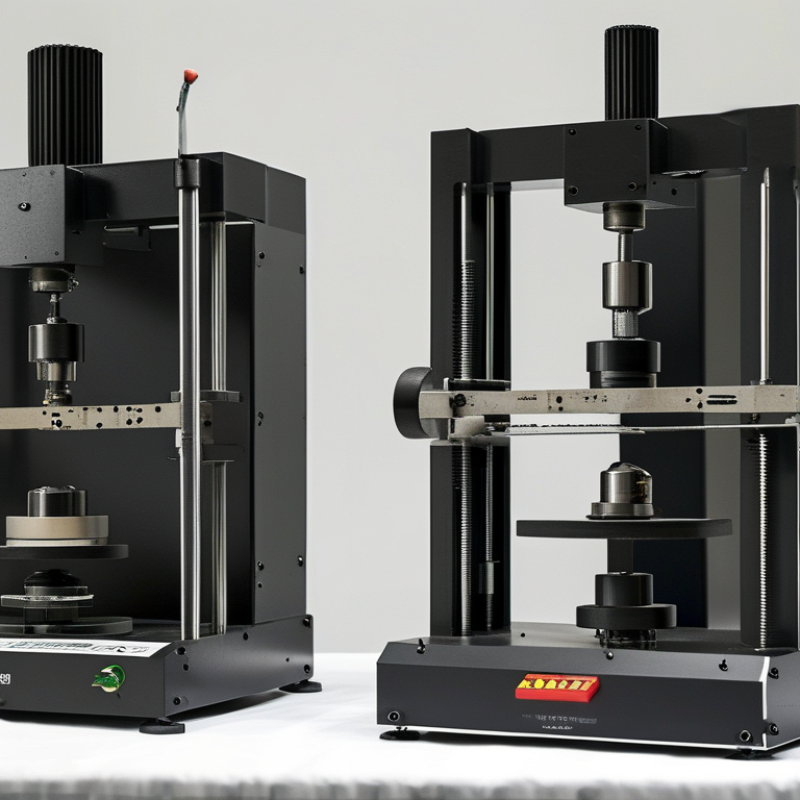
Top 10 Best UP-1001 DIN Abrasion Testers for Buyers

What the UP-1001 DIN Abrasion Tester Measures

What the UP-1001 DIN Abrasion Tester Measures

A DIN abrasion tester measures how much rubber or elastomer material is lost during controlled rubbing. The result is usually reported as relative volume loss, expressed in cubic millimetres. Lower loss generally indicates better abrasion resistance.

The test uses a cylindrical specimen, abrasive cloth, and a defined load. Under ISO 4649:2017, common conditions include a 10-newton load and a 40-metre sliding distance. The specimen rotates while contacting the abrasive surface. Technicians record its mass before and after testing, then apply material density to calculate volume loss. Small weighing errors can change the result.

The test is practical.

It helps compare outsole compounds, conveyor coverings, seals, and rubber wheels under repeatable conditions. A 2023 report from the European Tyre and Rim Technical Organisation identifies abrasion resistance as a key performance factor in tyre durability evaluations. However, DIN results do not predict every service environment. Heat, moisture, sharp stones, ozone, and repeated flexing may alter real-world wear.

That limitation matters. A compound with low DIN loss may still perform poorly on wet concrete or rough asphalt. Buyers should review specimen preparation, reference calibration, load settings, and test direction. Reports should include individual results, not only an average. Three readings may expose variation that one polished number hides.

Key Standards and Specifications for Comparing Models

Choosing among UP-1001 DIN abrasion testers requires more than comparing prices or exterior design. Check compliance with DIN 53516 or the applicable ISO 4649 method. Confirm the exact standard revision before testing. A reliable unit should provide controlled load, defined abrasive travel, stable rotation, and accurate specimen positioning. These details directly affect volume loss results, usually reported in cubic millimetres. Small alignment errors can produce surprisingly different readings.

Tips: Ask for calibration records, traceable reference materials, and a clear uncertainty statement. Verify the test wheel, abrasive sheet, specimen holder, and cutting tools. The machine should support repeatable conditioning and temperature control when required. Review whether its timer, counter, and measurement system are easy to inspect. Practical experience matters here. A technically impressive tester can still slow production if operators struggle with setup.

Compare the stated load range, rotation speed, stroke length, and specimen dimensions with your materials. Check whether replacement abrasives are consistently available and documented. Look for emergency protection and straightforward maintenance access. Ask how repeatability and reproducibility were validated, not only whether the tester “meets standards.” That wording can be vague. I would also run duplicate tests on a known reference compound before approving a purchase. No single specification proves long-term reliability; user training, calibration discipline, and laboratory conditions remain equally important.

Essential Features to Evaluate Before Buying

Top 10 Best UP-1001 DIN Abrasion Testers for Buyers

Essential Features to Evaluate Before Buying

Selecting a UP-1001 DIN abrasion tester requires more than checking its advertised price. In routine laboratory work, load stability often matters more than appearance. DIN 53516 uses a 10 N test force, a 40-metre abrasion path, and a standardized abrasive sheet. Confirm that the instrument controls these conditions accurately. ISO 4649 provides a related rotating-drum method, so method compatibility should be verified before purchase.

Check the specimen holder, cutter dimensions, drum speed, and abrasive-sheet alignment. A small positioning error can distort volume-loss results. The tester should offer clear calibration procedures, traceable weights, and repeatability records. Data logging is useful, but only when operators can export raw readings. According to Smithers’ 2024 rubber industry outlook, global rubber consumption exceeded 30 million tonnes annually, increasing pressure for dependable quality testing across industrial applications.

Look for overload protection, emergency stopping, dust control, and accessible replacement parts. Ask whether calibration support is available locally. It is easy to overlook servicing costs. A strong tester should also include a readable display and simple parameter settings, especially when several operators share one laboratory. However, no machine removes every source of uncertainty. Material hardness, surface texture, humidity, and operator technique can still affect results. One test may mislead. Run repeat specimens, compare reference materials, and question unusually good data.

Top 10 UP-1001 DIN Abrasion Testers Compared

Top 10 UP-1001 DIN Abrasion Testers Compared should be judged by repeatability, not appearance. DIN 53516 uses a defined abrasive path, load, and specimen size. A compliant tester should support the standard 10 N load and 40 m travel. It should also control drum speed near 40 rpm. Small deviations can distort volume-loss results. That matters when rubber compounds differ by only a few cubic millimetres.

For buyers, compare ten units across calibration stability, fixture alignment, dust extraction, and operator safety. A 2024 statistical release from the International Rubber Study Group placed global natural-rubber consumption near 15 million tonnes in 2023. Such scale makes comparable abrasion data valuable for footwear, seals, tires, and industrial components.

Look for traceable load verification and accessible calibration records. Digital displays help, but they do not prove accuracy.

Practical testing exposes differences quickly. Check whether the specimen holder stays rigid during a full abrasion cycle. Review replacement-drum availability and cleaning time. Cross-checking DIN 53516 results with ISO 4649 methods may reveal procedural variation, but the methods are not identical. A top-ten table still has limits. Some listings rely on brochures rather than interlaboratory evidence. Buyers should request repeatability data, raw test records, and service history before ranking any UP-1001 tester. Small details matter.

How to Select the Right Tester for Your Laboratory

Selecting the right UP-1001 DIN abrasion tester requires more than comparing rankings. A top-ten list can guide research, but your laboratory needs a precise match. Begin by matching the tester’s load range with your material and testing method. Confirm specimen dimensions, drum speed, and abrasive sheet requirements. Check the reading system carefully. Small details matter. Ask whether the instrument provides stable pressure, repeatable rotation, and clear wear measurements. In routine testing, operators may lose time aligning samples or removing rubber dust. Choose a design with accessible controls, secure clamping, and simple cleaning access. These features support consistent daily work.

Reliability depends on verification, not attractive specifications. Request calibration records, uncertainty information, and a practical demonstration with a similar compound. Review how the tester handles different hardness levels and surface textures. A smooth rubber reference may behave differently from a textured sole. Keep temperature and humidity records near the test area. This step is often missed. Inspect the manual for specimen preparation, maintenance intervals, and troubleshooting instructions. If technical support is distant, confirm response times and spare-part availability before purchase. Do not judge the instrument by price alone. A low initial cost can become expensive when downtime interrupts release testing. One honest concern deserves attention: even a precise tester cannot correct poor specimen preparation. Uneven trimming can distort results, yet users may blame the machine. Build a short operator training check around alignment, cleaning, and result recording.

Top 10 Best UP-1001 DIN Abrasion Testers for Buyers - How to Select the Right Tester for Your Laboratory

Rank Anonymous Tester Profile Recommended Laboratory Use Standard Basis to Verify Test Load Specimen Requirement Drum Diameter Drum Speed Standard Abrasion Distance Result Measurement Key Buying Advantage Critical Buyer Check
1 Digital Fully Automatic Configuration High-volume quality-control laboratories DIN 53516 / ISO 4649, Method A or B capability 10 ± 0.2 N 16 ± 0.2 mm diameter; approximately 6 mm minimum thickness 150 mm nominal 40 ± 1 rpm 40 m Automatic distance stop with digital mass-loss or volume-loss calculation Best repeatability and reduced operator workload Confirm calibration functions, software traceability, and automatic stop accuracy
2 Programmable Semi-Automatic Configuration Research and development laboratories DIN 53516 / ISO 4649 with programmable test cycle 10 ± 0.2 N 16 ± 0.2 mm diameter; approximately 6 mm minimum thickness 150 mm nominal 40 ± 1 rpm 40 m, programmable where permitted Digital timer, revolution counter, and calculated abrasion loss Good balance between flexibility and operating cost Verify whether custom cycles affect formal standard compliance
3 Precision Manual Configuration Small laboratories and routine material screening DIN 53516 reference method 10 ± 0.2 N 16 ± 0.2 mm diameter; approximately 6 mm minimum thickness 150 mm nominal 40 ± 1 rpm 40 m Operator-controlled run with balance-based mass-loss calculation Lower purchase and maintenance complexity Check operator training, manual distance control, and balance readability
4 Dual-Method DIN/ISO Configuration Contract testing and multi-standard laboratories DIN 53516 and ISO 4649 method selection 10 ± 0.2 N 16 ± 0.2 mm diameter; approximately 6 mm minimum thickness 150 mm nominal 40 ± 1 rpm 40 m for the standard reference cycle Mass loss and volume loss using material density data Supports broader customer and specification requirements Confirm the supplied abrasive system and method-specific accessories
5 High-Throughput Multi-Station Configuration Production laboratories testing many compounds daily DIN 53516-compatible test station design 10 ± 0.2 N per station 16 ± 0.2 mm diameter; approximately 6 mm minimum thickness 150 mm nominal per station 40 ± 1 rpm 40 m Parallel testing with individual specimen identification Improves sample throughput and scheduling efficiency Check station-to-station load uniformity and independent distance control
6 Compact Benchtop Configuration University, pilot, and space-limited laboratories DIN 53516 test geometry and operating conditions 10 ± 0.2 N 16 ± 0.2 mm diameter; approximately 6 mm minimum thickness 150 mm nominal 40 ± 1 rpm 40 m Digital or manual measurement depending on configuration Small footprint with the essential abrasion-test functions Measure required clearance for the drum, specimen holder, and dust extraction
7 Heavy-Duty Industrial Configuration Rubber, tire, footwear, and conveyor-belt laboratories DIN 53516 / ISO 4649 operating geometry 10 ± 0.2 N 16 ± 0.2 mm diameter; approximately 6 mm minimum thickness 150 mm nominal 40 ± 1 rpm 40 m Mass-loss measurement with durable specimen clamping Suitable for frequent use and demanding production environments Evaluate frame rigidity, motor duty cycle, guarding, and dust management
8 Traceable Metrology Configuration Accredited and audit-focused testing laboratories DIN 53516 / ISO 4649 with documented verification procedures 10 ± 0.2 N 16 ± 0.2 mm diameter; approximately 6 mm minimum thickness 150 mm nominal 40 ± 1 rpm 40 m Recorded load, speed, distance, mass, and density inputs Supports audit trails and measurement-system documentation Request calibration certificates, uncertainty data, and verification intervals
9 Safety-Enhanced Enclosed Configuration Shared laboratories and operator-sensitive workplaces DIN 53516-compatible enclosure and test arrangement 10 ± 0.2 N 16 ± 0.2 mm diameter; approximately 6 mm minimum thickness 150 mm nominal 40 ± 1 rpm 40 m Protected test chamber with interlock or guarded access Reduces exposure to moving parts and abrasive dust Check emergency stop, interlock behavior, visibility, and cleaning access
10 Entry-Level Teaching Configuration Training, demonstrations, and basic comparative testing DIN 53516 principles; formal compliance must be verified Target: 10 ± 0.2 N 16 ± 0.2 mm diameter; approximately 6 mm minimum thickness Target: 150 mm nominal Target: 40 ± 1 rpm Target: 40 m Manual or basic digital result recording Accessible platform for learning abrasion-test fundamentals Do not use for release decisions until load, speed, distance, and calibration are validated

Buyer note: The listed values are the commonly referenced DIN 53516 / ISO 4649 test targets. Before purchase, verify the exact UP-1001 configuration, applicable method, abrasive sheet specification, calibration documentation, specimen dimensions, electrical requirements, and safety provisions with the supplier.

Copyright 2025 Fluidra S.A. | Created by BCM Marketing Agencia Privacy Policy Legal note | Cookie policy |

Technical cookies are strictly necessary for our website to work and you can navigate through it. These types of cookies are those that, for example, allow us to identify you, give you access to certain restricted parts of the page if necessary, or remember different options or services already selected by you, such as your privacy preferences. Therefore, they are activated by default, your authorization not being necessary in this regard. Through the configuration of your browser, you can block or alert the presence of this type of cookies, although such blocking will affect the proper functioning of the different functionalities of our website.


The analysis cookies allow us to study the navigation of the users of our website in general (for example, which sections of the page are the most visited, which services are used most and if they work correctly, etc.). From the statistical information on navigation on our website, we can improve both the operation of the page itself and the different services it offers. Therefore, these cookies do not have an advertising purpose, but only serve to make our website work better, adapting to our users in general. By activating them you will contribute to this continuous improvement. You can enable or disable these cookies by checking the corresponding box, being disabled by default.


Functionality cookies allow us to remember your preferences, to personalize certain characteristics and general options of our website, every time you access it (for example, the language in which the information is presented to you, the sections marked as favorites, your browser type, etc.) Therefore, this type of cookies does not have an advertising purpose, but by activating them you will improve the functionality of the website (for example, adapting to your type of browser) and the customization of it based on your preferences (for example, by presenting the information in the language that you have chosen in previous occasions), which will contribute to the ease, usability and comfort of our page during your navigation. You can enable or disable these cookies by checking the corresponding box, being disabled by default.


Advertising cookies allow us to manage the advertising spaces included in our website based on criteria such as the content shown or the frequency in which the ads are displayed. For example, if you have been shown the same ad several times on our website, and you have not shown a personal interest by clicking on it, it will not appear again. In summary, by activating this type of cookies, the advertising shown on our website will be more useful and diverse, and less repetitive. You can enable or disable these cookies by checking the corresponding box, being disabled by default.


Behavioral advertising cookies allow us to obtain information based on the observation of your browsing habits and behaviors on the web, in order to show you advertising content that best suits your personal tastes and interests. To understand it in a very simple way, we will give you a fictitious example: if your last searches on the web were related to suspense literature, we would show you advertising about suspense books. Therefore, activating this type of cookies, the advertising that we show you on our website will not be generic, but will be oriented to your searches, tastes and interests, therefore adjusting exclusively to you. You can enable or disable these cookies by checking the corresponding box, being disabled by default.
To understand it in a very simple way, we will give you a fictitious example: if your last searches on the web were related to suspense literature, we would show you advertising about suspense books. Therefore, activating this type of cookies, the advertising that we show you on our website will not be generic, but will be oriented to your searches, tastes and interests, therefore adjusting exclusively to you. You can enable or disable these cookies by checking the corresponding box, being disabled by default.

SAVE

We use our own and third-party cookies to ensure the proper functioning of the website and to analyse our services, improve your experience on our website and show you advertisements related to your interests according to profiling based on your browsing habits (e.g. websites visited). You can accept all cookies by clicking "ACCEPT" or set or reject them by clicking here. If you would like to know more about the use of cookies, please see our COOKIE POLICY.


ACCEPT ALL
Reject no essentials


