
What Are the Top Types of Precision Work Rolls?
FLUID HANDLING EXPERTS

Blog, all our news

What Are the Top Types of Precision Work Rolls?

Precision Work Rolls are small in profile but decisive in the mill. They contact the strip directly, influencing thickness, surface finish, and dimensional consistency. The World Steel Association’s World Steel in Figures 2024 reports that global crude steel production reached 1,892.2 million tonnes in 2023. That scale helps explain why roll performance matters across hot- and cold-rolling operations. It does not, by itself, identify the best roll for a particular mill.

The main types are commonly distinguished by material and service: forged-steel rolls, cast-steel rolls, high-speed-steel rolls, and carbide rolls. Each brings different trade-offs in wear resistance, toughness, surface quality, and operating cost. OECD steel-market analyses also examine capacity, trade, and decarbonization pressures—conditions that shape mill investment and maintenance priorities. Still, a report cannot replace operating data from the line. Strip grade, rolling load, coolant practice, and finishing requirements all matter. A detail worth checking.

This guide compares the leading roll types and explains where each may fit. It also considers limitations, not just advertised advantages. Material names can sound definitive. They are not. Roll life and product quality depend on design, heat treatment, grinding, and operating discipline. The right choice is usually specific to the stand and production target. There is no universal winner.
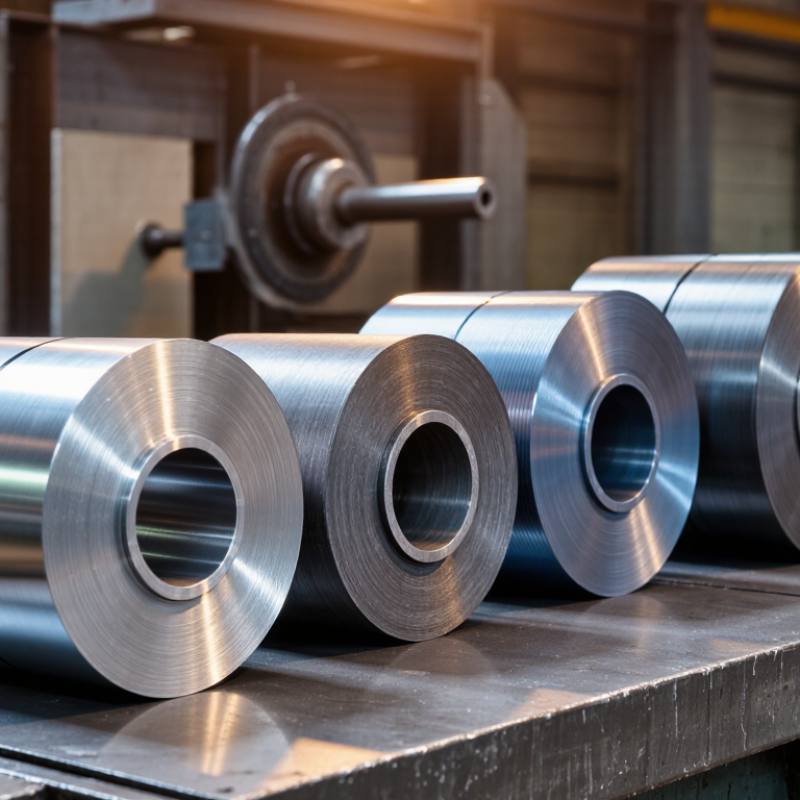
What Are the Top Types of Precision Work Rolls?

How Precision Work Rolls Are Classified by Mill, Material, and Duty

Precision work rolls are classified by mill, material, and duty—not by “precision” alone. In a four-high cold-rolling mill, smaller-diameter work rolls contact the strip directly, while backup rolls resist bending. Sendzimir mills use clustered roll arrangements and very small work rolls for thin, hard materials. The mill layout matters: a roll suitable for one stand may wear unevenly or deflect in another. World Steel Association data put 2023 global crude steel production at about 1.89 billion tonnes, underscoring the scale of rolling operations, though production volume alone does not determine roll choice.

Material selection follows contact pressure, surface finish, and wear demands. Forged steel rolls are common where toughness and resistance to fatigue are critical; high-chromium iron rolls can offer strong wear resistance in suitable applications. Carbide-based rolls may serve demanding finishing duties, but their brittleness and operating conditions need careful review. Hardness figures are meaningful only when the scale, test method, and roll layer are specified. Small detail. It changes comparisons.

Duty classification is just as practical: roughing, intermediate, and finishing work rolls face different loads, temperatures, and surface requirements. A finishing roll may need a highly controlled texture to transfer the required strip finish, while a roughing roll prioritizes durability under heavier reduction. Mill operators typically track wear, roll force, strip defects, and grinding history together. These are useful clues, not a perfect prediction; operating conditions can change faster than a specification sheet.

Cold-Rolling Work Rolls: Forged Steel, High-Chromium, and HSS Types

Cold-rolling work rolls face high contact pressure, repeated thermal changes, and abrasive strip surfaces. Their material affects wear, surface finish, and maintenance intervals. Three common choices are forged steel, high-chromium steel, and high-speed steel (HSS), each suited to different mill conditions.

Forged steel rolls offer toughness and resistance to impact. They can suit demanding stands where load changes are significant, though their wear resistance may be lower than that of harder alloys.

High-chromium rolls contain hard carbides that help resist abrasion and support a consistent strip finish. They are often considered for work that needs a balance of wear life and surface quality. A close look matters.

HSS rolls are designed to retain hardness under heat and resist wear, making them useful in demanding finishing applications. Their performance still depends on roll design, cooling, grinding, and the steel being rolled.

For example, a mill handling hard strip may value HSS wear resistance, while a stand exposed to impact may favor forged steel’s toughness.

No material wins everywhere.

Selection should follow operating data, including rolling force, temperature, surface requirements, and actual campaign life. Shop records can reveal patterns, but they are not perfect: changes in lubrication or grinding practice can blur comparisons.

Hot-Strip Work Rolls: ICDP, High-Chromium Iron, and HSS Types

What Are the Top Types of Precision Work Rolls?

Hot-strip work rolls face heat, pressure, scale, and repeated contact with moving steel. The main choices are ICDP, high-chromium iron, and high-speed steel (HSS). World Steel Association’s World Steel in Figures 2024 reports roughly 1.89 billion tonnes of crude steel production in 2023. That scale highlights why dependable roll life matters, though production volume alone cannot identify the best roll material.

ICDP rolls combine a hard working layer with a tougher core, making them a common option for finishing stands. High-chromium iron offers strong wear and oxidation resistance, useful where surface condition must remain stable over a campaign. HSS rolls contain hard carbides that help retain wear resistance under demanding hot-rolling conditions. They may extend campaigns, but grinding, cooling, and operating practice still matter. There is no universal winner. A tidy ranking can mislead: stand position, steel grade, and mill settings change the result.

Tips: Match roll material to the stand’s actual wear pattern, not just its nameplate role. Track roughness, wear, and grinding stock between campaigns. Small details matter. And mill data may be imperfect, so check trends across several campaigns before changing specifications.

Special-Purpose Rolls: Temper, Skin-Pass, Foil, and Leveling Applications

What Are the Top Types of Precision Work Rolls?

Special-Purpose Rolls: Temper, Skin-Pass, Foil, and Leveling Applications

Special-purpose work rolls refine strip after heavier reduction stages. Their job is not simply to make metal thinner. They influence surface texture, flatness, and the consistency of each pass. Small changes matter. A roll’s diameter, crown, finish, and material must suit the mill and product.

Temper rolls support a light reduction that improves shape and mechanical properties. Operators may use a controlled surface texture to transfer a chosen finish onto the strip. Skin-pass rolls perform a similar light treatment, often helping reduce yield-point markings and improve handling. The distinction can blur in practice, depending on the process and mill terminology. That deserves checking before specifying a roll.

Foil rolls need very smooth, carefully maintained surfaces because tiny marks can show on thin material. Clean handling matters; a trapped particle may leave a visible line. Leveling rolls address flatness rather than appearance alone. Their geometry and alignment help correct edge waves or center buckles as strip passes through the machine. Results depend on incoming material, tension, and setup, so roll selection cannot solve every shape problem. Measurements should guide adjustments, though mills do not always have perfect data.

How Roll Quality Is Measured: ISO 6508 HRC (20–70), HBW, and Ra (µm)

What Are the Top Types of Precision Work Rolls?

Roll quality needs more than a polished surface and a hardness number. For steel, copper, and aluminum rolling, Rockwell C hardness provides a quick check of resistance to indentation. ISO 6508-1 defines the HRC method; the commonly used working range is 20–70 HRC. A reading near either end deserves careful interpretation. Surface condition, test location, and curved geometry can affect results. Measure several prepared spots, not just one convenient patch.

Small detail. It matters.

Brinell hardness, reported as HBW, uses a ball indenter and can help assess larger, potentially less uniform areas. ISO 6506-1 specifies the test method. HRC and HBW are different scales, so avoid treating a conversion chart as exact evidence of roll performance.

Surface finish is another key measure: Ra, in micrometres, describes average profile deviation from a mean line. ISO 21920-2 sets profile-texture parameters, while the measurement procedure and filter settings still matter. For example, a roll marked Ra 0.2 µm is not automatically suitable for every product or pass schedule. The target depends on material, lubrication, and the required strip finish.

Slightly imperfect, but important: a single Ra value cannot capture every scratch, waviness pattern, or isolated defect. Record the cutoff, instrument direction, and test locations alongside the result.

Article Source:

Copyright 2025 Fluidra S.A. | Created by BCM Marketing Agencia Privacy Policy Legal note | Cookie policy |

Technical cookies are strictly necessary for our website to work and you can navigate through it. These types of cookies are those that, for example, allow us to identify you, give you access to certain restricted parts of the page if necessary, or remember different options or services already selected by you, such as your privacy preferences. Therefore, they are activated by default, your authorization not being necessary in this regard. Through the configuration of your browser, you can block or alert the presence of this type of cookies, although such blocking will affect the proper functioning of the different functionalities of our website.


The analysis cookies allow us to study the navigation of the users of our website in general (for example, which sections of the page are the most visited, which services are used most and if they work correctly, etc.). From the statistical information on navigation on our website, we can improve both the operation of the page itself and the different services it offers. Therefore, these cookies do not have an advertising purpose, but only serve to make our website work better, adapting to our users in general. By activating them you will contribute to this continuous improvement. You can enable or disable these cookies by checking the corresponding box, being disabled by default.


Functionality cookies allow us to remember your preferences, to personalize certain characteristics and general options of our website, every time you access it (for example, the language in which the information is presented to you, the sections marked as favorites, your browser type, etc.) Therefore, this type of cookies does not have an advertising purpose, but by activating them you will improve the functionality of the website (for example, adapting to your type of browser) and the customization of it based on your preferences (for example, by presenting the information in the language that you have chosen in previous occasions), which will contribute to the ease, usability and comfort of our page during your navigation. You can enable or disable these cookies by checking the corresponding box, being disabled by default.


Advertising cookies allow us to manage the advertising spaces included in our website based on criteria such as the content shown or the frequency in which the ads are displayed. For example, if you have been shown the same ad several times on our website, and you have not shown a personal interest by clicking on it, it will not appear again. In summary, by activating this type of cookies, the advertising shown on our website will be more useful and diverse, and less repetitive. You can enable or disable these cookies by checking the corresponding box, being disabled by default.


Behavioral advertising cookies allow us to obtain information based on the observation of your browsing habits and behaviors on the web, in order to show you advertising content that best suits your personal tastes and interests. To understand it in a very simple way, we will give you a fictitious example: if your last searches on the web were related to suspense literature, we would show you advertising about suspense books. Therefore, activating this type of cookies, the advertising that we show you on our website will not be generic, but will be oriented to your searches, tastes and interests, therefore adjusting exclusively to you. You can enable or disable these cookies by checking the corresponding box, being disabled by default.
To understand it in a very simple way, we will give you a fictitious example: if your last searches on the web were related to suspense literature, we would show you advertising about suspense books. Therefore, activating this type of cookies, the advertising that we show you on our website will not be generic, but will be oriented to your searches, tastes and interests, therefore adjusting exclusively to you. You can enable or disable these cookies by checking the corresponding box, being disabled by default.

SAVE

We use our own and third-party cookies to ensure the proper functioning of the website and to analyse our services, improve your experience on our website and show you advertisements related to your interests according to profiling based on your browsing habits (e.g. websites visited). You can accept all cookies by clicking "ACCEPT" or set or reject them by clicking here. If you would like to know more about the use of cookies, please see our COOKIE POLICY.


ACCEPT ALL
Reject no essentials


