
What Are the Top Types of Heat Resistant Adhesive?
FLUID HANDLING EXPERTS

Blog, all our news

What Are the Top Types of Heat Resistant Adhesive?

Choosing the right Heat Resistant Adhesive is rarely a simple matter of selecting the highest temperature rating. In practical applications, performance depends on heat exposure, bonding materials, pressure, moisture, and movement. A formula that holds ceramic near an oven may fail on flexible aluminum under vibration. That distinction matters.

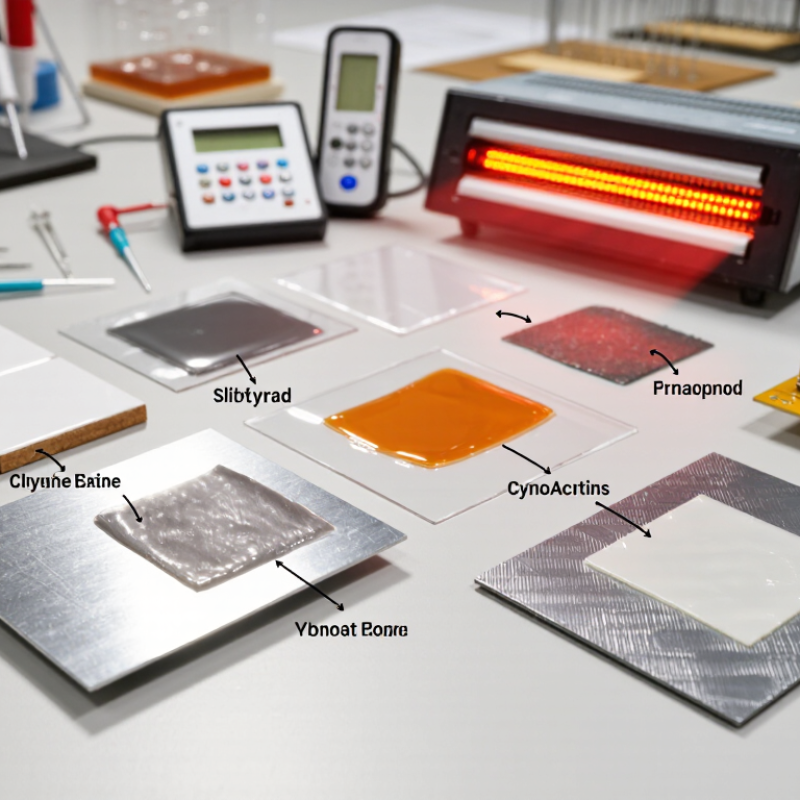
This guide examines the top types of heat-resistant adhesives, including silicone, epoxy, polyimide, cyanoacrylate, and ceramic-based formulas. Each type offers a different balance of temperature resistance, flexibility, curing time, and chemical stability. For example, silicone adhesive can remain flexible around heated components, while high-temperature epoxy often provides stronger structural support. Polyimide adhesives suit demanding electrical and aerospace applications, but they may require careful processing and higher curing temperatures.

Real-world selection should begin with the complete service environment. Check continuous and peak temperatures, not only the number printed on the package. Review the technical data sheet, substrate compatibility, surface preparation instructions, and expected bond thickness. A clean metal surface may need abrasion and degreasing before bonding. Small details can decide whether a joint lasts for months or fails during the first thermal cycle.

No adhesive is universally heatproof. That assumption often fails. Ratings can also change after repeated heating, chemical contact, or mechanical stress. Testing a sample under realistic conditions remains the most reliable approach. This overview provides a practical foundation, but professional engineering review may still be necessary for safety-critical assemblies. Even experienced users can overlook thermal expansion. That is worth reconsidering.
What Are the Top Types of Heat Resistant Adhesive?

What Heat-Resistant Adhesive Is and How It Works

What Are the Top Types of Heat Resistant Adhesive?

What Heat-Resistant Adhesive Is and How It Works

Heat-resistant adhesive is a bonding material designed to remain stable under elevated temperatures. It does not simply “ignore” heat. Instead, its chemical structure slows softening, breakdown, and loss of strength. Some formulas use flexible silicone polymers, while others rely on rigid epoxy or inorganic ceramic networks. Each type handles heat differently.

When the adhesive cures, its molecules link into a stronger structure. This process is called cross-linking. The finished bond can resist heat, vibration, moisture, and repeated expansion. However, performance depends on the surfaces, bond thickness, curing time, and temperature cycle. In practical testing, a thin bond between metal panels may survive an oven-like environment, but sudden cooling can still create cracks. Temperature ratings can also be misunderstood. Short-term exposure is not the same as continuous service.

Tips: Clean both surfaces thoroughly and remove oil, dust, and loose coatings. Follow the full curing schedule, even when the adhesive feels dry. Apply a controlled, thin layer. Leave room for different materials to expand. Test a small sample first. A neat label is not enough; real conditions often reveal weaknesses. Check shear strength, peel resistance, and repeated heating before using the bond in a critical assembly.

Key Types of Heat-Resistant Adhesives

Heat-resistant adhesives fall into several important types, each suited to a different thermal challenge. Epoxy adhesives provide strong structural bonding and resist many chemicals. They commonly perform between 120°C and 200°C, depending on formulation and curing conditions. Silicone adhesives remain flexible during expansion and contraction. Many grades tolerate temperatures near 250°C. Polyimide adhesives support more demanding aerospace and electronics applications, with some systems exceeding 300°C. Ceramic adhesives offer exceptional heat stability, but they can be brittle under vibration.

The market is expanding. A 2024 MarketsandMarkets report estimates that the high-temperature adhesives market could grow from about USD 3.4 billion in 2023 to USD 4.8 billion by 2028. Grand View Research also reported continued growth across the wider adhesives and sealants sector, driven partly by electronics, transportation, and energy equipment. These figures show demand, not guaranteed performance. Temperature ratings can mislead. They often describe short exposure under controlled conditions.

A technician should check continuous temperature, peak temperature, joint movement, curing time, and surface preparation. Silicone may suit a flexible oven gasket, while epoxy better fits a rigid metal bracket. Polyimide can protect a compact circuit near a heat source. Ceramic compounds may work on furnace components, but their brittleness needs careful review. In practice, the strongest adhesive is not always the best choice. A badly prepared surface can defeat an excellent formula. Small testing remains necessary.

Temperature Ranges and Performance Differences

What Are the Top Types of Heat Resistant Adhesive?

Temperature range is only one performance measure. Epoxy adhesives commonly operate from about -55°C to 150°C, with specialized grades reaching 200°C. They provide high shear strength and suit metal joints, circuit assemblies, and engine components. However, rigid epoxy can crack during repeated thermal cycling.

Silicone adhesives usually tolerate -60°C to 200°C, with short-term exposure near 250°C. Their flexibility helps absorb expansion between glass, aluminum, and plastics. Polyimide systems can withstand continuous temperatures above 250°C, while ceramic adhesives may perform beyond 1,000°C. They resist extreme heat, but often cure slowly and become brittle. Cyanoacrylate is fast, not especially heat resistant. Its service range often stays below 120°C.

Published ranges need careful interpretation. ASTM E831 measures thermal expansion, while ASTM D1002 evaluates lap-shear strength; neither standard guarantees performance in a real furnace. The U.S. Department of Energy’s 2023 battery technology assessments commonly target cell operation near 15–35°C, yet nearby components may face much higher localized temperatures. This difference matters. A joint beside a heating element may experience brief peaks, vibration, moisture, and cooling cycles.

Test the actual assembly. Use metal coupons, a temperature ramp, and repeated heating cycles. Record bond strength afterward. I would not trust a single maximum-temperature number. It looks precise, but often hides the weakest condition.

How to Choose an Adhesive for Specific Materials

What Are the Top Types of Heat Resistant Adhesive?

Choosing a heat resistant adhesive starts with the materials, not the temperature label. Metal, glass, ceramic, and high-temperature plastic each behave differently during heating. Metal conducts heat quickly and expands noticeably. Glass and ceramic resist heat well but can crack under uneven stress. Some plastics soften before the adhesive reaches its rated limit. Material matters.

For rigid metal-to-metal joints, high-temperature epoxy can provide strong bonding and gap filling. It suits engine covers, appliance parts, and small equipment housings when movement is limited. Silicone adhesive works better when surfaces expand at different rates. Its flexibility helps absorb vibration and repeated heating cycles. Ceramic adhesive may suit furnaces, heating elements, and refractory surfaces, but it often forms a brittle bond. Test it.

Check the continuous operating temperature, not only the short-term peak rating. A joint exposed to 180°C every day needs different protection from one facing 250°C for ten minutes. Clean oil, dust, and oxidation before bonding. Light abrasion can improve adhesion on some metals, while glass may need careful degreasing. Cure time also matters. Rushing the assembly can trap moisture and weaken the joint. I have found that a small test piece reveals problems early, especially after several heat-and-cool cycles. The first choice is not always the best one. Allow for gaps, load direction, and future repairs before applying adhesive to the final part.

Top Types of Heat-Resistant Adhesives

Typical maximum continuous-use temperatures vary by formulation, curing method, bond thickness, and exposure conditions.

How to choose: Silicone adhesives are flexible and suitable for glass, ceramics, and metals exposed to vibration. Epoxies provide strong, rigid bonds for metals, ceramics, and composites. Acrylic adhesives are useful for many metals and plastics, while polyurethane offers flexibility for plastics, rubber, and coated materials. Cyanoacrylate is best for small, close-fitting bonds where moderate heat resistance is sufficient.

Temperature values are representative industry ranges and should be verified against the adhesive’s technical data sheet before use.

Application Methods and Safety Considerations

What Are the Top Types of Heat Resistant Adhesive?

Application begins with the substrate, not the adhesive. Remove oil, dust, and loose oxidation with a compatible cleaner. Allow the surface to dry completely. A thin, continuous bead usually performs better than a thick puddle. Keep the joint aligned during the stated working time. Pressure matters. Use clamps or fixtures that distribute force without squeezing out the bond line.

For heat-resistant epoxy, controlled curing is important because rushed heating can create internal stress. Silicone-based adhesives need clean contact and sufficient moisture exposure. In practical assembly work, uneven surfaces remain a common failure point.

Safety deserves equal attention. Read the Safety Data Sheet before opening the container, especially when primers or solvent cleaners are involved. The NIOSH Pocket Guide lists recommended exposure limits of 250 ppm for acetone and 400 ppm for isopropyl alcohol, measured as eight-hour time-weighted averages.

These limits do not make casual ventilation acceptable. Use local exhaust, chemical-resistant gloves, eye protection, and suitable respiratory protection when the assessment requires it. OSHA’s Hazard Communication requirements also support clear labeling, training, and SDS access. Never assume a cured adhesive is harmless during heating; decomposition fumes can differ from uncured vapors.

A cautious installer should verify thermal cycling, peel strength, and lap-shear performance using recognized ASTM methods. One overlooked detail is fixture removal. Too early, and the bond may shift. Too late, and cleanup becomes needlessly difficult.

Copyright 2025 Fluidra S.A. | Created by BCM Marketing Agencia Privacy Policy Legal note | Cookie policy |

Technical cookies are strictly necessary for our website to work and you can navigate through it. These types of cookies are those that, for example, allow us to identify you, give you access to certain restricted parts of the page if necessary, or remember different options or services already selected by you, such as your privacy preferences. Therefore, they are activated by default, your authorization not being necessary in this regard. Through the configuration of your browser, you can block or alert the presence of this type of cookies, although such blocking will affect the proper functioning of the different functionalities of our website.


The analysis cookies allow us to study the navigation of the users of our website in general (for example, which sections of the page are the most visited, which services are used most and if they work correctly, etc.). From the statistical information on navigation on our website, we can improve both the operation of the page itself and the different services it offers. Therefore, these cookies do not have an advertising purpose, but only serve to make our website work better, adapting to our users in general. By activating them you will contribute to this continuous improvement. You can enable or disable these cookies by checking the corresponding box, being disabled by default.


Functionality cookies allow us to remember your preferences, to personalize certain characteristics and general options of our website, every time you access it (for example, the language in which the information is presented to you, the sections marked as favorites, your browser type, etc.) Therefore, this type of cookies does not have an advertising purpose, but by activating them you will improve the functionality of the website (for example, adapting to your type of browser) and the customization of it based on your preferences (for example, by presenting the information in the language that you have chosen in previous occasions), which will contribute to the ease, usability and comfort of our page during your navigation. You can enable or disable these cookies by checking the corresponding box, being disabled by default.


Advertising cookies allow us to manage the advertising spaces included in our website based on criteria such as the content shown or the frequency in which the ads are displayed. For example, if you have been shown the same ad several times on our website, and you have not shown a personal interest by clicking on it, it will not appear again. In summary, by activating this type of cookies, the advertising shown on our website will be more useful and diverse, and less repetitive. You can enable or disable these cookies by checking the corresponding box, being disabled by default.


Behavioral advertising cookies allow us to obtain information based on the observation of your browsing habits and behaviors on the web, in order to show you advertising content that best suits your personal tastes and interests. To understand it in a very simple way, we will give you a fictitious example: if your last searches on the web were related to suspense literature, we would show you advertising about suspense books. Therefore, activating this type of cookies, the advertising that we show you on our website will not be generic, but will be oriented to your searches, tastes and interests, therefore adjusting exclusively to you. You can enable or disable these cookies by checking the corresponding box, being disabled by default.
To understand it in a very simple way, we will give you a fictitious example: if your last searches on the web were related to suspense literature, we would show you advertising about suspense books. Therefore, activating this type of cookies, the advertising that we show you on our website will not be generic, but will be oriented to your searches, tastes and interests, therefore adjusting exclusively to you. You can enable or disable these cookies by checking the corresponding box, being disabled by default.

SAVE

We use our own and third-party cookies to ensure the proper functioning of the website and to analyse our services, improve your experience on our website and show you advertisements related to your interests according to profiling based on your browsing habits (e.g. websites visited). You can accept all cookies by clicking "ACCEPT" or set or reject them by clicking here. If you would like to know more about the use of cookies, please see our COOKIE POLICY.


ACCEPT ALL
Reject no essentials


