
What Are the Top Types of Digital Signal Isolators?
FLUID HANDLING EXPERTS

Blog, all our news

What Are the Top Types of Digital Signal Isolators?

Digital systems often need to exchange data across electrical boundaries without sharing a direct conductive path. A Digital Signal Isolator provides that separation while preserving logic-level communication between circuits. In a motor drive, for example, it can carry control pulses from a low-voltage processor to circuitry exposed to fast switching transients. The isolator helps protect sensitive electronics, but it does not remove every design risk. Layout, power, and noise still matter.

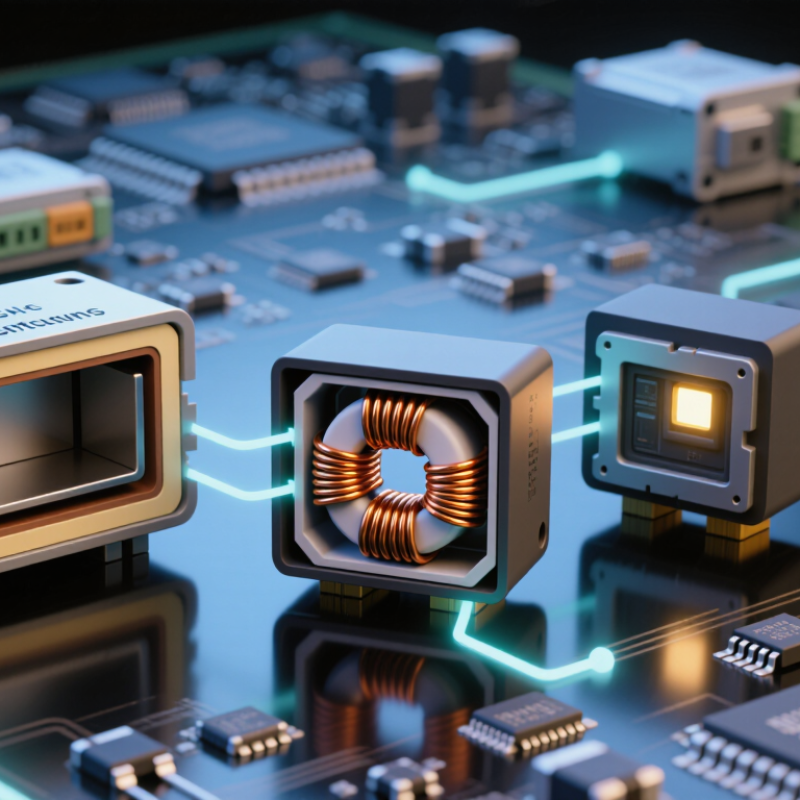
Common approaches include capacitive and magnetic coupling, while optical isolators are often considered alongside them. Capacitive devices transfer changing signals through an electric field. Magnetic designs use transformer-like coupling. Optical types transmit data as light, typically using an LED and detector. Each approach has tradeoffs. Some designs prioritize compact size or low power; others suit demanding transient environments. No type is best for every circuit.

Choosing among them means looking beyond the headline data rate. Engineers also compare channel count, propagation delay, common-mode transient immunity, insulation ratings, and operating conditions. A noisy inverter may call for different priorities than a small sensor board. Datasheets help, but real circuit behavior can still surprise designers. The following overview compares the main isolator types, explains where each tends to fit, and highlights practical details worth checking before selecting a component.
What Are the Top Types of Digital Signal Isolators?

Digital Signal Isolators: Signal Paths, Isolation Barriers, and Key Ratings

What Are the Top Types of Digital Signal Isolators?

Digital Signal Isolators: Signal Paths, Isolation Barriers, and Key Ratings

A digital isolator carries logic signals across a barrier while keeping input and output circuits electrically separated. Capacitive devices transfer encoded signals through an electric field. Magnetic types use a changing magnetic field, while optical isolators pass light across the gap. Each approach has different design trade-offs, including power use, speed, and susceptibility to interference.

Inside the signal path, an input circuit conditions the logic level, encodes its transitions, and sends them across the barrier. A receiver reconstructs the output. The barrier itself may use insulating layers within the package, but the signal still needs a clean path. Fast voltage changes nearby can disturb that path. That matters.

Compare ratings in the context of the application. Data rate and propagation delay affect timing; common-mode transient immunity, or CMTI, indicates resistance to rapid voltage changes across the barrier. Isolation voltage is not the same as continuous working voltage. I would not choose by headline voltage alone. Check creepage and clearance, channel direction, and required safety approvals against the equipment design. Datasheets can make these checks look simpler than they are. A few millimeters of board space may change the practical choice.

Capacitive Isolators: CMOS Coupling with Some Families Reaching 150 Mbps

Capacitive digital isolators transfer signals through tiny capacitors, using CMOS circuits on both sides of an insulation barrier. Unlike a direct electrical connection, this coupling helps block ground-loop currents while preserving fast digital communication. Industry device data sheets show that some families reach 150 Mbps; this is a family-specific ceiling, not a typical speed for every channel or operating condition. At that rate, a stream of pulses can cross the barrier quickly, but layout, load, and signal timing still matter. IEC 60747-17:2020 provides requirements for capacitive and magnetic couplers. It is a useful reference for evaluating insulation performance, though it does not make all devices interchangeable. Speed alone can mislead.

Tips: Check the data sheet’s maximum data rate, isolation rating, and common-mode transient immunity together. Keep the input and output traces short, and follow the specified board-clearance guidance. Test with the actual load and switching noise in your design. A 150 Mbps headline may look reassuring, but a slower link can be the better choice when timing margins are tight. Trade-offs are easy to overlook.

Magnetic Isolators: Transformer Coupling and CMTI Above 100 kV/µs in Some Devices

Magnetic digital isolators transfer logic signals across a tiny transformer, without a direct conductive path. On one side, a driver switches current through a coil; a receiver detects the resulting pulse on the other. This barrier can separate a controller from fast power stages in motor drives, solar inverters, and industrial converters. Noise can bite.

A key specification is common-mode transient immunity, or CMTI. It describes how quickly the voltage difference between the isolator’s sides can change without causing a false output. Some devices specify CMTI above 100 kV/µs, which can help in systems with steep switching edges. That number is not a guarantee. Actual performance depends on test conditions, circuit layout, coupling capacitance, and the waveform reaching the barrier.

On a bench, a long probe ground lead or signal trace may add ringing that the datasheet test did not include. Keep isolation loops short, separate noisy nodes, and compare the device’s CMTI test method with the system’s worst transient. Magnetic coupling also brings tradeoffs: pulse encoding, startup behavior, and power consumption deserve attention alongside isolation voltage. I would not select a device from its headline rating alone; a generous margin helps, though the right margin depends on the application. That’s worth checking.

Optocouplers: LED–Photodetector Links, Including 10 Mbps-Class Models

Optocouplers transfer digital signals through light. An LED sends pulses across an insulating gap, and a photodetector receives them on the other side. This optical link separates circuit grounds while carrying data. It is a familiar choice in control boards, power supplies, and industrial inputs.

Some optocouplers support data rates around 10 Mbps, but the headline rate does not guarantee clean communication in every circuit. Propagation delay, pulse-width distortion, and output loading can affect timing. Check the datasheet for the conditions behind its speed rating, including temperature and supply voltage. Also compare the required isolation rating and common-mode transient immunity with the equipment’s needs. A fast part can still disappoint if its output edges are too slow for the receiver. Easy to overlook.

Tips: Keep input current within the specified range, and give the output a suitable pull-up resistor. Test real signal patterns, not only a steady clock. Watch the waveform at the receiving pin. I would double-check timing margins after layout changes, since trace capacitance can shift edges. There is a trade-off here: higher speed may mean tighter design limits, and the datasheet cannot predict every board condition. A little caution helps.

Comparing Isolator Types: 2.5–5 kVrms Ratings, Speed, Power, and Lifetime

Digital signal isolators commonly use capacitive, magnetic, or optical barriers. Their isolation ratings often span roughly 2.5 to 5 kVrms, but the number alone can mislead. A 5 kVrms test rating does not mean the device can operate continuously at that voltage. Check the datasheet. Working voltage, surge withstand, creepage distance, and test duration matter too. Capacitive and magnetic devices often support fast edges and high data rates, making them useful for SPI or encoder signals. Optocouplers can provide strong isolation, though speed and current use vary widely with output design.

Power deserves separate attention. An isolator’s logic-side consumption may be modest, while an isolated gate driver or DC-DC supply can dominate the budget. Capacitive and magnetic barriers avoid LED aging, but temperature and electrical stress can still affect service life. Optocoupler LEDs may lose output over time, so check aging data and design margin, not just initial transfer performance. That detail is easy to miss. Compare lifetime information under expected voltage and temperature, then verify timing at the worst-case load. The fastest part is not always best; slower edges may reduce emissions and simplify layout. Leave some margin.

Copyright 2025 Fluidra S.A. | Created by BCM Marketing Agencia Privacy Policy Legal note | Cookie policy |

Technical cookies are strictly necessary for our website to work and you can navigate through it. These types of cookies are those that, for example, allow us to identify you, give you access to certain restricted parts of the page if necessary, or remember different options or services already selected by you, such as your privacy preferences. Therefore, they are activated by default, your authorization not being necessary in this regard. Through the configuration of your browser, you can block or alert the presence of this type of cookies, although such blocking will affect the proper functioning of the different functionalities of our website.


The analysis cookies allow us to study the navigation of the users of our website in general (for example, which sections of the page are the most visited, which services are used most and if they work correctly, etc.). From the statistical information on navigation on our website, we can improve both the operation of the page itself and the different services it offers. Therefore, these cookies do not have an advertising purpose, but only serve to make our website work better, adapting to our users in general. By activating them you will contribute to this continuous improvement. You can enable or disable these cookies by checking the corresponding box, being disabled by default.


Functionality cookies allow us to remember your preferences, to personalize certain characteristics and general options of our website, every time you access it (for example, the language in which the information is presented to you, the sections marked as favorites, your browser type, etc.) Therefore, this type of cookies does not have an advertising purpose, but by activating them you will improve the functionality of the website (for example, adapting to your type of browser) and the customization of it based on your preferences (for example, by presenting the information in the language that you have chosen in previous occasions), which will contribute to the ease, usability and comfort of our page during your navigation. You can enable or disable these cookies by checking the corresponding box, being disabled by default.


Advertising cookies allow us to manage the advertising spaces included in our website based on criteria such as the content shown or the frequency in which the ads are displayed. For example, if you have been shown the same ad several times on our website, and you have not shown a personal interest by clicking on it, it will not appear again. In summary, by activating this type of cookies, the advertising shown on our website will be more useful and diverse, and less repetitive. You can enable or disable these cookies by checking the corresponding box, being disabled by default.


Behavioral advertising cookies allow us to obtain information based on the observation of your browsing habits and behaviors on the web, in order to show you advertising content that best suits your personal tastes and interests. To understand it in a very simple way, we will give you a fictitious example: if your last searches on the web were related to suspense literature, we would show you advertising about suspense books. Therefore, activating this type of cookies, the advertising that we show you on our website will not be generic, but will be oriented to your searches, tastes and interests, therefore adjusting exclusively to you. You can enable or disable these cookies by checking the corresponding box, being disabled by default.
To understand it in a very simple way, we will give you a fictitious example: if your last searches on the web were related to suspense literature, we would show you advertising about suspense books. Therefore, activating this type of cookies, the advertising that we show you on our website will not be generic, but will be oriented to your searches, tastes and interests, therefore adjusting exclusively to you. You can enable or disable these cookies by checking the corresponding box, being disabled by default.

SAVE

We use our own and third-party cookies to ensure the proper functioning of the website and to analyse our services, improve your experience on our website and show you advertisements related to your interests according to profiling based on your browsing habits (e.g. websites visited). You can accept all cookies by clicking "ACCEPT" or set or reject them by clicking here. If you would like to know more about the use of cookies, please see our COOKIE POLICY.


ACCEPT ALL
Reject no essentials


