
What Are the Top Types of Cold Rolled Steel in 2026?
FLUID HANDLING EXPERTS

Blog, all our news

What Are the Top Types of Cold Rolled Steel in 2026?

In 2026, choosing Cold Rolled Steel means matching a grade to the job, not simply picking the smoothest sheet. A bright, even surface may suit visible panels, while a formable grade can better handle tight bends and stamped parts. The difference becomes clear on the shop floor: a bracket that cracks at the edge can waste more time than a slightly rougher finish.

This guide explores common types, including commercial-quality, drawing-quality, deep-drawing, and high-strength low-alloy steel. Each offers a different balance of formability, strength, surface quality, and cost. Names and specifications can vary by standard and supplier, so buyers should confirm the grade designation, thickness tolerance, coating, and intended forming limits on the product documentation. Small details matter.

We will also look at how these materials perform in appliances, furniture, automotive components, and general fabrication. A grade suited to a shallow panel may not work for a deep-drawn housing. In practice, material selection is rarely perfect on the first try; sample forming and clear communication with the supplier can reveal problems before production scales up. That step is easy to overlook. The goal is not to rank every type as universally best, but to explain where each option makes sense—and what to check before ordering.
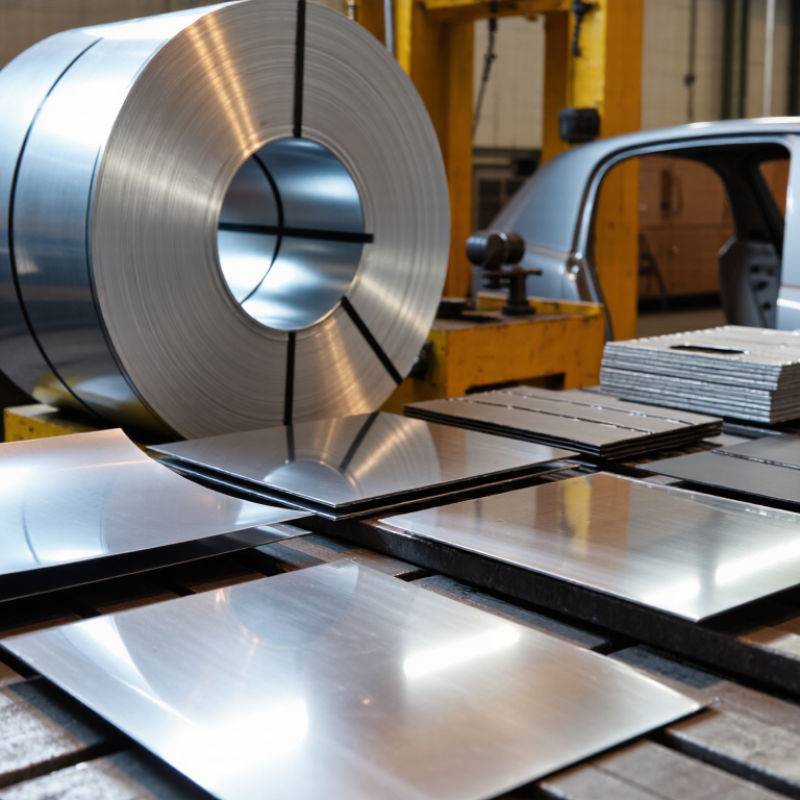
What Are the Top Types of Cold Rolled Steel in 2026?

What Cold-Rolled Steel Is and How It Is Produced

Cold-rolled steel begins as hot-rolled steel, which is cooled and cleaned to remove scale. The strip often passes through an acid pickling line before rolling. It is not rolled in a freezer. The process usually takes place near room temperature, though friction can warm the metal.

During cold reduction, powerful rollers squeeze the strip thinner and improve its thickness consistency. The steel also becomes harder and less ductile as its grains deform. That trade-off matters. A bright, smooth surface and crisp edges are common results, but the finish depends on cleaning, roll condition, and later handling. Even a small scratch can show clearly under workshop lights.

Some products are annealed after rolling. Controlled heating softens the steel and restores formability; a light temper pass can then refine flatness and surface texture. Not every coil receives identical treatment. Buyers should check the grade, thickness tolerance, surface designation, and intended forming method rather than relying on “cold rolled” alone. In practice, deep drawing may require softer material than a stiff panel. The label is useful, but incomplete. Specification sheets can be dense, and I would still verify the requirements before choosing a coil.

How Cold-Rolled Steel Is Classified by Grade and Finish

In 2026, cold-rolled steel is best understood through two separate labels: grade and finish. Grade describes the steel’s chemistry and mechanical performance; finish describes its surface texture and appearance. They are related, but not interchangeable.

Low-carbon grades such as 1006 and 1008 are common choices for formed panels, brackets, and appliance parts. Drawing-quality grades are designed for deeper forming, while high-strength low-alloy steel offers greater strength for a given thickness. Check the applicable specification and mill test report, since similar grade names can carry different requirements. The label alone is not enough.

Finish matters on the shop floor. A matte surface has a more noticeable texture and can help retain forming lubricant; a brighter finish looks smoother under inspection lights. Temper rolling can also influence flatness and surface feel. Looks can mislead. A bright sheet is not automatically better for every job, and a matte sheet is not necessarily rough or defective. Finish terminology can vary between specifications and suppliers, so confirm the required surface, thickness, and intended coating before ordering.

What Are the Top Types of Cold-Rolled Steel in 2026?

Representative ASTM A1008 structural steel grades, classified by minimum yield strength

How to read this chart: Structural steel (SS) grades are identified by strength requirements; the values shown are representative minimum yield strengths converted from grade designations in ksi and rounded to MPa. Cold-rolled steel is also classified by formability, including commercial, drawing, and deep-drawing steels. Surface finish is specified separately from grade: matte or dull and bright appearances are common descriptions, while the required finish depends on the product specification and processing. Confirm the applicable standard and product specification for a particular order.

Top Types of Cold-Rolled Steel in 2026

Top Types of Cold-Rolled Steel in 2026

Commercial-quality cold-rolled steel remains a practical choice for panels, cabinets, and appliance housings. Its smooth surface takes paint well, and its consistent thickness helps parts fit together. For simple bends and shallow forming, it is often sufficient. Details matter.

Drawing-quality steel offers greater formability for parts with deeper shapes. Deep-drawing grades can suit stamped components such as inner door panels or kitchen sinks. The right choice depends on the shape, tooling, and forming depth, not just the grade label. A small trial run can reveal cracking or wrinkling before full production.

Strength-focused options include high-strength low-alloy and dual-phase steels. They can help reduce component weight while retaining useful strength, particularly in vehicle structures and supports. Bake-hardenable steel is another option for exposed panels; its strength increases during paint-baking. However, stronger grades may require adjustments to press force and springback compensation. The categories can overlap, and supplier specifications do not always use identical wording. Check the material certificate, thickness tolerance, surface finish, and forming requirements before selecting a grade. Cold-rolled steel is not automatically the best fit for every part.

Key Properties and Common Uses of Each Type

What Are the Top Types of Cold Rolled Steel in 2026?

Commercial-quality low-carbon steel suits panels, cabinets, and general sheet-metal parts. Its smooth surface and consistent thickness support clean bends, though tight radii still need testing. Practical for everyday fabrication.

Drawing-quality steel has greater ductility, making it useful for formed parts such as appliance housings and automotive inner panels. Deep-drawing grades can stretch further with fewer tears, but tooling, lubrication, and sheet direction still matter. A small trial helps.

Bake-hardenable steel forms easily, then gains strength during paint-bake heating, making it useful for exposed vehicle panels. High-strength low-alloy steel offers more strength at a lower gauge for brackets and reinforcements, though springback can complicate forming. Full-hard steel is stiff and strong but has limited formability, so it suits simple shapes or further processing. Grade properties vary. Check the technical sheet.

What Are the Top Types of Cold Rolled Steel in 2026? - Key Properties and Common Uses of Each Type

Type Key Properties Formability and Strength Common Uses Typical Selection Consideration
Commercial Quality (CQ) General-purpose cold-rolled sheet with a smooth surface and consistent thickness. Usually produced for routine forming and fabrication. Moderate formability and strength; suitable for simple bends and shallow forming. Exact mechanical properties depend on the applicable grade and specification. Appliance panels, furniture, cabinets, enclosures, and general metal products. A practical choice when a clean surface and ordinary forming performance are required without demanding deep-drawing capability.
Drawing Quality (DQ) Designed for more demanding forming than standard commercial-quality sheet, with properties selected to support drawing operations. Good ductility and drawability; generally better suited to formed shapes than CQ sheet. Automotive interior panels, appliance components, and formed housings. Useful when a part requires deeper drawing or more complex forming; the specified grade should match the forming process.
Extra-Deep-Drawing Quality (EDD) Very low-carbon steel grades are commonly used to achieve high ductility and reliable deep-drawing performance. Excellent drawability and low resistance to complex forming compared with general-purpose sheet; strength is not its primary advantage. Deep-drawn automotive panels, complex appliance parts, and other parts with substantial forming depth. Choose when deep drawing and resistance to forming defects are priorities; forming conditions and grade requirements still matter.
Bake-Hardenable (BH) Steel Offers good formability during stamping and can gain strength during the paint-baking heat cycle used in many manufacturing processes. Formable in the as-supplied condition; bake hardening increases strength after forming and baking. Automotive outer panels and other formed parts that benefit from improved dent resistance after painting. Consider when the manufacturing route includes a compatible paint-bake cycle and the finished part needs added dent resistance.
High-Strength Low-Alloy (HSLA) Steel Strength is increased through alloying and controlled processing, often while retaining useful formability for structural sheet applications. Higher strength than many standard low-carbon sheet grades; formability varies by grade and may be lower than that of drawing-quality steel. Automotive structural parts, reinforcement components, brackets, and other weight-conscious structures. Suitable when strength and potential weight reduction are important; confirm that the selected grade meets forming and joining requirements.
Full-Hard Cold-Rolled Steel Cold rolled without the final annealing normally used to soften the steel. It retains work hardening and is typically harder and less ductile. Higher hardness and strength, but limited formability compared with annealed cold-rolled sheet. Applications requiring a hard, stiff sheet, or material intended for further processing such as annealing, coating, or temper rolling. Not usually the first choice for substantial forming; check whether the intended fabrication process requires annealed material.
Cold-Rolled Electrical Steel Specially processed for magnetic performance and low energy losses. It includes non-oriented grades for rotating equipment and grain-oriented grades for transformer cores. Designed primarily for magnetic properties rather than general sheet-metal formability; electrical and magnetic characteristics depend on grade and processing. Motor and generator cores, transformer cores, and other electromagnetic components. Select the specific electrical-steel category according to the magnetic field direction and performance needs of the equipment.

Note: These are common cold-rolled steel product and grade families, and they are not all mutually exclusive classifications. Mechanical and magnetic properties vary by grade, thickness, processing route, and applicable standard; consult the relevant material specification for design values.

How to Compare and Select Cold-Rolled Steel for an Application

When comparing cold-rolled steel, start with the part, not the grade name. Commercial-quality sheet suits simple bends and covers; drawing-quality grades handle formed panels; deep-drawing grades support tighter shapes; HSLA grades offer higher strength for lighter structures. ASTM A1008/A1008M and EN 10130 identify different requirements, so confirm the governing standard before comparing supplier data.

Check yield strength, tensile strength, elongation, thickness tolerance, surface finish, and bend radius. A dashboard panel may need clean, consistent surfaces; a bracket may prioritize strength and springback control. The World Steel Association’s World Steel in Figures 2024 reports 1,892.2 million tonnes of crude steel production in 2023. That scale is useful context, not a grade-selection shortcut. Large output does not guarantee the right formability or finish for your component.

Ask for mill test certificates and verify the actual heat and coil values against your drawing. Request trial blanks when forming behavior matters; a grade’s nominal properties cannot predict every tool, lubricant, or shop condition. Keep an eye on coating too: cold-rolled describes processing, while galvanized describes a surface coating. Easy to mix up. I would also leave room for a practical compromise: the tightest specification may add cost without improving the finished part.

Copyright 2025 Fluidra S.A. | Created by BCM Marketing Agencia Privacy Policy Legal note | Cookie policy |

Technical cookies are strictly necessary for our website to work and you can navigate through it. These types of cookies are those that, for example, allow us to identify you, give you access to certain restricted parts of the page if necessary, or remember different options or services already selected by you, such as your privacy preferences. Therefore, they are activated by default, your authorization not being necessary in this regard. Through the configuration of your browser, you can block or alert the presence of this type of cookies, although such blocking will affect the proper functioning of the different functionalities of our website.


The analysis cookies allow us to study the navigation of the users of our website in general (for example, which sections of the page are the most visited, which services are used most and if they work correctly, etc.). From the statistical information on navigation on our website, we can improve both the operation of the page itself and the different services it offers. Therefore, these cookies do not have an advertising purpose, but only serve to make our website work better, adapting to our users in general. By activating them you will contribute to this continuous improvement. You can enable or disable these cookies by checking the corresponding box, being disabled by default.


Functionality cookies allow us to remember your preferences, to personalize certain characteristics and general options of our website, every time you access it (for example, the language in which the information is presented to you, the sections marked as favorites, your browser type, etc.) Therefore, this type of cookies does not have an advertising purpose, but by activating them you will improve the functionality of the website (for example, adapting to your type of browser) and the customization of it based on your preferences (for example, by presenting the information in the language that you have chosen in previous occasions), which will contribute to the ease, usability and comfort of our page during your navigation. You can enable or disable these cookies by checking the corresponding box, being disabled by default.


Advertising cookies allow us to manage the advertising spaces included in our website based on criteria such as the content shown or the frequency in which the ads are displayed. For example, if you have been shown the same ad several times on our website, and you have not shown a personal interest by clicking on it, it will not appear again. In summary, by activating this type of cookies, the advertising shown on our website will be more useful and diverse, and less repetitive. You can enable or disable these cookies by checking the corresponding box, being disabled by default.


Behavioral advertising cookies allow us to obtain information based on the observation of your browsing habits and behaviors on the web, in order to show you advertising content that best suits your personal tastes and interests. To understand it in a very simple way, we will give you a fictitious example: if your last searches on the web were related to suspense literature, we would show you advertising about suspense books. Therefore, activating this type of cookies, the advertising that we show you on our website will not be generic, but will be oriented to your searches, tastes and interests, therefore adjusting exclusively to you. You can enable or disable these cookies by checking the corresponding box, being disabled by default.
To understand it in a very simple way, we will give you a fictitious example: if your last searches on the web were related to suspense literature, we would show you advertising about suspense books. Therefore, activating this type of cookies, the advertising that we show you on our website will not be generic, but will be oriented to your searches, tastes and interests, therefore adjusting exclusively to you. You can enable or disable these cookies by checking the corresponding box, being disabled by default.

SAVE

We use our own and third-party cookies to ensure the proper functioning of the website and to analyse our services, improve your experience on our website and show you advertisements related to your interests according to profiling based on your browsing habits (e.g. websites visited). You can accept all cookies by clicking "ACCEPT" or set or reject them by clicking here. If you would like to know more about the use of cookies, please see our COOKIE POLICY.


ACCEPT ALL
Reject no essentials


