
Top TS11 Pneumatic Breaker Manufacturers Worldwide?
FLUID HANDLING EXPERTS

Blog, all our news

Top TS11 Pneumatic Breaker Manufacturers Worldwide?

Choosing among the top TS11 Pneumatic Breaker manufacturers worldwide requires more than comparing catalogue prices. Buyers should examine engineering quality, production consistency, service support, and verified field performance. A reliable manufacturer explains impact energy, operating pressure, air consumption, weight, and compatible excavator classes clearly. It should also provide drawings, maintenance guidance, spare parts access, and practical warranty terms. These details matter when a breaker works beside concrete foundations, road edges, or reinforced slabs.

Real experience often reveals what brochures omit. Operators notice vibration, hose connection quality, tool wear, and noise after several demanding shifts. Therefore, this guide considers manufacturer capability, inspection procedures, export experience, and customer feedback. It also looks at whether suppliers adapt the TS11 Pneumatic Breaker to different compressors, climates, and jobsite conditions. Small differences can affect downtime.

No ranking is flawless. Public information varies between manufacturers, and performance claims may not use identical testing methods. That limitation deserves attention. The strongest companies usually welcome technical questions and provide evidence instead of vague promises. Buyers should request test reports, material specifications, delivery records, and references from comparable projects. They should also confirm local service arrangements before placing an order.

Practical evidence matters most.

This overview aims to help contractors, equipment distributors, and procurement teams make a more informed shortlist. It focuses on dependable construction, transparent communication, and long-term operating value. A lower purchase price may look attractive, but unstable parts supply can quickly increase total costs. Careful comparison creates a safer and more predictable investment.
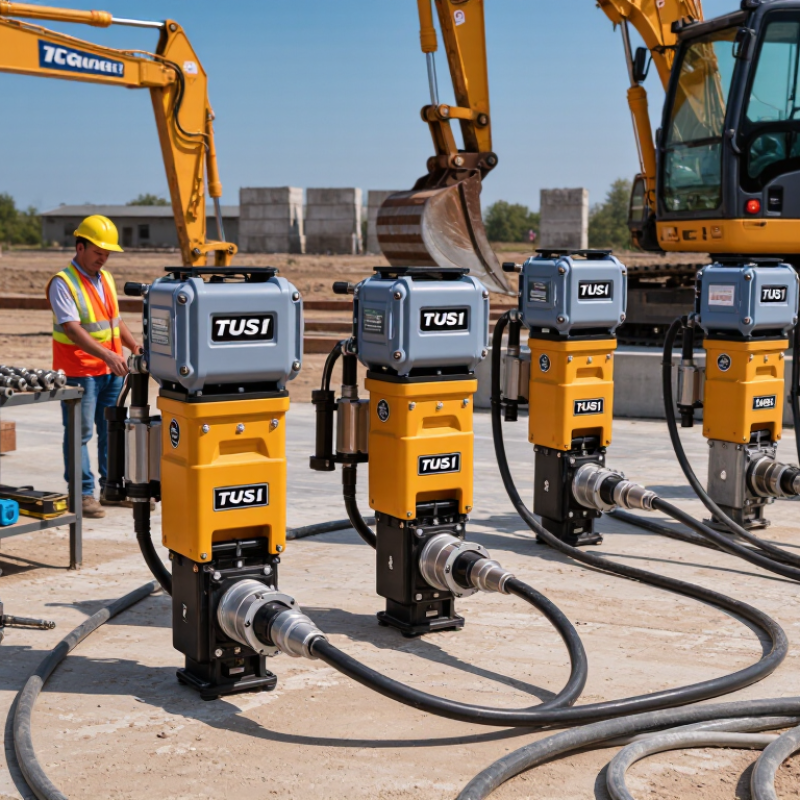
Top TS11 Pneumatic Breaker Manufacturers Worldwide?

TS11 Pneumatic Breaker Specifications: 11 kg Class and 1,200 BPM

An TS11 pneumatic breaker sits in the 11 kg class, offering a practical balance between impact power and operator control. Its rated speed reaches 1,200 blows per minute, usually under no-load conditions. Actual performance drops when the bit meets dense concrete, stone, or compacted soil. That difference matters.

A reliable setup begins with the air supply. Check the tool plate for required pressure and air consumption before connecting a compressor. A properly sized hose, clean couplings, and regular pneumatic oil help maintain steady impacts. Small restrictions can make the breaker feel weak. The bit also needs attention. A blunt chisel wastes energy and increases vibration around the handle.

Field handling reveals details that specifications miss. An 11 kg tool can remain manageable during short wall-breaking tasks, but fatigue develops quickly during overhead work. Firm footing helps. So does a controlled grip, rather than forcing the breaker into the surface. Hearing protection, eye protection, gloves, and suitable work boots should be standard practice. One imperfect assumption is treating 1,200 BPM as constant output. It is not. Ambient temperature, compressor recovery, hose length, bit condition, and operator technique can change the result. For purchasing decisions, compare tested operating data, service support, vibration information, and spare-part availability instead of relying on speed alone.

Global TS11 Market Scope: Air Pressure, Airflow, and Impact Energy Metrics

When evaluating TS11 pneumatic breaker manufacturers worldwide, technical consistency matters more than a polished catalogue. Air pressure is the starting point. Many TS11 units operate around 5–7 bar, but the tool must maintain pressure during continuous breaking. A gauge near the inlet can reveal sudden drops that a workshop test may miss.

Airflow is equally important. Published figures often range from roughly 1.2 to 1.8 cubic metres per minute, depending on valve design and test conditions. Numbers can mislead. Hose length, internal diameter, moisture, and compressor recovery time can change actual performance.

Impact energy gives the clearest picture of breaking strength, yet it should not stand alone. A TS11 breaker may deliver approximately 30–45 joules per blow, depending on pressure, stroke, and measurement method. Compare energy, blows per minute, and tool weight together.

A heavier body may reduce vibration, while a lighter design can improve control on vertical surfaces. In field use, I would record pressure at the tool, airflow under load, and penetration depth in the same concrete sample. This creates a fairer comparison between manufacturers.

Fit matters more. Some specifications remain incomplete, especially when suppliers omit noise, vibration, or test-standard details. That gap deserves careful questioning before purchase.

Leading TS11 Manufacturers in China, Japan, South Korea, and Europe

Top TS11 Pneumatic Breaker Manufacturers Worldwide

Leading TS11 manufacturers in China, Japan, South Korea, and Europe serve different project needs. China offers broad production capacity, flexible configurations, and competitive pricing for contractors managing large fleets. Many factories support customized hose fittings, chisel options, and packaging for export conditions.

Japanese manufacturers often emphasize machining accuracy, vibration control, and long service life. Their TS11 breakers may suit maintenance teams working in urban areas or confined construction zones. South Korean producers commonly balance robust housing design with practical operating costs. European manufacturers usually focus on safety engineering, ergonomic controls, noise reduction, and compliance documentation. However, published specifications do not always reflect field performance. That deserves careful checking.

In professional sourcing work, buyers should request impact frequency data, air consumption figures, and test records. Ask how the manufacturer checks piston wear and valve consistency. Review spare-part availability, warranty terms, and technical response times. A reliable supplier should explain limits clearly, not promise unlimited durability. Sample testing is still essential. One overlooked issue is compressor compatibility; insufficient airflow can make a strong breaker feel weak.

Tips: Compare at least three suppliers from different regions. Inspect seals, hose connections, and tool retainers before approval. Test the TS11 breaker on similar concrete or rock conditions. Keep service records, because small vibration changes can reveal internal wear early.

TS11 Manufacturer Comparison: Weight, Shank Size, Noise, and Vibration

Top TS11 Pneumatic Breaker Manufacturers Worldwide?

Comparing TS11 pneumatic breakers requires more than checking advertised impact power. Weight affects control, transport, and operator fatigue. Many market listings place TS11-class breakers near 10–12 kilograms, but published figures may exclude the hose or tool retainer. That small omission matters on a wet demolition site. Shank size also deserves careful attention. A common configuration is a 1-1/8-inch hex shank, or about 28.6 millimeters, yet buyers should verify length and collar design before ordering tools.

Noise and vibration reveal larger differences. The NIOSH Criteria for a Recommended Standard: Occupational Noise Exposure uses 85 dBA over eight hours, with a 3 dB exchange rate. A breaker operating above that level can require shorter exposure and stronger hearing controls. Very loud. Under ISO 28927-10, vibration testing should report measured hand-arm acceleration, not vague “low vibration” claims. EU-OSHA guidance references an action value of 2.5 m/s² A(8) and a limit value of 5.0 m/s² A(8) under Directive 2002/44/EC.

Independent testing remains essential. Two breakers with identical weight can feel completely different because of piston timing, grip isolation, and air pressure. I would request vibration data at the stated operating pressure, plus a verified sound-power or sound-pressure value. Some comparisons still rely on incomplete brochures. That is a weakness worth acknowledging. Real performance changes with worn shanks, poor lubrication, and uneven concrete.

Selecting a TS11 Supplier: Certifications, Warranty, Output, and Total Cost

When comparing TS11 pneumatic breaker suppliers, look beyond catalog photos and advertised impact rates. A credible supplier should provide current certificates for quality management, material traceability, and product safety. Ask whether these documents cover the exact TS11 model, not merely a similar tool.

Certificates matter.

Warranty terms deserve equal attention. Confirm coverage for the piston, cylinder, seals, tool shank, and air valve. Check the warranty period, response time, spare-parts policy, and repair location. Some warranties look generous but exclude common wear parts.

I once saw a low-cost offer become expensive after repeated seal failures. That gap changed the purchasing decision.

Output should be tested under defined air pressure, flow, and operating conditions. Request test records showing impact frequency, energy consistency, and air consumption. A supplier that explains testing limits earns more trust than one promising maximum performance.

Total cost includes the breaker, freight, hoses, couplers, lubricator, spare seals, and maintenance labor. Include expected downtime and local technician availability.

A cheaper unit may lose its advantage if operators wait weeks for parts. Also compare noise, vibration, and fuel demand from the compressor. These details affect daily productivity, even when the purchase order looks small.

Article Source:

Copyright 2025 Fluidra S.A. | Created by BCM Marketing Agencia Privacy Policy Legal note | Cookie policy |

Technical cookies are strictly necessary for our website to work and you can navigate through it. These types of cookies are those that, for example, allow us to identify you, give you access to certain restricted parts of the page if necessary, or remember different options or services already selected by you, such as your privacy preferences. Therefore, they are activated by default, your authorization not being necessary in this regard. Through the configuration of your browser, you can block or alert the presence of this type of cookies, although such blocking will affect the proper functioning of the different functionalities of our website.


The analysis cookies allow us to study the navigation of the users of our website in general (for example, which sections of the page are the most visited, which services are used most and if they work correctly, etc.). From the statistical information on navigation on our website, we can improve both the operation of the page itself and the different services it offers. Therefore, these cookies do not have an advertising purpose, but only serve to make our website work better, adapting to our users in general. By activating them you will contribute to this continuous improvement. You can enable or disable these cookies by checking the corresponding box, being disabled by default.


Functionality cookies allow us to remember your preferences, to personalize certain characteristics and general options of our website, every time you access it (for example, the language in which the information is presented to you, the sections marked as favorites, your browser type, etc.) Therefore, this type of cookies does not have an advertising purpose, but by activating them you will improve the functionality of the website (for example, adapting to your type of browser) and the customization of it based on your preferences (for example, by presenting the information in the language that you have chosen in previous occasions), which will contribute to the ease, usability and comfort of our page during your navigation. You can enable or disable these cookies by checking the corresponding box, being disabled by default.


Advertising cookies allow us to manage the advertising spaces included in our website based on criteria such as the content shown or the frequency in which the ads are displayed. For example, if you have been shown the same ad several times on our website, and you have not shown a personal interest by clicking on it, it will not appear again. In summary, by activating this type of cookies, the advertising shown on our website will be more useful and diverse, and less repetitive. You can enable or disable these cookies by checking the corresponding box, being disabled by default.


Behavioral advertising cookies allow us to obtain information based on the observation of your browsing habits and behaviors on the web, in order to show you advertising content that best suits your personal tastes and interests. To understand it in a very simple way, we will give you a fictitious example: if your last searches on the web were related to suspense literature, we would show you advertising about suspense books. Therefore, activating this type of cookies, the advertising that we show you on our website will not be generic, but will be oriented to your searches, tastes and interests, therefore adjusting exclusively to you. You can enable or disable these cookies by checking the corresponding box, being disabled by default.
To understand it in a very simple way, we will give you a fictitious example: if your last searches on the web were related to suspense literature, we would show you advertising about suspense books. Therefore, activating this type of cookies, the advertising that we show you on our website will not be generic, but will be oriented to your searches, tastes and interests, therefore adjusting exclusively to you. You can enable or disable these cookies by checking the corresponding box, being disabled by default.

SAVE

We use our own and third-party cookies to ensure the proper functioning of the website and to analyse our services, improve your experience on our website and show you advertisements related to your interests according to profiling based on your browsing habits (e.g. websites visited). You can accept all cookies by clicking "ACCEPT" or set or reject them by clicking here. If you would like to know more about the use of cookies, please see our COOKIE POLICY.


ACCEPT ALL
Reject no essentials


