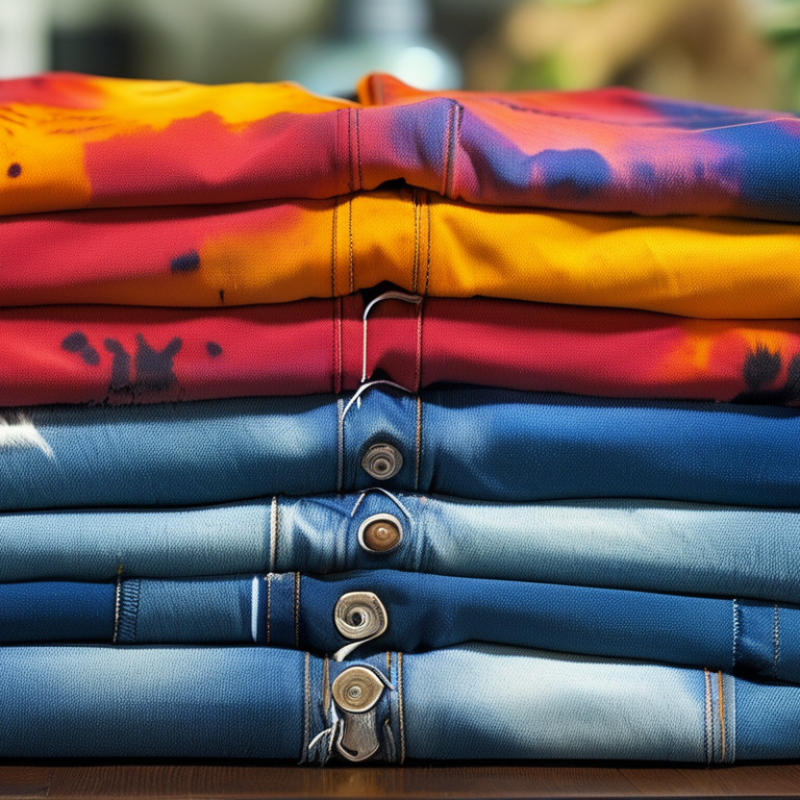
Top Tips for Successfully Dyeing Your Jeans at Home?
Dyeing your jeans at home can seem daunting. However, with the right approach, it can be a rewarding experience. Jeans Dye offers a chance to refresh your wardrobe and express your creativity.
Choosing the right dye is crucial. Consider factors like fabric content and desired color. Preparation is key; it can make or break your results. Washing your jeans before dyeing removes any residues that could affect the dye’s adherence.
Be mindful of the process. The dyeing technique you choose impacts the final appearance. Mistakes can happen, and it's important to embrace them. Sometimes, unexpected results lead to unique designs. Remember to keep notes on your method. This way, you can replicate success or learn from what went wrong. Ultimately, jeans dye is not just about color; it’s about making your jeans truly yours.
When choosing the right dye for your jeans, consider several factors. Fabric content is crucial. Most jeans are made from cotton, which absorbs dye well, while blends may not hold color as effectively. Choose a dye suitable for cotton to ensure the best results.
Color selection is equally important. Do you want to refresh faded jeans or try something bold? A darker dye often conceals imperfections better than lighter shades. Be aware that mixing colors can be challenging, leading to unexpected results. A test swatch can help you decide without committing to the entire piece.
You should prepare for some trial and error. Not every dye will work as expected. Even experienced dyers sometimes end with uneven tones or patchy results. That's part of the process. Document your steps and adjustments to refine your technique for next time. This patience and persistence will lead to a more satisfying final product.
Preparing Your Jeans for Dyeing
Preparing your jeans for dyeing is a crucial step that can greatly influence the outcome. Start by selecting a pair of jeans that you want to transform. Ensure that they are clean and dry. Pretreat any stains or marks to avoid unexpected results. A non-toxic detergent can help remove residues, making the fabric more receptive to dye.
Next, consider the fabric content of your jeans. Cotton jeans absorb dye better than those with synthetic fibers. Check the care label to understand the material. If your jeans contain polyester or spandex, the dye may not penetrate deeply. This can lead to uneven coloring. A test patch is a wise idea. Simply cut a small piece of fabric and apply dye to see how it reacts.
Once you’ve chosen your jeans, the dyeing area must be prepared. Use plastic sheets or old newspapers to protect surfaces. Clear the surrounding space of any items that could stain easily. Wear protective gloves and an apron to minimize mess. Lastly, remember that dyeing can be unpredictable. You might not get the exact shade you envision, and that’s part of the creative process. Embracing imperfections can lead to unique styles!
Step-by-Step Dyeing Process for Jeans
Dyeing your jeans at home is an exciting project. It allows for creativity and customization. Before starting, gather essential materials: fabric dye, gloves, salt or vinegar, and a large container. Choose a well-ventilated area for the dyeing process. It’s vital to prepare properly to avoid mess and achieve the desired color.
Start by washing your jeans. This helps the dye adhere better. As you prepare the dye mixture, follow the instructions on your dye package. Mixing the dye can be tricky; be consistent with your measurements. Add salt or vinegar to the dye bath to enhance color retention. Submerge your jeans fully in the dye solution. Stir occasionally for even coloring.
After the preferred shade is reached, rinse your jeans in cold water until the water runs clear. This can take time and patience. Avoid rushing this step, as it affects color longevity. After rinsing, hang the jeans to dry in a shaded area. Direct sunlight can fade the color. Keep in mind that dyeing may not always yield perfect results. Occasionally, patches may appear uneven or too light. Reflect on what worked and what didn’t for future projects. Each attempt offers learning opportunities for improving your dyeing technique.
Post-Dye Care and Maintenance Tips
Dyeing your jeans at home can be a fun and creative project. However, post-dye care is crucial for maintaining your new look. According to a 2021 industry report, around 30% of dyed garments lose their color due to improper care. It’s important to wash your jeans alone in cold water for at least the first few washes. This helps prevent color bleeding onto other clothes.
Using a gentle detergent is recommended. Avoid harsh chemicals that can fade colors faster. Additionally, air drying your jeans is preferable. The heat from dryers can alter the new dye and lead to unwanted fading. When hanging your jeans to dry, choose a shaded area to protect them from direct sunlight, which can also degrade color quality.
One often overlooked aspect is the way you handle stains. If a stain occurs, use cold water first and dab lightly. This minimizes the risk of the dye running. Remember, every fabric reacts differently. Test any cleaning solution on a small area first. Periodically, consider re-dyeing your jeans to refresh the color. This can help maintain that vibrant appearance. Small adjustments in care can significantly impact the longevity of your dyed jeans.
Troubleshooting Common Dyeing Issues
Dyeing jeans at home can be an enjoyable project, yet challenges often arise. One common issue is uneven color distribution. This often happens due to improper stirring during the dyeing process. Color expert studies suggest that consistent agitation can improve evenness by 30%. Pay attention to how you mix the dye and the fabric.
Another frequent hurdle is fading. Many home dyers experience rapid color loss after washing. According to textile research, using a fixative can extend the vibrancy of the dye. Using cold water for rinsing can also help maintain color integrity. This is essential, as up to 40% of dye can wash out without proper treatment.
Stains or blotches can result from insufficient rinsing or using incompatible materials. It’s critical to ensure that all residue is washed out after dyeing. Some users report that using salt in the dye bath can help combat such issues, as it promotes deeper penetration of the dye. Experimenting with salt concentrations may yield better results. Remember that dyeing is often a trial-and-error process, so keep notes on what works and what doesn't.
Cepex is the brand for the fluid handling market belonging to the Fluidra group. One of the leading european manufacturer of valves and fittings in thermoplastic materials.
Dedicated to the swimming pool, irrigation and industrial markets, we distribute our products worldwide with the Fluidra commercial network and presence in 46 countries with 136 sales branches.
Your data will be processed by CEPEX S.A., with address at C. Lluís Companys, 51-53, 08400, Granollers (Barcelona), and C.I.F. nº A-08928707, to send you communications about our products based on your interests. You can consult more information about the processing of your data and how to exercise your rights as described in the Privacy Policy.
Technical cookies are strictly necessary for our website to work and you can navigate through it. These types of cookies are those that, for example, allow us to identify you, give you access to certain restricted parts of the page if necessary, or remember different options or services already selected by you, such as your privacy preferences. Therefore, they are activated by default, your authorization not being necessary in this regard. Through the configuration of your browser, you can block or alert the presence of this type of cookies, although such blocking will affect the proper functioning of the different functionalities of our website.
The analysis cookies allow us to study the navigation of the users of our website in general (for example, which sections of the page are the most visited, which services are used most and if they work correctly, etc.). From the statistical information on navigation on our website, we can improve both the operation of the page itself and the different services it offers. Therefore, these cookies do not have an advertising purpose, but only serve to make our website work better, adapting to our users in general. By activating them you will contribute to this continuous improvement. You can enable or disable these cookies by checking the corresponding box, being disabled by default.
Functionality cookies allow us to remember your preferences, to personalize certain characteristics and general options of our website, every time you access it (for example, the language in which the information is presented to you, the sections marked as favorites, your browser type, etc.) Therefore, this type of cookies does not have an advertising purpose, but by activating them you will improve the functionality of the website (for example, adapting to your type of browser) and the customization of it based on your preferences (for example, by presenting the information in the language that you have chosen in previous occasions), which will contribute to the ease, usability and comfort of our page during your navigation. You can enable or disable these cookies by checking the corresponding box, being disabled by default.
Advertising cookies allow us to manage the advertising spaces included in our website based on criteria such as the content shown or the frequency in which the ads are displayed. For example, if you have been shown the same ad several times on our website, and you have not shown a personal interest by clicking on it, it will not appear again. In summary, by activating this type of cookies, the advertising shown on our website will be more useful and diverse, and less repetitive. You can enable or disable these cookies by checking the corresponding box, being disabled by default.
Behavioral advertising cookies allow us to obtain information based on the observation of your browsing habits and behaviors on the web, in order to show you advertising content that best suits your personal tastes and interests. To understand it in a very simple way, we will give you a fictitious example: if your last searches on the web were related to suspense literature, we would show you advertising about suspense books. Therefore, activating this type of cookies, the advertising that we show you on our website will not be generic, but will be oriented to your searches, tastes and interests, therefore adjusting exclusively to you. You can enable or disable these cookies by checking the corresponding box, being disabled by default. To understand it in a very simple way, we will give you a fictitious example: if your last searches on the web were related to suspense literature, we would show you advertising about suspense books. Therefore, activating this type of cookies, the advertising that we show you on our website will not be generic, but will be oriented to your searches, tastes and interests, therefore adjusting exclusively to you. You can enable or disable these cookies by checking the corresponding box, being disabled by default.
We use our own and third-party cookies to ensure the proper functioning of the website and to analyse our services, improve your experience on our website and show you advertisements related to your interests according to profiling based on your browsing habits (e.g. websites visited). You can accept all cookies by clicking "ACCEPT" or set or reject them by clicking here. If you would like to know more about the use of cookies, please see our COOKIE POLICY.