
Top 10 Three Phase Solid State Relay Suppliers
FLUID HANDLING EXPERTS

Blog, all our news

Top 10 Three Phase Solid State Relay Suppliers

Choosing a supplier for a Three Phase Solid State Relay affects more than the purchase price. The device must match the load, control voltage, switching method, and heat-management plan. A mismatch can cause nuisance trips, overheated panels, or a relay that fails earlier than expected. Small details matter.

This guide introduces ten suppliers and the practical factors engineers and buyers can compare. These include rated current, voltage range, isolation specifications, mounting options, certifications, documentation, and technical support. A nameplate rating alone is not enough. Ambient temperature, switching frequency, and enclosure ventilation can change real-world performance. No supplier is perfect.

The strongest choice depends on the application, not a ranking by name alone. Check current datasheets and confirm that the exact model fits the intended load and installation conditions. Ask suppliers how they specify derating and heat-sink requirements; vague answers deserve a closer look. Availability and replacement planning also matter, especially when a control panel may operate for years. Some product pages make comparison difficult. That is worth noting, rather than guessing. The profiles ahead offer a starting point for a careful shortlist, not a substitute for engineering review.
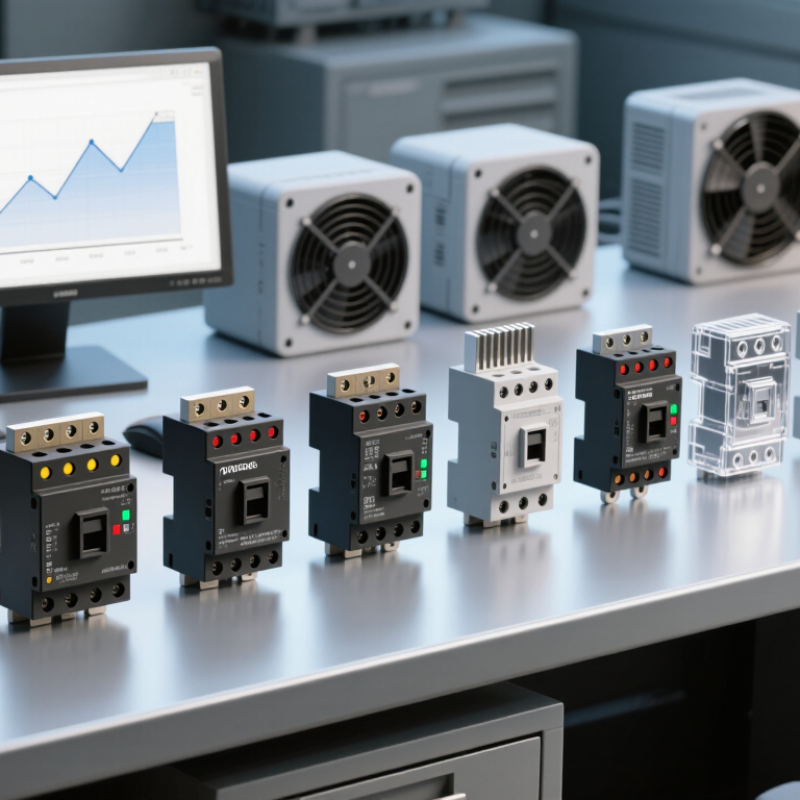
Top 10 Three Phase Solid State Relay Suppliers

Understanding Three-Phase Solid State Relays and Their Applications

Three-phase solid state relays switch three AC lines electronically, typically using semiconductor devices rather than moving contacts. They accept a low-voltage control signal and can switch heaters, pumps, or other compatible loads. They operate quietly and avoid contact wear, but they generate heat and may fail shorted. Heat matters. A three-phase unit should match the supply voltage, load current, switching method, and expected duty cycle. Zero-crossing models suit many resistive heaters; random switching may suit specific control tasks. Inductive loads, especially motors, need careful review of inrush current and switching frequency.

In a control cabinet, a relay may regulate an industrial heater bank or switch a ventilation motor. For heaters, a correctly rated heat sink and adequate airflow help keep operating temperatures within limits. For motors, confirm the relay suits the starting method; overload and short-circuit protection remain separate requirements. It is not an isolation device. Use caution. An SSR can also have off-state leakage, so a disconnected load may still show voltage on a meter. This detail is easy to miss.

Tips: Check the datasheet’s thermal derating curve, not only its headline current rating. Size wiring and protection for the installation, and leave space around the heat sink. Record cabinet temperature during commissioning. That measurement may change your choice.

Three-Phase Solid State Relays: Common Supply Voltage Classes

The chart shows common nominal three-phase line-to-line AC supply voltages, in volts RMS. When selecting a solid state relay, check that its rated output voltage and current suit the supply and load; installation conditions, load type, and heat sinking also affect relay performance.

Criteria for Evaluating Three-Phase SSR Suppliers

Top 10 Three Phase Solid State Relay Suppliers

Criteria for Evaluating Three-Phase SSR Suppliers

A supplier’s headline current rating is not enough to judge a three-phase SSR. Compare its ratings with your actual load, supply voltage, switching frequency, and ambient temperature. Check whether the stated current assumes a heatsink. A relay installed inside a warm control cabinet may need substantial derating. Ask for thermal curves, surge-current limits, and leakage-current specifications. These details affect real operation.

Tips: Request a sample datasheet and confirm its test conditions. Ask how the supplier handles technical questions and replacement parts. Keep the answers in writing. Small details count.

Look for clear traceability, consistent documentation, and evidence of relevant quality testing. Verify the recommended fuse type and wiring arrangement for the intended application. If the supplier cannot explain isolation ratings or heat dissipation plainly, pause before ordering. Response speed can be useful, but it does not prove product quality. Compare samples under representative conditions, and record temperature rise and switching behavior. No checklist is perfect; an overlooked cabinet temperature or unusual load can change the result.

Profiles of Ten Leading Three-Phase Solid State Relay Suppliers

A useful comparison of ten leading three-phase solid state relay suppliers starts with application fit, not catalog size.

Supplier 1 focuses on compact relays for crowded control panels.

Supplier 2 offers high-current models for industrial heaters.

Supplier 3 emphasizes fast switching and repeatable output.

Supplier 4 provides broad voltage ranges for varied equipment.

Supplier 5 is known for clear technical documentation.

Small details matter.

Supplier 6 supports custom configurations, though lead times may vary.

Supplier 7 offers built-in protection features for demanding loads.

Supplier 8 serves automation projects that need consistent switching across three phases.

Supplier 9 provides accessible engineering support during selection.

Supplier 10 maintains a wide range of mounting and connection options.

These profiles are practical starting points, not proof that any supplier suits every installation. I would still verify test conditions; catalog ratings can leave real-world questions unanswered.

Tips:

Check rated voltage, load current, heat-sink requirements, and switching method against the actual load. Confirm whether ratings apply at your ambient temperature. Ask for test data and installation guidance. A relay that fits electrically may still run too hot inside a sealed cabinet.

Comparing Supplier Products, Features, and Support

A useful comparison of three-phase solid state relay suppliers starts with the actual load, not the largest current number on a product page. Check rated voltage, operating current, control input, and permitted load type. Then look for derating curves: a relay rated for a certain current may need less current in a warm enclosure. Heat is easy to underestimate. Review the recommended heat sink, mounting method, and thermal resistance, especially when several relays sit side by side. Some details are buried in datasheets, and that makes comparison less tidy than it should be.

Features matter when they solve a real operating problem. Zero-cross switching can suit resistive heaters, while other loads may call for a different switching method. Compare short-circuit protection, status indicators, terminal access, and the stated electrical life under defined conditions. Support deserves the same scrutiny. Can the supplier clarify derating assumptions, provide wiring diagrams, and respond with practical troubleshooting steps? Ask about documentation revisions and replacement availability, too. A clear answer about a 40°C cabinet is more useful than a broad promise of reliability. It is still worth checking the answer against the datasheet; support teams can miss details, and specifications can leave awkward gaps.

Matching Suppliers to Industrial Requirements

Matching suppliers to industrial requirements means checking the application before comparing catalog ratings. A three-phase relay may switch a heater cleanly but struggle with a motor’s inrush current. Confirm load type, phase voltage, control input, switching method, and required operating cycles. Ask suppliers for derating curves at your cabinet’s actual temperature, not just a headline current rating. Heat matters.

The IEA’s Energy Efficiency 2023 report estimates that industry accounts for about 37% of global final energy consumption. That figure is not an SSR efficiency rating, but it underlines why thermal design and reliable process control matter. Compare heat-sink requirements, leakage current, isolation ratings, and short-circuit protection. Semiconductor relays can fail shorted, so verify the recommended fuse and coordination details. A tidy catalog can still hide a poor thermal margin; this is easy to overlook when procurement focuses only on price.

Tips: Send suppliers the motor or heater nameplate, switching frequency, ambient temperature, and wiring diagram. Request test data for your load. Then check installation space and service support—small details, but they can change the decision.

Copyright 2025 Fluidra S.A. | Created by BCM Marketing Agencia Privacy Policy Legal note | Cookie policy |

Technical cookies are strictly necessary for our website to work and you can navigate through it. These types of cookies are those that, for example, allow us to identify you, give you access to certain restricted parts of the page if necessary, or remember different options or services already selected by you, such as your privacy preferences. Therefore, they are activated by default, your authorization not being necessary in this regard. Through the configuration of your browser, you can block or alert the presence of this type of cookies, although such blocking will affect the proper functioning of the different functionalities of our website.


The analysis cookies allow us to study the navigation of the users of our website in general (for example, which sections of the page are the most visited, which services are used most and if they work correctly, etc.). From the statistical information on navigation on our website, we can improve both the operation of the page itself and the different services it offers. Therefore, these cookies do not have an advertising purpose, but only serve to make our website work better, adapting to our users in general. By activating them you will contribute to this continuous improvement. You can enable or disable these cookies by checking the corresponding box, being disabled by default.


Functionality cookies allow us to remember your preferences, to personalize certain characteristics and general options of our website, every time you access it (for example, the language in which the information is presented to you, the sections marked as favorites, your browser type, etc.) Therefore, this type of cookies does not have an advertising purpose, but by activating them you will improve the functionality of the website (for example, adapting to your type of browser) and the customization of it based on your preferences (for example, by presenting the information in the language that you have chosen in previous occasions), which will contribute to the ease, usability and comfort of our page during your navigation. You can enable or disable these cookies by checking the corresponding box, being disabled by default.


Advertising cookies allow us to manage the advertising spaces included in our website based on criteria such as the content shown or the frequency in which the ads are displayed. For example, if you have been shown the same ad several times on our website, and you have not shown a personal interest by clicking on it, it will not appear again. In summary, by activating this type of cookies, the advertising shown on our website will be more useful and diverse, and less repetitive. You can enable or disable these cookies by checking the corresponding box, being disabled by default.


Behavioral advertising cookies allow us to obtain information based on the observation of your browsing habits and behaviors on the web, in order to show you advertising content that best suits your personal tastes and interests. To understand it in a very simple way, we will give you a fictitious example: if your last searches on the web were related to suspense literature, we would show you advertising about suspense books. Therefore, activating this type of cookies, the advertising that we show you on our website will not be generic, but will be oriented to your searches, tastes and interests, therefore adjusting exclusively to you. You can enable or disable these cookies by checking the corresponding box, being disabled by default.
To understand it in a very simple way, we will give you a fictitious example: if your last searches on the web were related to suspense literature, we would show you advertising about suspense books. Therefore, activating this type of cookies, the advertising that we show you on our website will not be generic, but will be oriented to your searches, tastes and interests, therefore adjusting exclusively to you. You can enable or disable these cookies by checking the corresponding box, being disabled by default.

SAVE

We use our own and third-party cookies to ensure the proper functioning of the website and to analyse our services, improve your experience on our website and show you advertisements related to your interests according to profiling based on your browsing habits (e.g. websites visited). You can accept all cookies by clicking "ACCEPT" or set or reject them by clicking here. If you would like to know more about the use of cookies, please see our COOKIE POLICY.


ACCEPT ALL
Reject no essentials


