
What Are the Top Takeaway Food Containers for Global Buyers?
FLUID HANDLING EXPERTS

Blog, all our news

What Are the Top Takeaway Food Containers for Global Buyers?

For global foodservice buyers, choosing Takeaway Food Containers is a practical sourcing decision, not merely a packaging trend. The right format must protect meals, control costs, and support reliable delivery across different climates. A soup tub may face heat, pressure, and rough handling before reaching a customer’s table. Small details matter. Lids should fit securely, bases should remain stable, and surfaces should support clear labeling. Yet no container performs perfectly in every market.

Experienced purchasing teams compare material, capacity, closure design, insulation, stackability, and storage requirements. They also request food-contact documentation, migration test results, and supplier quality records where applicable. Local rules can differ, even between neighboring countries. A container accepted in one region may need additional verification elsewhere. Buyers should confirm temperature limits for hot, chilled, oily, and acidic foods. Cost deserves a wider view. A low unit price can become expensive when leakage causes refunds, waste, or damaged deliveries.

This guide examines leading options, including paperboard boxes, molded fiber trays, plastic tubs, and reusable systems. It considers real operating conditions rather than showroom appearance alone. Samples should be filled, closed, stacked, transported, and checked after service. That test may expose an inconvenient truth. The most sustainable choice is not always the lightest one; reuse depends on collection and washing systems. Reliable decisions require evidence, honest trade-offs, and periodic review. Global buyers can then match container performance with menu needs, regional requirements, and customer expectations.
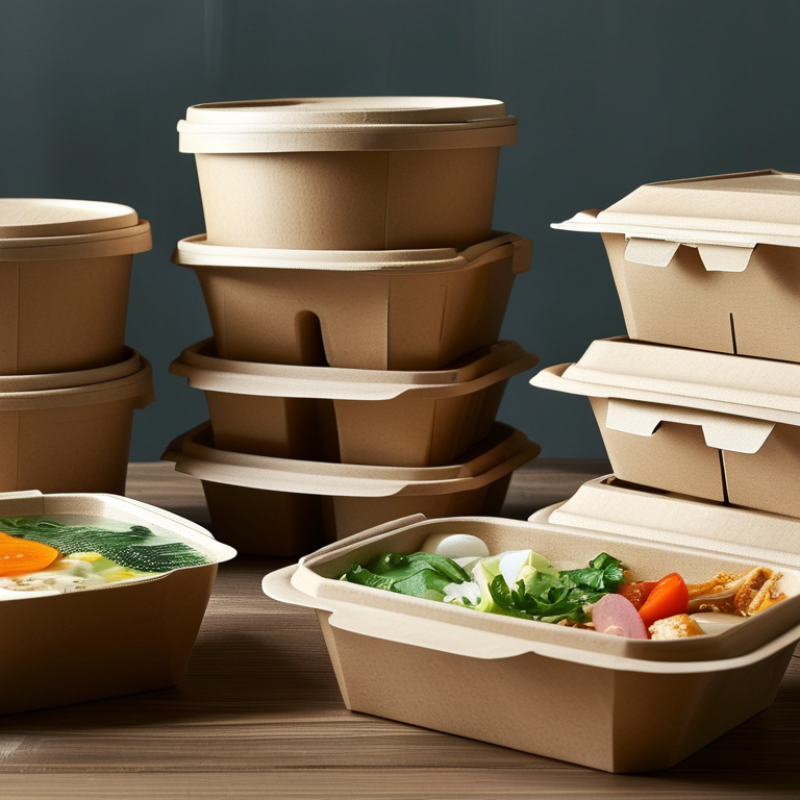
What Are the Top Takeaway Food Containers for Global Buyers?

What Makes a Takeaway Food Container Suitable for Global Buyers?

A suitable takeaway food container must survive more than a short delivery trip. It may face hot soup, chilled salad, motorbike vibration, and uneven stacking. A secure lid matters, but venting matters too. Without controlled vents, steam can soften fried food and create leaks. Buyers should check temperature limits, oil resistance, microwave suitability, and freezer performance. Food-contact documentation should match the destination market, not just the manufacturing country. Requirements differ across regions, and translation errors can delay approval.

Material choice also affects global practicality. Fiber containers can support a lower-plastic strategy, but moisture resistance and coating recovery need careful testing. Reusable formats may reduce waste, yet reverse logistics can make them unrealistic for smaller cities. The OECD’s Global Plastics Outlook (2022) states that packaging accounts for about 40% of global plastic waste. UNEP’s Turning off the Tap report (2023) estimates that system changes could reduce plastic pollution by 80% by 2040. These figures support better design, not careless material switching. A perfect container does not exist. Cost, durability, recyclability, and local infrastructure still conflict.

Tips: Test filled containers for six hours, not only empty samples. Drop them from counter height. Check lid fit after heating. Ask for food-contact declarations, migration-test results, carton dimensions, and pallet data. Small details matter. Also inspect the container after real delivery; laboratory results can look better than reality.

Which Materials and Designs Are Used for Takeaway Food Containers?

Global buyers usually compare paperboard, molded fiber, bagasse, polypropylene, PET, and aluminum containers. Each material suits different foods and delivery conditions. Paperboard feels professional and prints clearly, but it can soften around oily sauces. Molded fiber handles warm meals well and offers a textured, natural appearance. However, its surface may need a coating for soups or curry. That coating can affect recycling options.

Plastic containers provide strong leak resistance and consistent shapes. Polypropylene works well with hot meals and reheating requirements, while PET suits chilled salads and desserts. Aluminum protects food from light and heat, but it cannot enter every microwave system. Material choice should follow temperature, moisture, transport time, and local disposal facilities. Compostable claims also require careful checking. Industrial composting may not exist near the customer.

Design details often decide whether a container survives real delivery. A tight-fitting lid, reinforced rim, and deep locking channel reduce spills. Small steam vents prevent fried food from becoming soggy. Divided compartments keep rice away from sauces, although they reduce usable volume. Stackable corners save shelf space and improve warehouse handling. Clear lids help staff identify orders quickly. They can also show condensation and messy presentation.

In purchasing trials, a container may pass a desk test but fail after a forty-minute ride. We once found a sturdy fiber box bending under a heavy stew. That result changed the sample criteria. Buyers should test filled containers, tilted at different angles, with realistic heat and handling. No design solves every route. Practical testing remains more reliable than attractive specifications.

How Do Container Features Affect Food Safety and Performance?

For global buyers, the best takeaway container is not simply the cheapest or lightest option. It must protect food from contamination, leakage, heat, and rough transport. Polypropylene containers often handle hot meals well, while fiber-based containers can suit dry or moderately moist foods. Material choice matters.

Food-contact documentation should confirm that the container suits its intended temperature and food type. A container rated for cold storage may deform beside steaming rice. Microwave claims also require careful testing. Do not assume. Requirements differ across markets, so suppliers should provide test reports, migration data, and clear usage limits.

The closure is equally important. A firm lid reduces spills, but an overly tight seal can trap steam and soften fried food. Small vents help release pressure. They can also leak if poorly designed. I have seen containers pass a simple shake test yet fail after stacking overnight. That assumption fails. Buyers should check seal strength, drop resistance, stack stability, and condensation performance. Transparent walls help staff inspect portions quickly, while smooth surfaces make cleaning and filling more consistent. No container performs perfectly in every situation.

What Packaging Standards Apply in Different International Markets?

Global buyers should treat food containers as regulated food-contact articles, not simple boxes. In the European Union, packaging must meet food-contact safety rules and emerging Packaging and Packaging Waste Regulation requirements. Recyclability, recycled content, labeling, and material reduction are becoming purchasing conditions. In the United States, suppliers must verify compliance with applicable Food and Drug Administration food-contact provisions. China uses national standards, including GB 4806 series requirements, for materials touching food.

Local testing matters. A container for hot noodles needs steam resistance, leak control, and stable stacking. A chilled salad box needs different performance. Migration testing should match the food, temperature, and contact time. OECD’s Global Plastics Outlook reports that packaging creates about 40% of global plastic waste. That figure explains why authorities increasingly examine material weight and end-of-life options. However, “recyclable” can be misleading when local collection systems cannot process the container.

Buyers should request declarations of compliance, test reports, material specifications, and traceability records. They should also check whether coatings, inks, adhesives, and additives are covered. In the EU, paper containers with plastic barriers may face stricter recyclability scrutiny. In North America, compostable claims require recognized testing and suitable facilities. Asian markets may apply different migration limits and labeling rules. A certificate alone is not enough. Practical trials should include hot filling, oil exposure, freezer storage, transport vibration, and lid removal. Some containers still fail at the corners. That uncomfortable detail deserves attention.

Sources: OECD, Global Plastics Outlook, 2022; European Commission, Packaging and Packaging Waste Regulation, 2025; U.S. Food and Drug Administration, Food Contact Substances guidance.

What Are the Top Takeaway Food Containers for Global Buyers?

The chart compares the number of core compliance areas buyers should verify when sourcing takeaway food containers in major international markets. These areas include food-contact authorization, good manufacturing practice, chemical or migration controls, traceability, and market-specific sustainability or substance restrictions.

The checklist reflects commonly applicable frameworks, including EU Regulation (EC) No 1935/2004 and Regulation (EC) No 2023/2006, U.S. FDA food-contact requirements under 21 CFR, UK food-contact legislation, Canada’s Food and Drugs Act, Australia and New Zealand’s FSANZ food-contact standards, and Japan’s Food Sanitation Act and positive-list system. Requirements depend on the material, food type, temperature, and intended use.

How Can Global Buyers Compare Suppliers, Costs, and Customization Options?

Global buyers comparing takeaway food containers should start with use conditions, not catalog photos. A soup container needs leak resistance, heat stability, and a secure lid. A salad box needs visibility, ventilation, and enough stiffness for stacking. Ask suppliers for material specifications, food-contact test reports, sample records, and production photos. Samples matter. One container may look strong but buckle after hot filling. Test it twice.

Supplier comparison should include more than the quoted unit price. Calculate tooling, printing, inner packaging, freight, duties, and storage. Request prices at several order quantities, because a low minimum order may carry higher setup costs. Confirm production capacity, lead time, inspection procedures, and replacement handling. A supplier that answers clearly is easier to audit. Still, written promises are not proof. Use independent testing when the application is sensitive. Costs vary.

Customization can involve color, shape, lid fit, compartments, labels, and recycled-content requirements where permitted. Ask whether changes require a new mold. Mold charges, sampling rounds, and artwork adjustments can delay launch. Compare total landed cost and the cost of one failed shipment before choosing. I would not treat the cheapest offer as the best value. That assumption is tempting, and sometimes wrong. Buyers should record test results, defects, and supplier responses in one comparison sheet. Details matter. It makes later decisions less emotional, though no spreadsheet removes every risk.

Copyright 2025 Fluidra S.A. | Created by BCM Marketing Agencia Privacy Policy Legal note | Cookie policy |

Technical cookies are strictly necessary for our website to work and you can navigate through it. These types of cookies are those that, for example, allow us to identify you, give you access to certain restricted parts of the page if necessary, or remember different options or services already selected by you, such as your privacy preferences. Therefore, they are activated by default, your authorization not being necessary in this regard. Through the configuration of your browser, you can block or alert the presence of this type of cookies, although such blocking will affect the proper functioning of the different functionalities of our website.


The analysis cookies allow us to study the navigation of the users of our website in general (for example, which sections of the page are the most visited, which services are used most and if they work correctly, etc.). From the statistical information on navigation on our website, we can improve both the operation of the page itself and the different services it offers. Therefore, these cookies do not have an advertising purpose, but only serve to make our website work better, adapting to our users in general. By activating them you will contribute to this continuous improvement. You can enable or disable these cookies by checking the corresponding box, being disabled by default.


Functionality cookies allow us to remember your preferences, to personalize certain characteristics and general options of our website, every time you access it (for example, the language in which the information is presented to you, the sections marked as favorites, your browser type, etc.) Therefore, this type of cookies does not have an advertising purpose, but by activating them you will improve the functionality of the website (for example, adapting to your type of browser) and the customization of it based on your preferences (for example, by presenting the information in the language that you have chosen in previous occasions), which will contribute to the ease, usability and comfort of our page during your navigation. You can enable or disable these cookies by checking the corresponding box, being disabled by default.


Advertising cookies allow us to manage the advertising spaces included in our website based on criteria such as the content shown or the frequency in which the ads are displayed. For example, if you have been shown the same ad several times on our website, and you have not shown a personal interest by clicking on it, it will not appear again. In summary, by activating this type of cookies, the advertising shown on our website will be more useful and diverse, and less repetitive. You can enable or disable these cookies by checking the corresponding box, being disabled by default.


Behavioral advertising cookies allow us to obtain information based on the observation of your browsing habits and behaviors on the web, in order to show you advertising content that best suits your personal tastes and interests. To understand it in a very simple way, we will give you a fictitious example: if your last searches on the web were related to suspense literature, we would show you advertising about suspense books. Therefore, activating this type of cookies, the advertising that we show you on our website will not be generic, but will be oriented to your searches, tastes and interests, therefore adjusting exclusively to you. You can enable or disable these cookies by checking the corresponding box, being disabled by default.
To understand it in a very simple way, we will give you a fictitious example: if your last searches on the web were related to suspense literature, we would show you advertising about suspense books. Therefore, activating this type of cookies, the advertising that we show you on our website will not be generic, but will be oriented to your searches, tastes and interests, therefore adjusting exclusively to you. You can enable or disable these cookies by checking the corresponding box, being disabled by default.

SAVE

We use our own and third-party cookies to ensure the proper functioning of the website and to analyse our services, improve your experience on our website and show you advertisements related to your interests according to profiling based on your browsing habits (e.g. websites visited). You can accept all cookies by clicking "ACCEPT" or set or reject them by clicking here. If you would like to know more about the use of cookies, please see our COOKIE POLICY.


ACCEPT ALL
Reject no essentials


