
Top 10 Steel Pipe Machinery Accessories for Buyers
FLUID HANDLING EXPERTS

Blog, all our news

Top 10 Steel Pipe Machinery Accessories for Buyers

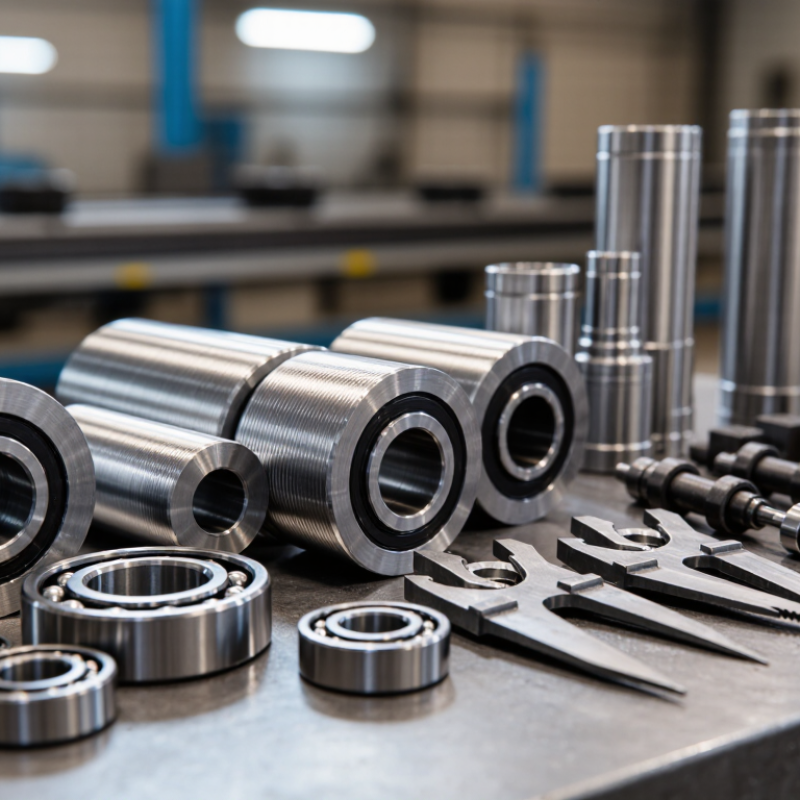
Steel Pipe Machinery Accessories may look like small parts beside a large production line. Yet a worn forming roll can leave a visible mark, while a poorly matched guide can disturb alignment. Buyers need to judge more than price. Material grade, dimensional accuracy, machine compatibility, service life, and replacement availability all matter. Details count.

Quality-management expert W. Edwards Deming warned, “A bad system will beat a good person every time.” For buyers, that principle points beyond any single accessory: even a well-made component can underperform if it does not suit the line, operating speed, or maintenance routine. Ask suppliers for material specifications, tolerance data, and clear compatibility details. Where possible, compare samples against actual production needs.

This guide explores ten commonly considered Steel Pipe Machinery Accessories, including forming and sizing rolls, guide components, cutting tools, bearings, and welding-line parts. Each item can affect uptime, surface finish, or changeover time. A useful comparison also considers lead times, wear patterns, and support after delivery. No checklist is perfect. Buyers should confirm critical dimensions with their machine builder, because catalog descriptions can leave gaps. A modest, well-tested choice may serve better than a premium part selected in a hurry. The right fit is practical, measurable, and sometimes less obvious than the sales sheet suggests.
Top 10 Steel Pipe Machinery Accessories for Buyers

Understanding Steel Pipe Machinery Accessories and Their Functions

Steel pipe machinery accessories guide material through forming, welding, sizing, and finishing. Their roles are practical, not decorative. A decoiler feeds flat strip into the line, while a leveling unit reduces coil set and helps keep the strip flat. An accumulator stores strip temporarily, allowing upstream loading without stopping the forming section. Small setup differences matter.

Edge preparation tools trim or clean strip edges before welding. Forming rolls gradually bend the strip into a tube, and guide rollers help keep it aligned. In high-frequency welding lines, welding components transfer energy to the seam; their condition affects heat consistency. Sizing rolls then control the finished pipe’s diameter and roundness. Keep them clean. Even a little buildup can mark the surface.

A cutoff saw separates pipe at the required length, while a deburring tool removes sharp edges from cut ends. Cooling and runout equipment support safe, steady handling after cutting, and a stacking system organizes finished lengths. These ten accessory types do not fit every mill in exactly the same way. Pipe diameter, wall thickness, material, and production speed all change what is needed. A checklist helps, but it can miss wear that only becomes obvious during a production run.

The Top 10 Accessories Used in Steel Pipe Production

Steel pipe production depends on more than the main forming mill. Ten useful accessories are a coil car, uncoiler, pinch rolls, leveling unit, strip accumulator, forming rolls, welding system, sizing rolls, flying cutoff saw, and hydrostatic tester. Each has a distinct job. The coil car positions heavy strip; leveling rolls reduce waviness before forming. An accumulator helps maintain strip feed during coil changes, while carefully aligned forming rolls shape the edges for welding.

Sizing rolls control finished diameter, and a flying cutoff saw separates pipes without stopping the line. A hydrostatic tester checks pressure integrity after production. These choices matter across a large industry: World Steel Association’s World Steel in Figures 2024 reports 1,892.2 million tonnes of crude steel produced globally in 2023. That figure is not pipe output, but it shows the scale of steel processing behind downstream products. Small alignment errors can still create visible problems, such as uneven seams or inconsistent cut lengths. No setup is perfect.

Tips: Match roll tooling to the pipe range and verify alignment during changeovers. Keep a simple log of weld settings, cut length, and test results. It may feel tedious, but it makes recurring defects easier to trace.

Top 10 Steel Pipe Production Accessories

Common accessories grouped by their primary production-line stage.

This illustrative grouping covers ten common accessories: forming rolls, guide rolls, induction coils, squeeze rolls, weld-bead scarfing tools, sizing rolls, cutoff saw blades, straightening rolls, cooling nozzles, and inspection sensors. Counts indicate accessories assigned to each stage—not sales rankings or measured industry usage.

How Accessories Support Forming, Welding, Sizing, and Finishing

On a tube mill, accessories are not minor add-ons; they support repeatability at every stage. Forming rolls and guide shoes keep strip edges aligned as flat coil becomes round tube. Keep a spare. Small alignment errors can leave edge mismatch before welding. A setup check is cheaper than chasing defects downstream. Operators should verify strip tracking after each tooling change, even when the first few lengths look clean.

During welding, contact tips, impeder assemblies, and cooling components help stabilize weld-zone conditions. Sizing rolls, straightening rolls, deburring tools, and gauges then control diameter, straightness, and edge finish. The World Steel Association’s World Steel in Figures 2025 reports 1,882.6 million tonnes of global crude steel production in 2024. That scale makes repeatable setups important, although this figure does not measure pipe-mill output. The IEA’s Iron and Steel Technology Roadmap (2020) estimates that steel production causes about 7% of global CO2 emissions. Less rework means less wasted material and energy. Not a cure-all. Worn rolls, poor strip quality, or rushed maintenance can still undermine the line.

Key Specifications Buyers Should Compare Before Purchase

Steel pipe machinery accessories should be compared by fit, load capacity, material, and expected service life—not price alone. Check roll-set profiles, shaft diameter, bearing load ratings, mandrel dimensions, guide clearance, weld-tool alignment, cutoff-blade hardness, cooling-nozzle flow, sensor accuracy, and changeover time. Small mismatches matter: a guide that sits 0.5 mm off-center can leave visible marks on a thin-wall tube. Ask suppliers for drawings, tolerance ranges, material certificates, and test conditions. “Compatible” is not a measurement.

The World Steel Association’s World Steel in Figures 2024 reports 1,888.2 million tonnes of crude steel production in 2023. That scale makes stable, repeatable equipment settings commercially important, though the figure does not predict any individual mill’s output. Compare accessories at your actual pipe diameter, wall thickness, line speed, and operating temperature. For bearings and shafts, request load and hardness data; for blades, review cutting-life results on comparable grades. Short trials help. A specification sheet can still omit setup time or wear variation, so ask how results were measured. One overlooked detail: spare parts should match the installed dimensions, not just the catalogue description.

How to Check Compatibility, Quality, and Long-Term Value

Compatibility starts with the production line, not the accessory catalogue. For rolls, guides, bearings, and couplings, compare tube diameter, wall thickness, material, line speed, shaft dimensions, and mounting interfaces. A coupling that fits physically may still transmit vibration or excessive load. Fit matters.

Ask suppliers for dimensional drawings, material certificates, hardness results, and runout measurements. Check that tolerances match the machine manual and that replacement parts suit the actual operating temperature and lubrication routine. McKinsey Global Institute’s 2015 report, The Internet of Things: Mapping the Value Beyond the Hype, estimated predictive maintenance could reduce maintenance costs by 10–40% and cut downtime by 50%. These are broad estimates, not guaranteed savings for every pipe mill.

Long-term value depends on service life, spare-part availability, and the cost of an unplanned line stop. The U.S. Department of Energy’s 2010 Operations & Maintenance Best Practices guide reports potential predictive-maintenance savings of 8–12% over preventive maintenance and 30–40% over reactive maintenance. Use those figures as context, not a purchase promise. In practice, request wear-life evidence under comparable loads, then check inspection intervals and replacement lead times. A polished specification sheet can still hide a mismatch; verify critical dimensions on the installed machine before ordering.

Copyright 2025 Fluidra S.A. | Created by BCM Marketing Agencia Privacy Policy Legal note | Cookie policy |

Technical cookies are strictly necessary for our website to work and you can navigate through it. These types of cookies are those that, for example, allow us to identify you, give you access to certain restricted parts of the page if necessary, or remember different options or services already selected by you, such as your privacy preferences. Therefore, they are activated by default, your authorization not being necessary in this regard. Through the configuration of your browser, you can block or alert the presence of this type of cookies, although such blocking will affect the proper functioning of the different functionalities of our website.


The analysis cookies allow us to study the navigation of the users of our website in general (for example, which sections of the page are the most visited, which services are used most and if they work correctly, etc.). From the statistical information on navigation on our website, we can improve both the operation of the page itself and the different services it offers. Therefore, these cookies do not have an advertising purpose, but only serve to make our website work better, adapting to our users in general. By activating them you will contribute to this continuous improvement. You can enable or disable these cookies by checking the corresponding box, being disabled by default.


Functionality cookies allow us to remember your preferences, to personalize certain characteristics and general options of our website, every time you access it (for example, the language in which the information is presented to you, the sections marked as favorites, your browser type, etc.) Therefore, this type of cookies does not have an advertising purpose, but by activating them you will improve the functionality of the website (for example, adapting to your type of browser) and the customization of it based on your preferences (for example, by presenting the information in the language that you have chosen in previous occasions), which will contribute to the ease, usability and comfort of our page during your navigation. You can enable or disable these cookies by checking the corresponding box, being disabled by default.


Advertising cookies allow us to manage the advertising spaces included in our website based on criteria such as the content shown or the frequency in which the ads are displayed. For example, if you have been shown the same ad several times on our website, and you have not shown a personal interest by clicking on it, it will not appear again. In summary, by activating this type of cookies, the advertising shown on our website will be more useful and diverse, and less repetitive. You can enable or disable these cookies by checking the corresponding box, being disabled by default.


Behavioral advertising cookies allow us to obtain information based on the observation of your browsing habits and behaviors on the web, in order to show you advertising content that best suits your personal tastes and interests. To understand it in a very simple way, we will give you a fictitious example: if your last searches on the web were related to suspense literature, we would show you advertising about suspense books. Therefore, activating this type of cookies, the advertising that we show you on our website will not be generic, but will be oriented to your searches, tastes and interests, therefore adjusting exclusively to you. You can enable or disable these cookies by checking the corresponding box, being disabled by default.
To understand it in a very simple way, we will give you a fictitious example: if your last searches on the web were related to suspense literature, we would show you advertising about suspense books. Therefore, activating this type of cookies, the advertising that we show you on our website will not be generic, but will be oriented to your searches, tastes and interests, therefore adjusting exclusively to you. You can enable or disable these cookies by checking the corresponding box, being disabled by default.

SAVE

We use our own and third-party cookies to ensure the proper functioning of the website and to analyse our services, improve your experience on our website and show you advertisements related to your interests according to profiling based on your browsing habits (e.g. websites visited). You can accept all cookies by clicking "ACCEPT" or set or reject them by clicking here. If you would like to know more about the use of cookies, please see our COOKIE POLICY.


ACCEPT ALL
Reject no essentials


